Excavator Industry News: Demand Shifts and Parts Availability
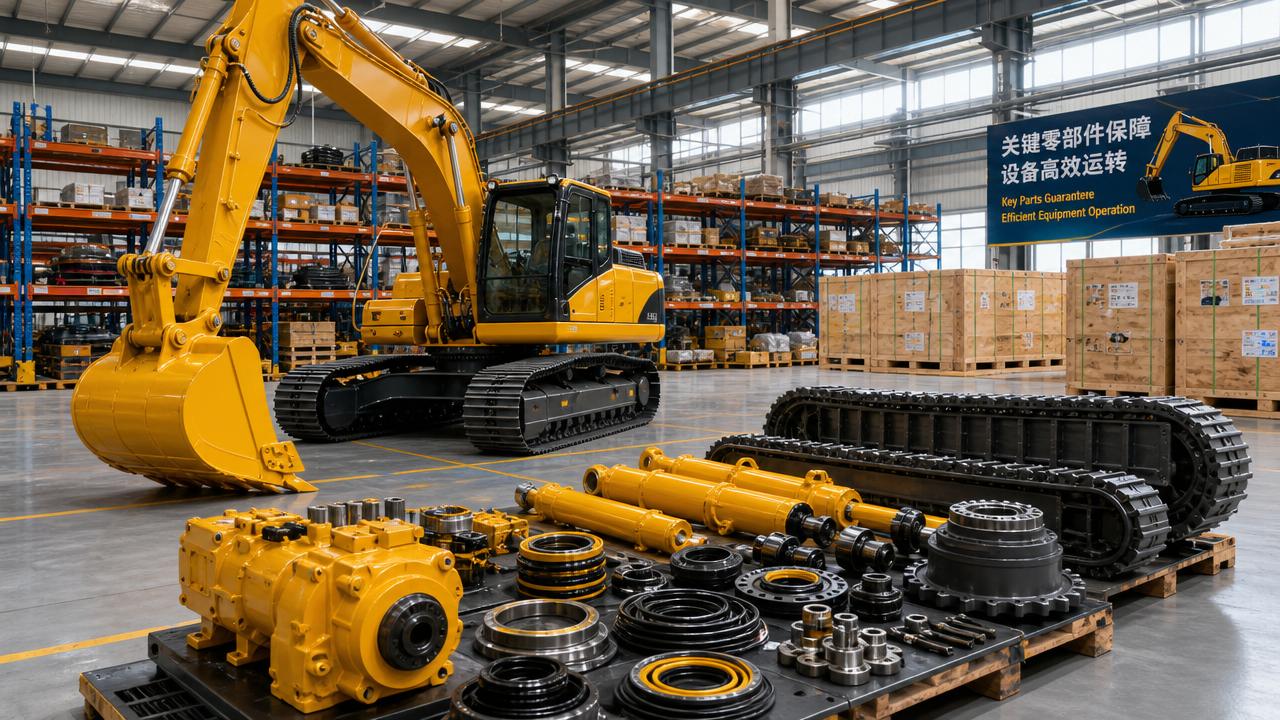
Excavator Industry News: Demand Shifts and Parts Availability
In today’s fast-moving heavy equipment market, excavator industry news is increasingly shaped by shifting regional demand, tighter parts availability, and the need for more reliable sourcing intelligence.
Understanding where demand is rising, which components face supply pressure, and how procurement risks affect uptime is essential for smarter inventory and sourcing decisions.
This article explains key market signals, common risks, and practical responses for organizations tracking excavator industry news across construction, mining, infrastructure, and rental markets.
What does current excavator industry news reveal about demand?
Recent excavator industry news shows demand becoming more selective, rather than uniformly weak or strong across all regions.
Infrastructure renewal, utility work, mining activity, and urban redevelopment continue to support excavator use in several markets.
However, residential construction softness, financing pressure, and delayed public projects can reduce short-term equipment orders.
The most useful excavator industry news does not only report unit sales. It explains utilization, fleet age, and replacement timing.
Older fleets create hidden demand for hydraulic components, undercarriage parts, sealing systems, filters, and control assemblies.
Where machine purchases slow, parts demand may remain resilient because owners extend service life.
That makes parts availability a central theme in excavator industry news, especially for high-use equipment operating in abrasive environments.
Which demand signals matter most?
- Fleet utilization rates in construction, quarrying, demolition, and municipal maintenance.
- Auction prices for used excavators and compact machines.
- Lead times for hydraulic pumps, cylinders, final drives, and electronic controllers.
- Regional infrastructure spending and project award schedules.
- Aftermarket demand for wear parts, seals, hoses, sensors, and maintenance kits.
Together, these signals turn excavator industry news into actionable market intelligence, not just headline reading.
Why is parts availability becoming a bigger issue?
Parts availability is under pressure because excavators depend on tightly integrated mechanical, hydraulic, electronic, and sealing systems.
A single delayed component can stop an otherwise serviceable machine, especially when hydraulic integrity or motion control is affected.
Excavator industry news increasingly highlights shortages in application-specific parts, not only broad commodity items.
Examples include hydraulic valve blocks, pressure sensors, travel motors, electronic modules, high-performance seals, and specialized gaskets.
Many of these parts require precise materials, clean manufacturing, reliable dimensional control, and verified performance under pressure.
This is where technical intelligence matters. G-PCS focuses on containment, flow, sealing, actuation, and reliability in demanding systems.
The same logic applies to excavators, where fluid leakage, seal failure, or delayed actuation directly affects productivity.
Which parts face the highest supply risk?
Excavator industry news often points to three categories with elevated risk: critical hydraulic parts, electronic control parts, and precision sealing parts.
Hydraulic items are vulnerable because pressure ratings, contamination control, and compatibility cannot be treated casually.
Electronic controls face risk from chip supply, model revisions, software compatibility, and limited interchangeability.
Seals and gaskets can seem low-cost, yet failure may cause leakage, overheating, contamination, or sudden downtime.
How should excavator industry news be interpreted by application?
The same excavator industry news can mean different things depending on machine size, usage pattern, and operating environment.
Compact excavators often track small construction, landscaping, utility trenching, and rental activity.
Mid-size machines usually reflect general contracting, roadwork, drainage projects, and regional infrastructure cycles.
Large excavators follow mining, quarrying, port expansion, heavy civil work, and energy-related development.
Parts demand also varies by application. Demolition creates heavy wear on attachments, pins, bushings, and hydraulic lines.
Mining and quarrying increase demand for undercarriage components, high-load seals, cooling parts, and filtration systems.
Urban utility work often requires fast service response because equipment downtime can block streets and delay crews.
What is the best way to read regional demand?
Good excavator industry news separates demand by geography, project type, machine class, and aftermarket behavior.
A market may show lower new machine orders while service parts remain strong because installed fleets keep working.
Another market may show equipment growth but weak spare parts stocking, creating service gaps later.
The practical question is not only where machines are sold. It is where machines are working hard every day.
How can sourcing risk be judged before shortages become costly?
Sourcing risk becomes visible before a true shortage appears, if the right warning signs are monitored.
Excavator industry news should be compared with supplier lead times, quotation validity, freight conditions, and repair order backlogs.
If delivery dates become less reliable, inventory planning should shift from reactive replenishment to risk-based stocking.
Criticality matters more than unit price. A low-cost seal kit may deserve priority if it prevents hydraulic downtime.
A high-value controller may require advance planning because substitutes are limited and programming may be model-specific.
What indicators suggest rising sourcing pressure?
- Lead times extend for the same part number across multiple suppliers.
- Suppliers reduce quotation validity or require allocation-based ordering.
- Substitute parts need additional validation or installation changes.
- Repair facilities report waiting queues for pumps, motors, and cylinders.
- Freight costs rise for urgent shipments or oversized components.
These indicators give excavator industry news a practical role in planning service continuity and inventory exposure.
What mistakes should be avoided when reacting to excavator industry news?
The first mistake is treating all demand growth as the same. Machine sales and parts consumption do not always move together.
The second mistake is stocking only fast-moving items while ignoring failure-critical components.
Fast-moving filters and teeth are important, but downtime may come from a seal, sensor, hose, or control valve.
The third mistake is accepting substitutes without checking pressure rating, material compatibility, dimensional tolerance, and warranty impact.
Excavator industry news may encourage quick buying, but rushed sourcing can create hidden reliability risk.
The fourth mistake is using outdated demand assumptions when regional project pipelines change.
A road program, mining expansion, flood-control project, or housing slowdown can rapidly change parts consumption.
How can technical quality be protected?
Quality protection starts with clear specifications, traceable sourcing, and realistic testing expectations.
For sealing and fluid-control parts, compatibility with temperature, pressure, oil chemistry, dust exposure, and vibration should be verified.
G-PCS emphasizes high-integrity containment and flow logic, which aligns with reliability expectations in demanding excavator systems.
This approach helps convert excavator industry news into disciplined sourcing, not speculative stockpiling.
FAQ and decision table for excavator industry news
This table shows why excavator industry news should be reviewed as a decision tool, not only as market commentary.
What practical steps improve readiness now?
Start by mapping critical parts by failure consequence, not only by historical sales volume.
Group parts into uptime-critical, maintenance-consumable, model-specific, and easily substitutable categories.
Next, compare excavator industry news with local machine utilization and service history.
If infrastructure projects are expanding, review stock for hydraulic hoses, filters, cylinders, seals, and undercarriage parts.
If mining activity is rising, focus on high-load components, cooling systems, filtration, track parts, and heavy-duty sealing solutions.
If urban rental activity is strong, emphasize fast-turn service kits and commonly damaged external components.
Finally, keep supplier qualification active. A low price is not enough when parts affect pressure control, sealing, and safe operation.
A simple readiness checklist
- Review excavator industry news monthly against regional project activity.
- Track lead-time changes for critical hydraulic and electronic parts.
- Validate substitutes before emergency demand appears.
- Prioritize parts that prevent leakage, overheating, and immobilization.
- Use technical data, not guesswork, for sealing and flow-control decisions.
Conclusion: turn excavator industry news into sourcing intelligence
Excavator industry news is most valuable when it connects demand shifts with parts availability, technical risk, and operational urgency.
Rising demand in one region, aging fleets in another, and longer component lead times can all reshape inventory priorities.
The strongest response is disciplined: monitor demand signals, classify critical parts, qualify alternatives, and protect technical reliability.
For systems involving containment, flow, actuation, sealing, and pressure control, G-PCS provides a useful technical lens.
Use current excavator industry news to review stock exposure, verify suppliers, and prepare for the next change before downtime forces action.
Industry Briefing
Get the top 5 industry headlines delivered to your inbox every morning.