2026 Global Supply Chain Updates for Precision Machinery
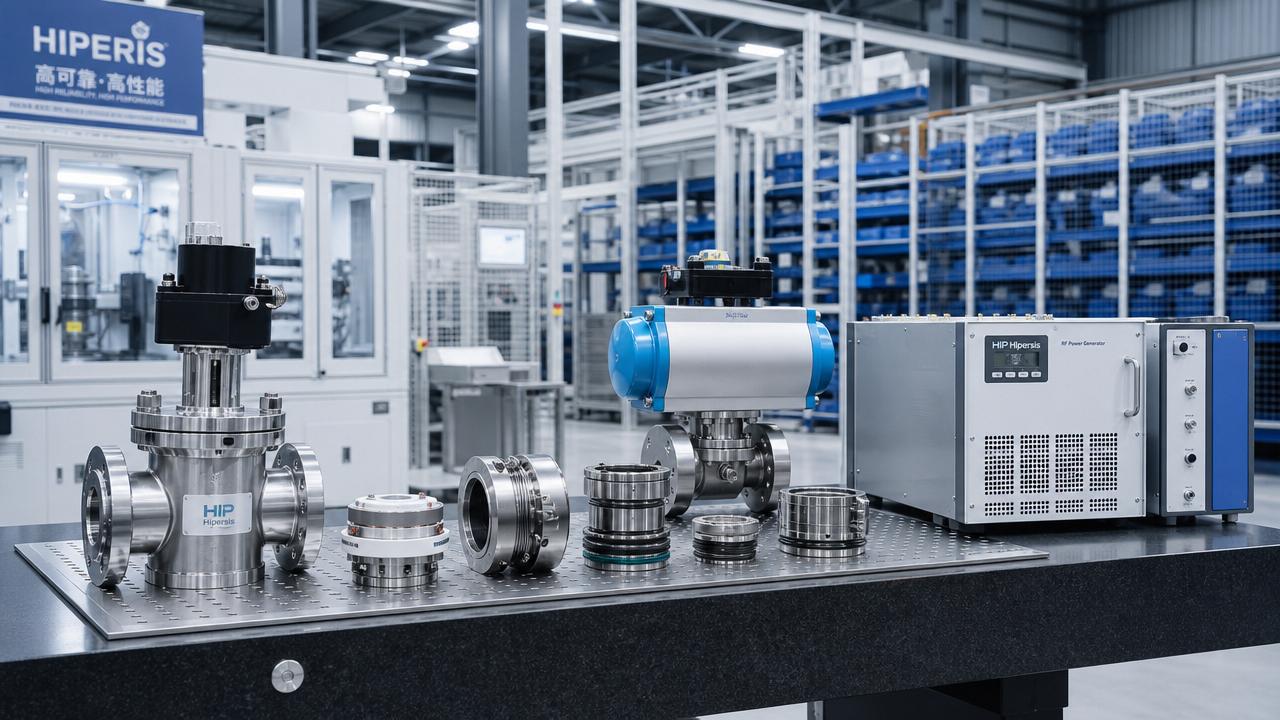
2026 Global Supply Chain Updates for Precision Machinery
In 2026, global supply chain updates for precision machinery are no longer just procurement signals—they are strategic risk indicators for enterprises operating in high-pressure control, advanced sealing, RF energy, and precision actuation markets.
As geopolitical shifts, material constraints, compliance requirements, and demand for ultra-reliable components reshape sourcing decisions, business leaders must understand where resilience, qualification standards, and technical performance converge.
This article provides a focused view of the key supply chain trends influencing precision machinery decisions in mission-critical industrial systems.
Foundational View of Precision Machinery Supply Chains
Precision machinery supply chains cover components where tolerance, sealing integrity, pressure stability, and response speed directly affect system reliability.
These networks include valves, seals, actuators, gaskets, RF energy modules, surface-treated parts, specialty polymers, and certified subassemblies.
Global supply chain updates for precision machinery matter because small component changes can alter qualification status, maintenance cycles, and safety margins.
In high-value systems, sourcing is not only about price or lead time. It is about documented repeatability under demanding operating conditions.
The most sensitive sectors now evaluate suppliers through engineering depth, materials traceability, process control, regulatory alignment, and lifecycle support.
This is especially visible in hydrogen infrastructure, semiconductor processing, aerospace systems, advanced robotics, defense electronics, and high-frequency industrial heating.
Core Components Under Closer Review
- Ultra-high pressure valves for hydrogen, test benches, and critical gas control.
- Extreme-environment mechanical seals for corrosive, cryogenic, or abrasive media.
- High-precision pneumatic and piezoelectric actuators for micro-positioning.
- Specialized polymer and composite gaskets for contamination-sensitive systems.
- Industrial microwave and RF energy systems for thermal, plasma, and materials processing.
Industry Signals Defining 2026
Global supply chain updates for precision machinery in 2026 reflect a move from efficiency-first sourcing toward controlled resilience.
The strongest suppliers are those able to combine technical validation, diversified capacity, and transparent compliance documentation.
Shortages are becoming more selective. Instead of broad scarcity, risks concentrate around specialty alloys, FFKM compounds, ceramics, high-purity metals, and qualified electronics.
These signals make global supply chain updates for precision machinery a practical tool for technical sourcing and operational planning.
Material Availability and Qualification Pressure
Material availability remains one of the most important drivers behind global supply chain updates for precision machinery.
Specialized sealing materials face pressure from fluoropolymer capacity limits, environmental controls, and growing demand in semiconductor and energy applications.
For FFKM, PTFE-based composites, graphite-filled polymers, and high-temperature elastomers, simple substitution is rarely acceptable.
Compression set, chemical compatibility, outgassing behavior, particle generation, and temperature cycling can determine whether a replacement is viable.
Metals and ceramics are facing similar qualification barriers. Nickel alloys, stainless grades, alumina, zirconia, and coatings require documented process stability.
In this environment, global supply chain updates for precision machinery should be read alongside approved material lists and failure history.
Qualification Questions for 2026
- Has the material source changed since the last validation cycle?
- Are test methods aligned with the operating environment?
- Does the supplier disclose batch-level inspection data?
- Are alternative materials pre-screened for emergency use?
- Can replacement parts maintain sealing or motion accuracy?
Regionalization and Supplier Network Redesign
Regionalization is reshaping sourcing strategies across precision machinery markets.
Global supply chain updates for precision machinery show increased investment in regional machining, coating, clean assembly, and final testing capacity.
This trend reduces exposure to port congestion, export controls, freight volatility, and single-country dependencies.
However, regionalization does not automatically create resilience. New facilities must meet the same dimensional, cleanliness, and documentation standards.
In 2026, supplier networks are moving toward a layered structure.
- Global strategic suppliers for patented or highly specialized technologies.
- Regional qualified suppliers for validated repeat production.
- Local service partners for repair, inspection, and urgent support.
- Controlled distributors for standard certified components.
This layered approach helps convert global supply chain updates for precision machinery into specific procurement and engineering actions.
Compliance, Documentation, and Data Integrity
Compliance has moved from a final approval step to a continuous supply chain requirement.
Global supply chain updates for precision machinery increasingly highlight the importance of auditable data, material certificates, inspection records, and change notices.
For pressure control components, documentation may need to support burst testing, leak testing, hydrogen compatibility, and pressure cycling.
For semiconductor-adjacent parts, cleanliness, low outgassing, particle control, and chemical resistance become critical acceptance factors.
For aerospace and defense systems, traceability must connect raw materials, process steps, inspection results, and authorized release records.
Strong documentation reduces ambiguity when global supply chain updates for precision machinery require fast sourcing decisions.
Business Value for Mission-Critical Systems
The business value of global supply chain updates for precision machinery is strongest where downtime, leakage, drift, or contamination creates high cost.
In hydrogen stations, valve reliability affects pressure safety and refueling availability.
In RF energy systems, magnetron availability and matching networks influence process stability.
In precision actuation, microsecond response and positional repeatability can determine final product yield.
In sealing systems, a gasket or mechanical seal can become the boundary between stable production and expensive contamination.
Therefore, supply chain intelligence must connect commercial data with engineering risk.
Lead time alone is insufficient. The better question is whether an available component can preserve system qualification.
Typical Application Categories
Global supply chain updates for precision machinery become more useful when mapped to component categories and operating conditions.
This categorization supports clearer sourcing decisions when global supply chain updates for precision machinery reveal disruption or capacity change.
Practical Review Priorities for 2026
A practical supply chain review should begin with components that combine high failure impact and difficult substitution.
Global supply chain updates for precision machinery should then be translated into ranked actions, not isolated observations.
- Identify single-source items tied to safety, cleanliness, or motion accuracy.
- Compare supplier lead times with validated inventory coverage.
- Review material certificates for origin, grade, and process consistency.
- Confirm whether design changes require requalification.
- Create second-source plans for long-cycle components.
- Link maintenance schedules with known supply constraints.
These steps help prevent reactive purchasing when a disruption has already reached production or field service.
Common Mistakes to Avoid
- Treating dimensional equivalence as full technical equivalence.
- Accepting substitute materials without environmental testing.
- Ignoring supplier change notices until failures appear.
- Separating procurement data from engineering qualification records.
- Overlooking spare parts for legacy systems still in service.
Strategic Outlook and Next Steps
Global supply chain updates for precision machinery in 2026 point toward a more disciplined sourcing environment.
Resilience will depend on qualified alternatives, transparent documentation, regional support, and early visibility into material constraints.
For critical containment and flow systems, the strongest decisions will integrate engineering validation with market intelligence.
G-PCS focuses on this intersection by benchmarking valves, seals, actuators, gaskets, and RF energy systems against demanding industrial standards.
The immediate next step is to build a component-level risk map.
Start with mission-critical parts, confirm qualification evidence, rank sourcing exposure, and align inventory policies with validated technical risk.
Used correctly, global supply chain updates for precision machinery become a planning framework for reliability, compliance, and long-term operational continuity.
Industry Briefing
Get the top 5 industry headlines delivered to your inbox every morning.