High-Tech Supply Chain Components: 2026 Risk Signals
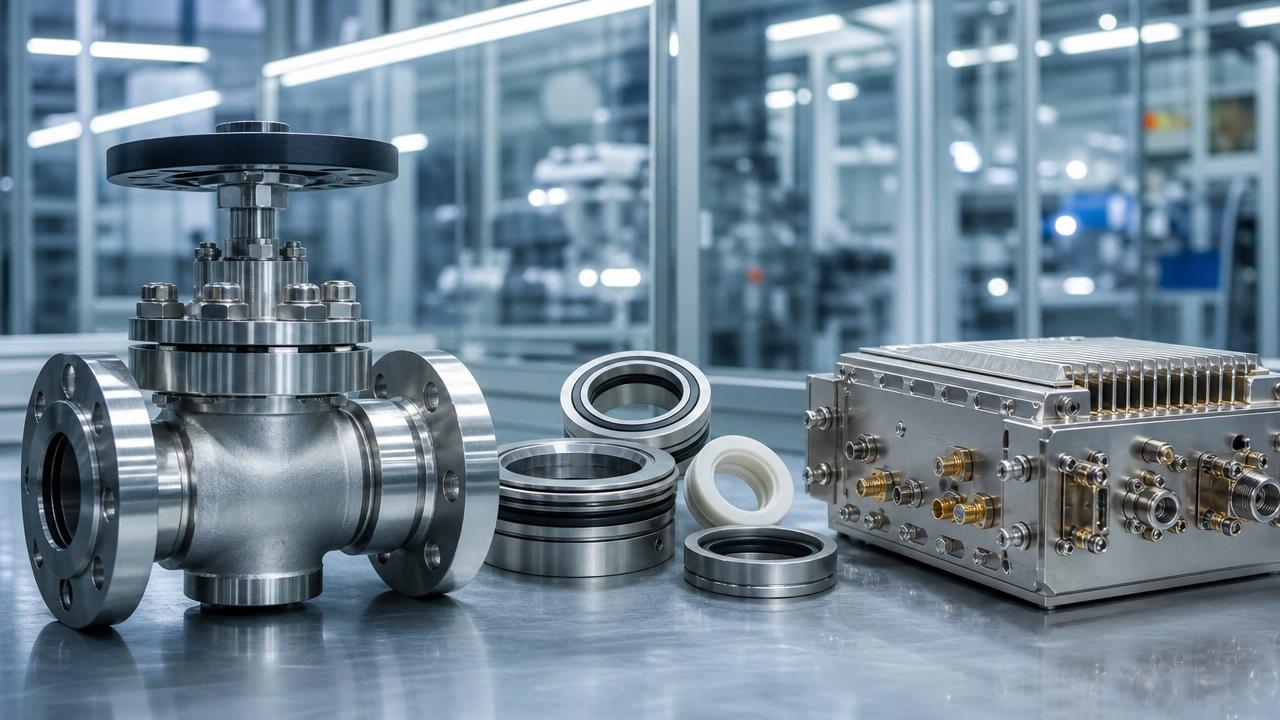
Why are high-tech supply chain components becoming 2026 risk signals?
As 2026 approaches, high-tech supply chain components are emerging as decisive risk indicators for enterprise resilience, compliance, and innovation continuity.
From ultra-high-pressure valves to precision seals and RF energy systems, subtle weaknesses in critical component chains can trigger major operational and strategic consequences.
For business decision-making, these signals now shape uptime, certification readiness, redesign costs, and long-term technology positioning.
The issue is not only shortage.
It is the growing fragility of specialized parts with narrow qualification paths, strict material traceability, and extreme performance tolerances.
In advanced systems, one weak gasket, actuator, seal, or valve can delay entire production programs.
That is why high-tech supply chain components now act as early warning markers across the broader industrial landscape.
What counts as a critical component risk in advanced supply chains?
A critical risk appears when a component has high system impact and low substitution flexibility.
This often includes parts validated for pressure, chemical resistance, thermal stability, electrical precision, or contamination control.
Examples within high-tech supply chain components include:
- 700 bar hydrogen-compatible valves
- FFKM and other specialized sealing materials
- industrial magnetrons and RF power assemblies
- piezoelectric positioners with micron-level stability
- extreme-environment mechanical seals
These are not generic catalog items.
They sit inside tightly engineered systems where qualification, cleanliness, and failure consequence are unusually severe.
A simple sourcing delay may hide a deeper issue.
That issue may involve test data gaps, export restrictions, material reformulation, or undocumented process drift at sub-tier suppliers.
When reviewing high-tech supply chain components, risk should be assessed through three linked questions:
- Can the part be replaced without system redesign?
- Can performance be verified quickly under the same standard?
- Can upstream production stability be proven beyond Tier 1?
Which 2026 risk signals deserve the closest attention?
Several signals stand out across the global market for high-tech supply chain components.
1. Qualification bottlenecks are getting longer
Lead time is no longer the only timeline that matters.
Validation cycles for seals, valves, and RF assemblies often exceed procurement windows.
A replacement source may exist, yet approval can take months because of protocol, sample testing, and reliability documentation.
2. Materials are becoming more regulated and less interchangeable
Advanced elastomers, fluoropolymers, ceramics, and alloys face increasing scrutiny from environmental, safety, and trade frameworks.
A compliant substitute may not match outgassing limits, permeation resistance, or dielectric behavior.
3. Performance drift is harder to detect than outright shortage
The most dangerous disruptions are often silent.
A seal compound change, machining variance, or coating inconsistency can pass initial inspection yet fail under real load.
4. Concentration risk remains high in niche technologies
Many high-tech supply chain components rely on very few approved producers.
That creates hidden dependency even when direct suppliers appear diversified.
5. Standards pressure is rising across industries
ISO, API, SEMI, and MIL-SPEC alignment increasingly affects sourcing decisions.
If a supplier cannot maintain document integrity, future compliance risk grows quickly.
How do these signals affect different industrial applications?
The impact of high-tech supply chain components varies by application, but the pattern is consistent.
The more sensitive the operating environment, the smaller the tolerance for sourcing uncertainty.
This is why broad industrial resilience now depends on very narrow technical details.
High-tech supply chain components link strategic planning directly to materials engineering and qualification discipline.
How should organizations evaluate suppliers beyond price and lead time?
Traditional purchasing metrics are no longer enough for high-tech supply chain components.
A lower unit cost can produce a much higher total risk burden.
Evaluation should include technical, operational, and documentation depth.
Key review criteria
- Process stability across raw material batches
- Change notification discipline and revision control
- Third-party test reports and standard alignment
- Sub-tier visibility for critical materials or coatings
- Failure analysis capability and response time
- Dual-source feasibility without performance compromise
The strongest suppliers do more than deliver.
They provide evidence that high-tech supply chain components will remain consistent under scaling, regulation changes, and application stress.
This is especially important when parts support containment, flow control, dielectric integrity, or motion precision.
What common mistakes increase exposure to component risk?
Several recurring mistakes continue to weaken resilience programs.
Assuming specification equivalence means performance equivalence
Two parts may share dimensions and datasheet values while behaving differently under contamination, vibration, radiation, or pressure cycling.
Treating documentation as secondary
Missing lot traceability or unclear formulation history can turn a small issue into a major audit or warranty problem.
Ignoring sub-tier concentration
A visible supplier network may still depend on one compounder, one ceramic source, or one precision machining site.
Delaying alternate qualification
Backup planning started after disruption is usually too late for high-tech supply chain components.
The qualification timeline becomes the real bottleneck.
What practical steps can reduce 2026 component risk now?
A workable plan does not require rebuilding the full supply base at once.
It starts by identifying where high-tech supply chain components have the highest consequence of failure.
- Map critical components by qualification difficulty and replacement time.
- Rank suppliers by technical transparency, not only delivery history.
- Audit change-control practices for materials, tooling, and processing.
- Build test-ready alternate paths for the most sensitive parts.
- Monitor standards exposure across ISO, SEMI, API, and MIL-SPEC contexts.
- Use technical intelligence sources to track niche component shifts early.
This is where structured repositories and technical benchmarking become valuable.
G-PCS helps frame high-tech supply chain components through performance logic, standards relevance, and cross-sector comparability.
That approach improves visibility around valves, RF systems, seals, actuators, and advanced gasket materials.
FAQ summary: how to read 2026 high-tech supply chain components risk
High-tech supply chain components are no longer background items.
They are strategic indicators of whether advanced operations can remain compliant, scalable, and reliable through 2026.
The next step is practical.
Review the most sensitive component families, validate alternate paths, and strengthen intelligence around standards, materials, and supplier process discipline.
Organizations that act early on high-tech supply chain components will be better positioned to protect continuity and maintain technical advantage.
Industry Briefing
Get the top 5 industry headlines delivered to your inbox every morning.