Energy Containment Solutions: What Impacts Lifetime Cost
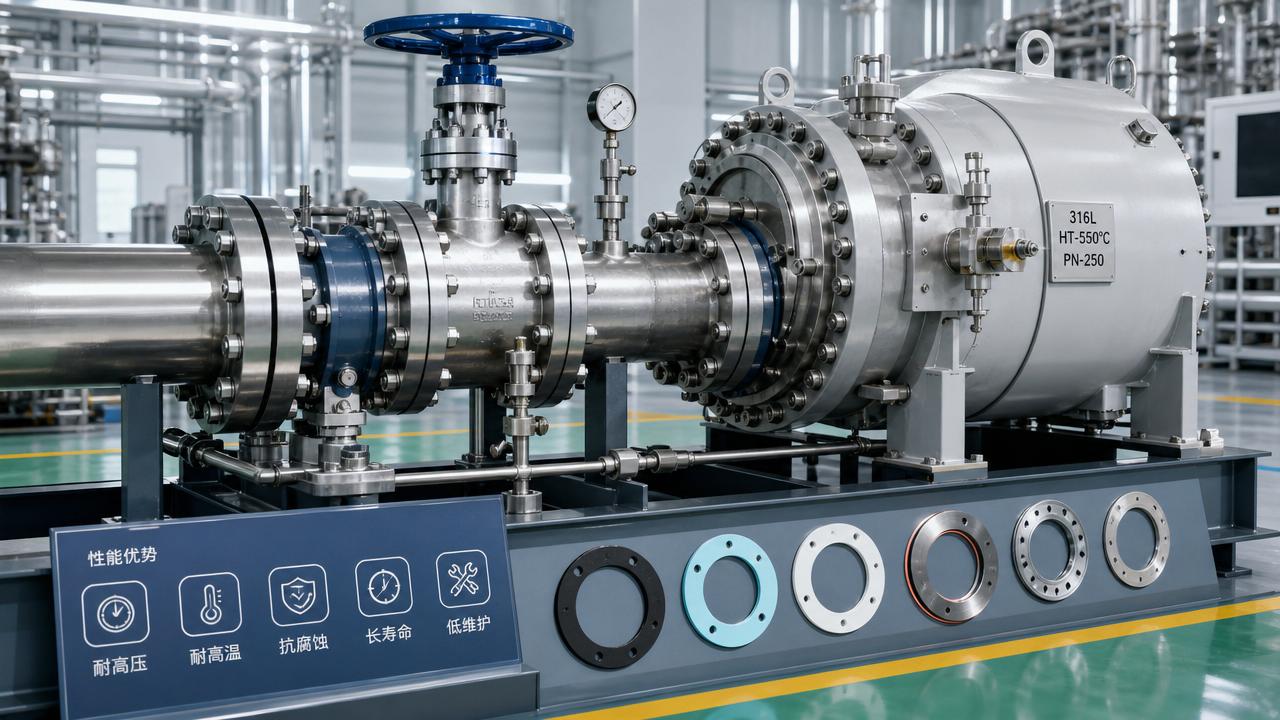
For financial decision-makers, choosing energy containment solutions is not only about upfront pricing but also about controlling lifetime cost across safety, maintenance, compliance, and downtime. In high-performance industrial environments, the right solution can reduce risk exposure and improve asset reliability, making total cost of ownership a far more strategic metric than purchase price alone.
Why a Checklist Matters for Energy Containment Solutions
Energy containment solutions operate at the intersection of pressure, heat, motion, media compatibility, and regulatory control. A weak decision in one area often creates hidden cost in another.
That is why a checklist approach works. It prevents decisions based only on unit price and forces a structured review of lifetime cost drivers.
Across valves, seals, gaskets, enclosures, and specialized flow interfaces, the most expensive outcome is usually not the initial purchase. It is unplanned failure.
Core Checklist: What Impacts Lifetime Cost
Use the following checklist to compare energy containment solutions on a true cost basis rather than a quote-only basis.
- Map the operating envelope, including pressure spikes, temperature cycling, media chemistry, vibration, and duty frequency, because nominal conditions rarely reflect real service stress.
- Verify material compatibility with process media, cleaning agents, and ambient contaminants, since corrosion, swelling, embrittlement, and permeation accelerate replacement intervals.
- Measure sealing integrity under transient conditions, not only at steady state, because startup, shutdown, pulsing, and thermal shock often drive leakage events.
- Compare certified compliance requirements early, including ISO, API, SEMI, or MIL-SPEC references, to avoid redesign, retesting, and delayed system approval.
- Calculate maintenance labor and access time, because a lower-cost component can become expensive if replacement requires disassembly, calibration, or production stoppage.
- Review expected cycle life using application-specific data, since bench ratings without actual media, temperature, and load conditions can misstate field longevity.
- Assess leak detection and monitoring integration, because energy containment solutions with better diagnostics reduce troubleshooting time and limit collateral equipment damage.
- Check failure mode severity, not just failure probability, because minor seepage and catastrophic rupture create very different downtime, safety, and liability costs.
- Quantify energy efficiency loss from poor containment, including pressure decay, thermal escape, and media loss, which silently erode operating margin over time.
- Confirm supply-chain resilience for critical spare parts, because extended lead times can multiply the lifetime cost of otherwise capable energy containment solutions.
- Audit installation sensitivity, including torque windows, alignment tolerance, and surface preparation, since field variability often determines whether design performance is achieved.
- Model total cost of ownership across five to ten years, combining purchase, validation, maintenance, downtime, compliance, and disposal into one decision framework.
How Lifetime Cost Changes by Application Scenario
High-Pressure Fluid and Gas Systems
In high-pressure environments, the lifetime cost of energy containment solutions is strongly influenced by fatigue, pressure pulsation, and seal extrusion risk.
A design that survives static testing may still fail early under rapid cycling. Cost therefore shifts toward validation quality, safety margin, and replacement predictability.
Thermal and Microwave Energy Equipment
For thermal processing and RF systems, containment is not only about holding media. It also includes insulating heat, controlling leakage paths, and maintaining stable process boundaries.
Here, energy containment solutions affect product consistency, power efficiency, and component life. Small thermal leaks can become large recurring operating costs.
Clean, Corrosive, or Ultra-Pure Environments
In semiconductor, laboratory, and specialty chemical service, contamination risk can outweigh direct hardware cost. Material purity and outgassing behavior become major lifetime cost factors.
Energy containment solutions in these settings must balance tight sealing with chemical resistance, particle control, and traceable compliance documentation.
Remote, Hazardous, or Hard-to-Service Installations
When service access is difficult, maintenance frequency dominates economics. A premium containment component often becomes cheaper if it eliminates one field intervention.
For these applications, the best energy containment solutions are usually those with conservative design margins, strong condition monitoring, and long service intervals.
Commonly Overlooked Cost Drivers and Risk Alerts
Underestimating Transient Loads
Pressure spikes, rapid depressurization, vibration bursts, and thermal shock often shorten life faster than steady-state conditions. Ignoring them produces misleading cost forecasts.
Treating Compliance as a Final-Step Check
If certifications and documentation are reviewed late, redesign costs rise quickly. Energy containment solutions should be screened against applicable standards before specification freeze.
Ignoring Installation Variability
Many leakage cases originate from assembly error rather than design weakness. Surface finish, bolt pattern, torque consistency, and alignment deserve explicit cost consideration.
Missing the Cost of Minor Leakage
Not every failure is dramatic. Small, persistent leakage can waste energy, contaminate product, trigger inspections, and accelerate nearby component wear.
Overlooking Spare-Part Risk
A technically excellent part becomes financially weak if replacement lead time is too long. Inventory strategy belongs inside the lifetime cost model.
Practical Execution Steps
- Define the real operating profile, including upset conditions, shutdown cycles, and maintenance access constraints.
- Build a comparison sheet for candidate energy containment solutions using the same duty assumptions and compliance requirements.
- Assign cost values to leakage, downtime, field labor, validation, and spare inventory before reviewing quoted prices.
- Request application-specific test data rather than relying only on catalog ratings or generic material claims.
- Run a five-year and ten-year total cost scenario to expose the break-even point between standard and premium options.
- Document installation controls so expected sealing performance can be repeated consistently in the field.
Final Takeaway on Energy Containment Solutions
The real value of energy containment solutions is measured over service life, not at purchase order stage. Lifetime cost is shaped by reliability, compliance, maintenance burden, energy loss, and failure impact.
A disciplined checklist turns selection into a measurable decision. It helps compare options across technical fit, operational risk, and economic durability.
Start with operating conditions, validate materials and standards, model downtime exposure, and test replacement assumptions. That process reveals which energy containment solutions actually protect long-term value.
Industry Briefing
Get the top 5 industry headlines delivered to your inbox every morning.