Tungsten Carbide Seal Ring OEM vs Standard Supply
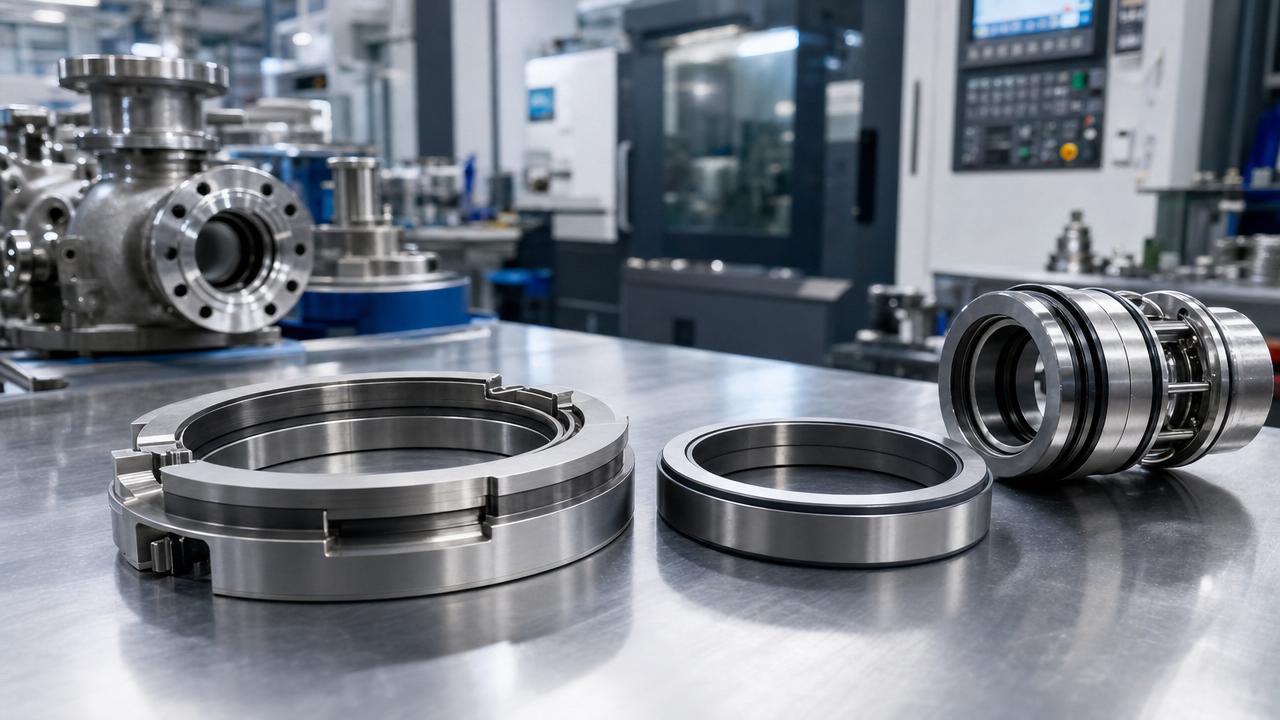
Choosing between tungsten carbide seal ring OEM and standard supply can directly affect sealing reliability, lifecycle cost, and project risk in demanding industrial systems. For project managers and engineering leads, the right option depends on performance targets, compliance needs, lead times, and integration complexity. This guide outlines the key differences to help you make a faster, more confident sourcing decision.
In high-value systems such as UHP valves, process pumps, RF equipment cooling loops, and extreme-environment mechanical seals, a seal ring is rarely a generic part. Small differences in density, grain size, flatness, lapped surface finish, or mating material can change leakage behavior, wear rate, and maintenance intervals. That is why the tungsten carbide seal ring OEM route and standard catalog supply route must be evaluated not only by unit price, but also by failure consequence, installation fit, and total project timing.
For B2B teams working within strict uptime targets, qualification plans, and cross-functional approval cycles, the sourcing decision often comes down to four questions: does the ring need custom geometry, does the duty cycle exceed standard service assumptions, is traceability mandatory, and can the project absorb redesign delays of 2–6 weeks if a standard part does not fit? Answering these questions early can reduce procurement friction and avoid hidden integration costs.
What OEM and Standard Supply Really Mean in Seal Ring Procurement
In the sealing sector, standard supply usually refers to catalog-based rings produced in predefined sizes, tolerances, and material grades. These parts are often available with shorter lead times, sometimes within 7–15 days, depending on stock and finish requirements. They are typically suited for stable applications where operating pressure, face speed, and media chemistry stay inside known design windows.
A tungsten carbide seal ring OEM program, by contrast, is built around equipment-specific requirements. That may include custom dimensions, special chamfers, anti-rotation features, matched face pairs, non-standard binders, tighter flatness control, or drawing-level traceability. OEM supply can also involve engineering review, first article validation, and coordinated quality documentation before volume release.
Why the distinction matters for project managers
Project managers are measured on delivery, cost, and risk control. A lower-priced standard ring can become the more expensive option if it triggers rework, extra inspection, or unplanned downtime after commissioning. In systems where leakage can interrupt production or damage adjacent assemblies, even a 1–2 day stoppage may outweigh a meaningful share of the original component savings.
OEM sourcing also affects planning structure. It often requires a 3-stage process: technical review, sample approval, and scheduled production release. Standard supply may compress that into 1 stage, but only when the equipment interface and operating conditions are already proven. The choice is therefore not simply custom versus off-the-shelf; it is a risk allocation decision across engineering, quality, procurement, and service teams.
The table below shows the most practical differences between tungsten carbide seal ring OEM and standard supply in industrial purchasing environments.
The key takeaway is straightforward: standard supply works well when the duty profile is already known and the dimensions are proven, while OEM supply creates value when the cost of mismatch is high. For project-led teams, this distinction often determines whether the seal package remains a commodity purchase or becomes a controlled engineering item.
Material nuance beyond the term “tungsten carbide”
Many buyers assume that all tungsten carbide rings behave the same. In practice, binder content, carbide grain structure, hardness range, and finishing method influence crack resistance, wear pattern, and compatibility with the mating face. Two rings with similar dimensions may perform very differently at 80 bar versus 700 bar, or at low-speed water service versus dry-running upset conditions.
This is one reason OEM projects often begin with application mapping rather than quoting. If the ring will operate in abrasive slurries, hydrogen-related pressure environments, or systems with rapid thermal cycling, material selection should be verified against both process media and mechanical loading. Standard supply can still be suitable, but only after the actual service envelope is checked.
When a Tungsten Carbide Seal Ring OEM Program Makes More Sense
A tungsten carbide seal ring OEM solution is generally justified when the seal ring influences system qualification, compliance, or mission-critical uptime. In industrial projects linked to high-pressure containment, semiconductor support utilities, aerospace test rigs, or RF thermal management loops, component variation can cascade into broader validation issues. In these cases, the engineering effort upfront is often cheaper than repeated field corrections later.
Typical triggers for OEM selection
- Custom housing dimensions or retrofit constraints that do not match standard ring sizes
- Operating pressure above common plant service ranges, such as 150 bar, 350 bar, or 700 bar systems
- Leakage tolerance close to zero for hazardous, ultrapure, or high-cost process media
- Required inspection items such as flatness, parallelism, or batch traceability on each release
- Need to match the ring with a specific counterface material, spring design, or seal cartridge layout
For project managers, these triggers matter because they shift the ring from a simple spare part into a controlled performance component. Once that shift happens, purchase decisions should involve engineering, quality, and sourcing together rather than sequentially. That can shorten the approval cycle by 1–2 rounds and reduce the risk of late-stage design exceptions.
Integration advantages in complex systems
OEM rings reduce adaptation work. Instead of modifying carriers, shims, or mating faces to fit a stocked part, the part is produced to match the assembly. This is especially valuable in compact equipment where axial space may be limited to less than 1 mm tolerance stack, or where thermal expansion must be considered across multiple materials.
In addition, OEM programs can align seal ring supply with broader qualification frameworks. G-PCS-aligned procurement teams often evaluate components against ISO, API, SEMI, or MIL-oriented documentation expectations, depending on the sector. A custom supply route can support these workflows more effectively than a generic distributor transaction.
Cost should be viewed over the full operating cycle
OEM parts usually carry higher up-front pricing because of engineering review, tooling adjustments, or lower-volume production. However, direct purchase price is only one layer of cost. If a custom ring extends maintenance intervals from 6 months to 12 months, or reduces seal failure incidents from three events per year to one, total ownership economics may improve significantly even without very large volume discounts.
This is particularly true in installations where labor access is difficult, shutdown windows are short, or contamination events trigger extra cleaning and qualification steps. In those environments, procurement should compare total service cost, not just unit cost.
When Standard Supply Is the Smarter Option
Standard supply remains the right choice for many industrial programs. If the assembly design is mature, spare part consumption is predictable, and the operating envelope has already been validated, a catalog ring can offer better speed and simpler purchasing. This model works especially well for MRO demand, routine replacement schedules, and multi-site plants that want to reduce SKU complexity.
Best-fit scenarios for standard supply
A standard ring is often sufficient when the equipment uses established dimensions, process media are stable, and sealing performance does not depend on custom surface engineering. In these cases, the procurement team can focus on availability, dimensional consistency, and supplier responsiveness rather than managing a technical development cycle.
- Routine spare replacement in already qualified pumps or seal cartridges
- Plant maintenance planning with fixed monthly or quarterly demand
- Projects with compressed startup schedules and no time for sample iteration
- Non-critical service where moderate wear variation does not disrupt output
The main benefit is execution speed. If the standard part is already field-proven, qualification effort can drop sharply. This is useful when project teams need to protect a commissioning milestone and avoid 3–5 additional approval steps.
The following decision matrix can help identify whether standard supply or a tungsten carbide seal ring OEM route is more practical for your project.
If two or more factors fall in the OEM column, a custom route usually deserves serious evaluation. If three or four factors align with standard supply, a catalog strategy can often meet both technical and schedule requirements with lower transaction complexity.
Where buyers often misjudge standard parts
The most common mistake is assuming dimensional similarity equals functional equivalence. In reality, two standard rings may share nominal OD and ID but differ in lapped finish, edge condition, or material composition. Those differences can influence startup leakage, frictional heat, and wear under intermittent dry running.
Another risk is inconsistent sourcing. If the same part number is supplied from different production lots without clearly controlled material and finish parameters, maintenance teams may see variable service life. For facilities managing uptime through planned shutdowns every 90 or 180 days, this inconsistency can disrupt maintenance forecasting.
Key Evaluation Criteria Before You Issue a PO
Before placing an order, project teams should define a practical evaluation checklist. This helps prevent late clarifications and reduces the risk of buying a tungsten carbide seal ring OEM package when a standard part would work, or selecting standard supply when the duty actually requires customization.
Five checks that should happen before sourcing approval
- Confirm operating pressure, temperature range, and media characteristics for both normal and upset conditions.
- Review dimensional stack-up, including axial compression, mating ring material, and installation constraints.
- Define inspection needs such as flatness, surface finish, edge quality, and material records.
- Estimate total downtime cost if the ring underperforms after startup.
- Map lead time against the project critical path, including sample approval if required.
Even a simple 5-point review can reveal whether the ring is truly a commodity item or a risk-sensitive engineered component. For example, if downtime costs exceed the price gap between standard and OEM by a factor of 10, the lower initial quote may not be the lower-risk decision.
Questions engineering and procurement should answer together
Ask whether the standard ring has already been proven in the same pressure class, with the same media, and against the same mating face. Ask whether traceability must be kept at batch level or drawing revision level. Ask whether the supplier can support pilot quantity, for example 5–20 pieces, before full-volume release. These details affect both cost control and implementation confidence.
For global programs, it is also useful to check whether the supply model can support regional stocking, packaging protection, and repeatability across sites. A ring that performs well in one plant but arrives with inconsistent documentation at another can still create project risk.
Implementation Strategy for Lower Risk and Better Lifecycle Value
The best sourcing outcome usually comes from aligning technical need with procurement timing. For high-criticality assets, a phased approach works well: define requirements, review manufacturability, approve a sample lot, then lock the production release. This structure may add 1–3 weeks early in the cycle, but it often prevents more costly schedule slips later.
A practical rollout model
If your application is new or upgraded, start with a limited OEM evaluation. Validate fit, leakage behavior, and wear under representative conditions. Once stable performance is confirmed, determine whether the ring should remain a custom controlled item or be standardized across future builds. This method is especially effective for organizations balancing engineering rigor with procurement scalability.
If the application is already mature, standard supply can still be optimized by locking specifications more tightly, qualifying one or two approved sources, and documenting acceptance criteria. That gives some of the control benefits of OEM without forcing full customization where it is not needed.
Final recommendation for project-led buying teams
Choose tungsten carbide seal ring OEM when sealing performance is tightly tied to equipment reliability, compliance, or custom geometry. Choose standard supply when the application is proven, dimensions are stable, and speed of replenishment matters more than engineering variation. In most cases, the right answer is found by comparing failure cost, lead time, documentation needs, and integration complexity in the same decision frame.
For CTOs, R&D leaders, procurement directors, and project managers operating in critical flow and containment environments, this decision should be treated as a system-level sourcing choice, not a simple line-item purchase. If you need support evaluating a tungsten carbide seal ring OEM path versus standard supply for your application, contact us to discuss specifications, risk factors, and a more precise sourcing strategy.
Industry Briefing
Get the top 5 industry headlines delivered to your inbox every morning.