Dual Mechanical Seal OEM: Key Checks Before Approval
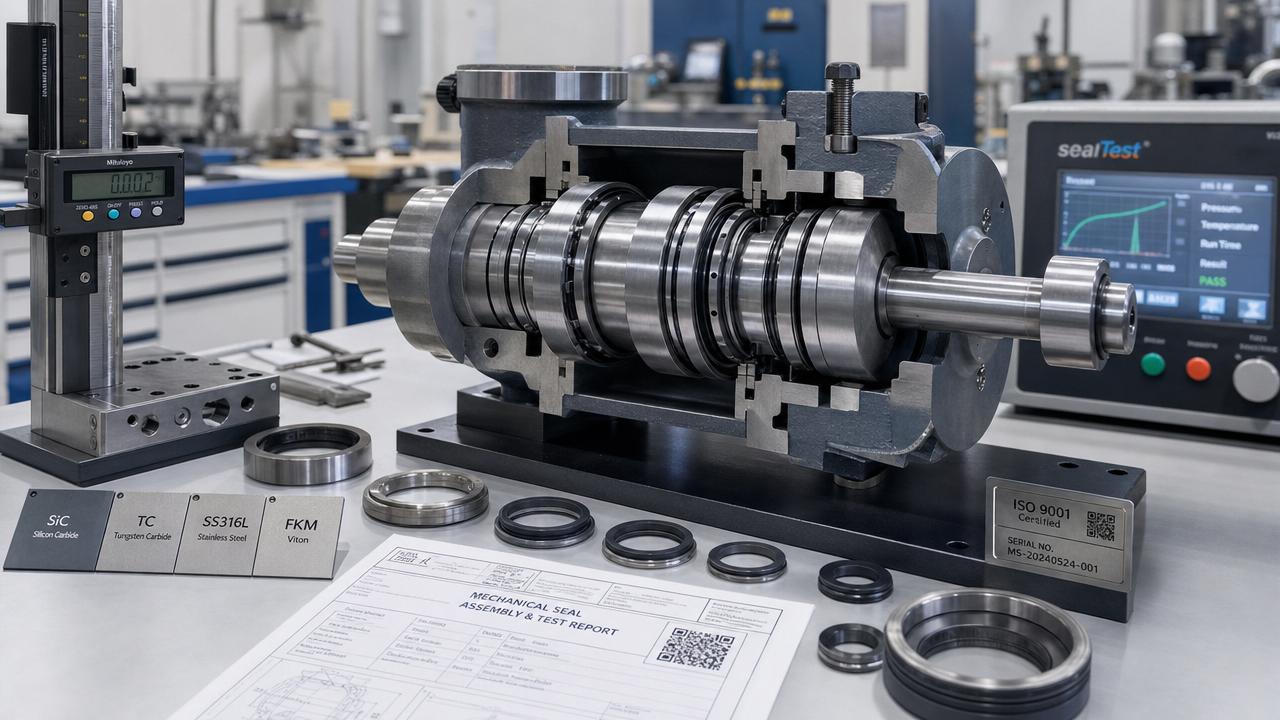
Selecting a dual mechanical seal OEM is not just a sourcing step—it is a risk-control decision that affects uptime, compliance, and system integrity. Before approval, technical evaluators should verify material compatibility, test data, manufacturing traceability, and application-specific sealing performance.
For most technical evaluators, the core search intent behind “dual mechanical seal OEM” is clear: how to qualify a supplier beyond catalog claims. They want to know which checks actually reduce operational risk, what evidence matters, and how to compare OEMs when failure consequences are expensive.
The biggest concerns usually center on four issues. First, will the seal survive the real operating environment, including pressure fluctuations, dry-run events, thermal cycling, and chemical exposure? Second, can the OEM prove performance with traceable test data rather than generic brochures?
Third, does the manufacturer control quality tightly enough to deliver repeatable products across batches, plants, and service cycles? Fourth, can the OEM support engineering changes, root-cause analysis, and long-term supply continuity for critical equipment?
This article focuses on those decision points. It gives technical assessment teams a practical framework for approving a dual mechanical seal OEM, with emphasis on engineering evidence, production discipline, and total lifecycle risk rather than broad supplier marketing language.
Why OEM Approval for Dual Mechanical Seals Is a High-Stakes Technical Decision
A dual mechanical seal operates at the intersection of containment, equipment reliability, and process safety. In many systems, it is not just a replaceable component. It is part of the control logic that protects product purity, environmental compliance, and rotating equipment integrity.
That is why approval should never rely only on dimensional fit or initial price. A seal that looks equivalent on paper can fail early if face materials, secondary elastomers, balance design, or barrier-fluid assumptions do not match the application’s real duty cycle.
For evaluators in industrial, chemical, energy, pharmaceutical, or advanced manufacturing settings, the practical question is not whether a supplier can make a dual seal. The real question is whether that OEM can make the right dual seal consistently, verify it properly, and support it after installation.
When the approval process is weak, the cost exposure extends far beyond spare-parts spend. Unplanned shutdowns, contaminated product, emissions incidents, pump damage, and emergency maintenance often outweigh the original purchase value by a wide margin.
Start with the Application Envelope, Not the Product Brochure
The first key check before approving any dual mechanical seal OEM is whether the supplier evaluates the full application envelope. Serious manufacturers begin with operating reality: fluid chemistry, solids content, vapor pressure, shaft speed, pressure range, upset conditions, and allowable leakage requirements.
If an OEM responds with a standard model recommendation before asking detailed application questions, that is a warning sign. Proper seal selection requires understanding not only normal operating points but also startup, shutdown, cleaning cycles, intermittent dry-running risk, and temperature excursions.
Technical evaluators should request a documented application review. This should show how the proposed seal type, face combination, elastomer set, metal components, and support-plan assumptions align with the exact service conditions. Generic references to “chemical resistance” or “high pressure capability” are not enough.
A strong dual mechanical seal OEM will also identify what it does not know. If process data are incomplete, the supplier should flag missing variables and explain how uncertainty affects seal design margins. That transparency is often a better predictor of field reliability than aggressive sales confidence.
Verify Material Compatibility at the Tribological and Chemical Level
Material compatibility is one of the most underestimated approval factors. Many evaluation teams check only whether wetted metals resist corrosion. That is necessary, but it is only the start. Dual seals fail just as often because face pairings, elastomer behavior, or sleeve and spring interactions are poorly matched.
Face materials must be reviewed for friction behavior, thermal conductivity, hardness, and resistance to blistering, scoring, and particle damage. Silicon carbide versus silicon carbide, carbon versus silicon carbide, or tungsten carbide combinations each have different implications depending on lubrication regime and solids presence.
Secondary sealing elements deserve equal scrutiny. FKM, EPDM, FFKM, PTFE-based options, and custom compounds can perform very differently under steam, solvents, amines, hydrocarbons, or aggressive cleaning chemicals. Approval should include explicit compatibility data tied to concentration, temperature, and exposure duration.
Ask the OEM whether material selection is based on internal chemical databases, field history, standardized testing, or supplier declarations. The best answer combines all four. A credible dual mechanical seal OEM should also explain material limitations, not just ideal-case suitability.
For critical services, request evidence that the exact face grade and elastomer compound have been used successfully in similar applications. A material family name alone is insufficient. In high-consequence systems, small formulation or processing differences can change wear behavior and service life substantially.
Demand Test Data That Reflects Real Service Conditions
One of the most important approval checks is the quality of performance validation. Many OEMs provide generalized test statements, but technical evaluators should look for data linked to specific seal configurations and meaningful operating conditions.
Ask what tests are performed at the design-validation stage and what inspections are completed during production release. Useful evidence may include pressure testing, leakage verification, dynamic running tests, thermal monitoring, face flatness measurements, balance calculations, and material certification reviews.
More importantly, ask whether the OEM has tested under conditions that resemble your service. A dual seal intended for hot hydrocarbons, abrasive slurry, pharmaceutical duty, or vacuum transitions should not be approved based solely on water-bench data at mild temperature and stable speed.
When reviewing test reports, check whether they include acceptance criteria, instrumentation methods, traceable sample identifiers, and failure observations. A polished summary slide is less valuable than a complete report showing what was tested, how it was measured, and whether deviations occurred.
For strategic applications, evaluators should prefer OEMs willing to support customized qualification testing. That may include barrier-fluid pressure behavior, transient thermal response, dry-run tolerance, or endurance simulation. Such willingness usually indicates strong engineering ownership and mature product confidence.
Check Manufacturing Traceability and Process Discipline
Even a sound design can become unreliable if production control is weak. That is why manufacturing traceability is central to dual mechanical seal OEM approval. Technical buyers need confidence that the tested and approved design is the same as the unit that will be delivered six months later.
Start by examining whether the OEM can trace critical components back to raw material lots, machining records, heat treatment where relevant, elastomer batches, and final inspection reports. Traceability should not depend on manual memory or fragmented spreadsheets.
Review process controls for sealing faces in particular. Face flatness, lapping quality, surface finish, and dimensional consistency are essential to leakage control and heat management. The OEM should be able to explain how these characteristics are measured, recorded, and kept within specification.
Ask about nonconformance handling, change control, and supplier qualification for subcomponents. If a face material source changes, if an elastomer compound is reformulated, or if machining parameters shift, what review process ensures the seal still meets approved performance requirements?
For many evaluators, the strongest signal of manufacturing maturity is not a perfect claim of zero defects. It is a documented quality system that detects variation early, contains risk quickly, and preserves complete product history for later investigation.
Evaluate Engineering Support, Not Just Product Availability
Approving a dual mechanical seal OEM should include a review of technical support capability. In critical service, the supplier relationship often continues long after first shipment. Engineering responsiveness during installation, commissioning, troubleshooting, and redesign can materially affect uptime.
Ask whether the OEM can support seal system reviews, piping plan selection, barrier or buffer fluid recommendations, installation guidance, and failure analysis. A supplier that only ships hardware without system-level insight may become a bottleneck during field issues.
Technical evaluators should also examine documentation quality. Good OEMs provide clear cross-sectional drawings, bill-of-material detail, operating limits, installation instructions, torque requirements, and storage recommendations. Poor documentation often signals weak internal engineering control.
Another useful check is the OEM’s ability to participate in root-cause analysis. When a seal fails, do they request operating data, inspection photos, and wear patterns? Can they distinguish between design mismatch, system contamination, misalignment, cavitation, and support-plan errors?
A capable supplier should be able to move from symptom to mechanism, then to corrective action. That problem-solving discipline is often more valuable than low initial price, especially in plants where each recurrence drives maintenance cost and operational uncertainty.
Review Compliance, Standards Alignment, and Industry Fit
Not every application requires the same standards framework, but technical approval should always consider regulatory and industry alignment. Depending on the sector, this may involve API expectations, ISO-based quality systems, emissions considerations, material declarations, or cleanliness requirements.
The key is not to ask whether the OEM mentions standards in marketing. Ask how those standards are translated into product design, validation, documentation, and inspection. A supplier should explain exactly which parts of its dual seal offering align with relevant customer or industry specifications.
In regulated or highly sensitive environments, supporting documents matter. These may include material certificates, pressure test records, dimensional reports, elastomer traceability, declaration of conformity statements, and documented revision control. Missing documentation can delay approval even when hardware quality is acceptable.
Industry fit also matters more than many sourcing teams assume. A dual mechanical seal OEM experienced in water or general industrial service may not be the best choice for sterile processing, hazardous solvents, semiconductor-related environments, or extreme-temperature rotating systems.
Past application history in comparable duty conditions should therefore be weighed heavily. Similar fluid families, shaft speeds, pressure classes, and failure consequences often tell you more about practical suitability than a broad but shallow product portfolio.
Assess Total Cost of Ownership Instead of Unit Price Alone
For technical evaluators, approval decisions often involve procurement scrutiny around cost. The right response is to frame the analysis around total cost of ownership. In dual seal applications, the cheapest option at purchase can easily become the most expensive over the service interval.
Useful comparison factors include expected seal life, leakage stability, barrier-fluid consumption, maintenance frequency, installation complexity, spare-parts standardization, and mean time to repair. If failures can damage sleeves, shafts, bearings, or adjacent equipment, those secondary costs must be included.
Also consider the supplier’s lead time consistency and after-sales support. A well-engineered seal from a responsive OEM may reduce downtime exposure simply because replacement logistics, troubleshooting, and dimensional repeatability are more predictable.
Where possible, build a supplier scorecard that combines technical performance, quality evidence, documentation completeness, field support, and commercial terms. This helps approval teams justify decisions internally and reduces the risk of price-driven compromises in critical applications.
A Practical Approval Checklist for Technical Evaluators
Before approving a dual mechanical seal OEM, many teams benefit from a structured review checklist. The first block should cover application definition: fluid, solids, pressure, temperature, speed, upset conditions, support plan, and allowable leakage or emissions expectations.
The second block should cover design and materials: seal arrangement, face combination, elastomer compound, metal selections, balance ratio, and suitability for dry-run risk, flashing tendencies, or contamination exposure. Every recommendation should be tied to the real operating envelope.
The third block should cover validation evidence: dynamic testing, pressure testing, inspection records, acceptance limits, and any application-specific qualification results. The fourth block should assess manufacturing controls, lot traceability, change management, and critical-dimension inspection capability.
The fifth block should cover support strength: installation guidance, troubleshooting access, root-cause analysis capability, spares continuity, and responsiveness to engineering queries. The final block should compare total lifecycle cost, not just quoted unit price.
If an OEM performs well across these areas, approval confidence rises substantially. If major gaps appear in several blocks, especially in validation and traceability, technical teams should treat those gaps as risk indicators rather than minor paperwork issues.
Conclusion: Approval Should Be Evidence-Based, Application-Specific, and Repeatable
Choosing a dual mechanical seal OEM is ultimately about controlling technical and operational uncertainty. The best supplier is rarely the one with the broadest claims. It is the one that can connect application knowledge, material science, validated performance, and production discipline into a repeatable result.
For technical evaluators, the most effective approval process starts with real service conditions, then moves through material compatibility, relevant testing, traceable manufacturing, and credible support capability. This sequence turns supplier assessment from a catalog exercise into a risk-based engineering decision.
In practice, a strong dual mechanical seal OEM should be able to explain not only what it supplies, but why that configuration fits your system, how performance was verified, and how consistency is maintained over time. That is the standard worth approving.
Industry Briefing
Get the top 5 industry headlines delivered to your inbox every morning.