Seal Face Flatness Benchmarks for Failure Prevention
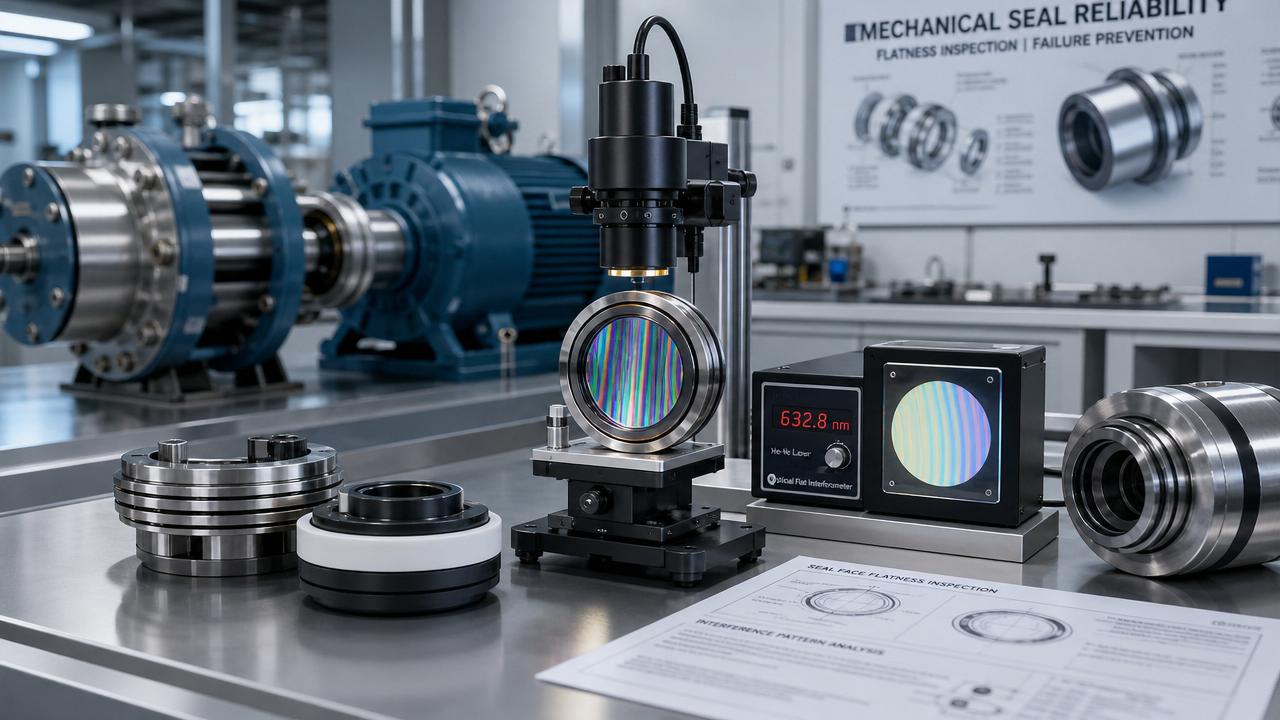
For aftermarket maintenance teams, understanding seal face flatness benchmarks is critical to preventing premature leakage, vibration, and costly equipment downtime. Even minor deviations in face geometry can accelerate wear and reduce sealing stability. In pumps, compressors, mixers, vacuum systems, and high-purity process equipment, flatness directly affects fluid film behavior, heat generation, and contact stress. A clear benchmark framework helps maintenance decisions move from guesswork to measurable control.
Within broad industrial service environments, seal face flatness benchmarks support failure prevention across rotating equipment with different speeds, pressures, and media. They also align well with the G-PCS focus on reliability, containment logic, and standards-based component evaluation. When flatness is checked correctly, teams can reduce repeat repairs, improve mean time between failures, and protect adjacent assets from contamination or unplanned shutdowns.
Seal Face Flatness Benchmarks: Core Definition and Measurement Basis
Seal face flatness describes how closely a lapped seal surface approaches a true plane. It is usually expressed in light bands, helium light bands, or micrometers. The flatter the face, the more predictable the sealing gap.
In practical maintenance work, seal face flatness benchmarks are not universal fixed numbers. Acceptable values depend on seal diameter, face width, speed, pressure, material pairing, and whether the seal runs lubricated or dry.
Most inspections rely on optical flats, monochromatic light, surface plates, or high-precision interferometry. Optical methods remain common because they quickly reveal high spots, waviness, and localized distortion patterns after service exposure.
A useful distinction is flatness versus finish. Flatness measures geometry across the face. Surface finish measures texture roughness. A face can be smooth yet not flat, and that still creates leakage risk.
- Flatness controls contact distribution and film thickness.
- Finish influences lubrication retention and running behavior.
- Parallelism affects mating face alignment.
- Waviness may create intermittent leakage under load.
For many mechanical seals, maintenance references often target flatness in the range of one to three light bands, depending on design severity. Tighter applications may require substantially better control.
Typical Interpretation of Light Bands
Industry Context and Why Flatness Gets More Attention
Across the comprehensive industrial sector, equipment now runs under tighter performance windows. Higher speed, lower emissions tolerance, cleaner media control, and reduced maintenance labor all increase the importance of seal face flatness benchmarks.
Systems linked to UHP valves, RF energy equipment cooling loops, extreme-environment sealing, pneumatic positioning, and specialty gasketed assemblies all depend on predictable leakage control. Flatness is one of the fastest indicators of whether that control is realistic.
- Higher shaft speeds increase thermal distortion sensitivity.
- Dry-running episodes quickly damage marginally flat faces.
- Process contamination rules penalize even small leakage events.
- Energy efficiency goals discourage excessive flush and cooling use.
- Reliability programs require measurable acceptance criteria.
Another reason for greater attention is the shift toward mixed-material seal pairs. Silicon carbide, tungsten carbide, carbon graphite, and advanced composites respond differently to heat and mounting stress. Flatness limits must reflect those behaviors.
Failure Risks Linked to Poor Seal Face Flatness Benchmarks
Weak control of seal face flatness benchmarks can trigger several failure paths. Leakage is the obvious one, but many failures begin earlier as unstable film formation, edge loading, and rising interface temperature.
When one face has a convex or concave condition beyond tolerance, contact pressure becomes uneven. The seal may run too tight at one radius and too open at another. That pattern drives localized wear.
Common Consequences
- Premature leakage during startup or thermal cycling.
- Excessive heat checking, glazing, or blistering.
- Vibration caused by unstable fluid film behavior.
- Accelerated wear on sleeves, bearings, and support hardware.
- Shortened service intervals after apparently correct rebuilds.
In severe cases, poor flatness can be mistaken for wrong elastomer selection, bad flush plans, or shaft misalignment. Those factors matter, but a distorted face may be the hidden root cause.
That is why failure analysis should compare leakage history, running temperature, visible track patterns, and measured flatness. Isolated inspection results rarely tell the full story.
Application Value of Flatness Control in Maintenance Programs
Using consistent seal face flatness benchmarks improves more than seal quality. It supports maintenance planning, inventory decisions, and acceptance standards for repaired or outsourced parts.
Flatness data also creates a common language between inspection teams, repair workshops, and equipment engineering groups. That reduces disagreement over whether a reused face is serviceable.
In broad industrial operations, this value is especially important where downtime costs exceed part costs. A precise flatness check before installation is far cheaper than a forced outage.
Typical Equipment Scenarios and Benchmark Priorities
Not every application needs the same flatness target. Effective seal face flatness benchmarks should be grouped by operating severity, media sensitivity, and thermal loading profile.
This comparative view keeps benchmarks realistic. Overly tight criteria may increase repair cost without real benefit. Loose criteria may create hidden reliability losses that appear later in operation.
Practical Inspection Priorities and Good-Control Practices
The best seal face flatness benchmarks are paired with disciplined inspection steps. Measurement alone is not enough if handling, cleaning, and mounting conditions are poor.
- Clean faces fully before inspection. Thin residues can hide true light band patterns.
- Measure in controlled temperature conditions whenever possible.
- Record band count, direction, and localized irregularities.
- Check mating face compatibility, not just individual flatness.
- Review shaft runout and hardware stress if distortion repeats.
- Reject faces showing chips, thermal cracks, or edge collapse.
It is also wise to define acceptance levels by service category. Critical containment equipment should have tighter geometric controls than low-risk utility systems. That keeps resources aligned with consequence level.
Where possible, trend inspection data over time. Repeated drift in seal face flatness benchmarks may indicate bad storage, poor lapping process control, or installation-induced distortion.
Next-Step Implementation for More Reliable Sealing
A workable improvement plan starts with a simple baseline. Identify the equipment that fails most often, review past seal returns, and compare visible wear patterns with recorded flatness results.
Then formalize seal face flatness benchmarks by equipment group, service severity, and material pairing. Add those limits to incoming inspection, repair release, and installation checklists.
Finally, connect benchmark control with broader containment and reliability goals. Better flatness discipline reduces leakage risk, improves asset stability, and supports the high-integrity operating logic emphasized across advanced industrial systems.
When geometric precision becomes a routine maintenance gate, failure prevention becomes measurable. That is the real value of using seal face flatness benchmarks as a practical standard rather than a vague quality preference.
Industry Briefing
Get the top 5 industry headlines delivered to your inbox every morning.