Seal Pressure-Velocity Limits: When PV Becomes a Risk
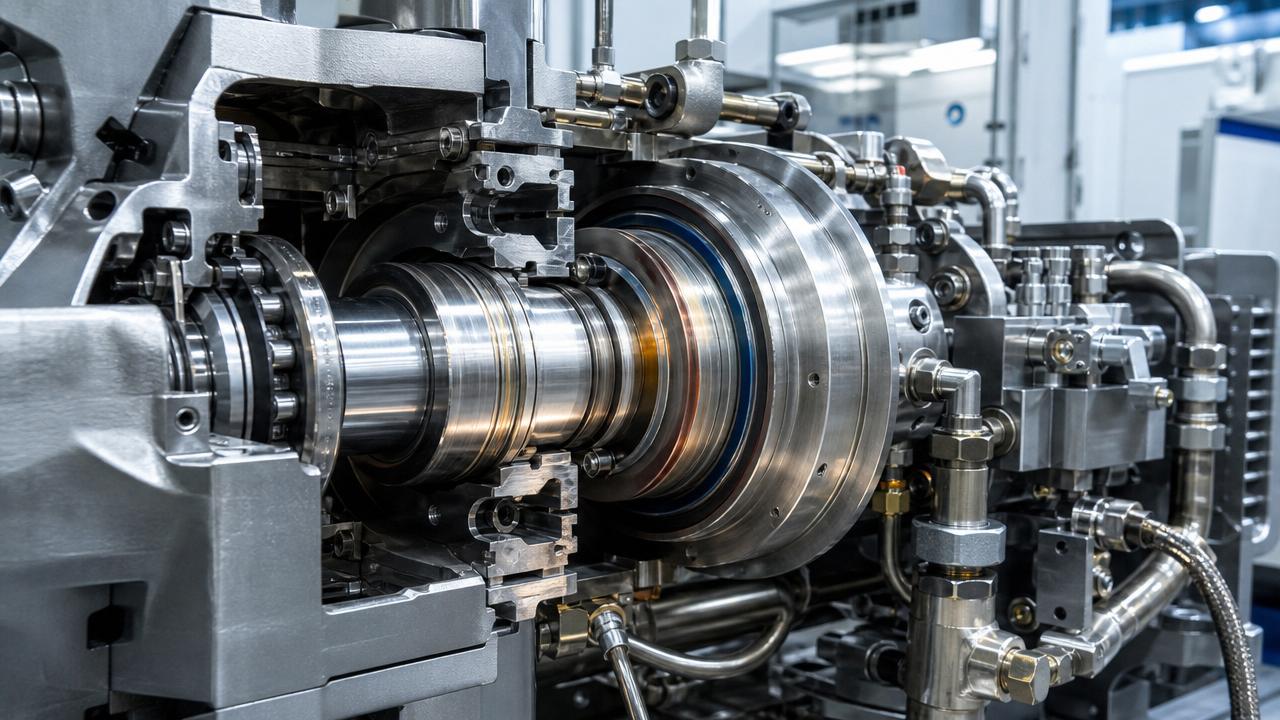
Understanding seal pressure-velocity (PV) limits is critical when evaluating reliability in high-load, high-speed systems.
Once seal pressure-velocity (PV) limits are exceeded, frictional heat rises quickly.
That heat can trigger wear, leakage, distortion, and sudden shutdowns.
In complex industrial environments, seal pressure-velocity (PV) limits influence safety, uptime, maintenance intervals, and lifecycle cost.
This FAQ-style guide explains when PV becomes a real risk, how to judge it, and what to check before failure appears.
What are seal pressure-velocity (PV) limits?
Seal pressure-velocity (PV) limits describe the combined stress created by contact pressure and sliding speed at the sealing interface.
Pressure increases contact load.
Velocity increases friction events and heat generation.
When both rise together, the seal material may cross a thermal or mechanical threshold.
A simple PV value often multiplies pressure by velocity.
However, practical seal pressure-velocity (PV) limits depend on more than one formula.
Material grade, lubrication, shaft finish, counterface hardness, temperature, and duty cycle all affect the real limit.
That is why two seals with similar dimensions may perform very differently.
In broad industrial use, PV is not only a design number.
It is a failure prediction tool.
Why does PV matter more than pressure alone?
Many sealing systems survive high pressure at low speed.
They may also survive high speed at low load.
The risk grows when both conditions occur together.
That combination accelerates surface breakdown, transfer film instability, and thermal softening.
For dynamic sealing, seal pressure-velocity (PV) limits often become the most useful screening criterion.
When do seal pressure-velocity (PV) limits become a real operational risk?
PV becomes dangerous when operating heat cannot be removed as fast as it is created.
That imbalance is common in dry-running, poorly lubricated, or intermittent overload conditions.
The earliest warning is rarely catastrophic leakage.
More often, it appears as rising torque, surface scoring, smell, discoloration, or unstable performance.
Common situations where PV risk rises
- Start-stop cycles with repeated boundary lubrication.
- High-speed shafts under unexpected pressure spikes.
- Dry gas, vacuum, or chemically aggressive media.
- Poor heat dissipation due to compact equipment layouts.
- Surface roughness outside the intended sealing window.
In advanced systems, seal pressure-velocity (PV) limits may be reached during short transients rather than steady operation.
That detail matters in semiconductor tools, high-frequency motion stages, valve actuation, and test rigs.
A component can look acceptable on paper, yet fail during acceleration, emergency cycling, or thermal ramp-up.
What happens after the limit is crossed?
The sequence is usually predictable.
First, contact temperature rises.
Then the material softens, deforms, or loses dimensional stability.
Friction may increase further, creating a thermal feedback loop.
Finally, wear debris, leakage paths, or face damage appear.
At that stage, system contamination and unplanned maintenance often follow.
Which applications are most sensitive to seal pressure-velocity (PV) limits?
Not every machine sees the same PV exposure.
Dynamic and precision systems are usually more sensitive than static joints.
The most vulnerable applications combine high speed, high load, tight tolerances, and low margin for leakage.
Typical high-risk environments
- Rotary equipment with compact thermal envelopes.
- UHP valves and control assemblies with rapid cycling.
- Mechanical seals in abrasive or low-lubricity fluids.
- Pneumatic and piezoelectric actuators with frequent motion reversals.
- RF and microwave systems requiring stable environmental containment.
In these cases, seal pressure-velocity (PV) limits affect more than seal life.
They also affect calibration stability, particle control, pressure retention, and compliance with internal quality standards.
Where downtime costs are high, a conservative PV margin is usually justified.
Are static gaskets affected the same way?
Usually no.
Static gaskets are more influenced by compression set, creep, chemical attack, and flange stress distribution.
Seal pressure-velocity (PV) limits mainly matter for dynamic contact interfaces where rubbing and heat generation occur.
How can seal pressure-velocity (PV) limits be evaluated before selection?
A reliable evaluation starts with the full duty profile, not only nominal pressure and speed.
Short spikes, reversals, dwell times, ambient temperature, and media properties all matter.
Published material data is useful, but it should not be treated as a universal guarantee.
Key checks before approving a seal design
- Calculate operating PV for normal, peak, and transient conditions.
- Review material temperature capability at the contact surface, not only ambient conditions.
- Confirm lubrication regime and cooling path.
- Check shaft finish, hardness, and runout.
- Compare laboratory PV ratings with actual duty cycle severity.
- Validate through testing when contamination, vacuum, or extreme media are involved.
In critical projects, seal pressure-velocity (PV) limits should be reviewed alongside leakage criteria, wear allowance, and maintenance strategy.
This avoids choosing a material that survives chemically but fails thermally.
Quick comparison table for field decisions
What are the most common mistakes when interpreting seal pressure-velocity (PV) limits?
A common mistake is assuming one PV number applies to every operating condition.
In reality, seal pressure-velocity (PV) limits are conditional.
They often depend on test method, mating surface, media, and exposure time.
Frequent interpretation errors
- Using catalog PV values without checking test conditions.
- Ignoring startup friction and transient overloads.
- Focusing on pressure while underestimating speed-related heating.
- Assuming a chemically resistant polymer is automatically PV resistant.
- Skipping validation because average operating values look safe.
Another mistake is treating PV as independent from hardware quality.
Surface finish, alignment, concentricity, and installation quality strongly influence real-world performance.
If those factors drift, effective seal pressure-velocity (PV) limits can drop sharply.
How can risk be reduced when seal pressure-velocity (PV) limits are close?
If operation sits near the threshold, risk reduction should focus on heat, friction, and load distribution.
Often, a small design change creates a large reliability gain.
Practical mitigation options
- Select a material with higher thermal stability and wear resistance.
- Reduce contact pressure through profile or geometry changes.
- Lower sliding speed during startup or peak events.
- Improve lubrication delivery or cooling efficiency.
- Upgrade shaft finish and counterface hardness.
- Test the seal in representative transient conditions.
Where compliance, contamination control, or mission reliability are critical, extra PV margin is usually more economical than reactive maintenance.
That principle applies across advanced flow control, sealing, actuation, and energy systems.
Final FAQ summary table
Seal pressure-velocity (PV) limits are not a minor catalog detail.
They are a practical indicator of thermal stress, wear potential, and sealing reliability.
When PV is reviewed early, failure risk drops and design confidence improves.
The next step is straightforward.
Map actual pressure, speed, media, and temperature conditions, then compare them against validated seal pressure-velocity (PV) limits under realistic duty cycles.
That approach supports better decisions, longer service life, and fewer surprises in critical systems.
Industry Briefing
Get the top 5 industry headlines delivered to your inbox every morning.