Seal Quench System Efficiency: Hidden Causes of Water Overuse
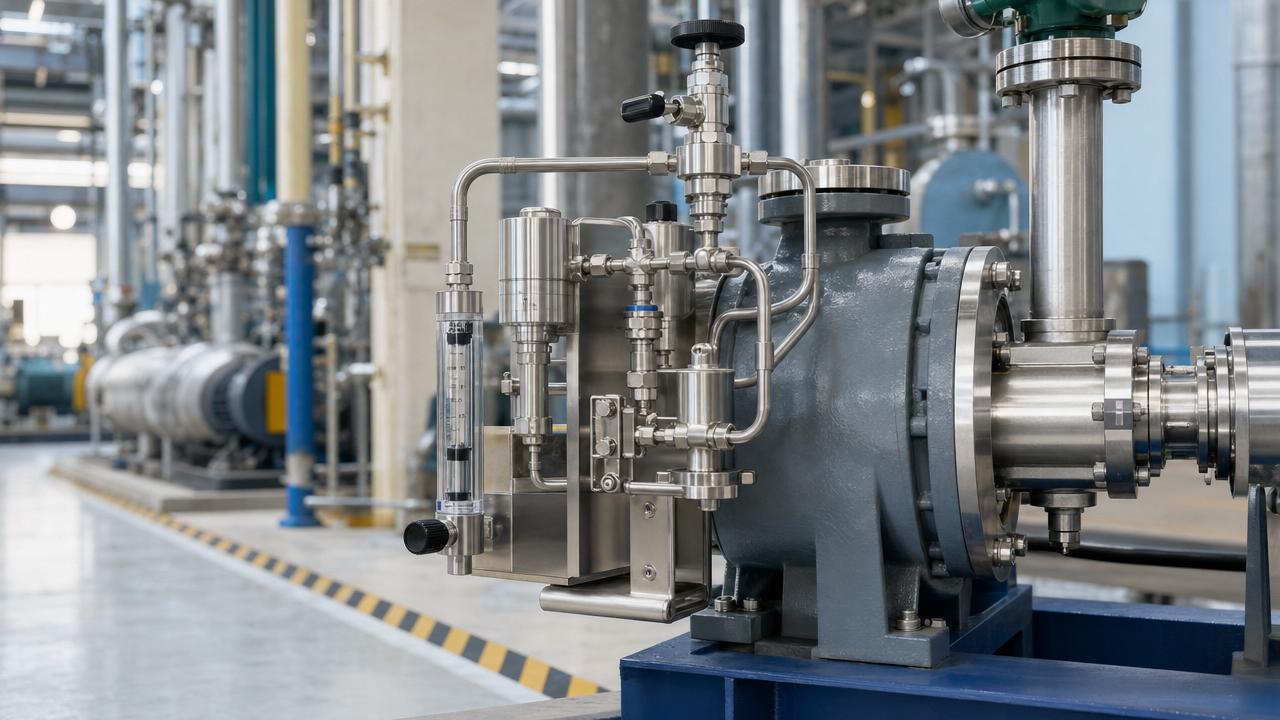
Seal quench system efficiency often declines long before teams recognize a visible failure. In many facilities, rising quench water consumption is accepted as a normal cost of safe seal operation, yet the real causes are frequently hidden in pressure instability, poor instrumentation, oversized flow settings, scaling, or legacy operating routines. For systems where containment reliability, water stewardship, uptime, and compliance all matter, improving seal quench system efficiency is not only a maintenance issue but also a process-performance decision. Understanding where overuse begins helps reduce waste without compromising seal protection.
When high water use is not process demand but a control problem
The first step in evaluating seal quench system efficiency is separating true cooling or flushing demand from avoidable overconsumption. In rotating equipment across chemical processing, power generation, water treatment, food production, and advanced manufacturing support systems, operators may increase quench flow “for safety” when the actual issue is unstable supply pressure or inconsistent valve response. This creates a false sense of protection while masking the root cause.
A quench system should deliver a controlled external fluid environment around the atmospheric side of a mechanical seal. If the quench flow fluctuates, the temptation is to open the valve further. However, a permanently over-open setting lowers seal quench system efficiency because the system consumes more water than needed during normal operation and still may not respond correctly during upset conditions. The result is higher utility cost, scaling risk, and reduced confidence in seal behavior.
Different operating scenes reveal different hidden causes
Seal quench system efficiency does not fail in the same way everywhere. The causes vary by process cleanliness, temperature swings, shut-down frequency, water quality, and the seal support hardware installed around the pump or mixer. Looking at operating scenes helps identify whether the problem is hydraulic, mechanical, procedural, or environmental.
Scene 1: Continuous-duty process lines with stable load but rising water bills
In stable, round-the-clock production lines, rising quench water use usually points to setting drift rather than true thermal load growth. Needle valves may have been opened gradually over months, rotameters may be fouled, and operators may rely on visual confirmation of “some flow” instead of a defined target. In this scene, seal quench system efficiency declines slowly and often goes unnoticed until utility data or sustainability reporting highlights the trend.
Another frequent issue is bypass behavior caused by poor valve authority. If the pressure differential is too high for the selected control device, small adjustments create large changes in flow. That makes stable tuning difficult and drives habitual overfeeding. Here, improving seal quench system efficiency means matching the flow-control component to actual pressure conditions and verifying the operating window with measured data rather than assumptions.
Scene 2: Batch operations with frequent start-stop cycles
Batch systems create a different challenge. Start-up and shutdown events often trigger manual intervention, and quench water is commonly left running longer than necessary before and after each cycle. The excess may seem minor per event, but repeated across multiple assets it becomes a major loss. In this scene, seal quench system efficiency is weakened by operating habit, timing inconsistency, and lack of clear standard work.
Short idle periods also encourage “just keep it on” thinking. Yet if the equipment, seal design, and contamination risk do not require full continuous quench during standby, that practice wastes water and can even promote mineral deposition. Better sequencing logic, interlocks, or timed shutoff routines often restore seal quench system efficiency without changing the seal itself.
Scene 3: Hot service or solids-prone applications
In hot service, slurry handling, or crystallizing media, users may assume high quench flow is always justified. Sometimes it is; often it is not. Excessive external water can cool unevenly, promote deposits at the wrong interface, or dilute visible signs that would otherwise indicate seal distress. In these applications, seal quench system efficiency depends on balancing thermal protection with controlled, purposeful flow.
The key judgment point is whether water is solving the real failure mode. If solids accumulation, vapor flashing, or coking is the concern, simply adding more water may treat symptoms while leaving line routing, nozzle position, seal face condition, or metallurgy unaddressed. A focused review of heat load, contamination pathways, and maintenance history is usually more effective than increasing quench volume.
Scene 4: Facilities using poor-quality utility water
Water quality is one of the most overlooked drivers of poor seal quench system efficiency. Hardness, suspended solids, biofouling potential, and corrosion chemistry can all change how a quench system performs. When passages scale or partially plug, users often compensate by raising the inlet flow. The meter may show acceptable throughput, but actual distribution at the seal is uneven, and total consumption climbs.
This scene is especially common in older sites where support systems evolved over time. Strainers may be undersized, flushing points may be missing, and no one may track pressure drop across the support loop. Improving seal quench system efficiency here requires attention to water treatment, line cleanliness, and maintainability, not just operator adjustment.
How demand differs by scene: a practical comparison
What usually improves seal quench system efficiency fastest
Many sites pursue major hardware changes first, but seal quench system efficiency often improves fastest through basic system discipline. The most effective actions are usually simple, measurable, and tied to a specific scene.
- Define a target flow range for each asset instead of relying on “more is safer.”
- Verify inlet pressure stability during normal load and upset conditions.
- Inspect rotameters, needle valves, strainers, and tubing for fouling, wear, or mismatch.
- Review quench line routing to eliminate dead legs, poor drainage, and inaccessible blockage points.
- Use shutoff timing or interlocks in cyclic service to prevent standby overuse.
- Track water use per seal support point where practical, not only at plant level.
Where technical reliability is critical, integrating support-system checks into seal failure analysis is essential. Seal quench system efficiency should be reviewed alongside leakage trends, bearing condition, vibration events, and maintenance frequency. Water overuse is rarely an isolated utility problem; it often signals that the broader containment environment is drifting away from design intent.
Common misjudgments that keep water use high
Several persistent assumptions prevent improvement. One is believing that if a seal is not visibly leaking, the quench system must be healthy. Another is assuming that the original commissioning setting remains valid after process changes, pump modifications, or water supply variations. Both ideas hide weak seal quench system efficiency because they focus on immediate symptoms instead of controlled performance.
A third mistake is treating all seals in a plant the same. Different shaft speeds, product temperatures, seal face materials, and contamination risks create very different quench needs. Standardizing every point to a single “safe” flow setting usually guarantees overuse somewhere. Good practice does not mean identical settings; it means consistent evaluation criteria.
Another overlooked point is instrumentation confidence. If local indicators are hard to read or known to be inaccurate, manual overcompensation becomes normal behavior. In that environment, seal quench system efficiency cannot be sustained because decisions are based on uncertainty. Even basic upgrades in visibility and measurement repeatability can reduce unnecessary water significantly.
A practical next step for reducing water overuse without increasing risk
A strong starting point is a short scene-based audit of the highest-use or most failure-sensitive assets. For each point, document actual quench flow, inlet pressure, water quality condition, duty pattern, and the reason the current setting exists. Then compare that evidence with seal history and process conditions. This approach quickly shows where seal quench system efficiency is limited by habit, hardware condition, or unsupported assumptions.
For organizations managing critical flow and containment systems, the value goes beyond lower water consumption. Better seal quench system efficiency supports more stable sealing behavior, cleaner maintenance decisions, and stronger alignment between reliability engineering and resource performance. When the hidden causes of overuse are addressed systematically, water savings and seal protection no longer compete; they reinforce each other.
Industry Briefing
Get the top 5 industry headlines delivered to your inbox every morning.