How Trade Pressure Is Disrupting High-End Seal Supply
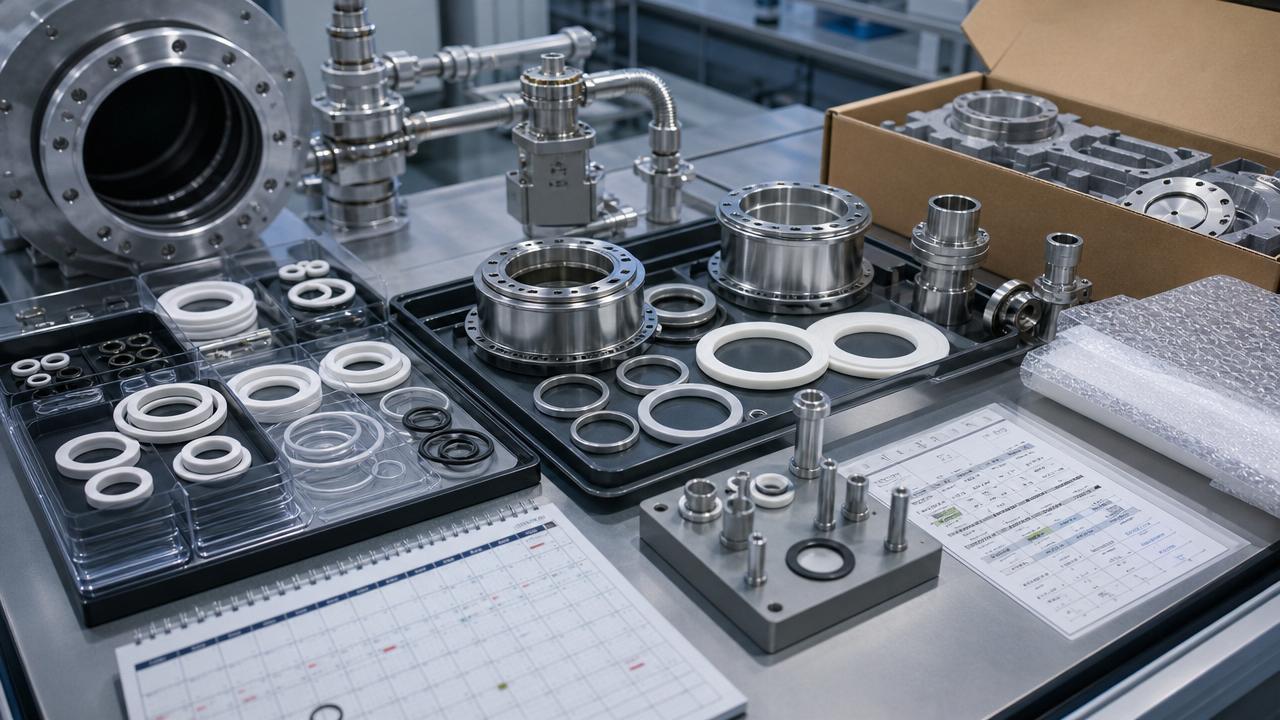
For business evaluators tracking critical component risk, the impact of trade on high-end seal supply is no longer a niche concern but a strategic issue shaping cost, continuity, and compliance. In sectors tied to semiconductor tools, aerospace assemblies, hydrogen systems, medical devices, industrial microwave equipment, and ultra-clean fluid control, sealing performance is not a minor consumable issue. It determines leak integrity, contamination control, uptime, and certification status. As tariffs, export controls, regionalization, and customs friction intensify, the impact of trade on high-end seal supply now affects lead times, validation cycles, approved vendor strategies, and the technical feasibility of substitution.
What does the impact of trade on high-end seal supply actually include?
The phrase covers more than border taxes. In practice, the impact of trade on high-end seal supply includes tariff exposure, export licensing, sanctions risk, country-of-origin restrictions, customs delays, local content requirements, logistics disruption, and reduced access to specialty raw materials such as FFKM compounds, PTFE blends, engineered thermoplastics, spring-energized profiles, and high-purity metal sealing components.
For advanced sealing, these pressures matter because high-end products are rarely interchangeable without consequences. A seal used in a plasma process chamber, cryogenic valve, high-pressure hydrogen manifold, or RF energy system must often meet strict dimensional, thermal, chemical, and outgassing specifications. If trade barriers remove a preferred source, replacement is not a simple commercial switch. It may trigger requalification, design review, process adjustment, and even new regulatory documentation.
This is why the impact of trade on high-end seal supply is different from commodity shortage risk. A standard gasket can sometimes be sourced regionally with limited effect. A perfluoroelastomer seal for corrosive semiconductor chemistry, or a metal C-seal for extreme temperature cycling, may depend on a very small number of qualified suppliers. Trade disruption in that environment compresses availability and expands technical risk at the same time.
Which applications feel the impact of trade on high-end seal supply most strongly?
The effect is most visible where failure tolerance is extremely low and qualification costs are high. Semiconductor manufacturing is a prime example. Chamber seals, valve seats, gas delivery interfaces, and wet process elastomers must resist aggressive media while maintaining particle control and dimensional stability. Even small formulation changes can affect plasma resistance, swelling behavior, and service life.
Hydrogen infrastructure is another exposed segment. Seals in 350 bar and 700 bar systems face permeation, decompression, low-temperature behavior, and compatibility issues that sharply limit acceptable alternatives. The impact of trade on high-end seal supply here is amplified because safety, standards compliance, and field reliability all depend on proven material behavior over time.
Aerospace, defense-adjacent systems, vacuum equipment, pharmaceutical processing, and industrial microwave platforms also carry above-average sensitivity. In these environments, documentation quality, traceability, lot consistency, and export classification can be as important as nominal material grade. A technically similar seal without complete data packages may still be unusable.
A useful way to judge exposure is to ask whether the seal is tied to one or more of the following: validated clean process performance, hazardous media containment, cyclic pressure extremes, strict standards, or long-life service under difficult thermal conditions. When several of these apply, the impact of trade on high-end seal supply becomes materially higher.
How does trade disruption change cost, lead time, and qualification risk?
Cost inflation is the most visible effect, but it is rarely the most damaging. Tariffs can raise direct purchase cost, yet hidden cost often comes from expedited freight, safety stock expansion, engineering test runs, production delay, and document review. In high-specification systems, one delayed seal family can hold up a much larger assembly.
Lead time risk also changes in a non-linear way. A supplier may still quote acceptable production time, but export review, customs inspection, or raw material allocation can add uncertainty that standard planning systems do not capture. This is a core part of the impact of trade on high-end seal supply: uncertainty widens, even before formal shortage appears.
Qualification risk is often underestimated. If a seal source changes, technical teams may need to confirm compression set behavior, media compatibility, particle generation, outgassing profile, hardness consistency, and dimensional repeatability. For dynamic seals, friction, wear, and cycle life may also require verification. In some sectors, any change can trigger a partial revalidation of the end system. That extends the business effect far beyond unit price.
Can high-end seals be replaced easily when trade pressure blocks supply?
Usually not. The most common mistake is to compare only material family names. Two FFKM seals may differ significantly in filler system, purity level, compression behavior, plasma resistance, thermal endurance, and extractables profile. The same is true for PTFE-based seals, graphite-reinforced solutions, and spring-energized designs. Trade-related substitution decisions that ignore these details can create latent field failures.
A practical review should cover five dimensions: material chemistry, process compatibility, geometry and tolerance, certification package, and manufacturing consistency. If any one of these is weak, the replacement may introduce new risk. The impact of trade on high-end seal supply often becomes severe when a substitute is physically available but technically incomplete.
- Check whether the alternative uses an equivalent compound, not just the same polymer family.
- Confirm pressure, temperature, vacuum, and media exposure ranges under real operating cycles.
- Review lot traceability, cleanliness controls, and change notification policy.
- Validate dimensions and compression behavior in the actual gland or sealing interface.
- Assess whether the new source affects standards, export status, or customer approvals.
In other words, substitution is possible, but only through structured engineering judgment. A low-friction switch in one application may become a costly failure in another. That is why the impact of trade on high-end seal supply should be assessed at application level, not only at SKU level.
How should organizations evaluate suppliers under rising trade pressure?
A strong evaluation framework looks beyond price and nominal availability. It should map where compounds are mixed, where parts are molded or machined, where finishing occurs, and where final documentation is issued. Some supply chains appear diversified but still depend on a single restricted precursor, tooling location, or test lab.
It is also important to separate dual-source from dual-region. Two approved brands may still manufacture in the same trade corridor. In that case, the impact of trade on high-end seal supply remains concentrated. True resilience usually requires geographic separation, transparent sub-tier visibility, and a pre-agreed protocol for formulation or source change.
The following checklist helps build a more realistic sourcing view:
What are the most effective ways to reduce the impact of trade on high-end seal supply?
The best mitigation strategy combines engineering readiness with commercial planning. First, identify seals that are technically critical rather than simply expensive. A low-cost but qualification-sensitive component can create outsized disruption. Second, classify parts by substitution difficulty, not just annual spend. Third, build a shortlist of validated or nearly validated alternatives before disruption escalates.
Where possible, standardize interfaces so more than one seal family can be considered without redesigning the assembly. In new product development, design-for-substitution can materially reduce future exposure. This does not mean relaxing specifications. It means avoiding unnecessary over-customization when equivalent validated geometries or materials already exist.
Documentation discipline also matters. Maintain updated material declarations, performance data, dimensional records, validation reports, and source mapping in one controlled repository. When trade conditions change, the speed of response often depends less on technical possibility than on whether evidence is easy to retrieve and compare.
For organizations following advanced sealing markets through technical intelligence platforms such as G-PCS, the practical advantage lies in connecting component-level data with standards, application severity, and source-region exposure. That integrated view helps translate the impact of trade on high-end seal supply into actionable decisions around stocking, approval sequencing, and risk-adjusted sourcing.
Quick FAQ: how to interpret current supply signals?
The impact of trade on high-end seal supply is no longer a background sourcing variable. It is a cross-functional issue affecting engineering continuity, compliance confidence, and asset reliability. The strongest response is not panic buying or broad supplier replacement, but a disciplined review of critical seal applications, source concentration, qualification readiness, and documentation strength. By treating advanced sealing as a strategic control point rather than a simple line item, it becomes possible to reduce disruption, preserve technical integrity, and make better-informed next-step decisions before market pressure hardens into operational loss.
Industry Briefing
Get the top 5 industry headlines delivered to your inbox every morning.