Global Supply Chain Updates for Low-Maintenance Solutions
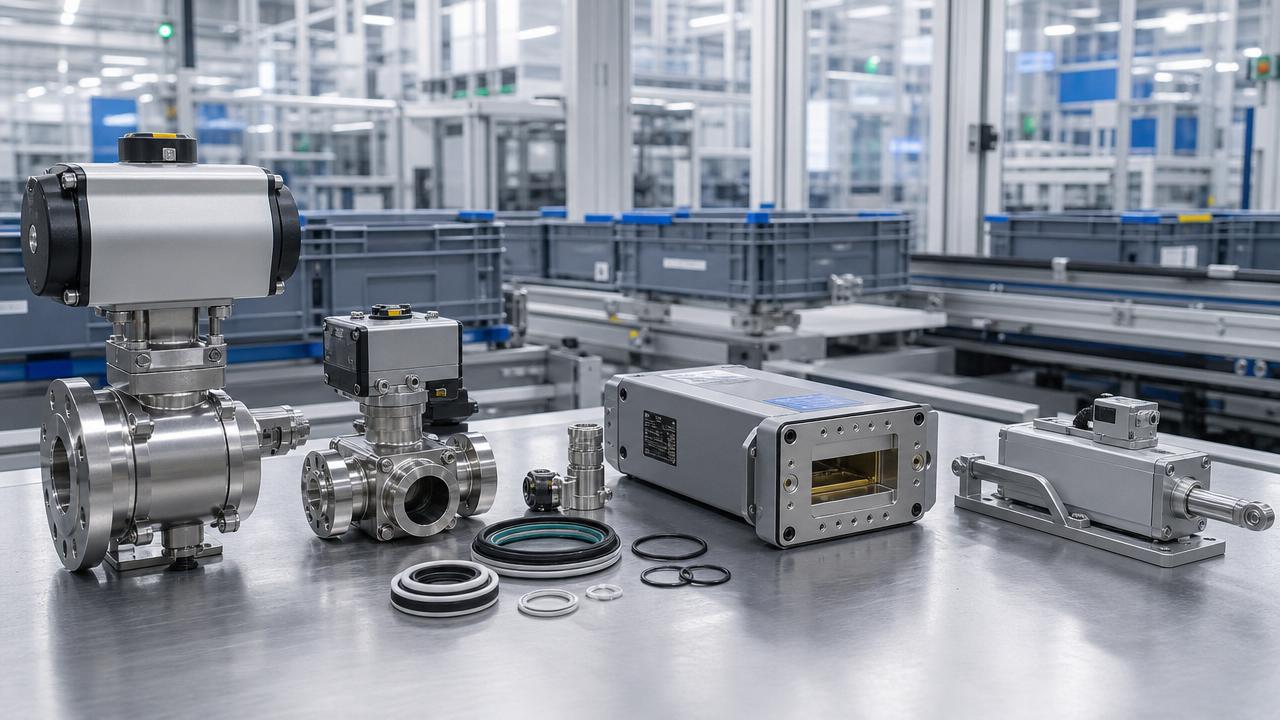
Global Supply Chain Updates for Low-Maintenance Solutions in Critical Industrial Scenarios
In today’s high-stakes industrial landscape, global supply chain updates for low-maintenance solutions are strategic signals for resilience, cost control, and technical continuity.
Precision control, specialized sealing, RF energy, actuation, and extreme-environment systems now depend on faster sourcing intelligence and stronger component validation.
When downtime carries safety, yield, or mission risk, low-intervention design becomes more than convenience. It becomes operational protection.
This article explains how global supply chain updates for low-maintenance solutions affect scenario planning, specification choices, and long-cycle reliability decisions.
Why Scenario Judgment Matters Before Selecting Low-Maintenance Systems
Low-maintenance requirements differ sharply across pressure control, sealing, microwave energy, pneumatic motion, and polymer gasket applications.
A hydrogen valve, an FFKM seal, and a piezoelectric positioner may all reduce service frequency, but they fail differently.
That is why global supply chain updates for low-maintenance solutions must be read through operating scenarios, not only delivery schedules.
A delayed alloy, coating, ceramic, elastomer, or control chip can change the best-fit design path for an entire subsystem.
Scenario judgment connects supply availability with failure modes, service intervals, standards compliance, and installed-base compatibility.
It also prevents a common mistake: selecting a durable component that cannot be supported consistently across regions.
Scenario 1: Ultra-High Pressure Control Where Service Access Is Limited
Ultra-high pressure systems demand components that maintain containment under repeated cycling, vibration, and aggressive media exposure.
Hydrogen-compatible 700bar valves, precision regulators, and isolation assemblies are especially sensitive to metallurgy and seal traceability.
Global supply chain updates for low-maintenance solutions matter here because minor material substitutions can alter permeation, embrittlement, and fatigue behavior.
The core judgment point is not only pressure rating. It is validated endurance under the actual duty cycle.
For remote installations, choose assemblies with documented cycle testing, compatible spare kits, and regional availability of certified service parts.
- Check ISO, API, or application-specific pressure test documentation.
- Confirm hydrogen exposure data when applicable.
- Prioritize seal designs with predictable replacement intervals.
- Avoid isolated custom parts without second-source strategy.
Scenario 2: Semiconductor and Vacuum Processes Requiring Clean Sealing
Clean processes need low-maintenance sealing that resists outgassing, particle generation, plasma exposure, and thermal cycling.
FFKM, PTFE composites, metal seals, and precision gaskets must be judged by contamination risk, not only chemical resistance.
Global supply chain updates for low-maintenance solutions influence this scenario through resin availability, cure capacity, and qualification lead times.
If an approved compound becomes constrained, unplanned substitutions may introduce yield loss or longer chamber recovery.
The best response is pre-qualification of equivalent compounds under SEMI-aligned cleanliness and thermal performance requirements.
Low-maintenance sealing in this setting depends on stable polymer chemistry, controlled fabrication, and verified batch consistency.
Scenario 3: Industrial Microwave and RF Energy With Continuous Operation
Industrial microwave and RF systems often operate under thermal stress, high voltage, and strict energy delivery requirements.
Magnetrons, RF windows, waveguides, circulators, cooling hardware, and shielding materials must remain stable over long duty periods.
Global supply chain updates for low-maintenance solutions affect this field through ceramic supply, rare materials, and power electronics availability.
A low-maintenance RF energy solution should reduce tuning drift, thermal degradation, and unexpected module replacement.
The key judgment point is integration stability. Component reliability must match cooling design, shielding geometry, and control response.
When supply risk rises, modular replacement strategy becomes valuable. It supports fast recovery without redesigning the energy chain.
Scenario 4: Extreme-Environment Mechanical Seals Under Chemical or Thermal Stress
Mechanical seals in corrosive, abrasive, cryogenic, or high-temperature conditions require careful balance between hardness, elasticity, and lubrication behavior.
Carbide faces, carbon materials, spring alloys, coatings, and secondary seals each bring different supply and qualification risks.
Global supply chain updates for low-maintenance solutions are crucial when specialty alloys or engineered carbons face extended lead times.
The right decision starts with the failure driver: chemical attack, dry running, thermal shock, shaft movement, or solids ingress.
Low-maintenance design should use proven face pairings, stable elastomer grades, and seal plans suited to the process environment.
For critical rotating assets, evaluate whether cartridge seals, monitoring ports, or flush plan upgrades reduce intervention frequency.
Scenario 5: Precision Actuation Where Response Stability Defines Uptime
Pneumatic, piezoelectric, and hybrid actuators support positioning, dosing, alignment, sorting, and micro-motion control across many industries.
Low-maintenance value comes from repeatability, friction control, clean motion, and stable control electronics.
Global supply chain updates for low-maintenance solutions matter when sensors, piezo ceramics, precision bearings, or driver electronics become constrained.
A component may appear interchangeable, yet its hysteresis, response delay, or thermal drift may change process quality.
Scenario-fit selection should compare load profile, control bandwidth, ambient cleanliness, lifetime cycles, and calibration effort.
For high-throughput systems, service reduction often depends on predictive diagnostics and standardized actuator interfaces.
Different Scenario Requirements for Low-Maintenance Decisions
This comparison shows why global supply chain updates for low-maintenance solutions must be tied to scenario-specific failure consequences.
The same shortage can create minor inconvenience in one system and unacceptable downtime in another.
Scenario Adaptation Recommendations for Resilient Sourcing
A practical adaptation plan should connect technical qualification with sourcing resilience before disruption appears.
- Map each critical component to its failure mode and maintenance interval.
- Identify materials with single-region or single-process dependence.
- Create approved alternatives using documented test evidence.
- Align spare strategies with real service access conditions.
- Track standards updates affecting ISO, SEMI, API, or MIL-SPEC compliance.
Global supply chain updates for low-maintenance solutions should also inform lifecycle planning, not only emergency purchasing.
Long-life components require long-life data management, including qualification records, batch history, and field performance feedback.
When an alternative is considered, compare total intervention cost, not only unit price or delivery date.
Common Scenario Misjudgments That Increase Maintenance Burden
One frequent misjudgment is treating low-maintenance components as universally interchangeable across similar-looking systems.
Pressure, temperature, cleanliness, media compatibility, duty cycle, and control precision can completely change suitability.
Another mistake is relying on nominal standards compliance without checking the exact test scope and operating assumptions.
Global supply chain updates for low-maintenance solutions can expose hidden weaknesses in over-customized parts or undocumented substitutions.
A third overlooked point is maintenance ecosystem readiness. A durable part still needs compatible tools, training, and spare availability.
- Do not assume equivalent polymers behave equally in plasma or solvents.
- Do not replace precision actuators without checking control loop effects.
- Do not select RF modules without thermal validation.
- Do not extend seal service intervals without field evidence.
Action Path: Turning Supply Chain Signals Into Low-Maintenance Advantage
The strongest next step is a scenario-based component review across containment, flow, energy, and motion systems.
Start with assets where unplanned intervention causes the highest production, safety, compliance, or recovery cost.
Then connect global supply chain updates for low-maintenance solutions with qualification status, alternative sources, and standards evidence.
G-PCS supports this process through data-driven intelligence focused on containment logic, flow control, sealing reliability, and specialized industrial components.
Use global supply chain updates for low-maintenance solutions as a decision framework, not a background report.
When scenario needs, technical validation, and sourcing resilience align, low-maintenance systems become measurable strategic assets.
Industry Briefing
Get the top 5 industry headlines delivered to your inbox every morning.