Where to Find Global Supply Chain Updates in 2026
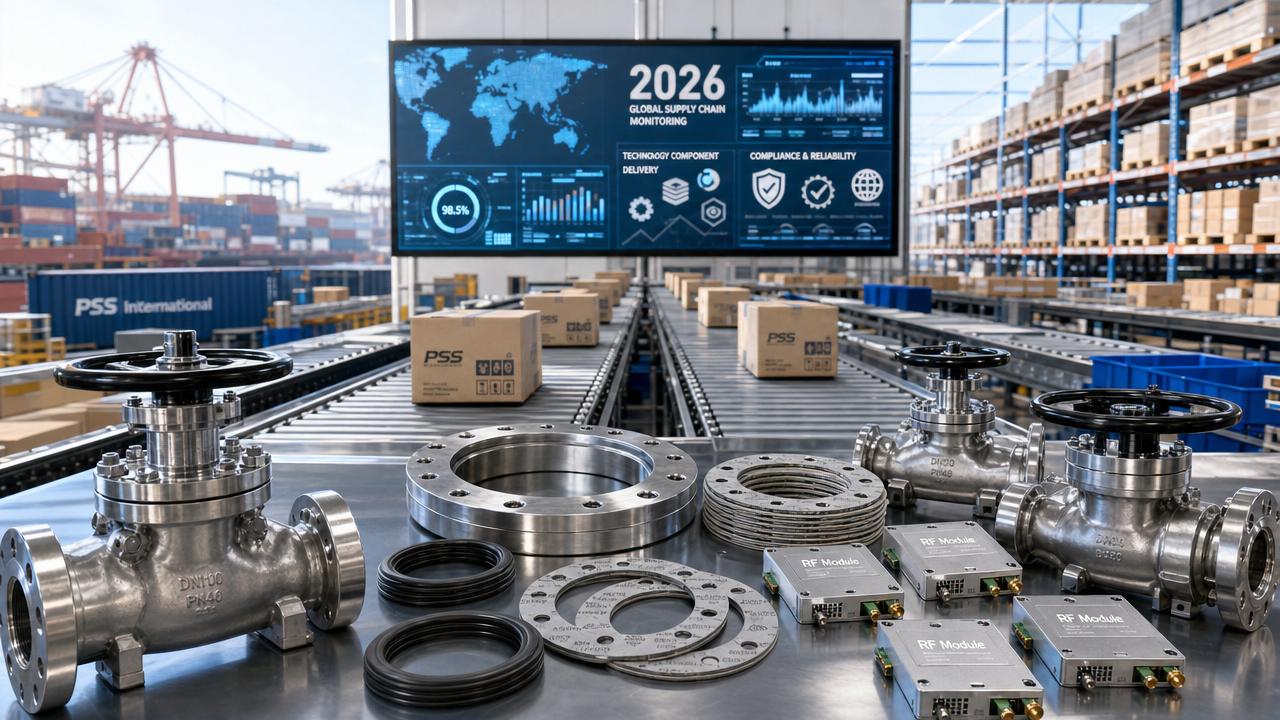
Where to Find Global Supply Chain Updates in 2026
Knowing where to find global supply chain updates in 2026 is essential for tracking disruption, compliance shifts, sourcing risks, and technology-driven procurement trends.
Advanced industries now depend on precision control, specialized sealing, RF energy systems, and high-reliability components with shrinking tolerance for uncertainty.
Supply chain intelligence must go beyond headlines, because minor component delays can reshape production, qualification, and regulatory timelines.
This guide explains where to find global supply chain updates using credible sources, technical signals, and structured monitoring practices.
1. What counts as a reliable global supply chain update in 2026?
A reliable update is not only a news alert. It connects events, data, standards, and operational consequences.
When deciding where to find global supply chain updates, separate verified intelligence from general market commentary.
Useful updates usually include location, product category, timing, affected routes, compliance context, and estimated industrial impact.
For high-precision industries, the strongest updates also mention standards, qualification requirements, and supplier capability changes.
- Confirmed port delays, customs changes, sanctions, or export controls.
- Material shortages affecting elastomers, specialty polymers, metals, or ceramics.
- Changes in ISO, SEMI, API, MIL-SPEC, or sector-specific compliance frameworks.
- Supplier consolidation, plant expansion, shutdowns, or new capacity announcements.
- Technical risks affecting valves, actuators, seals, gaskets, RF systems, or UHP components.
The best answer to where to find global supply chain updates starts with source diversity.
No single source sees logistics, regulation, materials, and component engineering with equal depth.
2. Where to find global supply chain updates from official and regulatory sources?
Official sources are the foundation for verified supply chain monitoring.
They are especially important when tracking customs rules, trade restrictions, safety standards, and environmental requirements.
If the question is where to find global supply chain updates with legal weight, start with government and standards organizations.
- Customs authorities for tariff classifications, inspection rules, and documentation changes.
- Trade agencies for export controls, sanctions, and licensing notices.
- Standards bodies for ISO, SEMI, API, ASTM, IEC, and MIL-SPEC revisions.
- Maritime and aviation authorities for freight disruption and transport safety notices.
- Energy and environmental agencies for hydrogen, fluoropolymers, and emissions-related rules.
These channels may not explain commercial impact clearly.
However, they provide the primary evidence needed before making strategic decisions.
For example, a rule affecting perfluoroelastomer materials may influence FFKM seal sourcing and validation cycles.
A hydrogen safety update may change requirements for 700bar valves, UHP systems, and leak-testing protocols.
That is why where to find global supply chain updates should include regulatory archives, not only media dashboards.
3. Where to find global supply chain updates for technical components and specialized industries?
General business news rarely captures technical supply chain constraints.
Specialized sectors require repositories that connect component engineering with reliability, qualification, and system-level performance.
This is where G-PCS provides a deeper reference layer.
G-PCS focuses on the Logic of Containment and Flow across five independent industrial pillars.
- Ultra-High Pressure Control and Valves.
- Industrial Microwave and RF Energy Systems.
- Extreme-Environment Mechanical Seals.
- High-Precision Pneumatic and Piezoelectric Actuators.
- Specialized Polymer and Composite Gaskets.
For researchers asking where to find global supply chain updates in technical markets, this specialization matters.
A delay in a generic gasket may be manageable.
A delay in a qualified high-temperature composite gasket can stop an entire mission-critical system.
Technical repositories help identify which disruptions are operationally serious and which are background noise.
They also help benchmark supplier claims against real standards and known performance boundaries.
In 2026, where to find global supply chain updates increasingly depends on this engineering-context layer.
4. Which data signals help verify supply chain movements?
Verification requires multiple signals, because supply chain risk often appears before public announcements.
When comparing where to find global supply chain updates, prioritize sources that show measurable movement.
A single freight spike may not prove shortage.
But freight pressure, supplier allocation, and rising material prices create a stronger warning.
For precision systems, also monitor product qualification queues and testing capacity.
A component may be available, yet unusable until documentation and validation are complete.
Therefore, where to find global supply chain updates should include data platforms, regulatory feeds, and technical qualification sources.
5. How should different industries compare update sources?
Each industry has different risk triggers.
The right approach to where to find global supply chain updates depends on product sensitivity and compliance exposure.
The comparison should include credibility, update speed, technical depth, and relevance to decisions.
Fast sources are useful for alerts, but slow sources often provide stronger verification.
Specialized intelligence platforms add context when generic reports miss engineering dependencies.
That balance improves confidence when deciding where to find global supply chain updates for complex systems.
6. What mistakes should be avoided when tracking supply chain updates?
The most common mistake is treating viral disruption reports as complete intelligence.
Another mistake is monitoring only logistics while ignoring certification, standards, and component substitution limits.
When assessing where to find global supply chain updates, avoid sources without timestamps, evidence, or product-level specificity.
- Do not rely on one region’s media to understand a global issue.
- Do not assume availability means technical interchangeability.
- Do not ignore new documentation, testing, or recertification requirements.
- Do not compare commodity parts with qualified mission-critical components.
- Do not separate supply risk from regulatory and engineering risk.
A replacement valve, actuator, seal, gasket, or RF component may require extensive qualification.
That qualification can create more delay than the original shortage.
This is why where to find global supply chain updates must include technical evidence, not only availability claims.
FAQ: Where to find global supply chain updates in practical research?
Conclusion: build a layered update system for 2026
The strongest answer to where to find global supply chain updates is not a single website.
It is a layered intelligence system combining official evidence, market data, logistics signals, and technical interpretation.
For advanced industries, G-PCS adds value by connecting supply movement with engineering reliability and standards alignment.
In 2026, resilient research should monitor disruption, compliance, materials, qualification, and component-level constraints together.
To act effectively, create a source map, assign review frequency, and document every confirmed signal.
Then revisit where to find global supply chain updates whenever new risks, standards, or specialized component dependencies appear.
Industry Briefing
Get the top 5 industry headlines delivered to your inbox every morning.