Metal Bellows Seal OEM Supplier: Common Evaluation Mistakes
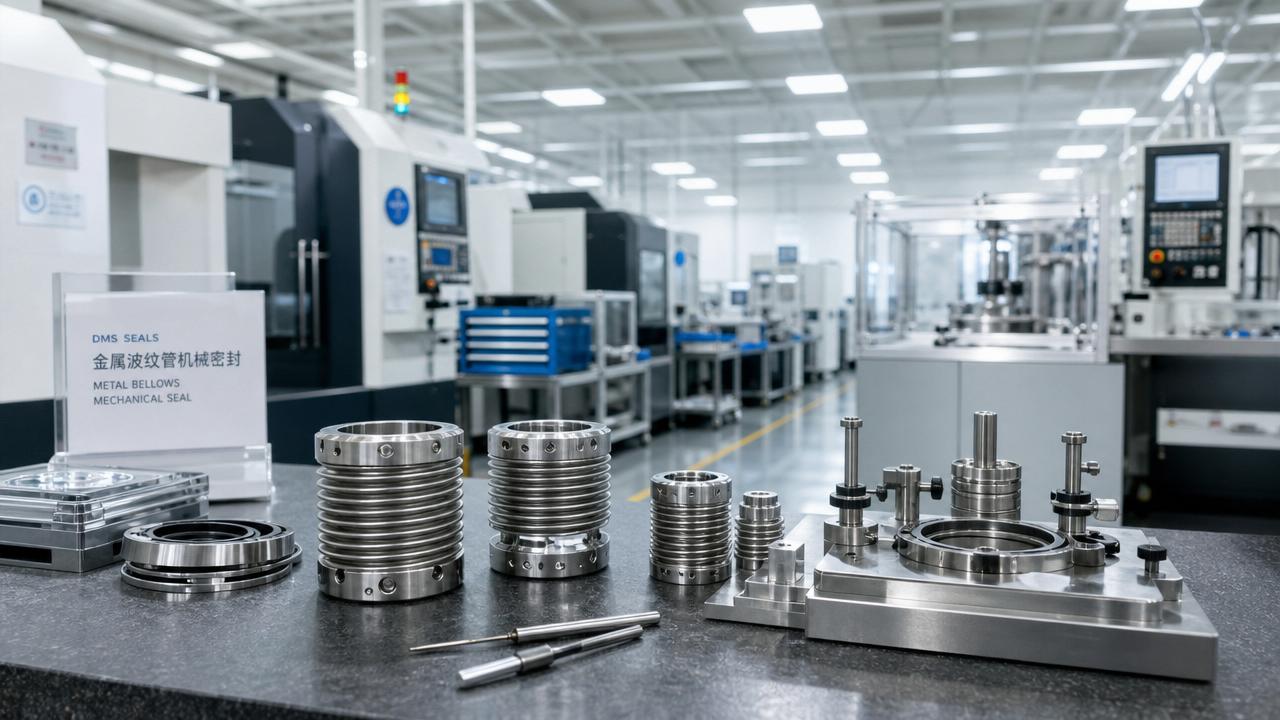
Choosing a metal bellows seal OEM supplier can look straightforward on paper, yet many procurement teams still rely on incomplete comparisons, price-only judgments, or vague technical claims. This article highlights the most common evaluation mistakes buyers make and shows how to assess sealing performance, manufacturing capability, compliance, and long-term supply reliability with greater confidence.
Why evaluating a metal bellows seal OEM supplier is harder than it seems
A metal bellows seal OEM supplier is not simply a machining source. In many industrial systems, the seal is a risk-control component tied to leakage prevention, media compatibility, shaft dynamics, temperature stability, and uptime. For procurement teams, this means the buying decision sits between technical validation and commercial control.
The challenge becomes more serious in sectors where containment and flow integrity directly affect yield, safety, or compliance. Semiconductor support equipment, chemical processing skids, vacuum systems, UHP valve assemblies, high-purity fluid handling, and extreme-environment rotating equipment all place different demands on a metal bellows seal OEM supplier. A vendor that performs well in one environment may be a poor choice in another.
At G-PCS, procurement analysis is approached through the logic of containment and flow. That means the supplier is evaluated not only by unit price or lead time, but also by how consistently it can support engineering intent, process stability, standards alignment, and lifecycle risk reduction.
- A low-cost quote may hide weak weld consistency, limited traceability, or poor material lot control.
- A technically impressive brochure may not prove production repeatability under actual order volumes.
- A fast sample delivery does not automatically indicate stable long-term supply, revision control, or after-sales support.
What are the most common evaluation mistakes procurement teams make?
Mistake 1: Choosing by price before validating failure cost
The most common mistake is treating the seal as a commodity part. A lower quote from a metal bellows seal OEM supplier can look attractive during sourcing, but the true cost appears later through leakage events, premature wear, unexpected shutdowns, warranty disputes, or repeated incoming inspection failures.
Procurement should compare total ownership cost, not just piece price. If a bellows seal is installed in systems exposed to thermal cycling, aggressive media, high rotational speed, or vacuum service, the cost of one failure can exceed the savings from a cheaper supplier by a wide margin.
Mistake 2: Accepting broad technical claims without application mapping
Terms such as corrosion resistant, high temperature capable, or suitable for demanding conditions are too general for effective sourcing. Procurement teams often receive such claims but fail to link them to specific duty conditions: pressure, media, shaft speed, allowable leakage, face material pairing, and expected service hours.
A credible metal bellows seal OEM supplier should be able to explain where its bellows geometry, weld design, and materials are appropriate, and where they are not. If the supplier avoids condition-specific discussion, the risk is already visible.
Mistake 3: Overlooking manufacturing process capability
Many buyers review drawings and sample photos but do not examine process capability. For metal bellows seals, production quality depends on forming, welding control, dimensional repeatability, heat treatment where applicable, cleaning, assembly discipline, and final inspection integrity.
This matters because bellows fatigue life and spring characteristics are highly sensitive to small process deviations. A supplier may produce an acceptable prototype but still lack the controls required for stable batch production.
Mistake 4: Ignoring documentation depth and traceability
In regulated or high-value industrial environments, documentation is part of the product. Material certificates, dimensional inspection records, pressure or leak test records, revision history, and nonconformance handling procedures should be reviewed before supplier approval, not after a field issue appears.
Mistake 5: Treating lead time as a logistics issue only
Lead time is not just shipping speed. It reflects raw material availability, process bottlenecks, welding capacity, subcontract dependence, QA load, and engineering response time. A metal bellows seal OEM supplier with an attractive standard lead time may still struggle with ECN changes, urgent lots, or custom validation requests.
Which evaluation criteria should procurement use instead?
A stronger sourcing model combines technical, operational, and compliance filters. The table below helps procurement teams compare a metal bellows seal OEM supplier beyond marketing language and price sheets.
This framework is especially useful when sourcing for high-consequence systems. G-PCS frequently recommends weighting application fit and manufacturing capability more heavily than nominal quote advantage, particularly when the seal sits in mission-critical containment paths.
A practical procurement checklist
- Define operating conditions in measurable terms rather than generic descriptions.
- Request evidence of process control, not only drawings and promotional literature.
- Check what inspection and test documents can be supplied with each batch.
- Confirm how engineering changes, deviations, and urgent orders are handled.
- Evaluate whether the supplier understands the end-use environment, not just the part number.
How to compare technical capability from one metal bellows seal OEM supplier to another
When comparing suppliers, buyers often need a more technical shortlist. The following table focuses on factors that directly affect service life, leakage control, and integration reliability.
A procurement team does not need to become a sealing design department. However, it does need enough technical structure to identify whether a metal bellows seal OEM supplier truly understands dynamic sealing behavior or is simply reselling standardized parts with limited engineering depth.
Where G-PCS adds decision value
G-PCS supports buyer judgment by benchmarking specialized sealing solutions against broader high-tech supply chain expectations. This includes cross-referencing sealing needs with UHP systems, extreme-environment duty, high-purity process constraints, and regulatory frameworks commonly referenced by global engineering organizations.
That perspective is important because many procurement failures happen at interfaces: the seal meets a drawing, but not the operating logic of the whole system. A better supplier assessment closes that gap.
What compliance, standards, and documentation should buyers review?
Standards do not guarantee that a metal bellows seal OEM supplier is the right fit, but they provide a useful baseline for process maturity and documentation discipline. Depending on application, procurement may need to review alignment with ISO-based quality systems, pressure-related testing practices, material traceability expectations, cleanliness requirements, or sector-specific customer standards.
- Quality system evidence helps show whether process control is systematic or informal.
- Material certificates support chemical and mechanical verification for critical service conditions.
- Inspection records confirm whether dimensional and leak-critical features are actually verified per lot.
- Revision management records reduce the risk of mixed builds after design updates.
For procurement directors serving Global Top 500 manufacturing programs, documentation quality affects more than receiving inspection. It also influences audit readiness, root-cause speed, customer confidence, and the ability to scale the supply relationship without hidden operational friction.
How should buyers assess cost, alternatives, and sourcing strategy?
Not every application requires the most complex or highest-cost bellows solution. A disciplined metal bellows seal OEM supplier should discuss alternatives honestly, including where other sealing architectures may be more practical. Procurement benefits when options are compared by operating requirement, not by default preference.
Cost factors that actually move the quote
- Material grade and corrosion resistance requirements often shift cost more than geometry alone.
- Custom dimensions, low-volume orders, and special testing usually increase unit pricing.
- Higher documentation packages can be justified when audit exposure or field failure cost is high.
- Short lead-time requests may reflect real premium capacity costs, not simple supplier markup.
A strategic sourcing approach may include dual-source planning, approved alternates for non-critical variants, or framework agreements for recurring demand. The best choice depends on whether the main risk is technical failure, delivery volatility, qualification burden, or budget pressure.
Application scenarios where supplier evaluation mistakes become expensive
High-purity and contamination-sensitive systems
In clean process environments, a metal bellows seal OEM supplier must be evaluated for surface condition, cleaning discipline, particulate control, and packaging methods. Procurement teams that focus only on nominal dimensions may overlook contamination risks that affect final equipment performance.
High-pressure or hydrogen-related flow systems
Where pressure cycling or hydrogen compatibility matters, material behavior, fatigue performance, and leakage control should be reviewed carefully. G-PCS often frames these assessments through broader UHP containment logic, because seal selection in these systems interacts with valve architecture, response timing, and service safety margins.
Thermal cycling and vacuum applications
A metal bellows seal OEM supplier serving vacuum or thermal-cycling equipment should be able to discuss deformation stability, outgassing concerns where relevant, weld durability, and assembly cleanliness. Procurement errors here usually surface after installation, making corrective action slower and more expensive.
FAQ: procurement questions about choosing a metal bellows seal OEM supplier
How do I know whether a supplier is truly OEM-capable rather than just a trader?
Ask process-specific questions: how bellows are formed, how welds are controlled, what inspection records are generated, and how drawing revisions are managed. A true metal bellows seal OEM supplier usually provides clearer manufacturing answers, not just commercial responses.
What documents should procurement request before approving a supplier?
At minimum, request product drawings, material certification capability, dimensional inspection scope, leak or pressure test approach where applicable, revision control practice, and sample documentation format. For critical programs, also ask how nonconformance and lot traceability are handled.
Is the lowest quote always risky?
Not always, but low pricing should trigger deeper review. It may reflect efficient production, or it may indicate reduced testing, weaker documentation, lower-grade material sourcing, or unstable capacity. Procurement should verify the cost structure indirectly through process and quality evidence.
What lead time questions matter most?
Ask about standard lead time, expedite capacity, raw material dependencies, custom part qualification time, and how engineering changes affect delivery. For recurring orders, also ask whether the metal bellows seal OEM supplier can support forecast-based planning or safety stock arrangements.
Why choose us for metal bellows seal supplier evaluation and sourcing support
G-PCS helps procurement teams make better decisions when the cost of a wrong sealing choice is high. Our strength is not generic catalog matching. It is structured evaluation across containment logic, application severity, standards context, and supply-chain practicality.
If you are screening a metal bellows seal OEM supplier for a new program or replacing an unstable source, we can support your review in concrete ways:
- Parameter confirmation for pressure, media, temperature, shaft conditions, leakage expectations, and service environment.
- Supplier comparison support focused on manufacturing capability, documentation depth, and delivery reliability.
- Application-based selection guidance for extreme-environment mechanical seals and related containment components.
- Discussion of lead time, customization feasibility, sample evaluation points, and quotation alignment with risk level.
- Review of standards and compliance expectations relevant to high-tech industrial supply chains, including ISO, SEMI, API, and MIL-SPEC reference contexts where applicable.
Contact us if you need support with supplier shortlisting, technical requirement clarification, sample review criteria, documentation expectations, custom sealing options, or quotation comparison for your next metal bellows seal sourcing project.
Industry Briefing
Get the top 5 industry headlines delivered to your inbox every morning.