Bellows Mechanical Seal Wholesale: Where Cost Cutting Goes Wrong
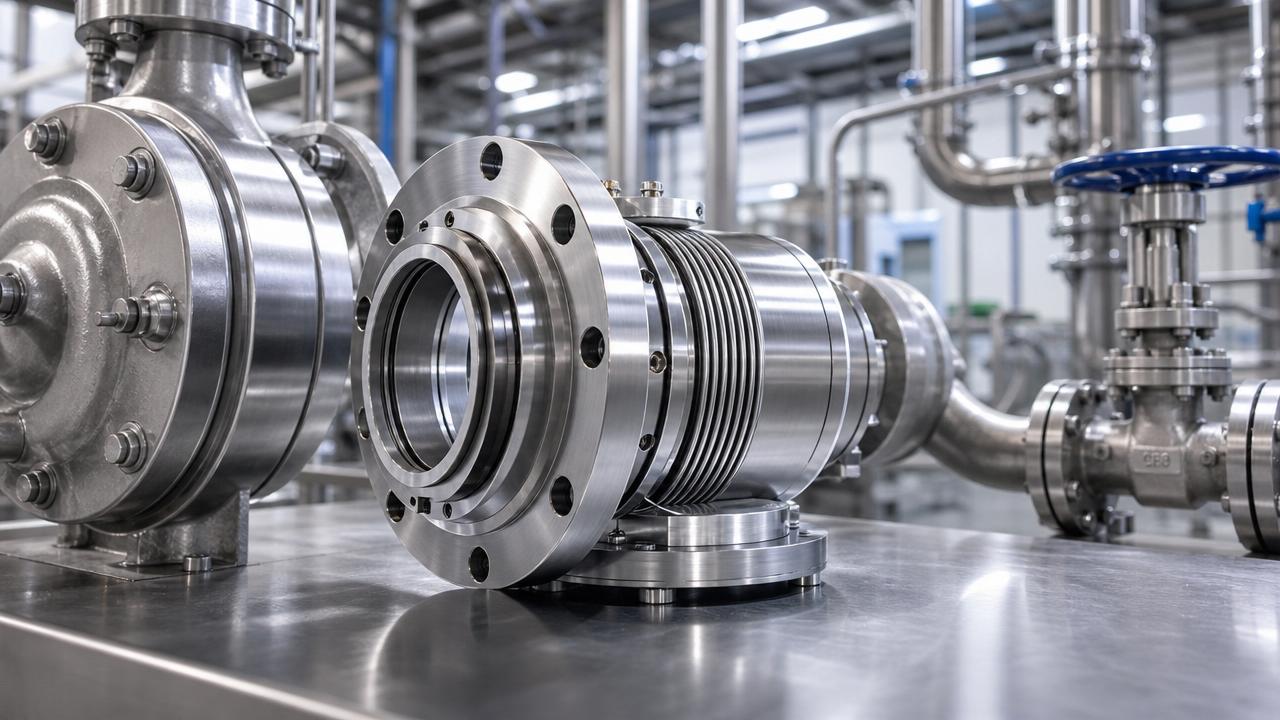
Bellows mechanical seal wholesale can look like an easy path to lower unit costs, but for business evaluators, the real risk often hides in lifecycle failure, compliance gaps, and unplanned downtime. In high-stakes industrial systems, the cheapest sourcing decision can quickly become the most expensive. This article examines where cost cutting goes wrong and how to assess wholesale seal options with greater technical and commercial discipline.
Why the Market Is Reassessing Bellows Mechanical Seal Wholesale
A clear shift is underway in industrial sourcing. In the past, many buyers approached bellows mechanical seal wholesale as a volume negotiation exercise: compare quotations, reduce per-piece price, and push lead times down. Today, that logic is under pressure. More procurement teams are being asked to justify not only purchase cost, but also reliability exposure, maintenance frequency, system cleanliness, media compatibility, and regulatory traceability.
This change is especially visible in sectors where containment and flow integrity are critical. Semiconductor support systems, chemical processing skids, hydrogen handling assemblies, pharmaceutical utilities, high-speed rotating equipment, and advanced energy platforms all face tighter performance windows. In these settings, a seal is no longer a minor commodity. It is a control point for uptime, safety, emissions, and asset protection.
As a result, business evaluators are seeing a new pattern: wholesale offers that look attractive in spreadsheets often create hidden exposure once installed. The issue is not that low-cost sourcing always fails. The issue is that cost cutting often happens in the wrong layer of decision-making, before technical suitability is fully verified.
The Strongest Trend Signals Behind This Change
Several market signals explain why bellows mechanical seal wholesale decisions are receiving more executive attention. First, industrial buyers are operating under greater uptime pressure. Spare capacity is tighter, shutdown windows are shorter, and maintenance teams are expected to do more with fewer disruptions. A seal failure that once caused an inconvenience may now trigger a major commercial loss.
Second, engineering specifications are becoming more demanding. Higher rotational speeds, more aggressive media, thermal cycling, dry-run sensitivity, vacuum exposure, and stricter leakage expectations all increase the consequence of specification shortcuts. Bellows designs, whether metal bellows or elastomer bellows variants depending on application context, require more precise matching to process conditions than many price-driven buyers assume.
Third, compliance and audit requirements are becoming harder to ignore. Procurement directors and technical reviewers increasingly need material certifications, dimensional consistency, manufacturing traceability, and confidence in test procedures. In global supply chains, especially where API, ISO, SEMI, or customer-specific standards apply, wholesale sourcing without documentation discipline can create downstream rejection risk.
Key market signals and what they mean
Where Cost Cutting Usually Goes Wrong
The most common mistake in bellows mechanical seal wholesale is treating all dimensional matches as functional equivalents. A seal that fits mechanically may still be wrong for pressure fluctuation, shaft movement, thermal distortion, media chemistry, or particulate conditions. Wholesale buyers under deadline pressure may assume interchangeability where there is none.
Another failure point is material simplification. To reach a lower price, suppliers may substitute bellows alloys, secondary sealing materials, spring metallurgy, or face combinations that are acceptable on paper but weak in the actual operating environment. For example, a lower-grade elastomer can harden, swell, or crack under chemical exposure. A less suitable face pair can accelerate wear under intermittent dry conditions. These are not abstract engineering details; they are direct cost drivers.
A third issue is inconsistent manufacturing quality across batches. In wholesale purchasing, the buyer often assumes that one approved sample represents the entire lot. But if process control is weak, lot-to-lot variation in flatness, weld integrity, surface finish, balance, or concentricity can undermine field performance. The lower the incoming inspection discipline, the higher the operational uncertainty.
Finally, business evaluators often underestimate the organizational cost of failure. A poor bellows mechanical seal wholesale decision affects more than maintenance spend. It can burden procurement with emergency buys, quality teams with failure analysis, production teams with downtime, and management with customer delivery risk. Cost cutting goes wrong when only the invoice is measured.
What Is Driving Buyers Toward Better Evaluation Standards
The shift in sourcing behavior is not only technical. It is also financial and strategic. As industrial systems become more specialized, the cost of interruption rises faster than the cost of components. This changes procurement logic. Instead of asking, “How low can the unit price go?” leading organizations now ask, “What is the risk-adjusted cost of this source?”
Digital maintenance practices are also changing expectations. With better failure tracking, procurement teams can no longer hide behind low purchase prices if repeat failures are visible in service records. Data transparency links sourcing choices to reliability outcomes more directly than before.
In parallel, supplier qualification is becoming a stronger competitive differentiator. Buyers increasingly value vendors that can discuss application parameters, not just offer stock. In bellows mechanical seal wholesale, technical support, material expertise, dimensional consistency, and test evidence now influence commercial credibility.
Primary drivers behind the new evaluation model
Who Feels the Impact Most
Not every organization experiences the risks of bellows mechanical seal wholesale in the same way. For business evaluators, it helps to identify which internal roles carry the heaviest consequences.
Procurement teams face the first-line pressure because they must balance cost targets with technical adequacy. Engineering teams absorb the consequences of specification mismatch. Maintenance teams deal with replacement frequency, installation complications, and unexpected leakage. Quality and compliance teams face the burden of proving material integrity and source control. Senior management ultimately sees the effect in delivery performance, warranty exposure, and operational stability.
This is why the wholesale decision has moved from a simple purchasing task to a cross-functional judgment call. In advanced industrial environments, seals sit at the intersection of engineering precision and commercial risk.
How to Judge Wholesale Offers More Rigorously
A stronger evaluation model for bellows mechanical seal wholesale starts with application segmentation. Buyers should not treat all seal purchases the same. Critical service points need deeper qualification than low-consequence utility positions. This allows commercial flexibility without exposing the most sensitive systems.
Second, evaluators should ask for operating-envelope evidence rather than generic claims. Pressure, temperature, media, speed, shaft movement, runout tolerance, expected cycle pattern, and cleaning regime all shape real performance. A supplier that cannot discuss these variables with confidence is offering price, not assurance.
Third, incoming quality control should be matched to business risk. High-volume purchasing without lot verification is only safe when supplier process capability is proven. For more critical applications, buyers should consider sample validation, documentation checks, and failure trend review before expanding order volume.
Fourth, total cost of ownership should be formalized. This includes replacement interval, labor for installation, seal support systems, collateral equipment wear, contamination risk, and production loss. In many cases, the “expensive” source becomes the economical one once the full operating horizon is considered.
A practical decision framework for business evaluators
What to Watch Next in Bellows Mechanical Seal Wholesale
Looking ahead, several developments are likely to shape the market. One is deeper segmentation between commodity sealing supply and application-engineered wholesale support. Buyers will increasingly separate low-risk replenishment purchases from seals used in extreme-environment, high-purity, or safety-sensitive systems.
Another likely direction is more documentation-led competition. Suppliers that can support traceability, material verification, and performance consistency will gain trust faster than those competing on price alone. For sectors with demanding reliability frameworks, paperwork quality will increasingly signal manufacturing quality.
There is also a growing expectation for technical collaboration earlier in the sourcing cycle. Instead of waiting for field failures, more buyers will involve engineering review before finalizing bellows mechanical seal wholesale contracts. That changes the conversation from reactive replacement to preventive qualification.
Strategic Guidance for Companies Evaluating Supply Options
For companies reviewing bellows mechanical seal wholesale options today, the most useful shift is mental rather than procedural: stop viewing cost reduction as the same thing as value creation. In many industrial systems, value comes from controlled risk, stable operation, and predictable maintenance outcomes.
A sound next step is to classify current seal spend by consequence of failure, then compare suppliers using a weighted scorecard that includes technical fit, documentation quality, consistency, service capability, and total operating cost. This approach protects budget discipline while reducing the chance of false savings.
If an organization wants to understand how current market changes may affect its own sourcing model, it should focus on a few practical questions: Which installed assets are most sensitive to seal failure? Where are undocumented substitutions entering the supply chain? Which suppliers can support application-level discussion instead of only transactional pricing? And where does the current procurement process still reward the lowest quote more than the lowest risk?
Those questions reveal the real lesson behind bellows mechanical seal wholesale. Cost matters, but in advanced industrial decision-making, cost without context is not savings. It is deferred exposure. The organizations that adapt fastest will be the ones that treat seals not as minor consumables, but as critical reliability components within a broader containment and flow strategy.
Industry Briefing
Get the top 5 industry headlines delivered to your inbox every morning.