Bellows Mechanical Seal Wholesale: Where Lower Price Can Backfire
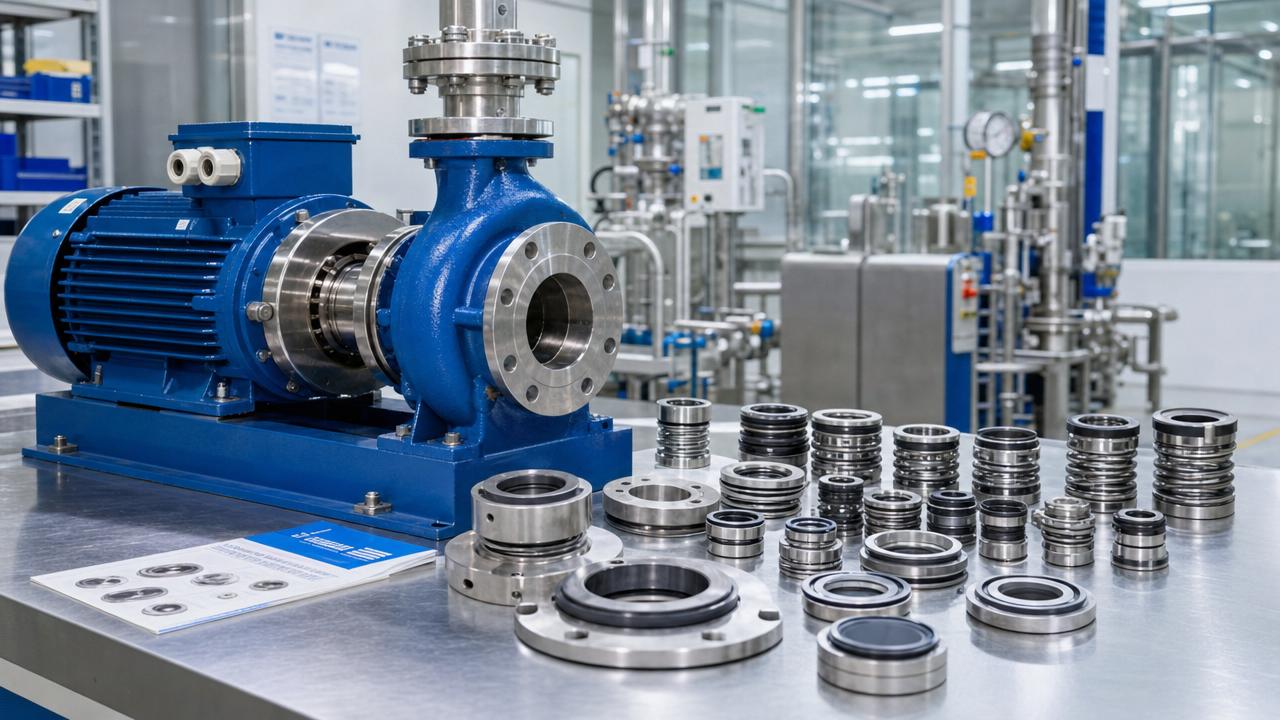
Bellows mechanical seal wholesale options often appear attractive on paper: lower unit pricing, simplified sourcing, and the promise of immediate budget relief. For financial approvers, however, the cheapest quote is rarely the cheapest decision. In sealing applications tied to pumps, mixers, compressors, vacuum systems, or process-critical rotating equipment, a low-cost seal can create expensive consequences through unplanned downtime, repeat maintenance, product loss, warranty disputes, and compliance exposure.
The core financial question is not whether wholesale purchasing reduces price. It often does. The real question is whether the selected supplier and seal design reduce total cost of ownership across service life, failure risk, replacement frequency, and operational disruption. In many industrial environments, one premature failure can erase the savings from an entire bulk order.
For readers responsible for approving spend, reviewing supplier proposals, or balancing cost control with operational reliability, the smartest procurement decision is usually not based on the lowest unit price. It is based on the lowest lifecycle cost with acceptable risk. That is where a disciplined evaluation of bellows mechanical seal wholesale sourcing becomes essential.
What Financial Approvers Are Really Trying to Avoid
When procurement teams bring a wholesale seal quotation for approval, the discussion often centers on visible numbers: unit price, order volume, lead time, and payment terms. But finance leaders are usually evaluating something larger. They want to avoid hidden cost multipliers that do not show up in the initial purchase order.
In practice, the major financial risks tied to low-cost bellows seals include production downtime, emergency maintenance labor, collateral equipment damage, leakage-related safety issues, inventory write-offs, quality losses, and repeat procurement cycles. If a seal fails in a critical process, the cost impact can move far beyond maintenance and directly affect revenue continuity.
This is especially true in systems where containment integrity matters: chemical handling, pharmaceutical production, semiconductor support systems, food processing, high-purity lines, and thermal or corrosive operating conditions. In these cases, a seal is not a minor consumable. It is a control point for uptime, compliance, and asset protection.
That is why the most relevant search intent behind “bellows mechanical seal wholesale” is not simply finding the cheapest supplier. It is understanding how to buy in volume without accepting disproportionate technical or financial risk.
Why Lower Unit Price Can Backfire So Easily
A low quotation may reflect legitimate scale efficiency, but it may also signal compromises that are hard to detect during commercial review. Bellows mechanical seals are performance-dependent components. Their value depends on metallurgy, elastomer compatibility, manufacturing tolerance, face material pairing, weld integrity in metal bellows designs, spring performance, and consistency across production lots.
If a supplier reduces price by relaxing tolerances, using lower-grade alloys, simplifying quality control, or substituting less suitable face materials, the seal may still look comparable on a datasheet. The financial problem appears later, when field performance does not match expected service life.
Cheap seals tend to backfire in four common ways. First, they fail sooner than forecast, increasing replacement frequency and labor cost. Second, they perform inconsistently across batches, making maintenance planning unreliable. Third, they raise the probability of process leakage or contamination. Fourth, they create procurement inefficiency by forcing reactive reordering and supplier switching.
For financial approvers, this means the purchase decision should never be isolated from operating context. A seal used in a benign utility system is one thing. A seal used in thermal cycling, corrosive media, dry running risk, vacuum service, or sterile process environments is entirely different. The cost of being wrong rises sharply with system criticality.
The Hidden Cost Structure Behind a “Cheap” Seal
The most effective way to evaluate bellows mechanical seal wholesale proposals is to break the decision into cost layers. Unit cost is only the first layer. The second layer is installation and replacement labor. The third is equipment downtime. The fourth includes product loss, contamination, or environmental leakage. The fifth is supplier management cost caused by inconsistent quality or unresolved claims.
Consider a simplified example. A wholesale supplier offers a seal at 20% less than an established source. On a bulk order, the savings look substantial. But if the lower-cost seal shortens average service life by even a few months, maintenance intervals accelerate. If just one failure causes an unplanned shutdown, the labor, lost production, and emergency response can exceed the full annual savings from the cheaper purchase.
This is why finance teams should ask for lifecycle economics, not only procurement economics. A purchasing win that becomes an operations loss is not a true saving. In many industrial environments, direct material cost is a small fraction of total system cost. The more critical the equipment, the less meaningful unit price becomes on its own.
Another hidden cost is inventory distortion. If low-cost seals have inconsistent fit or performance, maintenance teams may increase safety stock to protect against field failures. That ties up working capital and offsets the apparent benefit of wholesale pricing. Cheap sourcing can therefore increase both operating expense and inventory burden at the same time.
How to Evaluate Bellows Mechanical Seal Wholesale Offers Beyond Price
Financial approvers do not need to become seal design engineers, but they do need a practical review framework. The goal is to verify whether a lower quote comes from efficient production and strong process control, or from quality risk that has been shifted downstream to the buyer.
Start with application fit. Ask whether the offered bellows seal is specified for the actual pressure, temperature, shaft speed, media chemistry, and duty cycle. A low-cost wholesale seal is not a bargain if it is merely dimensionally compatible but operationally marginal.
Next, review materials in detail. “Equivalent” materials can perform very differently under corrosion, thermal cycling, abrasion, or clean-service requirements. Face combinations, elastomer grade, bellows material, secondary sealing elements, and metal component corrosion resistance all affect service life. Broad descriptions are not enough. Approvers should expect precise material identification.
Then examine manufacturing consistency. A capable supplier should provide evidence of process control, inspection discipline, and batch traceability. This may include dimensional reports, material certificates, leak testing methods, balance testing where relevant, and corrective action procedures. Wholesale volume magnifies the value of consistency. One defective batch can multiply failure events across many assets.
Finally, assess field support. A serious supplier will help validate operating conditions, confirm interchangeability, identify failure causes, and support root-cause analysis if issues arise. Low-price vendors often disappear once product is shipped. For finance, poor support is not a soft issue. It increases the cost and duration of every future problem.
The Supplier Questions That Protect Budget, Not Just Equipment
Before approving a large order, financial decision-makers should ask procurement and suppliers several practical questions. These questions can quickly expose whether a quote is built on reliable value or unstable assumptions.
Ask for expected service life under the intended application, not just generic product capability. Ask what percentage of shipments are subject to final inspection and what nonconformance rate the supplier tracks. Ask whether materials are certified and traceable by lot. Ask what failure analysis support is available if installed seals underperform.
It is also useful to ask for references in similar operating conditions. A seal that works in general water service may not perform in solvents, slurries, vacuum duty, high-purity environments, or thermal shock conditions. Relevant proof is more valuable than broad claims.
For wholesale decisions, ask about batch-to-batch consistency and change control. If the supplier changes subcomponents, face materials, or production methods, how will customers be informed? Silent substitution is one of the most expensive risks in industrial component sourcing because it undermines validation and creates unpredictable field behavior.
Another important question is warranty scope. Many low-cost suppliers offer narrow warranty language that excludes most real-world operating issues. A weak warranty is often a warning sign that the price advantage may not survive actual use.
When Wholesale Purchasing Does Make Sense
None of this means bellows mechanical seal wholesale purchasing is inherently risky. In fact, it can be a highly effective strategy when applied to the right categories and suppliers. Volume buying makes sense when specifications are stable, applications are well understood, supplier quality has been validated, and consumption patterns justify stocking economics.
Wholesale sourcing is especially valuable when an organization standardizes seal configurations across multiple sites or equipment families. Standardization can reduce unit pricing, simplify inventory management, improve maintenance training, and strengthen negotiating power. These are real financial benefits.
However, wholesale buying works best after technical qualification, not before it. The correct sequence is validate performance first, scale ordering second. If a supplier has proven quality, traceability, lead-time reliability, and technical support, then larger orders can lower total cost without increasing operational exposure.
Finance teams should support this distinction. The right policy is not “buy the cheapest” or “avoid wholesale.” It is “buy proven designs in volume from controlled suppliers.” That approach aligns procurement efficiency with reliability outcomes.
A Practical Total Cost of Ownership Model for Approval Decisions
For financial approvers, a simple total cost of ownership model can improve decision quality significantly. Compare suppliers using six categories: purchase price, average service life, replacement labor, downtime impact, failure consequence cost, and inventory carrying cost. This framework turns a technical argument into a financial one.
For example, Supplier A may quote 15% higher than Supplier B. But if Supplier A delivers 40% longer service life, fewer emergency replacements, lower leakage risk, and better lead-time stability, the annualized cost can be materially lower. The cheapest invoice may still be the most expensive line item once operations are included.
It is also wise to assign a risk weighting based on application criticality. In noncritical systems, lower-cost options may be acceptable with monitoring. In high-consequence systems, failure cost should be heavily weighted. This prevents procurement logic for low-risk assets from being wrongly applied to mission-critical equipment.
Approval decisions become more defensible when they are tied to expected financial exposure rather than headline pricing. This is especially important in organizations where finance, procurement, engineering, and maintenance must align across complex assets and regulated operating environments.
Red Flags That Suggest the Quote Is Too Cheap for the Risk
Some warning signs appear repeatedly in problematic sourcing decisions. One is a quote that is dramatically below market without a clear explanation tied to scale, localization, or design simplification approved by engineering. Another is vague technical documentation that avoids precise material specifications or operating limits.
Other red flags include long response times to technical questions, inability to provide traceability, limited quality records, unclear warranty terms, and no meaningful support for failure analysis. If a supplier cannot answer application-specific questions before the sale, they are unlikely to solve problems after installation.
A further warning sign is overreliance on interchangeability language. “Fits existing equipment” is not enough. A seal can fit physically while failing functionally due to face flatness, bellows fatigue resistance, heat management, or media compatibility issues. Mechanical equivalence is not performance equivalence.
For finance leaders, these signs matter because they predict downstream cost volatility. A very low quote with weak technical discipline should be treated not as a discount, but as a risk transfer mechanism.
The Smarter Procurement Position for Finance Teams
The strongest financial position is to require value evidence before approving low-cost wholesale transitions. That does not mean slowing procurement unnecessarily. It means setting practical thresholds for technical validation, supplier documentation, and lifecycle comparison.
A sound approval policy may require pilot use in representative applications, documented material verification, a comparative service-life estimate, and agreement on quality traceability. For critical systems, it may also require engineering sign-off and supplier support commitments. These controls protect budget integrity by reducing avoidable failure costs.
Finance can also encourage category segmentation. Not every seal should be sourced under the same logic. Commodity-like, noncritical applications can tolerate more price competition. Critical containment points should be sourced with stronger quality and performance criteria. This creates a balanced procurement strategy instead of a one-size-fits-all rule.
In other words, cost discipline is not weakened by rejecting the lowest quote. It is strengthened when the organization distinguishes between price reduction and cost reduction. Those are not the same thing.
Conclusion: The Best Wholesale Decision Is the One That Survives Real Operating Conditions
Bellows mechanical seal wholesale purchasing can absolutely support cost control, but only when price savings are grounded in verified quality, application fit, and supplier reliability. For financial approvers, the danger is not wholesale buying itself. The danger is approving a low unit price without understanding the failure cost attached to it.
If the seal operates in a critical system, the economic test should be straightforward: will this sourcing decision lower total cost after accounting for service life, downtime risk, maintenance burden, and compliance exposure? If the answer is uncertain, the cheapest quote is not a savings strategy. It is a gamble.
The most defensible decision is to buy for lifecycle value, not invoice appearance. In the world of industrial sealing, lower price can backfire quickly. But disciplined evaluation can turn wholesale purchasing into a real financial advantage rather than a hidden liability.
Industry Briefing
Get the top 5 industry headlines delivered to your inbox every morning.