2026 Guide to Ultra-High Pressure Control Valves
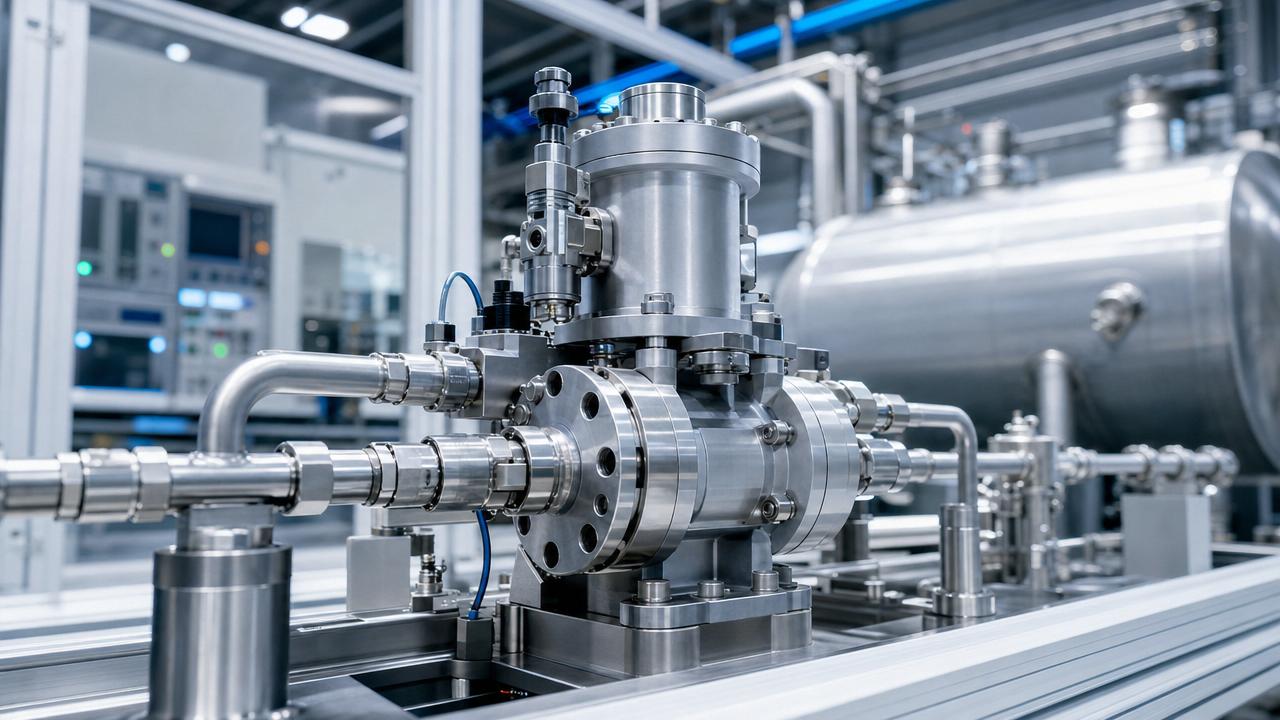
As industries push the limits of containment, response speed, and reliability, ultra-high pressure control valves have become mission-critical components in advanced engineering systems. This 2026 guide explains how ultra-high pressure control valves support precise flow regulation, seal integrity, and lifecycle stability in environments where failure margins are extremely small.
From hydrogen systems and semiconductor gas delivery to test rigs and aerospace platforms, ultra-high pressure control valves sit at the intersection of safety, process control, and compliance. Their selection now depends on more than pressure rating alone. Material science, actuation behavior, leakage class, response speed, and global standards all matter.
Within the broader high-tech supply chain, G-PCS frames these components through the logic of containment and flow. That perspective helps align engineering performance with reliability requirements, qualification demands, and long-term operational risk.
Definition and Core Design Logic of Ultra-High Pressure Control Valves
Ultra-high pressure control valves are engineered to regulate media under very high internal pressures while maintaining stable flow, repeatable positioning, and reliable sealing. They differ from standard valves through tighter tolerances, stronger body structures, and more specialized trim geometry.
In practical terms, ultra-high pressure control valves must resist deformation, seat wear, and dynamic leakage during frequent cycling. Small dimensional shifts can change flow coefficients, closing force, or sealing behavior. Design discipline is therefore central to performance.
Most ultra-high pressure control valves combine several technical elements:
- High-strength body and bonnet construction
- Precision-machined seats and stems
- Metal-to-metal or advanced soft sealing systems
- Actuators matched to force and response requirements
- Leakage control for hazardous or ultra-pure media
The term “ultra-high pressure” may vary by sector. In hydrogen, oil and gas, or laboratory intensification systems, it often refers to pressures far above conventional process instrumentation ranges. Context, medium, and duty cycle determine the real design threshold.
Key Performance Variables
Industry Context and 2026 Evaluation Priorities
The 2026 market for ultra-high pressure control valves is shaped by several converging pressures. Clean energy scaling, semiconductor process complexity, stricter emissions rules, and deeper system automation are increasing performance expectations across industries.
At the same time, high-tech systems demand faster qualification cycles and stronger documentation. A valve is no longer judged only by whether it opens and closes. It must prove traceability, repeatability, and compatibility with digital maintenance strategies.
Current Signals Affecting Selection
- Hydrogen infrastructure is increasing focus on embrittlement resistance and 700 bar system integrity.
- Semiconductor and analytical systems require lower particle generation and tighter contamination control.
- Defense and aerospace programs are demanding validated performance across wider thermal ranges.
- Industrial digitalization is raising demand for feedback-enabled actuation and predictive maintenance data.
- Global compliance scrutiny is making certification and documentation more important in supplier approval.
These shifts make ultra-high pressure control valves part of a broader engineering decision. They influence uptime, qualification speed, and failure investigation exposure. For critical systems, the valve becomes a reliability node rather than a commodity item.
Relevant Standards and Benchmarks
Validation should reference the standards most relevant to the operating environment. Common frameworks include ISO, API, SEMI, and selected MIL-SPEC requirements. Not every standard applies equally, but benchmark alignment improves confidence and comparability.
Business Value and Operational Impact
Well-specified ultra-high pressure control valves reduce hidden operating costs. They limit unplanned downtime, lower contamination events, and improve process repeatability. In regulated environments, they also simplify audit preparation and failure root-cause analysis.
The strongest value often appears where pressure and precision interact. Examples include gas dosing, pressure decay testing, fuel delivery, calibration skids, and high-pressure reactor control. In these cases, small valve instability can create large system-level variation.
For integrated supply chains, component consistency matters as much as peak performance. Ultra-high pressure control valves with predictable documentation, spare strategy, and qualification history help protect deployment schedules and reduce engineering rework.
Where Value Usually Appears
- Lower leakage-related product loss or hazard exposure
- More stable process control during rapid cycling
- Longer maintenance intervals under severe duty
- Faster qualification in standards-driven projects
- Reduced risk of material incompatibility failures
Typical Application Segments and Valve Categories
Not all ultra-high pressure control valves serve the same mission. Selection should begin with media behavior, control objective, and failure consequences. A strong fit in one environment may perform poorly in another.
Material selection is especially important in these segments. Stainless alloys, nickel-based alloys, hardened internals, and engineered polymer seals each carry trade-offs in strength, corrosion resistance, permeability, and contamination risk.
Practical Selection Guidance and Common Risks
A robust review process should examine operating pressure, surge conditions, temperature variation, medium composition, and cycling frequency together. Ultra-high pressure control valves often fail when one of these variables is underestimated during specification.
Selection Checklist
- Confirm maximum working pressure and pressure spike profile.
- Match body, trim, and seal materials to the media and cleaning method.
- Check flow coefficient against minimum and maximum control range.
- Verify leakage class, test method, and acceptance criteria.
- Review actuator force, fail-safe mode, and signal compatibility.
- Request cycle-life, burst, and environmental test data.
- Assess maintenance access, spare parts, and documentation quality.
Common Mistakes
One frequent error is selecting ultra-high pressure control valves by pressure rating only. This can ignore controllability, seat wear, or incompatible sealing materials. Another mistake is overlooking transient conditions such as rapid decompression or thermal shock.
Documentation gaps create a second layer of risk. Missing traceability, undefined cleaning status, or vague test records can delay project approval. In sensitive sectors, incomplete paperwork can be almost as disruptive as technical failure.
Next-Step Evaluation Framework
For 2026 projects, the most useful approach is a structured comparison matrix. Rank ultra-high pressure control valves by pressure margin, leakage performance, material compatibility, response behavior, standards alignment, and total lifecycle support.
Shortlist only those options backed by verifiable test evidence and application-relevant documentation. Then validate them against the real duty profile, not just catalog data. This method reduces selection bias and improves reliability planning.
G-PCS supports this evaluation logic by connecting component engineering with compliance, containment, and operational integrity. In high-consequence systems, better valve intelligence leads to better decisions. That is why ultra-high pressure control valves deserve rigorous technical review before final integration.
Industry Briefing
Get the top 5 industry headlines delivered to your inbox every morning.