Hydrogen Compatible Valves: Key Material Limits Before Selection
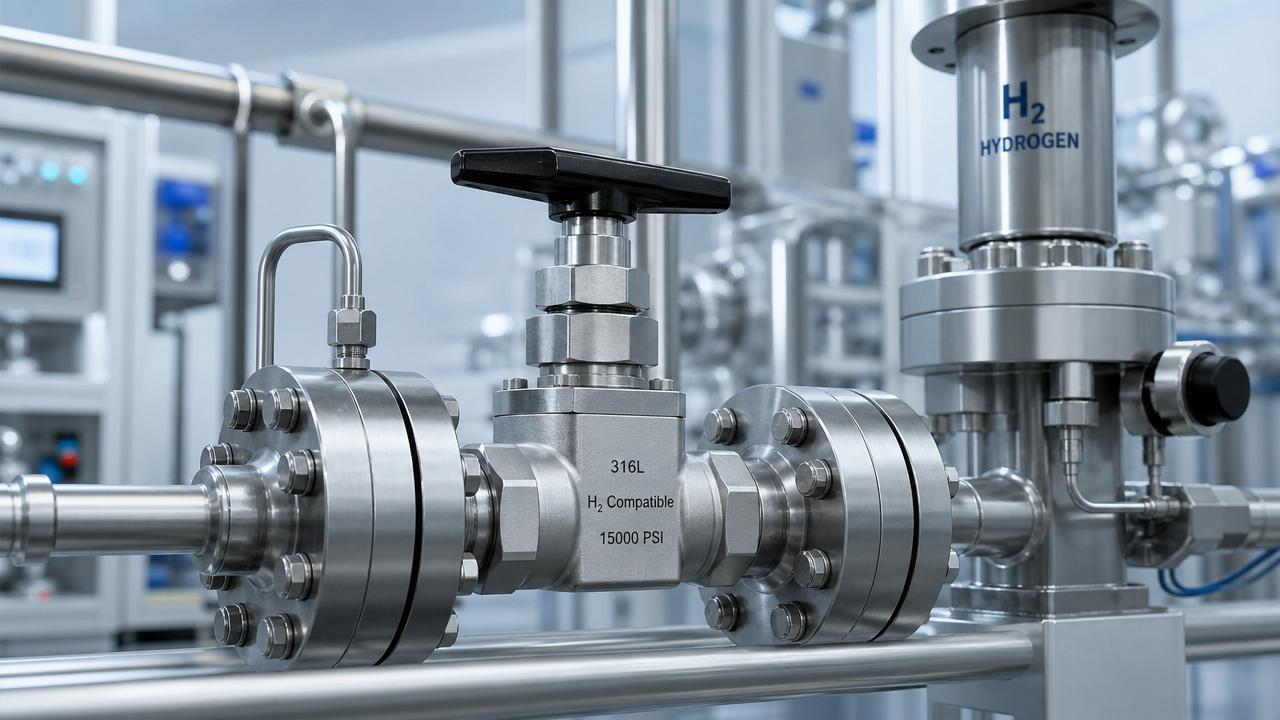
Hydrogen compatible valves are being judged by stricter material limits
Selecting hydrogen compatible valves now requires deeper material review than in conventional gas service.
Hydrogen creates unusual risks through permeation, embrittlement, rapid decompression, and ignition sensitivity.
Small differences in alloy hardness, seal formulation, and surface finish can shift failure probability sharply.
That is why hydrogen compatible valves are increasingly evaluated as system safety components, not simple flow devices.
The key question is not only whether a valve works today.
It is whether its materials remain stable after cycling, pressure swings, thermal shifts, and years of hydrogen exposure.
This article highlights the material limits that should be checked before selecting hydrogen compatible valves for demanding service.
A visible shift is pushing valve selection from pressure rating to material science
Across energy, mobility, refining, electronics, and laboratory infrastructure, hydrogen duty is becoming more varied.
Applications now range from low-pressure blending lines to 350 bar and 700 bar storage, fueling, and test systems.
As operating envelopes expand, standard valve qualification no longer answers the real reliability question.
A valve body may meet pressure design rules, yet still fail through cracking, leakage, or seal degradation.
This is why hydrogen compatible valves are now compared by microstructure, seal chemistry, and long-term compatibility data.
The strongest trend signal is simple.
Material limits are becoming a first-stage screening factor before commercial or dimensional review even begins.
Why the selection benchmark has changed
- Higher hydrogen pressures increase susceptibility to embrittlement and permeation.
- Frequent cycling raises fatigue risk in stems, seats, springs, and threaded joints.
- Low temperatures during fast filling can shift seal behavior outside standard assumptions.
- Purity-sensitive systems need lower outgassing and lower particle generation.
- Audit expectations increasingly reference ISO, API, and hydrogen test evidence.
The main material limits behind hydrogen compatible valves can be mapped clearly
The best way to evaluate hydrogen compatible valves is to isolate the principal material constraints early.
Those limits usually involve metal cracking resistance, seal integrity, leakage pathways, and temperature-driven property changes.
Metal selection remains the first hard gate for hydrogen compatible valves
Metals in hydrogen compatible valves face pressure containment, mechanical loading, and chemical interaction at the same time.
Not all high-strength alloys behave safely in hydrogen service.
As strength rises, hydrogen embrittlement sensitivity often rises too.
Key metal checks before selection
- Confirm the exact alloy, not only the generic stainless category.
- Review hardness limits because excessive hardness can raise cracking risk.
- Check weld zones and heat-affected areas if the valve body is fabricated.
- Request fatigue and pressure cycling evidence in hydrogen, not only inert gas.
- Look at spring materials, stem materials, and fasteners separately.
Austenitic stainless steels are often used, but composition and cold work still matter.
Nickel alloys may improve margins in severe service, yet they add cost and require application-specific review.
Brass and some copper alloys can fit limited duties, but pressure, purity, and cracking concerns must be checked carefully.
For high-pressure hydrogen compatible valves, material traceability is not optional.
It supports failure analysis, compliance, and repeatability across replacement batches.
Seal chemistry is becoming the most underestimated failure boundary
Many hydrogen compatible valves fail first at the soft seal, not the metal body.
Elastomers can absorb hydrogen, swell, harden, crack, or blister after decompression.
The wrong seat or O-ring compound can create leakage even when the valve remains mechanically intact.
What to verify for seals and seats
- Base polymer family, including PTFE, PEEK, FKM, EPDM, HNBR, or FFKM.
- Temperature range under real pressure, not catalog-only values.
- Compression set performance after cycling.
- Rapid gas decompression resistance for high-pressure service.
- Permeation behavior and purity impact.
PTFE-based sealing can work well in some hydrogen compatible valves because of chemical resistance and low friction.
However, cold flow and seat deformation must be assessed under load and temperature change.
Elastomer selection should never rely only on broad gas compatibility charts.
Compound formulation, fillers, hardness, and decompression performance can differ dramatically within one polymer family.
Temperature and cycling conditions are reshaping what “compatible” really means
Hydrogen service rarely stays at one stable temperature.
Fast fills and pressure drops can produce cooling, while ambient exposure or nearby equipment can raise temperatures.
These shifts affect both metals and seals in hydrogen compatible valves.
A valve that is nominally hydrogen compatible can still lose margin if tested only at room temperature.
Selection should reflect the full operating profile, including startup, standby, purge, vent, and emergency scenarios.
The impact extends beyond the valve to safety, uptime, and compliance pathways
Material limits in hydrogen compatible valves affect more than component replacement frequency.
They influence leak probability, maintenance planning, downtime exposure, and inspection intervals.
In high-purity systems, wrong materials can also affect contamination control and analytical accuracy.
In fueling or storage systems, they can alter safety case assumptions and certification confidence.
Where the effects show up first
- Unexpected leakage at seats, stems, or threaded interfaces
- Higher maintenance due to seal change frequency
- Reduced confidence in pressure cycling life
- More difficult documentation during audits or project approval
- Inconsistent field performance across nominally similar valve models
The strongest selection practice is evidence-based screening before specification lock
A practical review process can reduce risk quickly when comparing hydrogen compatible valves.
The objective is to eliminate weak material options before drawing, pricing, and installation decisions become fixed.
Priority checks to keep in focus
- Match alloy and seal materials to actual hydrogen pressure and cycle profile.
- Request hydrogen-specific test records rather than general gas service statements.
- Verify low-temperature and decompression behavior for sealing elements.
- Review hardness, heat treatment, and traceability for pressure-retaining metals.
- Check standards alignment with ISO, API, or project-specific technical requirements.
- Confirm cleanliness, surface finish, and leak testing methods.
When documentation is incomplete, the safest assumption is that compatibility margins are also incomplete.
That approach is especially important for hydrogen compatible valves in high-pressure or critical isolation duty.
A sharper next step is to convert material questions into a review checklist
Before final valve selection, build a short technical matrix for every candidate.
List alloy grade, hardness, seal chemistry, decompression data, cycle test evidence, and temperature range.
Then compare each item against the real service envelope, not the nominal design point.
This method makes hydrogen compatible valves easier to evaluate with consistency and audit clarity.
It also reveals where a lower-cost option may carry a hidden reliability penalty.
In hydrogen systems, material limits decide whether a valve stays sealed, durable, and defensible over time.
That is the real starting point for selecting hydrogen compatible valves with confidence.
Industry Briefing
Get the top 5 industry headlines delivered to your inbox every morning.