API Certified Bellows Valves: Cost vs Service Life
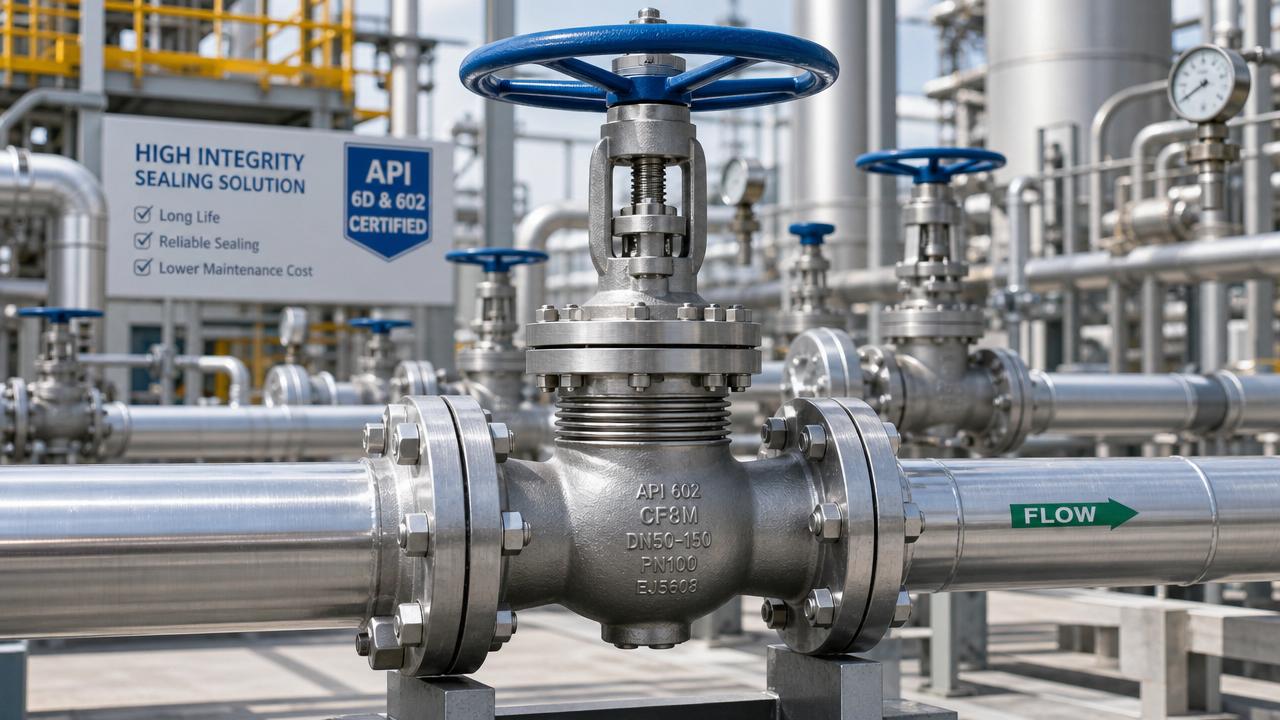
For teams evaluating API certified valves, the key question is not only purchase price. It is how cost behaves over years of operation. In severe service, API certified valves with bellows sealing can lower fugitive emissions, reduce packing-related failures, and stabilize maintenance planning. That changes the economics of uptime, compliance, and spare inventory.
API Certified Bellows Valves are often priced above conventional packed valves. Yet in refinery, gas processing, chemical duty, and high-integrity utility lines, service life frequently offsets the premium. The right comparison must include shutdown exposure, leak response, inspection burden, and the cost of process instability.
Why a Checklist-Based Evaluation Works Better
Bellows valve selection crosses several disciplines at once. Material compatibility, pressure class, cycle frequency, API compliance, and maintenance access all affect value. A checklist prevents decisions based only on catalog price or nominal specification.
This approach is especially useful when comparing API certified valves across suppliers. One product may offer a lower quote, while another delivers longer bellows cycle life, stronger test records, or lower total leakage risk. A structured review makes those tradeoffs visible.
Core Checklist for Comparing Cost vs Service Life
- Verify API scope first, including the exact standard, pressure class, testing method, traceability level, and whether the offered valve configuration matches the certified design envelope.
- Check bellows design life in cycles, not just years, and compare it with actual open-close frequency, thermal transients, and vibration expected in the target line.
- Review body, bellows, stem, and seat materials against process chemistry, chloride exposure, sulfur content, temperature swings, and cleaning media used during maintenance.
- Compare fugitive emission performance data, helium leak tests, and seat leakage records to understand whether lower leakage risk justifies the higher upfront valve price.
- Calculate maintenance intervals using packing adjustment elimination, inspection frequency, spare part replacement rates, and the labor required to access each installed valve.
- Estimate downtime exposure by assigning a real cost to each unplanned intervention, especially where process interruption can affect yield, safety isolation, or environmental reporting.
- Confirm operator compatibility, actuator loads, and torque margins so the bellows valve performs reliably without overstressing the stem or introducing control lag.
- Assess supplier documentation quality, including mill certificates, pressure test reports, weld qualifications, and repair guidance for long-term asset governance.
- Model total cost of ownership over the intended service window, using acquisition cost, maintenance cost, failure probability, energy loss, and compliance-related financial exposure.
How to Read the Price Premium
A higher quoted price for API certified valves usually reflects more than branding. Bellows welding quality, material control, testing rigor, and documentation depth all add cost. Those factors also influence service stability and audit readiness.
In practical terms, a valve that avoids one leak investigation or one short shutdown can outperform a cheaper option quickly. This is why API Certified Bellows Valves are often justified in critical containment duty.
Application Scenarios That Change the Decision
Hydrocarbon and Gas Containment
In hydrocarbon service, leakage risk carries both safety and compliance consequences. Bellows-sealed API certified valves can reduce stem emission pathways that are common in packed designs under thermal cycling.
Where lines are difficult to isolate, longer service life matters more than unit price. The cost of emergency intervention usually exceeds the original premium for a better valve design.
Chemical Processing and Corrosive Media
Corrosive duty changes the value equation because material mismatch shortens bellows life rapidly. Here, service life depends on alloy choice, weld integrity, and resistance to process upsets, not just API marking.
For this reason, comparing API certified valves should include a close review of corrosion allowance, cleaning chemicals, and startup-shutdown conditions. A lower-cost body material can create a much higher lifecycle burden.
High-Purity and Reliability-Critical Utility Lines
In utility systems supporting high-tech production, reliability often outweighs replacement price. Even when media are less aggressive, contamination control and predictable valve response support process consistency.
Bellows-sealed API certified valves can fit these duties when containment assurance and repeatable operation are required. The savings come from fewer interventions and fewer variables introduced into the process environment.
Commonly Overlooked Risks
Ignoring Cycle Count Reality
A valve rated for severe pressure may still underperform if cycle frequency is underestimated. Bellows fatigue is a mechanical life issue, and real switching behavior should drive the comparison.
Treating API Certification as a Complete Selection Answer
API compliance is essential, but it does not replace application engineering. Two API certified valves can differ significantly in metallurgy, bellows geometry, and maintainability.
Underpricing Installation and Access Constraints
A valve located in elevated racks, insulated zones, or congested skids carries a higher intervention cost. In those locations, service life has more economic importance than on easy-access lines.
Overlooking Documentation Value
Traceability, test records, and repair instructions support audits, incident reviews, and spare standardization. Weak documentation increases lifecycle friction, even if the valve hardware seems acceptable.
Practical Execution Steps
- Build a comparison sheet for at least three API certified valves, covering price, cycle life, leak test data, material set, lead time, and documentation package.
- Assign cost values to leaks, labor hours, lost production, and access complexity, then convert those factors into a five-year ownership model.
- Separate critical lines from general lines, because the best valve for emission-sensitive duty may not be necessary for every service position.
- Request failure mode details, not only compliance certificates, and check whether field repair or replacement strategy is clearly defined.
- Standardize around a limited number of validated valve configurations to reduce spare stock variation and simplify future maintenance planning.
Conclusion and Next Action
The real value of API Certified Bellows Valves appears when service life is measured against leak prevention, maintenance reduction, and downtime avoidance. In many critical services, the cheapest option is not the lowest-cost asset.
Use a structured review to compare API certified valves by total ownership impact, not only quote price. Start with certification scope, cycle life, material fit, and maintenance burden. Then rank each valve by containment reliability over the full operating window.
That method supports better technical alignment, stronger compliance confidence, and more predictable lifecycle cost across modern flow-control systems.
Industry Briefing
Get the top 5 industry headlines delivered to your inbox every morning.