How Polymer Gaskets Handle High-Temperature Duty
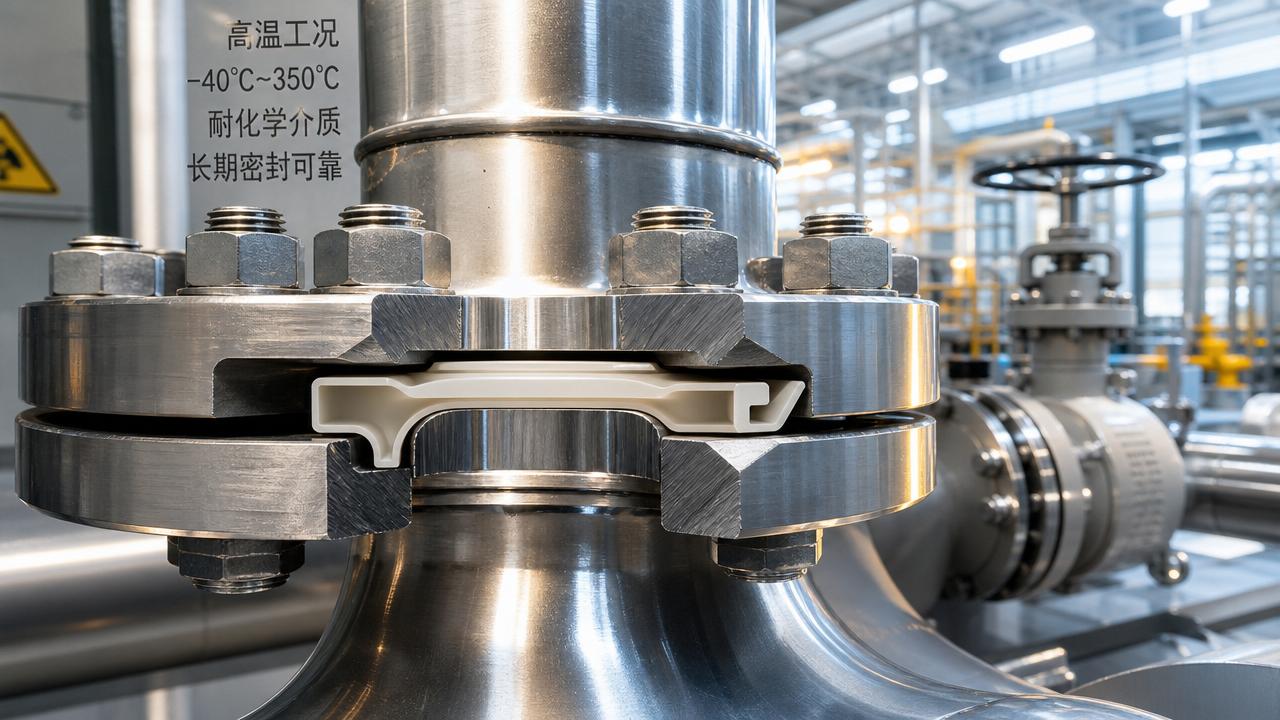
Selecting polymer gaskets for high temperature environments requires more than checking a temperature rating. For technical evaluators, long-term sealing stability depends on polymer chemistry, thermal cycling resistance, media compatibility, and compliance with demanding system standards. This article outlines how advanced polymer gaskets maintain containment, reduce failure risk, and support reliable performance in heat-intensive industrial applications.
Why polymer gaskets for high temperature environments fail or succeed
In high-heat duty, gasket performance is shaped by more than peak temperature. Compression set, creep relaxation, oxidation, outgassing, pressure fluctuation, flange condition, and the sealed medium all influence service life.
For technical assessment teams, the main challenge is that two polymer gaskets with similar catalog ratings can behave very differently once exposed to cycling heat, aggressive chemicals, vacuum duty, or pulsed pressure.
This is why polymer gaskets for high temperature environments should be evaluated as system components, not simple consumables. In advanced manufacturing and critical flow systems, a gasket failure can trigger contamination, downtime, requalification, or unsafe leakage.
- Short exposure temperature and continuous service temperature are different engineering limits and should never be treated as interchangeable.
- Mechanical loading matters. A high-performance polymer may still leak if bolt load, flange finish, or groove design are not matched to the material.
- Media compatibility remains decisive. Steam, oxidizers, solvents, fuels, ultrapure gases, and plasma-related byproducts stress polymers in different ways.
What high-temperature sealing really demands
A workable seal in heat-intensive duty must keep contact stress high enough to prevent leakage while resisting physical changes that reduce recovery. That means low compression set, controlled thermal expansion, chemical stability, and predictable aging behavior.
In sectors covered by G-PCS, this matters in UHP valves, industrial microwave systems, mechanical seal support assemblies, piezo-driven precision modules, and specialized polymer sealing interfaces where dimensional drift cannot be ignored.
How material chemistry affects polymer gaskets for high temperature environments
Material selection is the core decision. Technical evaluators should begin with polymer family behavior, then narrow choices using actual duty conditions rather than generic catalog comparisons.
The table below summarizes common material directions used when specifying polymer gaskets for high temperature environments in industrial systems.
The practical lesson is simple: “high temperature” is not a single category. A hot oxidizing gas stream, a heated solvent line, and a vacuum chamber with thermal cycling can each require different polymer strategies.
Why compound-level evaluation matters
Even within the same polymer family, fillers, cure systems, purity level, and processing route affect sealing behavior. Technical evaluators should request compound-specific data whenever possible, especially for compression set, outgassing, and media aging.
G-PCS supports this evaluation logic by aligning material review with critical containment scenarios rather than relying on oversimplified temperature claims.
Which application scenarios are most demanding
Not all high-heat applications load the gasket in the same way. Procurement and engineering teams should segment the duty by thermal pattern, pressure profile, contamination sensitivity, and maintenance access.
The following table helps technical evaluators map polymer gaskets for high temperature environments to realistic operating scenarios.
This scenario-based view reduces a frequent sourcing mistake: selecting the same gasket material for every hot application. Thermal exposure is only one variable; the mechanical and chemical context determines whether that material will remain reliable.
Where technical evaluators should be most cautious
- Batch processes with repeated heat-up and cool-down, because thermal cycling accelerates crack initiation, hardening, and relaxation loss.
- High-purity environments, where a gasket that survives thermally may still fail due to extractables, particle generation, or outgassing.
- Applications with difficult maintenance access, where a low initial part price can lead to very high intervention cost later.
How to compare options during procurement and technical review
When comparing polymer gaskets for high temperature environments, the right process is to score total fitness, not just price or maximum rated temperature. This is especially important when qualification delays can affect production launches or facility uptime.
A practical evaluation checklist
- Define real continuous temperature, upset temperature, ramp rate, and dwell time instead of using one simplified number.
- Confirm media exposure, including cleaning agents, trace contaminants, and byproducts generated during high-heat operation.
- Review sealing geometry, bolt load, flange flatness, groove fill, and thermal expansion mismatch between metal and polymer.
- Request evidence relevant to the use case, such as compression set trend, aging data, purity profile, or standard test references.
- Assess supply continuity, lot consistency, lead time, and whether custom dimensions or compound variations will be needed.
For technical evaluators working across multiple business units, this discipline supports faster cross-functional decisions between design, quality, sourcing, and operations teams.
Common comparison mistakes
One common mistake is comparing elastomer gaskets and rigid polymer gaskets as if they serve the same sealing mechanics. Another is treating compliance documentation as proof of service life. Standards support screening, but they do not replace application-specific verification.
G-PCS addresses this gap by framing sealing choice within broader reliability architecture, especially where containment, flow precision, and regulatory expectations intersect.
What standards and compliance points should be reviewed
In critical supply chains, compliance is not a paperwork exercise. It shapes material acceptability, qualification speed, and audit confidence. Teams specifying polymer gaskets for high temperature environments should review standards that match the operating sector and risk profile.
- ISO-related quality and test references may support traceability and general consistency review.
- SEMI-oriented expectations can matter in high-purity and contamination-sensitive applications.
- API-linked context may be relevant in fluid handling, pressure systems, and severe process conditions.
- MIL-SPEC references may be considered where environmental extremes, reliability assurance, or aerospace-adjacent screening is required.
The key is to match the evidence package to the system. A gasket in a clean gas manifold may require different supporting data than one in a hot solvent pump or RF-assisted chamber assembly.
Cost, alternatives, and lifecycle trade-offs
Technical evaluators are often asked to reduce spend while maintaining reliability. The best response is to compare lifecycle cost, not part price alone. Premium polymer gaskets for high temperature environments may cost more initially but reduce shutdowns, scrap, rework, and leakage risk.
The table below helps frame cost discussions in terms that procurement, engineering, and maintenance can evaluate together.
A cheaper gasket is rarely the lowest-cost choice when hot-process leakage can interrupt validated production or damage expensive adjacent components. The more critical the containment function, the more valuable disciplined material selection becomes.
FAQ: what technical evaluators ask most often
How should we select polymer gaskets for high temperature environments when media data is incomplete?
Start with a conservative screening based on known temperature range, pressure, and likely fluid family. Then identify unknowns such as trace solvents, cleaning chemistry, or oxidizing byproducts. If uncertainty remains high, prioritize compounds with broader chemical resistance and request additional compatibility review before full rollout.
Are polymer gaskets for high temperature environments suitable for thermal cycling?
Yes, but only if the material has adequate recovery and the joint design accounts for expansion mismatch. Thermal cycling is often more damaging than steady heat because repeated movement reduces sealing stress and can accelerate hardening, cracking, or creep.
What matters more: maximum temperature rating or compression set data?
For long-term sealing, compression set and stress retention are often more useful than a headline temperature number. A gasket may survive a peak temperature briefly yet lose enough resilience to leak during normal service afterward.
When is a premium material justified?
Premium materials are justified when downtime is expensive, access is difficult, contamination is unacceptable, or requalification is lengthy. In those cases, lifecycle economics usually favor the higher-grade option even when unit price is substantially higher.
Why technical teams use G-PCS for evaluation support
G-PCS is built for decision-makers who need more than catalog filtering. Its focus on the logic of containment and flow helps technical teams evaluate polymer gaskets for high temperature environments within the real context of system reliability, compliance pressure, and high-value asset protection.
Because G-PCS spans UHP controls, industrial microwave and RF systems, extreme-environment seals, precision actuators, and specialized polymer and composite gaskets, it supports cross-domain judgment where thermal sealing decisions affect broader equipment performance.
- Support for parameter confirmation, including temperature profile, pressure, media, sealing geometry, and maintenance expectations.
- Guidance for product selection across polymer families, application risk levels, and system cleanliness requirements.
- Discussion of delivery timing, custom dimensions, sample support, and documentation needs for internal qualification workflows.
- Review of standards context where ISO, SEMI, API, or MIL-SPEC references influence sourcing and approval decisions.
Contact us for selection, qualification, and supply planning
If your team is comparing polymer gaskets for high temperature environments, contact G-PCS with the application details that matter: operating temperature range, thermal cycling pattern, pressure class, media, flange or groove design, cleanliness targets, and required standards context.
We can help you clarify material options, review selection risks, align documentation needs, discuss sample support, estimate delivery windows, and structure a more efficient quotation process for critical sealing projects.
For technical evaluators, the goal is not to buy a gasket with the highest stated temperature. The goal is to secure reliable containment under real operating conditions. That is where disciplined comparison and application-focused guidance create measurable value.
Industry Briefing
Get the top 5 industry headlines delivered to your inbox every morning.