High-Temp Polymer Gaskets: Key Failure Risks
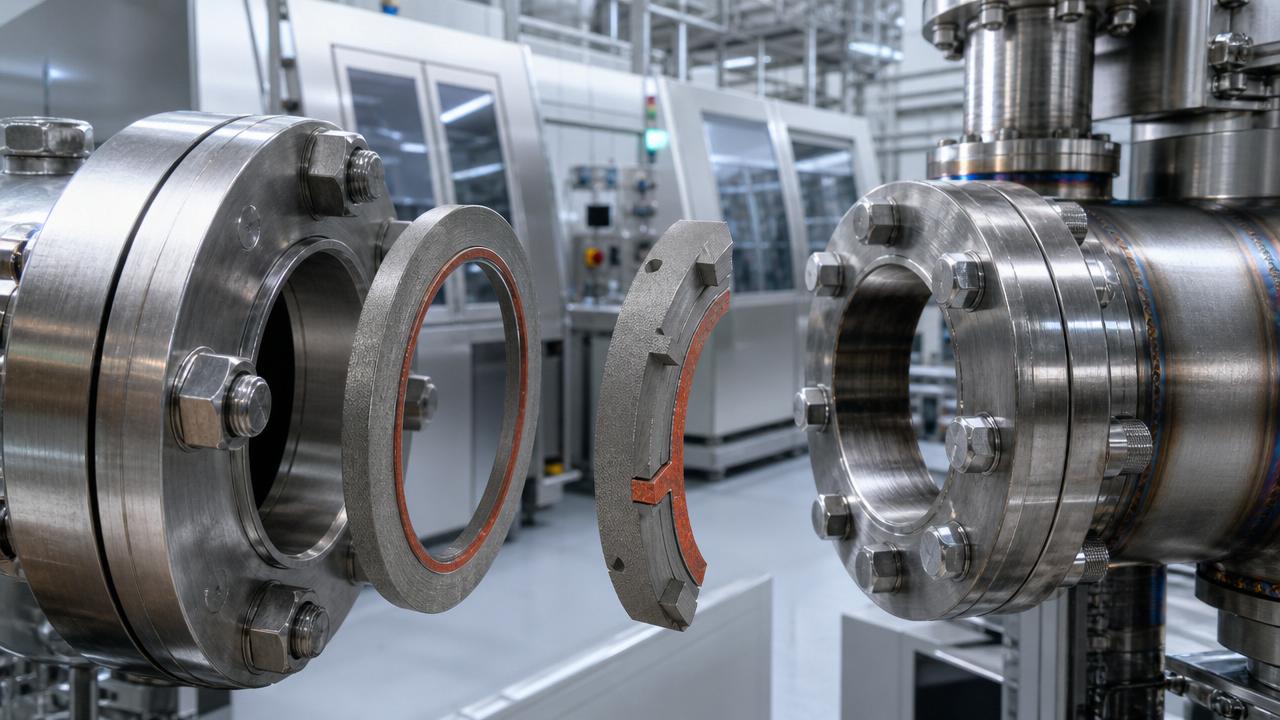
High-Temp Polymer Gaskets: why failures often start before anyone sees them
In sealed systems, visible damage is usually the late-stage symptom, not the first warning.
That is especially true for polymer gaskets for high temperature environments, where heat, media, pressure, and assembly stress interact over time.
A gasket may still look intact while leakage paths, compression loss, or embrittlement are already developing inside the joint.
In critical flow and containment systems, that delay between damage and detection creates real operational risk.
The issue spans semiconductor tools, RF equipment, thermal process lines, chemical transfer skids, aerospace assemblies, and UHP control systems.
Across these sectors, the common question is not just which gasket survives heat, but which failure mode appears first.
That is why technical reference platforms such as G-PCS focus on containment logic, standards alignment, and application-specific sealing behavior.
What actually makes polymer gaskets for high temperature environments fail?
Heat alone is rarely the whole story.
Most failures happen when elevated temperature accelerates another weakness already present in the system.
The most common mechanisms include thermal oxidation, creep relaxation, media attack, pressure cycling, and improper gland design.
Thermal degradation changes the polymer structure itself.
As chains break down, the gasket can harden, crack, shrink, or lose elastic recovery.
Compression set is another frequent issue.
After long exposure to heat and load, the gasket no longer rebounds enough to maintain sealing stress.
Chemical attack often works quietly alongside temperature.
Aggressive solvents, oxidizers, steam, acids, and reactive gases can swell or extract material components.
In real installations, failure is usually cumulative rather than dramatic.
- Loss of bolt load due to creep or thermal cycling
- Micro-cracking from repeated startup and shutdown
- Blistering from trapped volatiles or rapid decompression
- Edge attack from hot media concentrating at flange gaps
- Shape distortion from overcompression during installation
So when evaluating polymer gaskets for high temperature environments, the better question is: which combined stresses dominate this exact duty cycle?
Which warning signs matter most before a leak becomes obvious?
Early indicators are usually subtle, and that is why they are often missed.
A slight torque loss after thermal cycling can matter more than a clean-looking gasket surface.
Small process drifts also deserve attention.
Unexpected contamination, changing vacuum hold times, odor, pressure decay, or residue near flange edges may point to seal deterioration.
Hardness change is another useful clue.
If the removed gasket feels noticeably stiffer or more brittle than the original specification, heat aging may already be driving failure.
The table below helps connect symptoms with likely causes.
The main lesson is simple.
Inspection should focus on condition changes, not just visible breakage.
Are all high-temperature polymers equally suitable for the same service?
Not even close.
Materials that tolerate dry heat well may fail quickly in hot steam, oxidizing chemicals, or plasma-adjacent environments.
That is where confusion often starts.
Buyers compare maximum temperature ratings, but service reality depends on pressure, media, joint geometry, and time at temperature.
For example, PTFE-based materials offer broad chemical resistance, yet they can creep under load.
FFKM grades perform well in severe thermal and chemical conditions, but not every formulation behaves the same in amines, steam, or oxygen-rich service.
PEEK composites can provide strength and dimensional stability, though edge loading and assembly design still matter.
A practical material decision usually balances four questions:
- What is the continuous temperature, not just the upset peak?
- Which chemicals contact the gasket during process and cleaning?
- How much sealing stress can the joint maintain over time?
- Is contamination, outgassing, or extractables control required?
This is why G-PCS-style benchmarking against ISO, SEMI, API, and MIL-SPEC references is valuable.
The right comparison is rarely material versus material alone.
It is application duty versus validated sealing behavior.
Why do polymer gaskets for high temperature environments fail even when the material grade looks correct?
Because material selection is only one part of sealing reliability.
A technically suitable polymer can still fail in a poor mechanical system.
Installation error is one reason.
Uneven torque, damaged flange faces, reused gaskets, and contamination during assembly all reduce sealing consistency.
Joint design is another weak point.
If flange stiffness is low, load distribution becomes uneven under heat, and local stress concentrations form at the gasket edge.
Thermal expansion mismatch also matters more than many teams expect.
Metals, composites, bolts, and polymers expand at different rates.
A design that seals well at room temperature may lose enough seating stress during operation to leak.
Common hidden contributors include:
- Temperature mapping based on nominal values, not hot spots
- Ignoring startup, purge, and cleaning excursions
- Using lab compatibility data without dynamic pressure data
- Assuming one successful site trial covers all process variants
So if polymer gaskets for high temperature environments keep failing, the review should include the full sealing system, not the gasket in isolation.
How should high-risk applications judge suitability before field failure happens?
The strongest approach is staged validation.
Start with actual service conditions, then test the gasket and joint against those conditions as realistically as possible.
That means recording more than temperature limits.
You need continuous temperature, peak excursions, cycling frequency, pressure pulses, media purity, cleaning chemistry, and required leak performance.
In critical containment systems, qualification often benefits from this checklist:
- Define the real thermal envelope, including transient spikes.
- Review media compatibility under temperature, not room conditions.
- Confirm flange finish, flatness, and load path.
- Evaluate compression set and creep after aging.
- Check post-test leakage, dimensions, hardness, and visual changes.
Where standards apply, using benchmark methods improves comparability and traceability.
That matters in regulated, audited, or mission-critical environments.
It also reduces the common mistake of approving a material based on one favorable data point.
What is the smartest next step if current gasket performance is uncertain?
Do not wait for a visible failure event to define the problem.
A more reliable next step is to build a short decision file around the actual joint.
Include service temperature history, media list, flange condition, maintenance intervals, torque records, and leak observations.
Then compare that information against the expected behavior of candidate polymer gaskets for high temperature environments.
If the gap is unclear, request deeper technical evidence rather than broader marketing claims.
Useful evidence includes aging data, compression-set results, media compatibility under heat, and application-specific case history.
The main takeaway is straightforward.
High-temperature sealing failure is usually predictable when thermal, chemical, and mechanical factors are reviewed together.
For anyone managing critical containment and flow assets, the best next move is to document conditions, test assumptions, and qualify materials against real duty rather than catalog limits.
Industry Briefing
Get the top 5 industry headlines delivered to your inbox every morning.