Seal Pressure-Velocity Limits: When PV Becomes a Risk
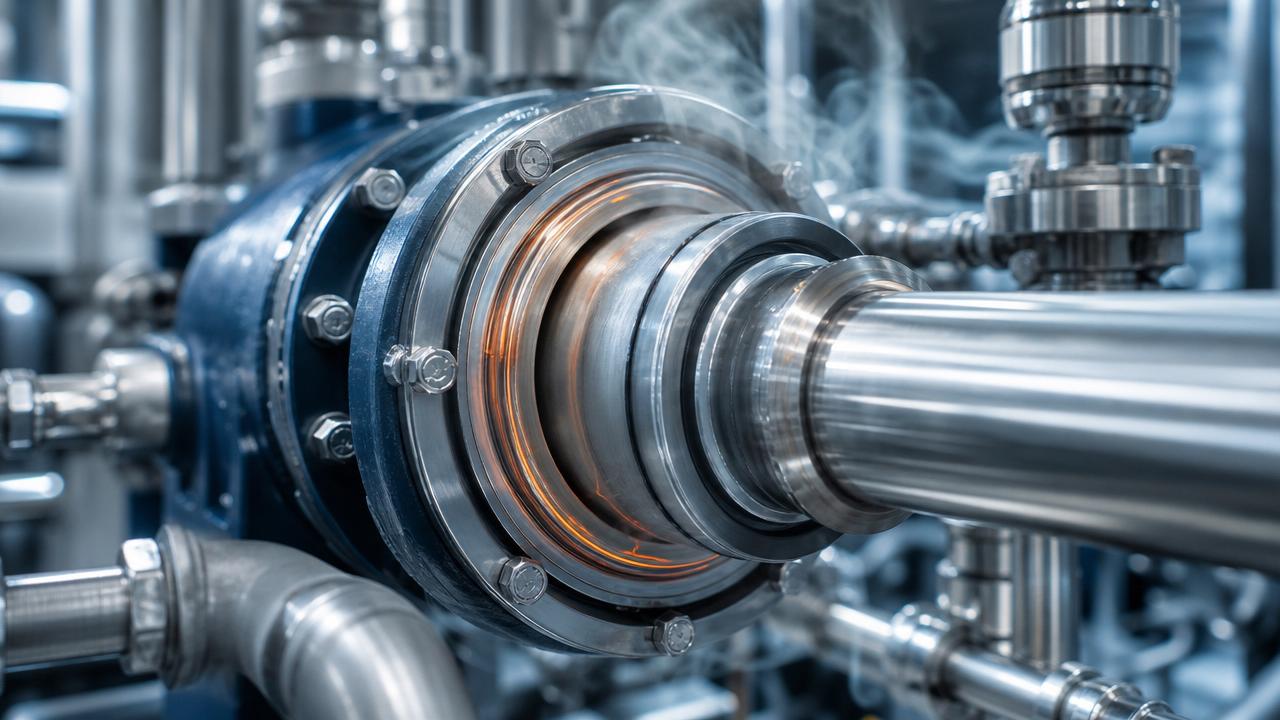
For quality and safety teams, understanding seal pressure-velocity (PV) limits is essential to preventing premature wear, thermal damage, and sudden containment failure. When PV rises beyond a material’s safe operating window, even well-designed sealing systems can become a hidden risk. This article explains when seal pressure-velocity (PV) limits start to threaten reliability, compliance, and operational safety.
What seal pressure-velocity (PV) limits mean in practical terms
In sealing engineering, seal pressure-velocity (PV) limits describe the combined operating stress created by contact pressure and sliding speed at the sealing interface. Pressure alone does not always cause failure, and speed alone may be manageable. The risk rises when both variables act together, generating frictional heat faster than the seal material, lubricant, and surrounding hardware can dissipate it. That is the point where seal pressure-velocity (PV) limits become more than a design number—they become a safety boundary.
For quality-control and safety managers, PV is valuable because it connects mechanical loading with real failure modes: lip hardening, extrusion, blistering, loss of elasticity, shaft scoring, leakage, and in severe cases rapid containment loss. A seal can appear dimensionally correct and still operate in an unsafe PV zone if process conditions change, lubrication becomes inadequate, or temperature rises beyond the validated range.
This issue is especially relevant across advanced manufacturing and critical flow systems, where even minor leakage can affect uptime, product purity, fire risk, environmental compliance, or worker safety. In high-value sectors served by technical intelligence platforms such as G-PCS, seal pressure-velocity (PV) limits matter because systems increasingly run faster, hotter, cleaner, and under tighter tolerances than in conventional industrial service.
Why industry pays closer attention to PV risk today
Several trends have made PV analysis a more important part of reliability planning. First, equipment is being pushed toward higher throughput and faster cycle times. Second, operators are adopting more aggressive media, wider thermal ranges, and lower-emission requirements. Third, procurement teams increasingly require evidence that component performance aligns with ISO, API, SEMI, or other application-specific expectations. Under these conditions, relying only on nominal pressure ratings is no longer enough.
Seal pressure-velocity (PV) limits are also receiving more attention because many failures are misdiagnosed. A leaking seal may be blamed on installation error, wrong hardness, or poor surface finish, when the root cause is cumulative thermal overload from an underestimated PV condition. This creates a hidden quality problem: the component may pass incoming inspection, yet fail prematurely in service because operating reality differs from catalog assumptions.
In safety governance, that distinction matters. A material that performs well in static sealing can become unstable in dynamic service. Likewise, a seal that survives short qualification testing may not tolerate prolonged duty cycles, stop-start friction peaks, dry running events, or pressure spikes. Understanding seal pressure-velocity (PV) limits helps teams move from reactive replacement to condition-based risk prevention.
How PV interacts with material behavior and hardware conditions
PV is not a standalone property in the way tensile strength or hardness is. It is a system-level performance limit influenced by material type, contact geometry, lubrication regime, surface finish, temperature, shaft eccentricity, media compatibility, and dwell pattern. For example, PTFE-based compounds, filled polymers, FFKM, advanced elastomers, and composite sealing elements each respond differently to heat build-up and frictional loading.
When PV rises, interface temperature usually rises as well. Elevated temperature can soften polymeric structures, accelerate compression set, reduce lubricant film stability, and increase wear particle generation. In some cases, the seal face may glaze and lose control of friction. In others, the seal edge may harden and crack. A rise in PV can therefore trigger several failure mechanisms at once rather than a single obvious defect.
Hardware condition is equally important. Rough shafts increase friction; misalignment creates localized contact pressure; poor groove design traps heat; insufficient radial support encourages extrusion. That is why seal pressure-velocity (PV) limits should be read as validated operating guidance under defined test assumptions, not as universal guarantees.
Industry overview: where seal pressure-velocity (PV) limits become critical
Across the broader industrial landscape, PV sensitivity is highest in applications where motion, pressure, cleanliness, and continuity must coexist. The table below highlights representative situations relevant to quality and safety decision-makers.
When PV becomes a real operational risk
Seal pressure-velocity (PV) limits become dangerous when operating conditions approach or exceed the point where frictional heat cannot be managed consistently. In practice, the first warning sign is not always visible leakage. Teams may notice increased torque, surface discoloration, unstable friction, unexplained temperature rise, noise, or shortened maintenance intervals before failure becomes obvious.
Risk becomes more acute under five common conditions. The first is intermittent lubrication or dry starts, which can produce short but damaging PV spikes. The second is temperature stacking, where ambient heat, process heat, and friction heat combine. The third is dynamic pressure fluctuation, which changes contact stress faster than the material can recover. The fourth is media incompatibility, which reduces mechanical resilience. The fifth is using nominal catalog PV values without adjusting for actual shaft finish, eccentricity, contamination, or duty cycle.
For safety managers, the key point is that PV risk is cumulative. A seal does not need to catastrophically exceed its published limit in a single moment to fail early. Repeated operation near the edge can age the material, reduce sealing margin, and make a later upset event much more severe.
Application value for quality control and safety management
Integrating seal pressure-velocity (PV) limits into quality planning improves more than component selection. It strengthens failure analysis, acceptance criteria, maintenance intervals, and supplier communication. Instead of asking whether a seal meets a pressure rating, teams can ask whether the full sealing system remains stable across start-up, normal operation, upset conditions, and shutdown.
For quality personnel, PV awareness supports incoming inspection and root-cause review. If field returns show edge wear, thermal cracking, or glossed surfaces, PV overload should be considered alongside dimensional tolerance and installation quality. For safety teams, PV analysis supports hazard assessment because it helps identify when a seal may fail without much visible warning, especially in hazardous gas, solvent, or high-energy process service.
At an organizational level, this also improves cross-functional decisions. Engineering can define realistic limits, procurement can compare suppliers on validated operating envelopes rather than broad claims, and operations can recognize where process changes may unintentionally push a proven seal design outside its safe PV window.
Typical seal categories and PV sensitivity
Different seal types do not respond equally to PV loading. Understanding the category helps teams assess where risk is likely to emerge first.
Practical evaluation steps before PV turns into failure
A sound evaluation process starts with real operating data. Use actual pressure range, peak speed, cycle frequency, temperature exposure, media type, and upset scenarios—not only nameplate values. Then compare these conditions with supplier-validated seal pressure-velocity (PV) limits and confirm the test basis behind those limits. A PV number generated under lubricated laboratory conditions may not apply to contaminated, pulsating, or partially dry field service.
Next, review hardware factors: shaft hardness, runout, groove fill, backup support, and surface finish. Many apparent material limitations are actually installation or geometry issues that intensify contact stress. It is also wise to map transient events such as cold starts, emergency stops, purge failures, and pressure reversals, because these can create the highest PV load even when average operating conditions seem acceptable.
Where the application is safety-critical, teams should add thermal monitoring, leak trend analysis, or maintenance triggers tied to service severity. In regulated or mission-critical environments, documenting the relationship between design assumptions and field conditions is often as important as the seal choice itself.
Good practice for reducing seal pressure-velocity (PV) limits risk
The most effective control strategy is to treat PV margin as a managed reliability reserve. That means selecting materials with verified compatibility, reducing unnecessary friction, stabilizing lubrication where possible, and avoiding operation too close to the upper limit. If service demands high pressure and high speed simultaneously, consider redesign options such as altered contact geometry, different seal architecture, cooling improvements, or staged pressure management.
Supplier qualification should also go beyond datasheets. Ask how seal pressure-velocity (PV) limits were derived, under what media, temperature, and surface conditions, and whether the supplier has field data in comparable duty. For strategic sectors addressed by G-PCS, this level of validation is essential because performance expectations are tied to containment integrity, process continuity, and audit readiness.
Finally, train maintenance and inspection teams to recognize early PV-related symptoms. A small change in friction behavior or wear pattern can be a leading indicator of larger containment risk. Early intervention is almost always less costly than investigating a contamination event, production loss, or safety incident after the seal has already failed.
Conclusion and next-step focus
Seal pressure-velocity (PV) limits are not merely a technical specification buried in supplier literature. They are a practical operating boundary that influences leakage risk, maintenance stability, equipment life, and personnel safety. As systems become faster, cleaner, and more demanding, the cost of underestimating PV grows across the entire asset lifecycle.
For quality and safety teams, the right next step is to review critical sealing points where pressure, speed, temperature, and duty cycle overlap. Confirm whether current assumptions match real field conditions, verify the basis of supplier PV data, and prioritize applications where failure would affect compliance, purity, or containment. A disciplined approach to seal pressure-velocity (PV) limits helps convert a hidden reliability threat into a controlled engineering parameter.
Industry Briefing
Get the top 5 industry headlines delivered to your inbox every morning.