Smart Seal Monitoring Technology: What Data Matters Most
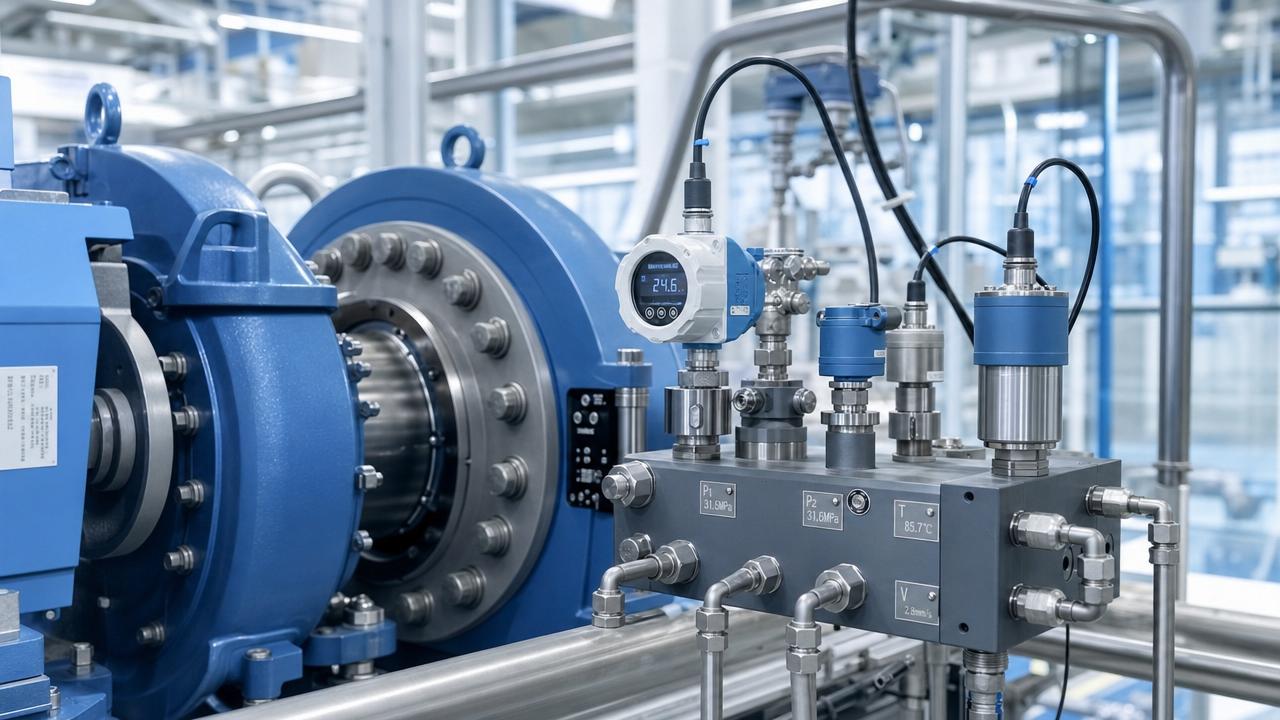
Smart seal monitoring technology is changing how sealing performance is evaluated across critical industrial environments. In systems where containment, pressure stability, thermal control, and uptime directly affect safety and output, the most useful insight no longer comes from a single leak alarm. Instead, smart seal monitoring technology creates a broader evidence set built around pressure behavior, temperature drift, vibration signatures, wear progression, and response thresholds. This richer data view helps teams compare operating conditions, predict failure modes earlier, and make more defensible engineering, maintenance, and sourcing decisions.
Why the Value of Smart Seal Monitoring Technology Depends on the Operating Scenario
Not every sealed system fails for the same reason, and that is why the data priorities inside smart seal monitoring technology must be scenario-specific. In a high-pressure valve train, transient pressure spikes may matter more than steady-state leakage. In an RF or microwave enclosure, thermal cycling and material relaxation can be stronger indicators of future seal degradation. In extreme-environment rotating equipment, vibration and frictional heat often reveal the earliest instability.
For cross-industry technical evaluation, the key question is not simply whether a sealing interface is “smart,” but whether the monitoring architecture captures the right variables for the right failure mechanism. Smart seal monitoring technology becomes most valuable when data is mapped to containment logic, equipment duty cycle, environmental stress, and the cost of unplanned intervention.
In Ultra-High-Pressure Control Systems, Pressure Behavior Is the First Data Priority
In ultra-high-pressure control systems, especially those involving hydrogen, aggressive gases, or rapid actuation cycles, smart seal monitoring technology should first capture dynamic pressure data rather than rely only on final leak confirmation. A seal may appear stable during static testing but fail under repeated pressure ramping, pulsation, or decompression stress. Monitoring pressure rise rate, spike frequency, pressure decay, and valve-seat recovery behavior provides a clearer picture of seal survivability.
The most useful judgment point in this scenario is whether pressure anomalies correlate with cycle count, media type, and temperature exposure. If pressure signatures begin drifting before measurable leakage appears, smart seal monitoring technology can flag early material extrusion, compression-set progression, or micro-path formation. In these systems, pressure trend quality often matters more than a single pass-fail result.
What to track in high-pressure sealing environments
- Pressure spike amplitude and frequency during switching events
- Pressure decay under static hold conditions
- Cycle-based drift in sealing response thresholds
- Recovery stability after decompression or rapid venting
- Correlation between pressure instability and thermal excursion
In Thermal and RF Energy Systems, Temperature Drift Often Reveals Seal Risk Earlier Than Leakage
In industrial microwave and RF energy systems, seals are often exposed to localized heating, non-uniform thermal loads, and repeated expansion-contraction cycles. Here, smart seal monitoring technology should prioritize temperature mapping, hotspot tracking, and thermal gradient behavior. A seal can remain apparently intact while gradually losing elasticity, dimensional stability, or shielding integrity due to repeated thermal stress.
The strongest evaluation signal in this scenario is temperature drift relative to baseline operating windows. If the same process setting produces a hotter flange zone, slower cooldown, or increasing asymmetry, that may indicate compression changes, interface contamination, material aging, or mounting distortion. Smart seal monitoring technology is especially effective when thermal data is paired with cycle counts and power-load history, turning heat patterns into maintenance evidence rather than post-failure explanation.
In Rotating and Extreme-Environment Equipment, Vibration and Wear Trends Matter Most
Mechanical seals operating in corrosive, abrasive, vacuum, cryogenic, or high-speed conditions rarely fail from one isolated factor. In these environments, smart seal monitoring technology should emphasize vibration signatures, shaft movement, frictional temperature, acoustic irregularities, and wear-rate progression. These variables help distinguish normal running behavior from seal face instability, misalignment, lubrication breakdown, or particle intrusion.
A common mistake is to treat leakage as the primary decision metric. In rotating equipment, leakage can be a late symptom. Smart seal monitoring technology becomes far more useful when wear trends and vibration thresholds are trended over time and linked to process changes. A subtle rise in vibration at a specific speed band, for example, may reveal seal face damage long before output quality or visible containment is affected.
How Data Priorities Change Across Typical Smart Seal Monitoring Technology Scenarios
For Precision Actuation Scenarios, Response Thresholds Can Be More Important Than Leak Rate
In high-precision pneumatic and piezoelectric-adjacent assemblies, smart seal monitoring technology should focus on how sealing affects system response, repeatability, and control stability. The issue is often not catastrophic leakage, but micro-instability that reduces timing accuracy, pressure consistency, or stroke precision. In these applications, a small seal deviation can produce measurable performance drift even when traditional leak tests still pass.
This makes response thresholds, latency variation, and micro-pressure fluctuation highly valuable data points. Smart seal monitoring technology supports better scenario fit when it can show whether seal degradation is beginning to affect output quality, not just containment. That is essential in systems where milliseconds, microns, or repeatable force delivery define operating value.
How to Match Smart Seal Monitoring Technology to Real Operating Needs
A practical evaluation framework should begin with failure mode logic rather than sensor quantity. More data is not automatically better if the variables do not match the physical stress acting on the seal. Smart seal monitoring technology should be selected based on three questions: what causes degradation in this system, what signal appears first, and what action becomes possible when that signal is detected early.
- Use pressure-centric monitoring where transient loads dominate seal fatigue.
- Use thermal trend monitoring where heating and cooldown cycles drive material change.
- Use vibration and wear analytics where mechanical motion is the main failure pathway.
- Use response-threshold monitoring where sealing condition influences system precision.
- Link all monitored values to alarm thresholds, maintenance actions, and validation standards.
Common Misjudgments When Interpreting Smart Seal Monitoring Technology Data
One frequent misjudgment is assuming that leak detection alone defines seal health. In many advanced systems, by the time leakage is visible, damage has already progressed too far for efficient correction. Another mistake is reading isolated data points without operational context. A temperature rise may be harmless during one duty cycle and critical in another. Likewise, vibration amplitude means little without speed, media, and load correlation.
A third oversight is treating smart seal monitoring technology as a universal layer rather than an application-tuned decision tool. Data must be normalized against materials, sealing geometry, media compatibility, test protocols, and standards expectations. Without that structure, even sophisticated monitoring can generate noise, false confidence, or delayed action.
What to Do Next When Evaluating Smart Seal Monitoring Technology
The most effective next step is to map each critical sealing point to its dominant operating stress and earliest measurable failure indicator. From there, define which data stream—pressure, temperature, vibration, wear, or response threshold—delivers the highest decision value. This turns smart seal monitoring technology from a general digital upgrade into a targeted reliability framework.
For high-consequence industrial systems, the best outcomes come from comparing monitored seal behavior against actual operating scenarios, not generic assumptions. Smart seal monitoring technology delivers the strongest return when it supports earlier diagnosis, more accurate lifecycle planning, and evidence-based specification choices across pressure control, RF energy, extreme-environment sealing, and precision motion platforms.
Industry Briefing
Get the top 5 industry headlines delivered to your inbox every morning.