Seal Leakage Comparison Data: What Results Actually Matter
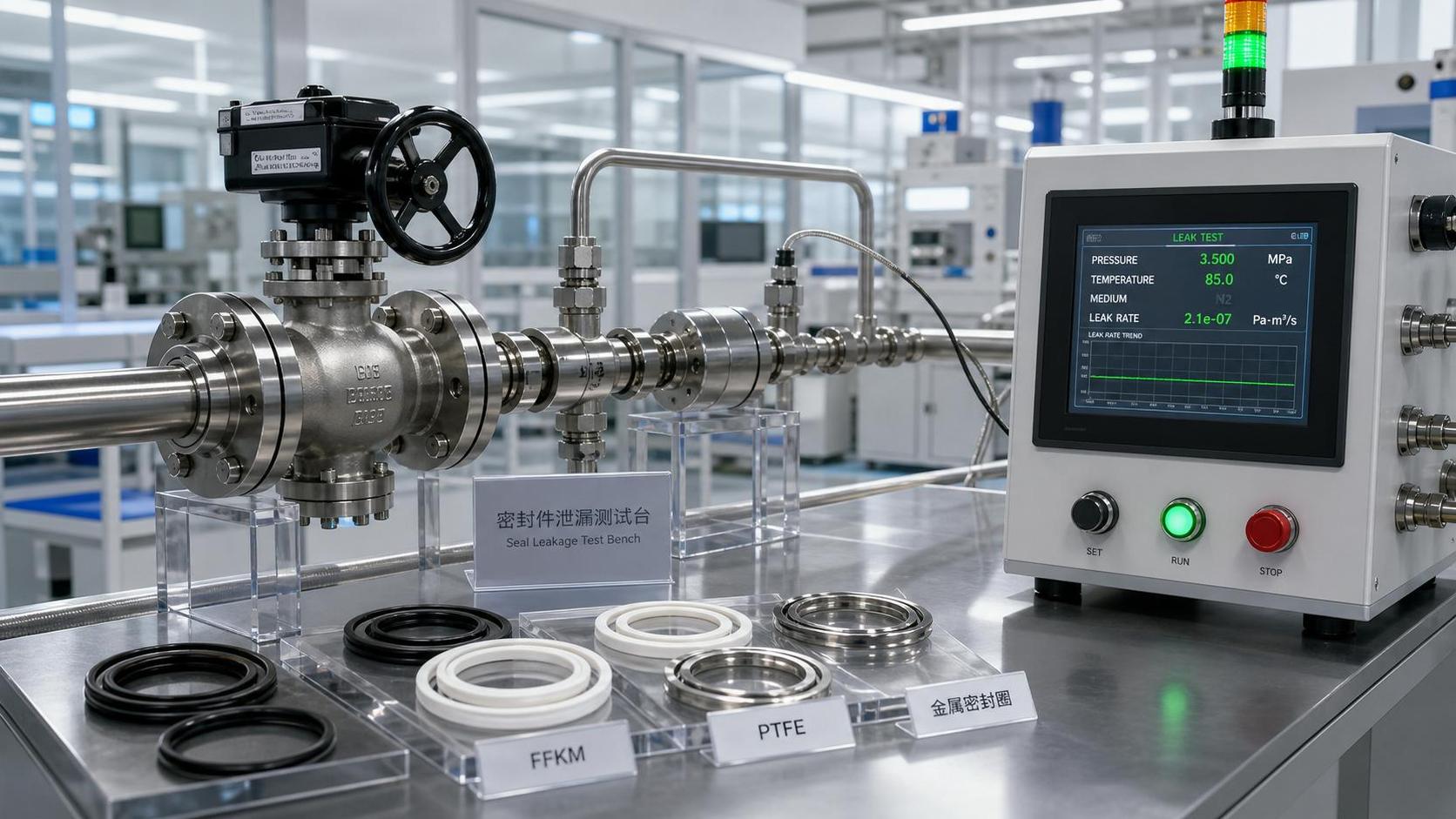
Seal Leakage Comparison Data: What Results Actually Matter
When reviewing seal leakage comparison data, headline numbers rarely tell the full story.
A leak rate looks precise, but precision without context can mislead selection decisions.
In critical systems, what matters is not the lowest published value.
What matters is whether the result reflects real pressure, media, temperature, motion, and failure consequence.
That is where seal leakage comparison data becomes useful instead of decorative.
For high-risk applications, leakage data must support engineering judgment, compliance review, and procurement confidence at the same time.
This is especially true in the G-PCS environment, where containment logic affects valves, RF systems, mechanical seals, actuators, and advanced gasket platforms.
Why Seal Leakage Comparison Data Often Gets Misread
The first problem is unit confusion.
Some reports use sccm, others use Pa·m3/s, mg/s, ppm, or pressure decay over time.
Without conversion discipline, seal leakage comparison data cannot support an apples-to-apples decision.
The second problem is selective testing.
A seal may perform well in static helium testing, then behave very differently in dynamic liquid service.
The third problem is missing duration.
Initial leakage values can look excellent before compression set, thermal cycling, or surface wear changes the outcome.
More importantly, many reports hide boundary conditions in footnotes.
That includes gland design, surface finish, preload, lubrication, installation method, and test fixture geometry.
From a technical evaluation standpoint, those details are not minor.
They often explain most of the variation inside seal leakage comparison data.
The Results That Actually Matter
Useful seal leakage comparison data has five traits.
1. Test Medium Relevance
Helium is common because it is sensitive and easy to detect.
Still, helium leakage data alone may overstate or understate service risk.
Gas viscosity, molecule size, wetting behavior, and permeation all affect results.
Hydrogen service, solvent exposure, steam duty, and high-purity vacuum applications need closer medium matching.
2. Pressure And Differential Pressure
Absolute pressure matters, but differential pressure often matters more.
A low leak rate at 2 bar says little about performance at 200 bar or under vacuum transition.
Good seal leakage comparison data shows the leakage curve across multiple pressure points.
3. Temperature Range And Cycling
Single-point room temperature data is weak evidence for demanding systems.
Thermal expansion mismatch, elastomer hardening, and material relaxation can change sealing behavior quickly.
In practice, temperature cycling data usually reveals more than a polished brochure number.
4. Static Versus Dynamic Condition
A static gasket and a reciprocating actuator seal should never share the same evaluation logic.
Motion introduces wear, frictional heat, micro-misalignment, and surface film disruption.
If the application moves, seal leakage comparison data must include cycle count and speed.
5. End-Of-Life Behavior
Early-life performance is useful, but degradation behavior is usually the real decision driver.
A slightly higher initial leak rate with stable aging may be safer than a very low initial rate that climbs sharply.
How To Compare Leakage Data Across Materials
Material comparison is where many evaluations lose discipline.
FFKM, PTFE, filled PTFE, graphite, metal seals, and engineered composites solve different containment problems.
The better question is not which material leaks least in general.
The better question is which material keeps leakage within acceptable limits under actual duty.
This also means seal leakage comparison data should sit beside mechanical and chemical data, not replace it.
A narrow leakage win can disappear once installation tolerance or media exposure enters the picture.
Why Standards And Test Methods Change The Meaning
Standards give leakage data credibility, but only when the method aligns with the application.
ISO, API, SEMI, MIL-SPEC, and product-specific protocols often define different test logic.
One method may target emissions control.
Another may target vacuum integrity, explosive decompression resistance, or cleanroom contamination risk.
This is where seal leakage comparison data must be linked to a compliance objective.
- For semiconductor tools, outgassing and ultra-clean leakage behavior may outweigh bulk leak rate alone.
- For hydrogen or UHP valves, pressure cycling and permeation control carry heavier weight.
- For aerospace and defense, broad environmental durability can matter more than one benchmark number.
- For RF and microwave systems, stable containment under thermal loading is often the decisive factor.
A compliant result is not automatically a transferable result.
That distinction deserves close attention during technical review.
Common Signals Of Misleading Seal Leakage Comparison Data
Several warning signs show up again and again.
- Only one pressure point is reported.
- The test medium is unspecified or commercially irrelevant.
- No temperature range or thermal cycling data appears.
- Fixture design, seal geometry, or surface finish is omitted.
- The dataset shows averages without spread, deviation, or sample size.
- Aging, wear, or retest data is absent.
The stronger signal is not a perfect number.
It is a transparent dataset with enough detail to survive scrutiny.
A Practical Review Framework
To make seal leakage comparison data actionable, use a short review framework.
- Confirm unit consistency and convert results into one working format.
- Check that pressure, temperature, media, and motion match service conditions.
- Review sample size, repeatability, and end-of-life behavior.
- Map the test method to the required standard or qualification route.
- Balance leakage data against compatibility, wear, and tolerance sensitivity.
This approach keeps seal leakage comparison data tied to actual risk.
It also reduces the chance of selecting a material that performs well only in a controlled demonstration.
What Good Decisions Look Like
The best decisions come from leakage data that is comparable, application-based, and standard-aware.
In other words, useful seal leakage comparison data answers three questions clearly.
Was the seal tested in conditions that resemble reality?
Does the leakage result stay stable across time and stress?
And does the method support the compliance path the system actually needs?
Once those answers are in place, seal leakage comparison data becomes a strong decision tool.
Without them, even impressive numbers can point a program in the wrong direction.
The practical next step is simple: evaluate every leakage dataset against service reality before comparing suppliers, materials, or designs.
Industry Briefing
Get the top 5 industry headlines delivered to your inbox every morning.