Environmental Integrity Solutions Compliance: What to Check First
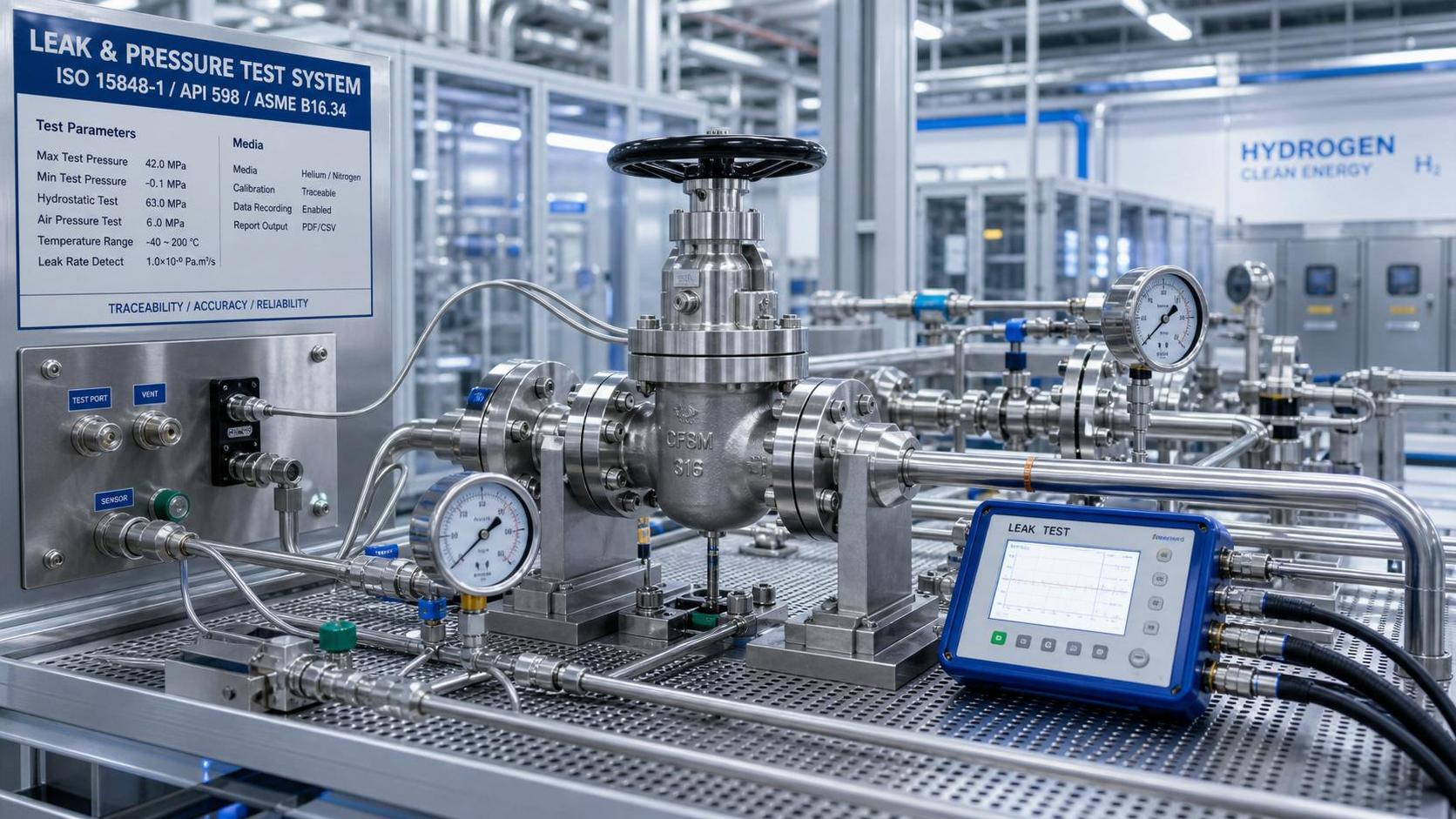
Environmental integrity solutions compliance begins with a practical question: can a system keep containment, traceability, and stable performance when operating conditions become less than ideal?
That question matters across sectors, from semiconductor processing and hydrogen handling to RF energy equipment and extreme-environment sealing systems.
A minor leak, unnoticed material reaction, or weak documentation trail can quickly move from a maintenance issue to a safety, regulatory, and cost problem.
In practice, environmental integrity solutions compliance is not only about passing an audit.
It is about proving that valves, seals, actuators, gaskets, and related assemblies will hold up under pressure, temperature, media exposure, and repeated cycling.
Why the issue is getting more attention
Industrial systems are becoming more compact, more precise, and more exposed to demanding environments.
At the same time, compliance expectations are tightening.
Operators are expected to demonstrate not just nominal performance, but controlled risk under real operating stress.
This is especially relevant where containment failure affects product purity, worker safety, environmental release, or mission reliability.
The pressure is stronger in high-value supply chains.
Sub-nanometer fabrication, high-frequency microwave systems, deep-space hardware, and hydrogen-compatible flow control all depend on tight tolerances and predictable sealing behavior.
In those contexts, environmental integrity solutions compliance becomes a cross-functional reliability discipline, not a paperwork exercise.
What environmental integrity solutions compliance really covers
The phrase sounds broad because it is broad.
It covers the ability of equipment and components to prevent unintended release, preserve process conditions, and maintain documented conformity over time.
That includes physical containment, but also verification logic.
A system may appear mechanically sound, yet still fail compliance if material records are incomplete, test methods are inconsistent, or service limits are unclear.
Usually, environmental integrity solutions compliance has four linked dimensions:
- material compatibility with process media and cleaning agents
- seal and joint reliability through the full duty cycle
- pressure and vacuum integrity under expected extremes
- traceable alignment with ISO, SEMI, API, MIL-SPEC, or site-specific rules
If one of these dimensions is weak, the rest become harder to trust.
What to check first
The first review should focus on failure points that typically hide behind acceptable lab results or supplier claims.
Simple component names are not enough.
Actual compound formulation, surface condition, assembly load, and service profile often determine whether environmental integrity solutions compliance will hold in use.
Material compatibility
Start with the contact materials, especially elastomers, engineered polymers, metals, adhesives, and coatings.
A seal rated for temperature may still fail in an aggressive chemical or plasma-cleaning environment.
FFKM, PTFE blends, specialty composites, and high-grade alloys can improve margins, but only when matched to the real medium and exposure duration.
Seal reliability
Look beyond catalog pressure ratings.
Check compression set behavior, creep, thermal cycling response, wear profile, and tolerance sensitivity.
Mechanical seals, gasket stacks, and dynamic sealing interfaces often pass static tests but weaken under vibration or rapid actuation.
Pressure integrity
Review test pressure, burst margin, leak-rate thresholds, and pressure-pulse performance.
For UHP valves or hydrogen-compatible assemblies, pressure containment must be tied to fatigue life and permeation behavior, not only a single proof test.
Standards alignment
Compliance claims should map to actual standards, revision levels, and application boundaries.
A general ISO statement is weaker than a documented link to the exact test method, acceptance criteria, and lot traceability process.
Where weak compliance usually appears
The most common gaps are rarely dramatic at first.
They appear as inconsistent certificates, vague service limits, incomplete test histories, or unexplained material substitutions.
Those signs deserve attention because they often point to deeper control issues.
How this applies across critical equipment categories
Environmental integrity solutions compliance does not look identical in every asset class.
Still, the logic of containment and flow remains consistent.
That is why component-level intelligence matters.
In UHP control and valve systems, the first concern is usually leak containment under pressure spikes, media compatibility, and seat durability.
In industrial microwave and RF energy systems, attention shifts toward thermal stability, shielding integrity, cooling interfaces, and material behavior near high-frequency energy sources.
Extreme-environment mechanical seals require a closer look at face materials, lubrication assumptions, shaft dynamics, and emergency upset conditions.
High-precision pneumatic and piezoelectric actuators introduce another layer: repeatability under micro-movement, contamination control, and response drift over time.
Specialized polymer and composite gaskets often become the overlooked compliance hinge, particularly where aggressive media, high purity, or thermal swing are involved.
This is the type of cross-sector comparison that G-PCS is built to support.
By linking component behavior to standards and application context, it becomes easier to judge whether a compliance claim is meaningful or only superficial.
A workable review method
A useful compliance review should be short enough to repeat and detailed enough to expose risk.
Usually, that means checking evidence in a fixed order.
- Define the actual service envelope, including upset conditions and maintenance cycles.
- Match every wetted and sealing material to the real media, not the nominal process name.
- Review leak, pressure, fatigue, and thermal-cycle test data against the intended duty profile.
- Confirm traceability from material batch to finished assembly and test record.
- Check whether stated compliance aligns with the exact standard and revision used.
- Document any assumption that is still unsupported by field evidence.
This approach keeps environmental integrity solutions compliance grounded in evidence instead of broad declarations.
What deserves a second look before approval
Some conditions justify extra scrutiny even when documents look complete.
Mixed-media service, rapid thermal transition, intermittent vacuum, hydrogen exposure, plasma cleaning, and high-cycle actuation all increase the chance of hidden failure modes.
Supplier change notices also matter.
A small change in elastomer compound, surface finish, spring material, or curing process can affect environmental integrity solutions compliance more than a drawing revision suggests.
Where the consequences are severe, comparative validation across qualified alternatives is often worth the effort.
Turning compliance into a stronger control baseline
The most effective organizations treat environmental integrity solutions compliance as an operating baseline, not a one-time gate.
That means updating approved material lists, linking component risk to inspection frequency, and tightening traceability where field conditions are less predictable.
It also means comparing component claims with independent technical benchmarks.
For systems built around containment and flow, the better next step is usually a focused review of the few parts that carry the highest consequence of failure.
When those parts are verified against application-specific standards, service conditions, and traceable test evidence, environmental integrity solutions compliance becomes easier to defend and easier to maintain.
Industry Briefing
Get the top 5 industry headlines delivered to your inbox every morning.
- RF energy systems
- piezoelectric actuators
- composite gaskets
- flow control
- sub-nanometer fabrication
- high-frequency microwave
- environmental integrity
- extreme-environment mechanical seals
- environmental integrity solutions
- mechanical seals
- environmental integrity solutions compliance
- engineered polymers