Industrial Environmental News: 2026 Equipment Rules
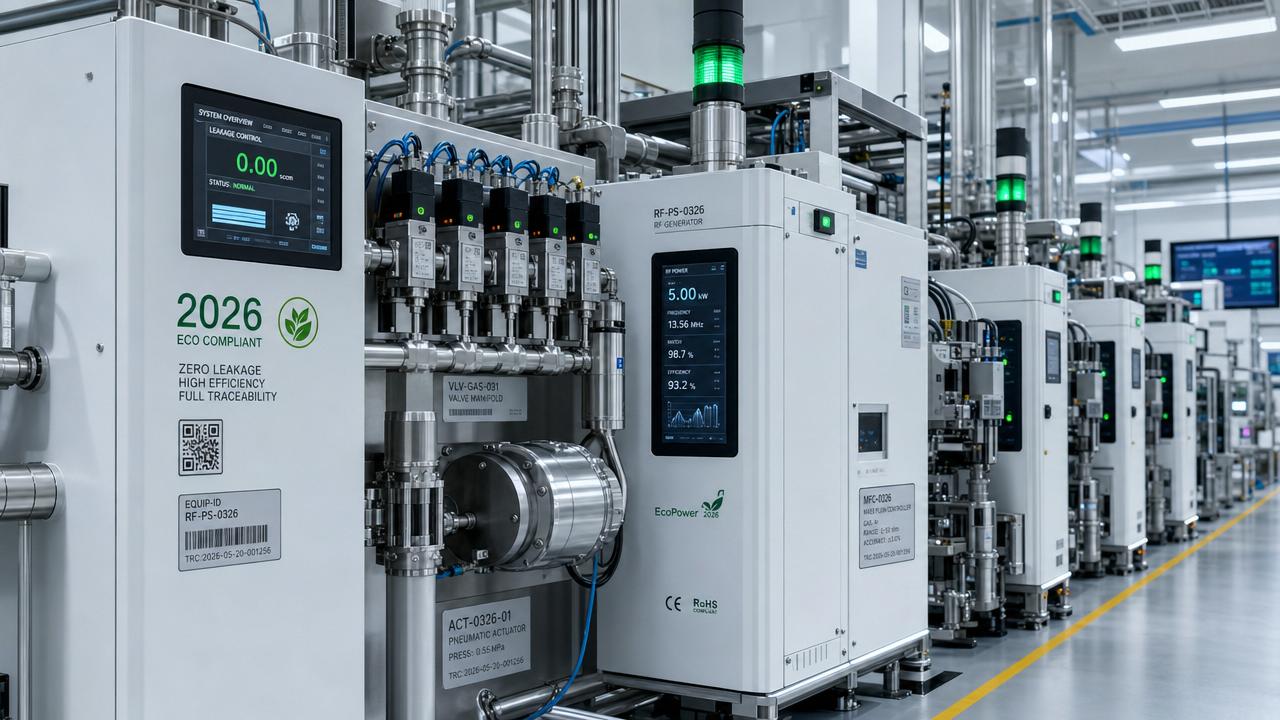
Industrial Environmental News: 2026 Equipment Rules
As 2026 regulatory updates reshape compliance expectations across critical manufacturing, energy, aerospace, and advanced technology sectors, decision-makers need actionable industrial environmental news for industrial equipment.
The coming rules are not only about emissions. They increasingly connect containment integrity, lifecycle documentation, energy efficiency, material traceability, and operational resilience.
For advanced systems, the central question is changing. Equipment must now prove environmental performance while maintaining pressure control, sealing stability, and rapid response precision.
2026 Signals Point Toward Stricter Equipment Accountability
Recent industrial environmental news for industrial equipment shows a clear shift from facility-level reporting toward component-level accountability.
Valves, seals, actuators, gaskets, RF energy systems, and pressure-control assemblies are becoming part of measurable environmental risk frameworks.
This matters because critical equipment often determines whether emissions, leaks, thermal losses, or process deviations remain controlled.
In 2026, compliance evidence may need to travel with the equipment, not only with the facility operating it.
The Most Visible Trend Signals
- Tighter documentation for leak-prone and pressure-bearing components.
- Greater scrutiny of fluorinated materials and high-performance elastomers.
- More attention to energy conversion losses in industrial microwave and RF systems.
- Expanded expectations for predictive maintenance records.
- Closer alignment between environmental compliance and safety standards.
These signals suggest that industrial environmental news for industrial equipment will become more technical, evidence-driven, and asset-specific through 2026.
Why Equipment Rules Are Moving Beyond Basic Emissions
The next phase of environmental regulation reflects the complexity of modern industrial systems.
Hydrogen infrastructure, semiconductor fabrication, aerospace testing, and high-frequency processing all depend on precise containment and flow behavior.
Small deviations can trigger environmental, safety, and productivity consequences at the same time.
This broader direction makes industrial environmental news for industrial equipment especially relevant for high-specification assets and regulated supply chains.
Containment Integrity Becomes a Core Environmental Metric
Containment has moved from engineering preference to environmental performance indicator.
In high-pressure hydrogen, chemical processing, vacuum systems, and semiconductor gas delivery, leakage is no longer a minor maintenance issue.
It can influence emissions exposure, worker safety, process purity, and regulatory reporting quality.
Industrial environmental news for industrial equipment increasingly highlights fugitive emissions, permeation, seal relaxation, thermal cycling, and pressure fatigue.
Likely Areas of Scrutiny
- Hydrogen-compatible 350bar and 700bar valve assemblies.
- FFKM, PTFE, and advanced polymer sealing systems.
- Vacuum seals used in ultra-clean production environments.
- High-cycle pneumatic and piezoelectric actuator interfaces.
- Composite gaskets exposed to aggressive media.
The practical message is clear. Equipment selection should consider verified leakage performance across temperature, pressure, media, and duty-cycle conditions.
Energy Systems Face Efficiency and Emissions Convergence
Industrial microwave and RF energy systems are entering a more demanding environmental conversation.
Efficiency, shielding, thermal management, power stability, and component life may become increasingly connected to environmental evaluation.
This does not mean every magnetron, solid-state generator, or applicator will face identical rules.
However, industrial environmental news for industrial equipment indicates rising interest in energy intensity and avoidable waste.
Performance Questions Becoming More Important
- How efficiently is electrical energy converted into usable process energy?
- How stable is output under variable production loads?
- How well are electromagnetic leakage and thermal losses controlled?
- How often do components require replacement or recalibration?
These questions link environmental compliance with reliability engineering, total cost, and long-term asset strategy.
Material Rules Could Reframe Sealing and Gasket Decisions
Specialized polymers, elastomers, and composite gaskets provide essential performance in harsh industrial environments.
Yet 2026 policy discussions may increase pressure on chemical disclosure, end-of-life handling, and high-risk material substitution.
Industrial environmental news for industrial equipment often connects these topics with PFAS-related scrutiny and broader chemical management reforms.
The challenge is balancing environmental expectations with uncompromised sealing reliability.
A poorly matched substitute may reduce regulatory exposure in one area while increasing leakage, failure frequency, or maintenance waste.
Selection Criteria May Need Rebalancing
- Chemical resistance under actual process media.
- Compression set after thermal cycling.
- Permeation behavior for hydrogen and aggressive gases.
- Traceability of compound formulation and batch history.
- Documented compatibility with ISO, SEMI, API, or MIL-SPEC references.
This is where industrial environmental news for industrial equipment becomes directly relevant to specification discipline.
Operational Impact Will Vary by Equipment Class
The 2026 rule environment will not affect every asset equally.
Equipment exposed to pressure, heat, reactive chemicals, or precision motion will likely face higher documentation expectations.
Industrial environmental news for industrial equipment should therefore be interpreted by equipment class, duty cycle, and risk consequence.
What Technical Teams Should Monitor Before 2026
Early preparation should focus on evidence quality, not only equipment replacement.
Many compliance gaps appear because performance data is incomplete, fragmented, or unavailable during audits and qualification reviews.
Core Monitoring Priorities
- Map equipment that controls emissions, pressure, containment, or energy conversion.
- Review current certificates, test reports, and material declarations.
- Compare maintenance records with actual failure modes.
- Identify assets lacking traceable calibration or leak-testing history.
- Monitor industrial environmental news for industrial equipment by region and standard body.
This approach turns regulatory uncertainty into a structured readiness program.
A Practical Response Framework for 2026 Readiness
A strong response combines engineering validation, supplier transparency, and operational data discipline.
The objective is not to chase every headline. It is to identify which rule changes affect critical equipment decisions.
Industrial environmental news for industrial equipment becomes more valuable when translated into these operational actions.
How G-PCS Supports Technical Interpretation
G-PCS focuses on the logic of containment and flow across critical industrial systems.
Its perspective connects environmental regulation with high-performance component engineering, reliability frameworks, and global technical standards.
For 2026, this matters because compliance decisions will increasingly depend on equipment-level evidence.
UHP control valves, RF energy systems, mechanical seals, actuators, and specialized gaskets all require disciplined interpretation.
Industrial environmental news for industrial equipment should be assessed through measurable performance, not isolated policy language.
Next Step: Turn Regulatory Signals Into Asset Decisions
The most effective 2026 response starts with a focused equipment review.
Prioritize assets tied to containment, emissions control, high pressure, high energy use, or hazardous media.
Then compare available evidence against expected regulatory questions, technical standards, and internal reliability targets.
Industrial environmental news for industrial equipment will continue evolving, but early structure reduces uncertainty.
Use the coming year to strengthen documentation, validate critical components, and align equipment specifications with environmental performance expectations.
A disciplined readiness plan can protect compliance, reliability, and lifecycle value as 2026 equipment rules take shape.
Industry Briefing
Get the top 5 industry headlines delivered to your inbox every morning.