Heavy Industry Machinery Parts: Costly Wear Points to Check
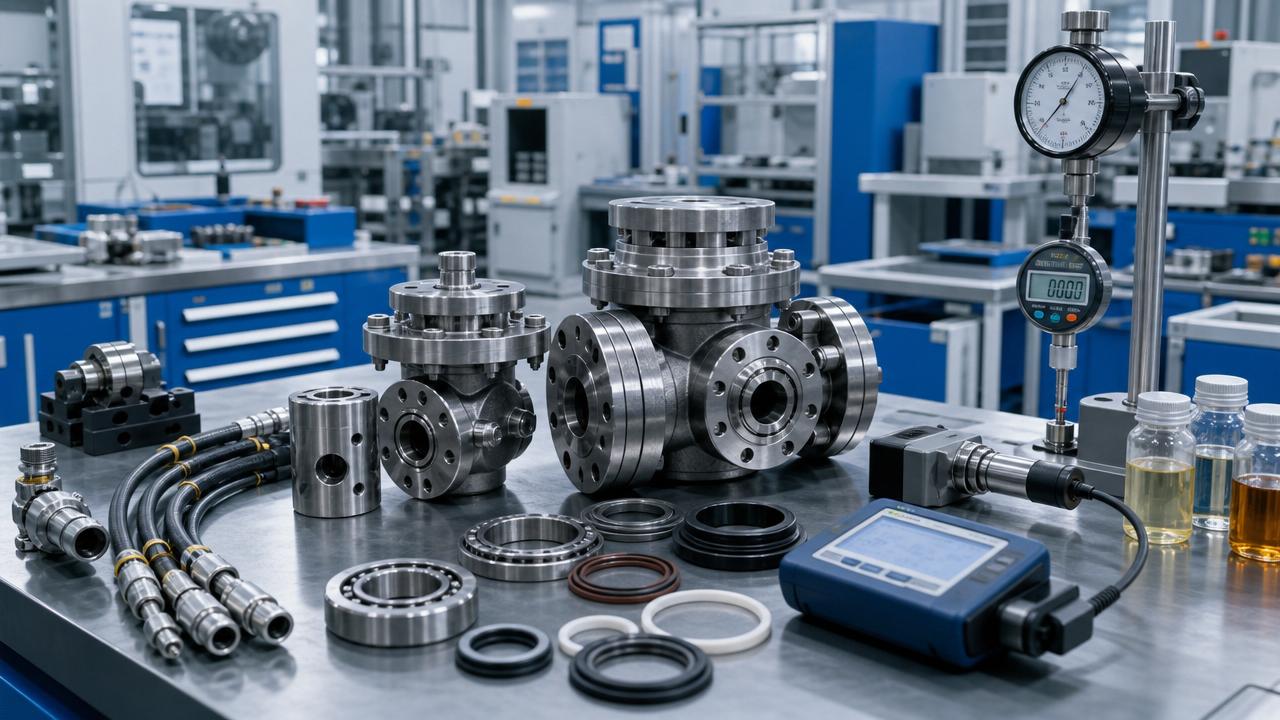
For after-sales maintenance, identifying wear before failure is the fastest way to reduce downtime, emergency repairs, and unplanned replacement costs.
Heavy industry machinery parts operate under extreme load, vibration, heat, contamination, and pressure, so certain components become costly failure points.
This guide explains where to inspect first, how scenarios change priorities, and which checks protect reliability across demanding industrial systems.
Why Wear Patterns Differ Across Heavy Industry Machinery Parts
Wear is never random. It reflects load direction, media chemistry, operating cycles, contamination level, and maintenance discipline.
Heavy industry machinery parts in mining, steel, cement, energy, marine, and process plants face different failure drivers.
A sealing interface may fail from heat aging, while a valve seat may fail from erosion, cavitation, or poor alignment.
A bearing may survive high load but fail early when lubrication becomes contaminated by dust, water, or process chemicals.
Effective inspection starts by linking each machine scenario to the most vulnerable heavy industry machinery parts inside it.
Scenario 1: High-Pressure Flow Systems and Valve Wear
High-pressure systems place severe stress on valve seats, stems, packing sets, seals, and precision flow-control assemblies.
In hydraulic presses, chemical dosing skids, hydrogen systems, and test benches, leakage is often the first visible warning.
Heavy industry machinery parts in these systems should be checked for scoring, galling, extrusion, seat pitting, and stem vibration marks.
Core inspection points
- Inspect valve seats for erosion rings, cavitation pits, and uneven contact bands.
- Check stem surfaces for scratches that damage packing during cycling.
- Measure actuator response if pressure control becomes unstable.
- Confirm gasket compression after thermal or pressure cycling.
When pressure spikes repeat, replace only after confirming root cause. Otherwise, new heavy industry machinery parts may fail quickly.
Scenario 2: Abrasive Material Handling and Surface Loss
Mining, quarrying, cement, aggregate, and bulk conveying systems punish contact surfaces through impact and abrasive sliding.
Chutes, liners, crusher jaws, rollers, scraper blades, bushings, and seals often become recurring cost centers.
Heavy industry machinery parts in abrasive service require thickness checks, surface mapping, and scheduled comparison against baseline measurements.
Judgment signals that matter
Uneven wear usually indicates material misdirection, poor feed control, or misaligned transfer points.
Rapid liner loss can also reveal moisture changes, oversize particles, or unsuitable hardness selection.
For heavy industry machinery parts exposed to dust, sealing failure accelerates bearing damage and actuator contamination.
Scenario 3: Rotating Equipment, Bearings, and Misalignment
Rotating systems fail expensively when bearings, couplings, shafts, mechanical seals, and lubrication systems are not inspected together.
Pumps, compressors, gearboxes, crushers, fans, and turbines all convert small alignment errors into heat and vibration.
Heavy industry machinery parts in rotating assemblies should be evaluated through vibration trends, temperature rise, oil condition, and seal leakage.
Checks that reduce catastrophic failure
- Compare bearing temperature against normal operating history.
- Inspect coupling inserts for cracks, hardening, or torsional wear.
- Review lubricant color, viscosity, particles, and water content.
- Check mechanical seal faces for heat checking or dry-running marks.
Bearing replacement alone may not solve vibration. Misalignment can damage new heavy industry machinery parts within days.
Scenario 4: Heat, Chemicals, and Sealing Degradation
Seals and gaskets are small, but their failure can stop large process lines immediately.
Extreme temperature, aggressive media, steam, solvents, fuels, and oxidizing fluids change elastomer and polymer behavior.
Heavy industry machinery parts such as FFKM seals, PTFE gaskets, graphite packing, and composite seals require material-specific inspection.
Common sealing wear modes
- Compression set reduces recovery after repeated thermal cycling.
- Chemical swelling changes seal geometry and contact pressure.
- Extrusion creates nibbling at high-pressure gaps.
- Thermal cracking indicates overheating or incompatible compound selection.
For critical containment, heavy industry machinery parts should be matched against media compatibility, pressure, temperature, and cleaning chemistry.
Scenario 5: Actuators, Pneumatics, and Control Response Drift
Modern industrial systems rely on precise movement, fast response, and repeatable positioning under difficult environmental conditions.
Pneumatic cylinders, piezoelectric positioners, solenoid valves, regulators, and feedback devices can drift before complete failure.
Heavy industry machinery parts in actuation circuits should be checked when response slows, positioning overshoots, or pressure becomes unstable.
Practical diagnosis points
Air contamination causes internal seal wear, sticking, corrosion, and uneven cylinder motion.
In precision assemblies, small particles can affect micro-positioning and create repeatability errors.
Actuator-related heavy industry machinery parts require clean supply media, validated response timing, and periodic calibration checks.
Different Scenarios, Different Wear Priorities
This comparison helps rank heavy industry machinery parts by consequence, not just replacement price.
A low-cost seal can create a high-cost outage when it protects pressure, contamination control, or hazardous containment.
Scenario-Based Maintenance Prioritization for Heavy Industry Machinery Parts
Inspection frequency should reflect risk. High-load, high-temperature, and high-contamination zones deserve shorter inspection intervals.
Use operating history to separate normal wear from abnormal degradation. A trend is more useful than a single reading.
- Map critical heavy industry machinery parts by machine function and downtime consequence.
- Record baseline dimensions, vibration, temperature, pressure, and leakage rates.
- Link each wear sign to possible operating causes.
- Replace parts only after correcting contamination, alignment, pressure, or lubrication problems.
- Review failed parts before changing material, design, or supplier specification.
This sequence prevents repetitive replacement of heavy industry machinery parts without solving the operating condition behind the wear.
Common Misjudgments That Increase Replacement Costs
Many expensive failures begin with small assumptions that delay proper diagnosis.
The first mistake is treating leakage as only a sealing problem. Pressure pulsation or shaft movement may be the real cause.
The second mistake is replacing bearings without checking lubrication cleanliness, housing fit, and coupling alignment.
The third mistake is selecting heavy industry machinery parts only by size, while ignoring media, temperature, speed, and pressure class.
The fourth mistake is extending service intervals after no visible failure. Hidden fatigue can still advance inside load-bearing parts.
The fifth mistake is overlooking standards. ISO, API, SEMI, MIL-SPEC, and site-specific rules may affect acceptance criteria.
How G-PCS Supports Better Wear Decisions
G-PCS focuses on the logic of containment and flow across demanding industrial environments.
Its technical perspective connects valves, sealing systems, actuators, gaskets, polymers, microwave systems, and high-pressure control assemblies.
For heavy industry machinery parts, that means inspection decisions can be linked to materials, standards, operating data, and failure modes.
The goal is not simply replacing worn components. The goal is controlling the conditions that produce repeat failures.
Action Plan: Turn Inspection Findings Into Reliability Gains
Start with the machines that create the highest downtime cost, safety exposure, or quality risk.
Then list the heavy industry machinery parts most exposed to pressure, abrasion, heat, contamination, vibration, and chemical attack.
Create a repeatable inspection sheet covering dimensions, surface condition, leakage, vibration, temperature, and operating hours.
When wear accelerates, compare the failed part against the scenario, not just the catalog specification.
Reliable operation depends on matching heavy industry machinery parts to real service conditions and validating them through disciplined inspection.
Use each finding to refine material selection, sealing design, lubrication practice, alignment control, and spare-part planning.
That approach converts maintenance from reactive replacement into scenario-based reliability management for heavy industry machinery parts.
Industry Briefing
Get the top 5 industry headlines delivered to your inbox every morning.