Pump Seal Quench System Problems and Practical Fixes
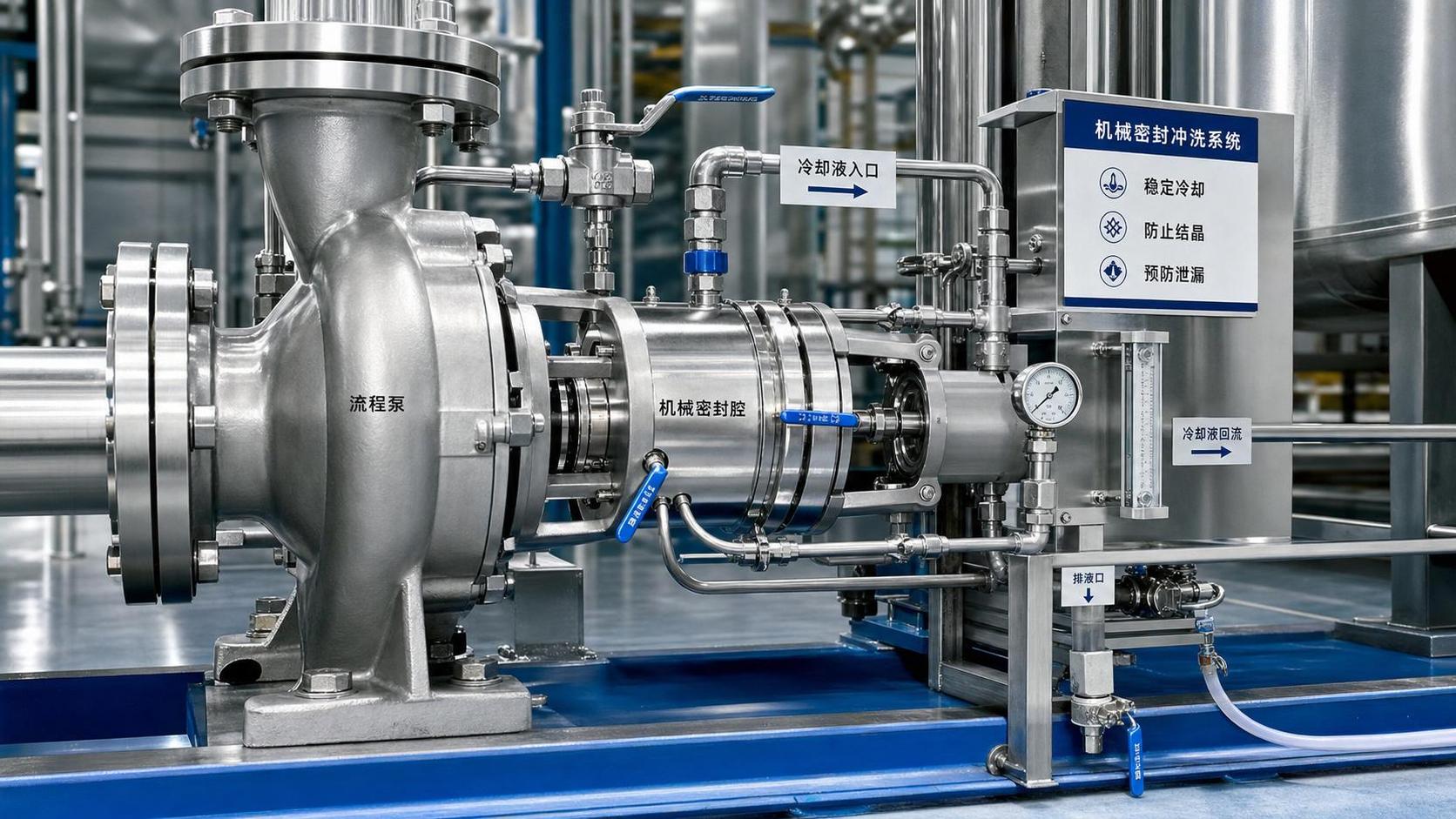
Why pump seal quench system problems rarely look the same in practice
Pump seal quench system failures usually begin as small instability, not dramatic breakdown. A slight temperature rise, salt residue, erratic flow, or a wet gland area often appears first.
When those signs are ignored, the result can be leakage, overheating, contamination, and unscheduled shutdowns. In critical operations, that chain develops faster than many maintenance plans assume.
The reason is simple. A pump seal quench system is not just an accessory line around the seal. It is part of the sealing environment.
That matters across broad industrial settings. Chemical transfer, ultrapure processing, thermal service, abrasive duty, and washdown areas place very different demands on quench flow, fluid quality, pressure stability, and materials compatibility.
Within the wider containment and flow discipline, the better judgment is to treat quench performance as a system reliability issue. That is consistent with the G-PCS view of sealing logic, standards alignment, and failure prevention.
Actual operating conditions change what the pump seal quench system must do
In some services, the quench exists mainly to cool and clean the atmospheric side of the seal. In others, it prevents crystallization, keeps sticky product from hardening, or reduces exposure around hazardous fluids.
That is why similar pumps can require different corrective actions. A pump seal quench system that works in water service may fail quickly in hot slurry, solvent duty, or product that leaves solids after evaporation.
More useful field questions include:
- Is the quench fluid meant to cool, flush, dilute, or isolate?
- Does the process create solids, film, or thermal shock risk?
- Is the seal seeing frequent starts, dry running episodes, or unstable suction?
- Are tubing, fittings, and elastomers compatible with both fluids?
Those answers define whether the problem is poor quench design, poor control, wrong fluid selection, or maintenance drift.
When hot service drives the problem, cooling alone is not the full answer
High-temperature applications often show the most visible pump seal quench system problems. Operators may increase quench flow, yet face recurring leakage and carbon build-up around the seal.
In these cases, the real issue is often heat distribution rather than total flow. If the quench does not reach the right zone, the seal faces still run hot.
A second complication is thermal cycling. Repeated starts and stops can distort faces, harden deposits, and crack residue into abrasive particles.
Practical fixes usually include verifying nozzle orientation, checking line restrictions, confirming stable quench supply temperature, and reviewing whether the chosen fluid flashes or degrades near the gland.
Where process sensitivity is high, it also helps to compare seal support details against API and material compatibility guidance rather than relying on legacy settings.
Crystallizing and solids-forming duties need a different pump seal quench system strategy
A common field mistake is treating crystallizing product like ordinary liquid service. The pump seal quench system then gets sized for temperature control, while solid formation remains the real failure driver.
This shows up in fertilizer streams, chemical intermediates, slurry transfer, and fluids that dry into hard deposits. Leakage may begin only after shutdown, when stagnant product cools and hardens.
In that setting, continuous wetting and surface cleaning matter more than occasional high flow. Intermittent quench can leave alternating dry and wet zones where crystals grow fastest.
Useful corrections include lowering dead legs in the quench line, preventing stagnant pockets, selecting a fluid that dissolves residue, and confirming that shutdown procedures keep the seal area protected.
The best pump seal quench system for solids-prone duty is usually the one that maintains consistency, not the one with the highest nominal flow value.
Clean-process environments shift the focus from leakage control to contamination control
In semiconductor-support utilities, precision chemical handling, pharmaceutical skids, and high-purity water systems, the pump seal quench system cannot be evaluated only by visible seal life.
The quench medium itself may become a contamination source. Trace ions, incompatible additives, or degraded tubing can undermine process integrity even when the seal appears stable.
That changes the judgment criteria. Fluid cleanliness, material extractables, flushing control, and drain routing become as important as temperature and pressure.
In these environments, practical fixes often involve tighter fluid qualification, more stable instrumentation, and review of elastomers, fittings, and composite parts against ISO, SEMI, or internal contamination limits.
A pump seal quench system that is acceptable in general utility service can still be wrong for high-integrity process equipment.
Different duties create different warning signs
The table below helps separate common operating patterns. It is more useful than searching for one universal fix.
Where pump seal quench system troubleshooting often goes wrong
One repeated misjudgment is focusing on the seal model while ignoring the support conditions around it. A premium seal cannot compensate for blocked quench tubing or poor drain behavior.
Another is assuming similar pumps share identical needs. The same pump seal quench system arrangement can behave differently after a fluid change, a higher duty cycle, or a revised cleaning routine.
It is also common to optimize for purchase cost and miss lifecycle effects. Quench fluid consumption, inspection frequency, seal replacement intervals, and contamination risk often outweigh the initial hardware difference.
In higher-consequence systems, missed standards alignment creates hidden risk. Pressure boundary details, elastomer compatibility, and traceability expectations may matter long before visible leakage begins.
A practical way to match the pump seal quench system to the job
A workable selection and correction process starts with field evidence, not catalog language. The aim is to define what the quench must prevent under real duty conditions.
- Record seal temperature trend, visible residue, leakage pattern, and shutdown behavior.
- Confirm actual quench fluid condition, pressure, flow stability, and return path performance.
- Review process chemistry, solids tendency, and whether evaporation changes the local environment.
- Check tubing orientation, valve position, orifice fouling, and instrumentation reliability.
- Verify compatibility of seal faces, elastomers, and adjacent polymers with both media.
This approach is especially useful where containment tolerance is tight. In advanced manufacturing, energy systems, and harsh process service, small sealing errors can propagate into wider reliability problems.
The broader G-PCS framework is relevant here because seal support decisions rarely stand alone. They interact with valve behavior, gasket integrity, actuator precision, and compliance expectations across the flow path.
What to review before the next outage window
A stable pump seal quench system comes from matching the quench function to the operating reality. Heat, solids, cleanliness, and cycling each change the correct response.
Before the next maintenance window, map each pump by process condition rather than by equipment name alone. Then compare quench fluid, line condition, material compatibility, and failure history for each group.
That review usually reveals where the risk actually sits. Sometimes the answer is a layout change. Sometimes it is a different fluid, a better shutdown routine, or tighter control of contamination pathways.
The useful next step is to build a simple site standard for pump seal quench system checks, acceptance limits, and maintenance triggers. That makes troubleshooting faster and prevents repeat failures from being treated as isolated events.
Industry Briefing
Get the top 5 industry headlines delivered to your inbox every morning.