API 682 Mechanical Seals: Selection Factors for Reliable Pump Sealing
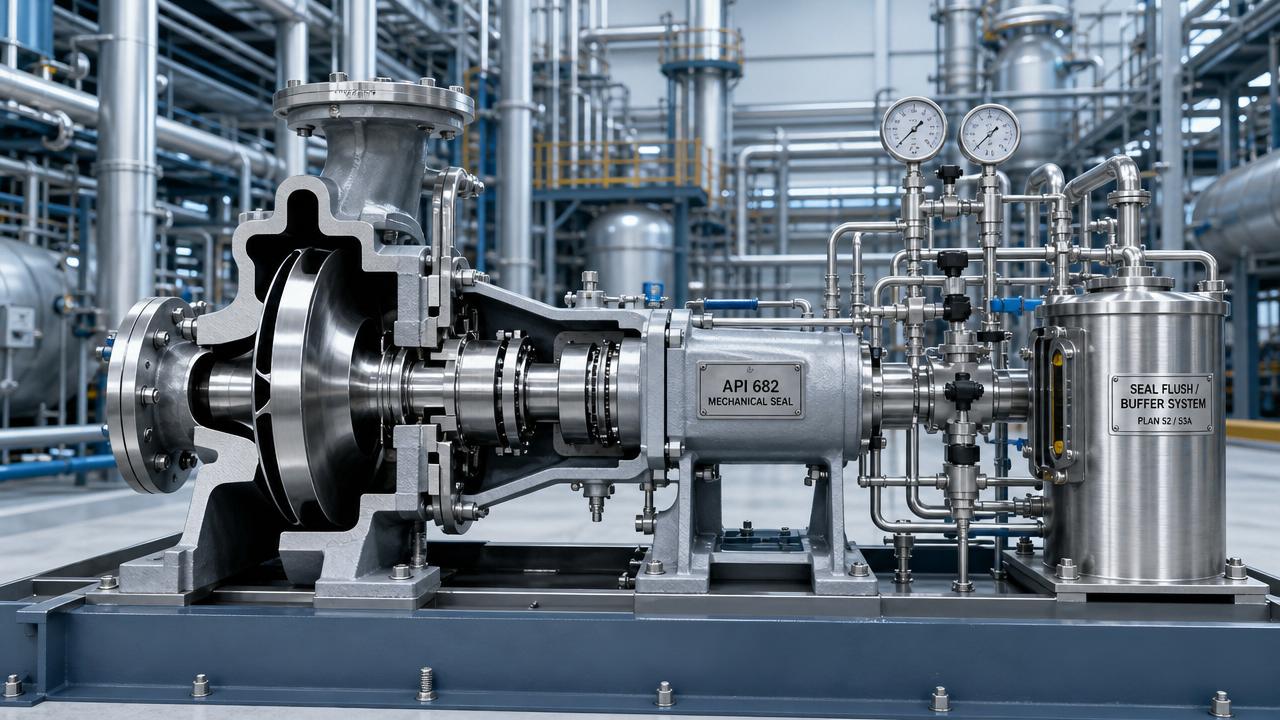
Selecting API 682 mechanical seals is rarely a simple parts decision. In pump systems handling hazardous, volatile, abrasive, or temperature-sensitive fluids, the seal becomes a reliability boundary that affects leakage control, uptime, maintenance cost, and regulatory exposure.
That is why API 682 mechanical seals remain central in refineries, chemical plants, gas processing units, pharmaceuticals, advanced manufacturing, and other process-intensive sectors. The standard gives a structured framework, but dependable pump sealing still depends on matching the seal arrangement to the real operating environment.
From the perspective of G-PCS, where containment logic is evaluated against strict international benchmarks, seal selection is best treated as a systems decision. Material compatibility, piping plan, pressure behavior, emission targets, and maintenance capability all shape whether a chosen seal performs reliably over time.
Why API 682 matters in critical pump sealing
API 682 is widely used as the reference standard for mechanical seals in centrifugal and rotary pumps within petroleum, natural gas, and chemical applications. Its value extends beyond compliance language.
In practice, the standard creates a common engineering basis for seal types, seal chamber dimensions, flush plans, testing expectations, and performance assumptions. That consistency reduces ambiguity during specification, procurement, installation, and troubleshooting.
For organizations managing sensitive flow assets, this matters because a pump seal failure is rarely isolated. It can trigger process contamination, product loss, unplanned shutdowns, environmental release, or damage to adjacent equipment.
API 682 mechanical seals are therefore not only sealing components. They are part of a broader risk-control architecture for fluid containment.
A practical way to understand the standard
At a high level, API 682 mechanical seals are organized around seal categories, arrangements, and specific seal designs. This structure helps narrow choices according to fluid hazard, process duty, and desired containment performance.
Single seals are often suitable where leakage can be tolerated within controlled limits. Dual seals are typically preferred where emissions, personnel safety, product purity, or fluid crystallization make extra containment necessary.
Arrangement selection is especially important:
- Arrangement 1 uses a single seal and is usually chosen for lower-risk services.
- Arrangement 2 uses two seals with unpressurized buffer fluid for added safety.
- Arrangement 3 uses two seals with pressurized barrier fluid for maximum containment control.
The right choice depends less on preference and more on service conditions, failure consequences, and plant operating philosophy.
The selection factors that most affect reliability
When evaluating API 682 mechanical seals, several factors deserve close attention because they directly influence leakage stability and seal life.
Fluid properties drive the first decision
The sealed fluid defines much of the selection logic. Viscosity, lubricity, vapor pressure, solids content, toxicity, corrosiveness, and tendency to polymerize all affect seal face behavior.
A clean hydrocarbon stream calls for one approach. A slurry, flashing fluid, or sticky chemical demands another. If the fluid forms deposits or loses lubrication near the faces, even a compliant seal may fail early.
Pressure and temperature must be assessed dynamically
Nameplate pressure and temperature are not enough. Upset conditions, startup cycling, shutdown heat soak, and transient pressure spikes often determine actual seal stress.
Reliable API 682 mechanical seals are selected against the full operating envelope, not just normal duty. This is particularly relevant in high-energy services where momentary deviations can disrupt the fluid film.
Seal support systems are part of the seal
Flush, quench, buffer, and barrier systems are not accessories. They are essential to thermal control, cleanliness, lubrication, and pressure management.
An otherwise sound seal can underperform if the piping plan is mismatched. Plan selection should reflect whether the service needs cooling, solids removal, vapor suppression, or external pressure support.
Materials must match both chemistry and motion
Face materials, secondary seals, and metal parts should be reviewed for corrosion resistance, thermal behavior, wear response, and compatibility with cleaning media or barrier fluids.
Silicon carbide, tungsten carbide, carbon graphite, FKM, EPDM, and FFKM each have valid use cases. The better question is how they behave together under actual process conditions.
Where evaluation often goes wrong
Many sealing problems begin before the pump starts running. The issue is often incomplete evaluation rather than poor manufacturing quality.
- Selecting by pump model without confirming the fluid’s real behavior.
- Using normal operating data while ignoring upset or standby conditions.
- Specifying seal materials without checking cleaning chemicals or CIP exposure.
- Treating the piping plan as standard rather than service-specific.
- Overlooking shaft movement, vibration, and seal chamber geometry.
These gaps are common in mixed industrial environments where pumps serve different duties, from corrosive process transfer to high-purity circulation loops.
Typical application contexts across industries
The phrase api 682 mechanical seals is strongly associated with oil and gas, yet the selection logic applies more broadly wherever containment quality is tied to process continuity.
This wider relevance aligns with the G-PCS view that extreme-environment seals should be judged not only by component ratings, but by how they protect the integrity of larger flow and energy systems.
How to compare options more effectively
A useful comparison process for API 682 mechanical seals starts with a disciplined data set. Without it, even detailed quotations can remain technically incomplete.
Key inputs worth organizing early
- Fluid composition, including contaminants, solids, and cleaning agents.
- Normal, minimum, maximum, and upset pressure and temperature.
- Available utilities for flush, cooling, and barrier circulation.
- Emissions targets, safety limits, and plant standard requirements.
- Maintenance intervals, spare strategy, and monitoring capability.
Once these inputs are clear, comparison becomes more meaningful. The question shifts from which seal is cheapest or most common to which configuration best supports stable containment in that service.
Lifecycle thinking is usually more accurate than unit cost
The lowest purchase price can hide higher operating cost through flush consumption, barrier fluid maintenance, short face life, or repeated shutdowns.
For that reason, API 682 mechanical seals should be evaluated against total lifecycle impact. In critical service, avoiding one unplanned failure may justify a more advanced arrangement.
Signals of a well-matched seal strategy
A strong selection outcome usually shows several characteristics at once:
- The seal arrangement reflects the hazard and behavior of the pumped fluid.
- Materials are chosen for both chemistry and operating transitions.
- The support plan addresses heat, solids, vaporization, or pressure control.
- Instrumentation and maintenance practices can verify actual seal health.
- Specification language is clear enough to avoid supplier interpretation gaps.
In other words, reliable sealing is usually the result of alignment, not a single premium component.
A sensible next step for evaluation
When reviewing new or replacement API 682 mechanical seals, it helps to build a short decision matrix around fluid risk, operating envelope, containment objective, and support system needs.
That approach creates a better basis for comparing arrangements, materials, and piping plans across suppliers. It also makes internal approval easier because the tradeoffs become visible and technically defensible.
For operations tied to strict reliability or compliance expectations, the most useful next move is often not broader vendor outreach, but tighter definition of service data and failure consequences. Once that foundation is clear, api 682 mechanical seals can be selected with far more confidence.
Industry Briefing
Get the top 5 industry headlines delivered to your inbox every morning.