Boiler Feed Pump Mechanical Seal Failure Signs to Watch
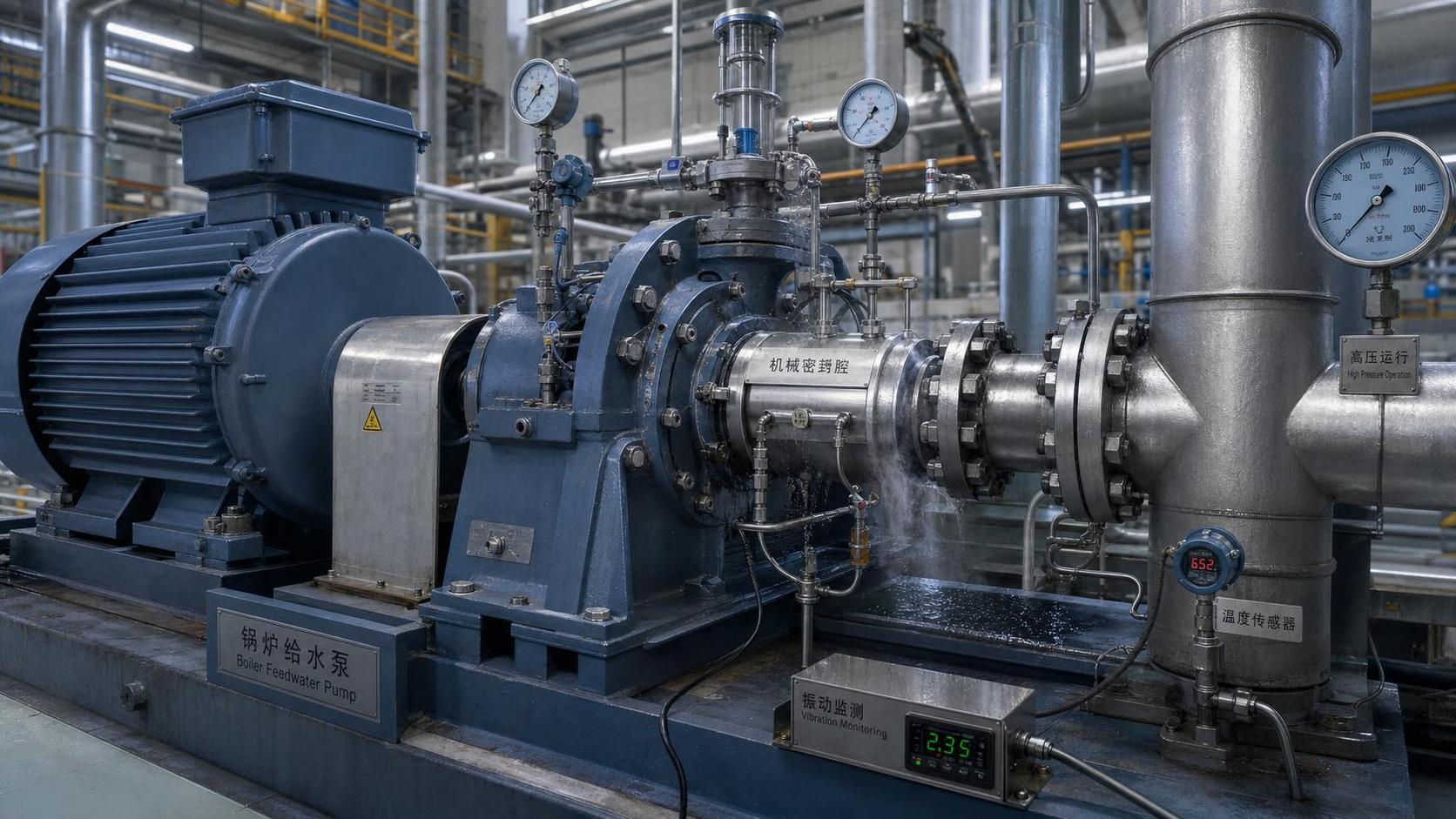
Why Early Seal Symptoms Matter in Real Boiler Feed Service
A boiler feed pump mechanical seal usually gives warning before total failure.
The problem is not visibility. It is interpretation under different operating conditions.
In power generation, process steam systems, chemical utilities, and high-load thermal plants, the same symptom can point to different causes.
A light leak during cold startup may be manageable.
The same leak during steady high-pressure duty can signal rapid face damage, flashing, or loss of lubrication.
That is why boiler feed pump mechanical seal monitoring should never rely on one visual check alone.
A useful approach combines leakage pattern, temperature trend, vibration behavior, pressure stability, and service context.
Within the broader G-PCS view of containment and flow, seal reliability is not a minor maintenance topic.
It sits inside a larger integrity framework shaped by API practice, material compatibility, thermal control, and response speed.
When a boiler feed pump mechanical seal begins to drift, the cost is rarely limited to the seal itself.
It can affect bearing life, shaft condition, pump efficiency, boiler stability, and outage exposure.
Different Operating Conditions Change What the Signs Mean
The first judgment point is service severity.
A boiler feed pump mechanical seal in a base-load unit behaves differently from one in a cycling plant.
Base-load systems usually expose slow wear patterns.
Cycling systems create repeated thermal shock, pressure fluctuation, and intermittent dry-running risk.
Feedwater quality also changes interpretation.
Clean, conditioned water may still cause trouble if low suction margin leads to flashing near the seal faces.
In other plants, trace solids or corrosion products can mark the real failure path.
Speed matters as well.
High-speed pumps amplify face instability and shaft movement much faster than moderate-speed utility pumps.
This is where a symptom-led review works better than a nameplate-led review.
Two pumps may use similar seal arrangements but require different maintenance thresholds.
A quick comparison helps frame the inspection
When Leakage Is the First Sign, Look Beyond the Drip Rate
Leakage is the most obvious boiler feed pump mechanical seal warning.
It is also the easiest one to misread.
A constant light film can suggest normal face tracking in some arrangements.
A sudden wetting pattern, pulsing leak, or steam-like vapor is more serious.
In high-temperature feedwater service, flashing can make small liquid loss look deceptively minor.
The real issue may be heat concentration at the faces.
During startup-heavy operation, leakage often rises right after thermal transition.
That points toward distortion, trapped air, or unstable flush conditions.
In long-running utility loops, a gradual leak increase often indicates wear, secondary seal hardening, or sleeve scoring.
The practical check is to record pattern, timing, and temperature together.
Without that context, a boiler feed pump mechanical seal issue is often treated too late or rebuilt too early.
Vibration and Noise Become More Important in High-Speed Systems
In some plants, leakage is not the first clue.
The first clue is a vibration signature that shifts before visible seal loss appears.
This matters in compact, high-speed boiler feed applications where shaft deflection and hydraulic disturbance reach the seal quickly.
A rising broadband vibration level can indicate cavitation, misalignment, or bearing wear.
All three can destroy a boiler feed pump mechanical seal even when the seal materials are correct.
Noise interpretation needs care.
A squeal may suggest dry running.
A periodic clicking sound may point to mechanical looseness or face chatter.
A rough grinding tone usually raises concern about debris or damaged rotating hardware.
In practice, seal failure signs and rotor failure signs overlap.
That is why monitoring should compare seal symptoms with bearing temperature, shaft movement, and suction performance.
Heat and Pressure Instability Often Reveal the Hidden Failure Mechanism
Temperature rise near the seal chamber is one of the strongest warning signs.
It often appears before catastrophic leakage.
For a boiler feed pump mechanical seal, abnormal heat usually means one of four things.
- Insufficient lubrication at the seal faces
- Improper flush or barrier performance
- Excessive face loading from pressure imbalance
- Distortion caused by repeated thermal cycling
Pressure behavior gives the next layer of meaning.
If discharge pressure becomes unstable while seal temperature rises, the problem may begin in the hydraulic side.
If pressure remains stable but seal temperature climbs, face friction or support-system failure becomes more likely.
In critical systems, this distinction affects shutdown timing.
It also affects whether the next action is seal replacement, piping correction, or a wider pump inspection.
This is consistent with G-PCS reliability thinking.
Containment issues should be traced through the full operating envelope, not isolated as a single component event.
Different Plant Situations Need Different Response Thresholds
Not every site should react to the same symptom at the same point.
That is where application context becomes practical rather than theoretical.
For older plants with limited instrumentation, a boiler feed pump mechanical seal review often starts with trend logs and manual observation.
For digitally monitored systems, alarm thresholds should reflect startup transients and seasonal operating changes.
Mixed-service industrial sites need extra caution.
A feed pump serving variable process demand can show symptoms that resemble seal wear but actually come from unstable load control.
Practical response differences by situation
Misread Signals That Often Delay the Right Fix
Several mistakes appear repeatedly in boiler feed pump mechanical seal troubleshooting.
- Treating any leakage as seal failure without checking startup state
- Replacing the seal before confirming shaft runout or bearing condition
- Comparing two similar pumps without accounting for duty-cycle differences
- Focusing on purchase cost while ignoring outage and repeat labor cost
- Using material compatibility data without matching actual feedwater chemistry and temperature range
Another common error is assuming that a premium seal design will solve a system problem.
It may not.
If pressure excursions, cavitation, or flush piping defects remain, the next boiler feed pump mechanical seal may fail the same way.
What to Check Next Before Failure Becomes an Outage
A good next step is to build a short review sequence around actual operating conditions.
- Log leakage pattern by startup, steady load, and shutdown phase
- Compare seal chamber temperature with normal historical range
- Review vibration changes alongside bearing and suction data
- Confirm flush, barrier, or cooling support performance
- Check whether current materials match chemistry, pressure, and thermal cycling severity
- Set response thresholds by service profile, not by one generic alarm value
The most reliable boiler feed pump mechanical seal decisions come from matching symptoms to service reality.
That means looking at containment, motion, heat, and operating envelope together.
When those factors are reviewed as one system, failure signs become easier to rank, easier to verify, and far less expensive to address.
Industry Briefing
Get the top 5 industry headlines delivered to your inbox every morning.