API 682 Seal Price: What Changes the Final Cost?
API 682 Seal Price: What Changes the Final Cost?
Understanding API 682 seal price is essential when balancing reliability, compliance, and long-term operating cost.
At first glance, two seals can look similar.
In practice, the final quote can differ sharply.
That gap usually comes from engineering complexity, not simple markups.
Seal arrangement, metallurgy, face material, API piping plan, testing scope, and documentation all affect price.
This also means a low initial number may hide higher lifecycle expense.
For critical pumps, an inaccurate comparison can lead to rework, downtime, and delayed startup.
So, the better question is not only, “What is the API 682 seal price?”
It is also, “What is included, what is excluded, and what risk am I buying?”
Why API 682 Seal Price Varies So Much
API 682 is not a single product.
It is a standard that defines sealing arrangements, categories, qualification expectations, and support systems.
Because of that, API 682 seal price changes with the application profile.
A refinery hydrocarbon pump will not be priced like a moderate-duty chemical service unit.
A cartridge seal for hazardous media also carries different cost than a simpler configuration.
From recent buying patterns, the biggest pricing swings come from six areas:
- seal arrangement and configuration
- material selection
- operating pressure, temperature, and fluid properties
- API plan requirements
- testing, certification, and documentation
- supplier engineering support and lead time
Once these are clear, comparing API 682 seal price becomes much more accurate.
Seal Arrangement Is Usually the First Cost Driver
Single seals generally cost less than dual seals.
That part is straightforward.
The larger issue is how the arrangement changes support hardware, reliability, and compliance.
Arrangement 1 often has the lowest API 682 seal price.
Arrangement 2 and Arrangement 3 usually increase cost through extra seal faces, containment features, and system complexity.
Between pusher and metal bellows designs, price can also shift meaningfully.
Bellows seals may cost more, especially in corrosive or high-temperature duty.
However, they may reduce failure risk where elastomer limitations become a concern.
Typical Pricing Logic by Arrangement
Materials Can Move the Price Faster Than Expected
Material selection has a direct impact on API 682 seal price.
It also influences delivery, spare strategy, and seal life.
The most visible examples are face materials and elastomers.
Carbon versus silicon carbide is not only a technical choice.
It is a price decision tied to wear, dry running resistance, and fluid cleanliness.
The same applies to FKM, EPDM, FFKM, or specialty compounds.
Metal parts matter too.
316 stainless steel is common, but duplex, Hastelloy, or other corrosion-resistant alloys increase cost quickly.
In aggressive service, though, those upgrades can prevent expensive premature replacement.
Material Questions Worth Asking Before Comparing Quotes
- Are seal face pairs identical across suppliers?
- Are elastomers suitable for temperature spikes and chemical cleaning?
- Are wetted metal parts upgraded for chloride, sulfur, or sour service?
- Is the quote based on standard stock materials or special sourcing?
These details often explain why one API 682 seal price looks unusually low.
Operating Conditions Change Both Design and Cost
Service conditions shape the seal design more than most buyers expect.
Higher pressure usually means tighter tolerances and stronger component design.
Higher temperature may require different faces, secondary seals, and cooling arrangements.
Dirty, flashing, polymerizing, or toxic fluids also raise engineering demands.
That is why API 682 seal price for the same shaft size can still vary a lot.
A quote based on clean hydrocarbon duty is not comparable to one for slurry or hot amine service.
In real sourcing work, incomplete operating data is one of the most common reasons for misleading quotations.
API Plan Requirements Add More Than Seal Cost
Many teams focus only on the seal cartridge price.
That misses a major part of total spend.
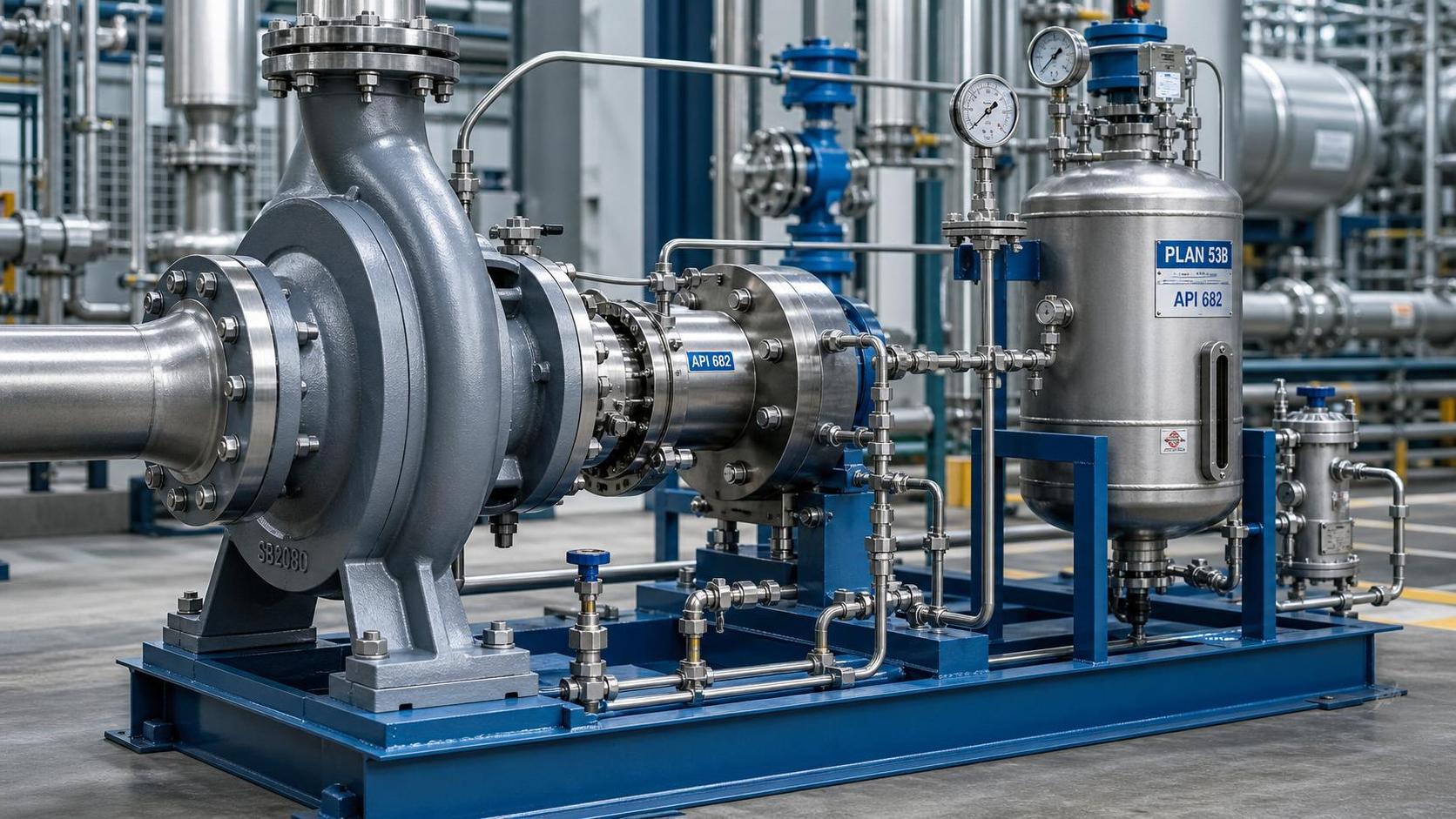
API plans such as Plan 52, Plan 53A, Plan 53B, or Plan 54 can reshape the full package cost.
Reservoirs, coolers, instrumentation, pressure devices, and piping hardware all add expense.
They also affect installation footprint and maintenance workload.
More importantly, they can dominate the final API 682 seal price package in critical service.
A lower cartridge quote may be offset by a more expensive or less efficient support system.
What to Check in the API Plan Scope
- Included instruments and transmitters
- Tubing, valves, and mounting hardware
- Cooling or circulation requirements
- Factory assembly versus field assembly scope
- Pressure vessel code or local compliance requirements
Testing, Documentation, and Supplier Support Also Affect Price
Two quotes may match technically and still have different pricing.
Often, the difference sits in quality scope.
Test procedures, inspection hold points, material traceability, and certification packages all cost money.
The same is true for drawings, data books, and installation support.
For shutdown-driven projects, lead time can raise API 682 seal price even more.
Expedited machining, premium freight, and dedicated engineering attention usually appear in the final offer.
That premium may be justified when production loss costs more than the seal itself.
How to Compare API 682 Seal Price Without Missing Hidden Cost
The cleanest approach is to compare total applied value, not unit price alone.
That means using one data sheet, one operating basis, and one documentation checklist for all bidders.
It also helps to request a cost breakdown.
When suppliers separate cartridge, API plan, instruments, testing, and spares, price logic becomes visible.
A practical comparison model should include:
- initial API 682 seal price
- support system cost
- expected maintenance interval
- spare parts pricing
- repairability and local service access
- downtime risk from seal failure
This is where low quote and low cost stop meaning the same thing.
A Smarter Buying Decision Starts With Better Inputs
API 682 seal price is shaped by far more than seal size or brand.
Arrangement, materials, service severity, API plan scope, testing, and supplier support all change the final number.
More importantly, they change risk.
A well-priced seal package should match duty conditions, compliance needs, and maintenance strategy.
Before requesting final bids, confirm the operating data, API plan scope, materials, test requirements, and spare philosophy.
That extra discipline usually leads to cleaner comparisons and fewer change orders.
In the end, the right API 682 seal price is the one that holds performance, compliance, and lifecycle cost in balance.
That is the number worth buying against.
Industry Briefing
Get the top 5 industry headlines delivered to your inbox every morning.