Key Takeaways from Seal Industry Conference 2026 News
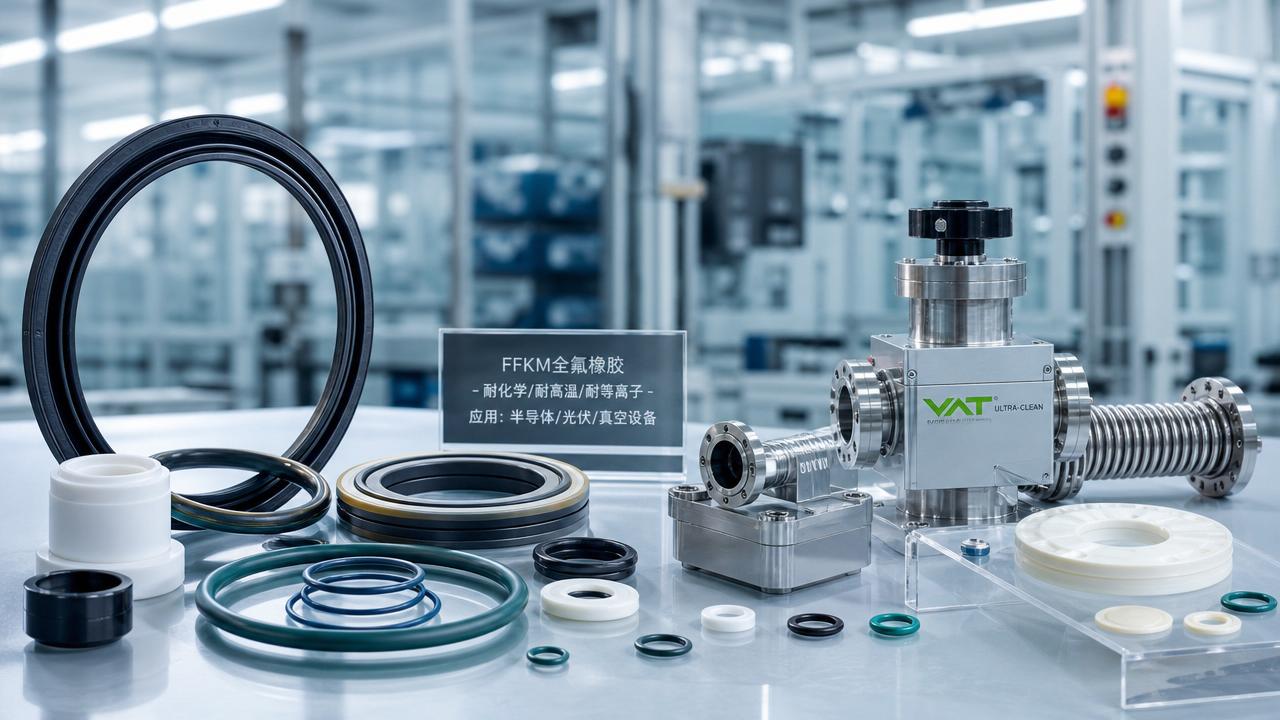
The seal industry conference 2026 news highlights a market shaped by stricter reliability standards, advanced materials, and growing demand from high-tech manufacturing. For researchers and decision-makers tracking sealing innovation, this update offers a clear entry point into the trends, technical priorities, and industry signals that will influence product development, sourcing strategies, and competitive positioning in the year ahead.
Why a checklist approach is the fastest way to read seal industry conference 2026 news
For information researchers, conference coverage can easily become noisy. A typical event includes product launches, technical papers, standards discussions, supplier marketing, and broad market forecasts. The most useful way to interpret seal industry conference 2026 news is not to read everything as equal. Instead, decision-makers should sort each update through a practical checklist: what changed, which industries are driving the change, which materials or test methods are gaining credibility, and what this means for sourcing, qualification, and long-term risk.
This matters even more in sectors where seals are not minor consumables but system-enabling components. In semiconductor tools, aerospace subsystems, hydrogen handling, pharmaceutical processing, vacuum equipment, RF energy systems, and ultra-high pressure controls, a sealing failure can disrupt compliance, safety, throughput, and uptime at the same time. That is why the latest seal industry conference 2026 news should be read as a signal map for reliability priorities, not just as an event recap.
First-pass checklist: what to confirm before trusting any conference takeaway
Start by filtering the most repeated themes through a set of validation questions. This prevents overreacting to announcements that sound important but lack engineering depth or commercial relevance.
- Check whether the claim is supported by test data. Useful seal industry conference 2026 news should reference pressure cycling, temperature stability, chemical compatibility, vacuum behavior, compression set, leakage rate, wear profile, or service-life benchmarks.
- Confirm the target application. A material or geometry praised for static sealing in clean environments may not perform well in dynamic, abrasive, high-frequency, cryogenic, or microwave-adjacent systems.
- Identify the standards context. Mentions of ISO, API, SEMI, FDA, USP, or MIL-SPEC relevance usually indicate stronger downstream value than unsupported marketing language.
- Look for manufacturing readiness. Prototype-stage compounds, coatings, or spring-energized designs may attract attention, but availability, repeatability, and qualification timelines matter more for procurement planning.
- Assess whether the update reflects a broad market shift or a niche innovation. The strongest conference signals usually appear across multiple speakers, suppliers, and user panels.
- Separate reliability improvements from cost-reduction claims. In mission-critical systems, a lower-cost seal is irrelevant if it increases maintenance intervals, validation burdens, or failure exposure.
Core signals emerging from seal industry conference 2026 news
1. Reliability standards are getting stricter
A major theme across seal industry conference 2026 news is the move from “acceptable performance” to “traceable reliability.” Buyers increasingly want sealing systems backed by documented test methods, lot consistency, failure analysis records, and application-specific validation. This is especially visible in high-value manufacturing where one leakage event can contaminate product, damage instrumentation, or halt automated production cells.
For researchers, the key takeaway is simple: news items discussing traceability, process capability, clean manufacturing, and qualification discipline deserve more attention than generic durability claims.
2. Advanced polymers and engineered composites remain a top priority
Another consistent message in seal industry conference 2026 news is the continued rise of high-performance materials such as FFKM, advanced PTFE blends, PEEK-based structures, filled fluoropolymers, and specialty elastomer systems. The driver is not novelty alone. End users want resistance to aggressive media, higher thermal stability, lower outgassing, better plasma tolerance, and more predictable behavior under combined stress conditions.
The most credible material updates are those tied to measurable failure reduction in exact use cases: semiconductor etch tools, hydrogen valves, sterile processing lines, aerospace actuators, or vacuum-enabled RF systems.
3. Application-specific sealing is outperforming one-size-fits-all design logic
Conference discussions increasingly favor customization at the interface level: groove design, preload control, surface finish, media-specific compound selection, and dynamic motion matching. The lesson from seal industry conference 2026 news is that the market is moving away from broad catalog substitution and toward engineered sealing packages designed for exact duty cycles.
4. Supply chain resilience is now part of technical evaluation
Material innovation alone is no longer enough. Procurement and engineering teams are paying closer attention to lead-time volatility, dual-sourcing feasibility, regional production support, and raw-material continuity. A recurring thread in seal industry conference 2026 news is that technical excellence must be paired with dependable delivery and transparent quality systems.
Practical evaluation table: how to judge which conference updates deserve follow-up
Use the following decision table to sort conference insights by business value and urgency.
What different audiences should focus on first
For CTOs and R&D leaders
Prioritize seal industry conference 2026 news that reveals new reliability thresholds, material compatibility data, and interface design methods. The most valuable updates are those that influence future platform architecture. Ask whether the new information changes product assumptions around pressure, contamination control, vacuum integrity, friction, or maintenance intervals.
For procurement directors
Focus on supply continuity, qualification burden, supplier process discipline, and total cost of ownership. The right reading of seal industry conference 2026 news is not “which supplier sounds innovative,” but “which developments can be sourced with acceptable risk and lifecycle economics.”
For technical intelligence and market researchers
Track repeated references across multiple sessions. If several speakers independently discuss low-outgassing compounds, hydrogen compatibility, cleanroom packaging, or failure diagnostics, those repeated signals often indicate meaningful market direction rather than isolated vendor messaging.
High-priority application areas to watch in 2026
Not every industry will be affected in the same way. Some segments are likely to generate a disproportionate share of relevant seal industry conference 2026 news.
- Semiconductor and advanced electronics manufacturing, where contamination control, plasma resistance, and thermal stability are central.
- Hydrogen and ultra-high pressure fluid systems, where permeation, embrittlement-related design concerns, and long-cycle sealing behavior remain critical.
- Aerospace and defense applications, where lightweighting cannot compromise environmental isolation or mission reliability.
- Pharma, biotech, and sterile process systems, where material extractables, compliance, and cleanability influence approval pathways.
- Industrial microwave, RF, and precision-control systems, where sealing must coexist with thermal cycling, sensitive energy delivery, and exacting uptime requirements.
Common blind spots when reading seal industry conference 2026 news
Several points are often overlooked by readers who move too quickly from conference summary to decision-making.
- Ignoring system-level context. A better seal material may still fail if gland geometry, shaft finish, hardware alignment, or thermal expansion mismatch is not addressed.
- Assuming standards mention equals compliance readiness. Conference references to standards are useful, but buyers still need exact certification scope and test conditions.
- Overvaluing “new” over “proven.” In critical environments, mature materials with well-documented performance can outperform exciting but insufficiently validated alternatives.
- Missing the packaging and handling issue. For high-purity and high-tech applications, contamination introduced after manufacturing can erase the value of an advanced sealing compound.
- Treating all leakage metrics as comparable. Test setup, media type, temperature, and pressure profile can radically change the meaning of a published number.
Execution guide: what companies should prepare next
If your team plans to act on seal industry conference 2026 news, the next step should be structured follow-up rather than broad internal discussion. Prepare a short validation package built around actual operating requirements.
Start by defining the exact sealing environment: pressure range, vacuum level if relevant, motion profile, temperature extremes, media exposure, cleanliness requirement, and expected service life. Then collect current failure data, maintenance intervals, warranty issues, and qualification constraints. This allows engineering and sourcing teams to compare new conference claims against real performance gaps rather than abstract trend language.
It is also wise to request three layers of supplier information: material pedigree, application history in similar environments, and manufacturing consistency evidence. For advanced buyers, a fourth layer should include traceability methods, lot control, and deviation management. These checks are especially relevant when evaluating components for UHP valves, extreme-environment mechanical seals, specialized gaskets, precision actuators, and other containment-critical systems.
FAQ-style quick checks for researchers and buyers
How much of seal industry conference 2026 news is immediately actionable?
Only a portion. Actionable updates usually include test-backed data, clear application scope, and realistic manufacturing status. The rest should be tracked as directional intelligence.
What is the most important trend to verify independently?
Material claims. Because advanced compounds are a central theme in seal industry conference 2026 news, independent review of compatibility, outgassing, thermal behavior, and lifecycle performance is essential.
What usually deserves the fastest internal follow-up?
Any update tied to stricter reliability standards, contamination control, hydrogen service, high-pressure duty, or supply continuity risk should move quickly into engineering-procurement review.
Final takeaway and next questions to ask
The strongest reading of seal industry conference 2026 news is a disciplined one. Focus first on reliability evidence, application fit, standards relevance, and supply maturity. For information researchers, this approach turns a large stream of event coverage into a prioritized map of what may affect design choices, qualification planning, and supplier strategy over the next year.
If your organization needs to move from news tracking to execution, the best next conversation should center on five questions: which operating parameters are non-negotiable, which materials are already qualified or restricted, what failure modes are most expensive today, what lead-time or sourcing constraints exist, and what validation timeline is acceptable for a new sealing solution. Clarifying those points early will make any follow-up on seal industry conference 2026 news faster, more comparable, and more useful for real business decisions.
Industry Briefing
Get the top 5 industry headlines delivered to your inbox every morning.