Industrial environmental news shaping wastewater treatment upgrades
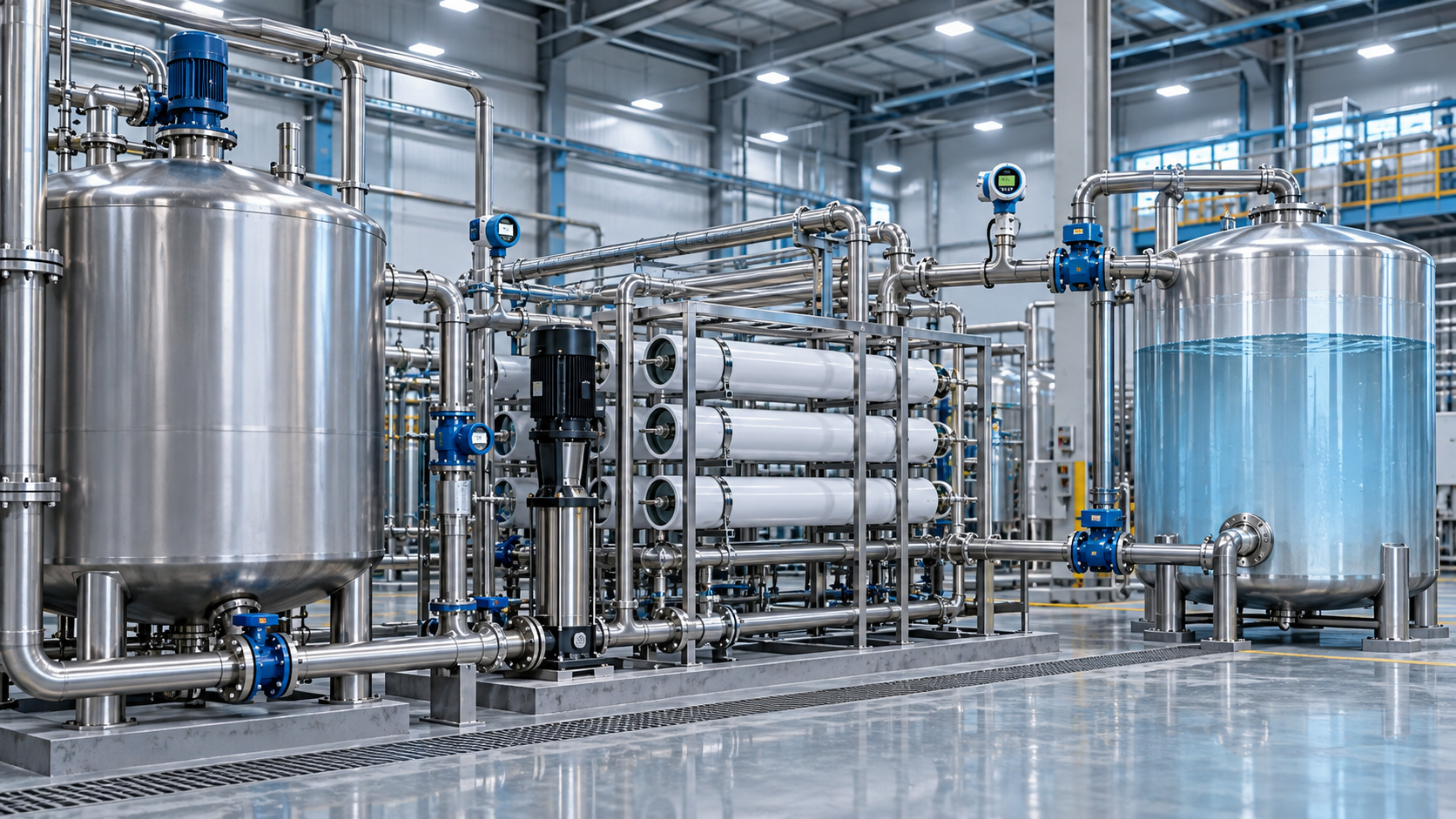
Industrial environmental news for wastewater treatment is changing the upgrade conversation from “add capacity when limits tighten” to “remove uncertainty before a discharge event exposes a weak point.” The shift is visible in the attention given to persistent contaminants, intermittent high-strength streams, water reuse, digital monitoring, and the operational consequences of equipment failure. A treatment plant can meet average discharge conditions while still carrying material, control, and containment weaknesses that emerge during cleaning cycles, production changes, or abnormal flow events.
For industrial facilities with sensitive processes, wastewater treatment is increasingly evaluated as part of the same reliability system as process piping, chemical delivery, utility water, and asset protection. A leaking isolation valve, an incompatible elastomer, or a flow measurement point placed in the wrong hydraulic location can undermine a well-designed treatment train. Upgrade priorities therefore need to begin with the character and variability of the wastewater, then extend through the components that control, contain, measure, and isolate it.
News signals are pushing upgrades toward variability management
The most useful environmental signals are not broad claims that regulation is becoming stricter. They are indications that the accepted margin for operational inconsistency is narrowing. Discharge requirements, permit interpretations, customer water-use expectations, and internal environmental reporting all place greater value on stable performance across changing conditions. This favors treatment systems that respond to fluctuations rather than systems sized only around a nominal daily average.
Many industrial streams are not constant. Conductivity can rise after a rinse sequence, pH can shift during batch changeover, and suspended solids can surge after maintenance or cleaning. A biological process designed around a representative composite sample may struggle when it receives short-duration chemical shocks. Similarly, a membrane system can appear undersized when the actual cause of poor recovery is variable pretreatment quality, unstable feed pressure, or an ineffective backwash sequence.
This distinction affects capital planning. Expanding a tank or installing an additional membrane skid may be justified, but it should follow a clear diagnosis of the limiting condition. A smaller equalization upgrade, segregated collection line, or revised chemical dosing arrangement can sometimes address the real source of instability with less disruption. The relevant question is not simply whether a treatment stage is overloaded. It is whether the stage receives a feed within the operating envelope it was designed to handle.
Average data can conceal the upgrade trigger
Wastewater records are often organized around averages because averages are convenient for reporting. They are less useful for identifying failure mechanisms. An average pH within target range does not show the depth or duration of acid and caustic excursions. An average flow rate does not reveal whether pumps, valves, and downstream separation equipment are exposed to repeated hydraulic peaks. Average contaminant concentration can also conceal two very different conditions: a steady moderate load and a sharp periodic load that passes through the plant before controls have time to respond.
Trend data should be read alongside operating events. Production scheduling, clean-in-place cycles, maintenance washdowns, resin regeneration, surface-treatment baths, and wastewater transfer timing often explain excursions more effectively than a laboratory result alone. A useful review aligns process events with flow, pH, conductivity, oxidation-reduction potential where relevant, turbidity, differential pressure, and discharge quality. The purpose is to locate the sequence that precedes deterioration, rather than treating every elevated result as a treatment chemistry problem.
Sampling design deserves the same scrutiny. A grab sample near the end of a shift can miss the concentrated portion of a batch release. A composite sampler may dilute a short spike into an acceptable daily result while downstream equipment still experienced the full shock load. Sampling points also matter: measurements taken after dilution water is added can be valid for discharge reporting but weak for diagnosing the load imposed on primary treatment.
Separate streams before selecting a larger treatment unit
Segregation remains one of the most consequential upgrade decisions because mixed wastewater creates difficult chemistry and reduces recovery options. High-salt streams, oily wastewater, metal-bearing rinses, acidic or alkaline cleaning solutions, and relatively clean utility water rarely benefit from being combined at the earliest collection point. Once mixed, the volume requiring advanced treatment grows and the ability to target a specific contaminant declines.
Segregation should be based on treatment compatibility, not merely on the department or building from which a stream originates. Two alkaline streams may look compatible until one contains oxidizing compounds that change downstream reactions. A low-flow stream may deserve dedicated handling when it contains a constituent that interferes with biological treatment, membrane performance, or sludge disposal. Conversely, a separate line adds valves, transfer equipment, controls, and inspection points; the containment burden rises with every connection. The practical design balances chemical separation against the reliability of the collection network.
Containment components have become wastewater performance variables
Environmental upgrades often focus on reactors, clarifiers, filters, and analyzers. Yet persistent problems frequently originate in supporting equipment. Valve leakage can admit dilution water, create unintended bypasses, or allow incompatible streams to mix. Seal failure on a transfer pump can turn a contained process issue into a housekeeping and reporting event. A gasket selected only for room-temperature chemical resistance may harden, swell, or lose compression after repeated thermal cycles and exposure to cleaning agents.
Material selection must be tied to the actual fluid history. A component may contact concentrated chemical during a short cleaning event, diluted wastewater during normal service, and oxidizing sanitizer during shutdown. Temperature, pressure cycling, solids abrasion, and dwell time alter the result. A seal material that performs well in a static laboratory immersion test can fail prematurely in a pump because shaft movement, dry running, pressure transients, or crystallizing residues impose different stresses.
The same caution applies to valve selection. A valve with adequate nominal pressure rating may still be unsuitable if its seating arrangement traps solids, if its actuation speed creates water hammer, or if the dead volume allows deposits to accumulate. In abrasive slurry service, a tight shutoff claim is incomplete without information about particle size, velocity, cycling frequency, and expected maintenance access. In corrosive service, body alloy, trim material, stem packing, seat design, and fastener compatibility should be evaluated as a set.
Automation adds value only when the control boundary is sound
Online instruments and automated valves receive considerable attention in wastewater treatment upgrades because they shorten the time between a changing condition and a corrective action. Their value depends on what happens after the signal is generated. A pH analyzer can identify an excursion, but it cannot prevent a release if the diversion valve is slow, fouled, incorrectly sequenced, or installed where the measured fluid is not representative of the stream being diverted.
Control design should distinguish between monitoring, alarming, interlocking, and correcting. These functions are often blended into a single specification even though they have different failure consequences. Monitoring creates visibility. An alarm prompts review. An interlock stops or diverts a process automatically. Corrective control adjusts dosing, flow, or another variable to restore a target condition. The right architecture depends on how quickly the wastewater characteristic changes and how much receiving capacity exists before the condition reaches a sensitive treatment stage.
Response time is not limited to the analyzer. It includes sample transport delay, sensor stabilization, signal filtering, control logic, actuator travel, mixing time, and confirmation measurement. A fast piezoelectric or pneumatic actuator does not compensate for a poor sampling location, while a precise flow control valve offers little benefit if its range is oversized and most operation occurs near the closed position. Stable control requires the instrument range, valve authority, line velocity, and process dead time to be considered together.
Redundancy should be purposeful. A second measurement can improve confidence where a single instrument drives diversion or chemical addition, but duplicate sensors installed in the same unsuitable location can reproduce the same error. Independent confirmation is stronger when it uses a different measurement principle, a separate sample path, or a laboratory verification process tied to a defined escalation rule.
Water reuse changes the definition of acceptable treatment
Reuse projects are gaining attention because they connect wastewater investment to utility resilience, but reuse quality must be defined by the next application rather than by the fact that water has been treated. Water suitable for cooling-tower makeup may be unsuitable for high-purity rinse duty. Water that is acceptable for washdown can create scaling, corrosion, or microbial-control problems if sent to a recirculating utility system without additional conditioning.
The design basis should identify the contaminants that matter at the reuse point: dissolved salts, silica, hardness, organics, oil, particles, microorganisms, residual oxidants, or trace compounds from the originating process. A low turbidity reading alone does not establish compatibility. Nor does a high recovery target automatically produce a better project if concentrate handling becomes the unresolved constraint.
Reuse also introduces cross-connection discipline. Reclaimed water piping, isolation points, backflow protection, labeling, storage turnover, and sampling locations should be defined before installation. A treatment upgrade can create a new operational risk when reclaimed water is capable of entering a higher-quality water network through an undocumented tie-in or a failed isolation device. Physical separation and verifiable valve lineups are as important as the treatment technology.
Procurement choices influence commissioning outcomes
Long-lead equipment can encourage early purchasing, yet premature selection often leads to field modifications when actual pipe routing, electrical classification, drainage, access, or chemical connection details emerge. Specifications should state the fluid composition range, temperature range, solids characteristics, required turndown, cleaning media, control interface, and maintainability constraints. “Chemical-resistant” and “wastewater duty” are not adequate descriptions for critical valves, seals, meters, or pump assemblies.
Inspection and acceptance should focus on the interfaces most likely to create startup delays. These include flange-facing materials, gasket dimensions, actuator fail positions, instrument wetted materials, cable entries, drainability, calibration access, and spare-part interchangeability. A component that satisfies a data sheet may still be difficult to service if it requires line removal for seal replacement or cannot be isolated without shutting down a larger treatment area.
Commissioning should test abnormal conditions deliberately. Normal-water testing verifies basic movement and communication, but it does not reveal every issue associated with viscosity, solids, foaming, pressure decay, chemical compatibility, or control delay. Controlled introduction of representative conditions, where safe and appropriate, gives the operating team a chance to validate diversion sequences, alarm thresholds, valve stroke behavior, and post-event recovery.
Upgrade timing is increasingly tied to resilience, not only compliance
A wastewater treatment upgrade has greater value when it reduces the time required to understand and contain an upset. That outcome comes from coherent treatment design, reliable mechanical isolation, credible measurements, and documented operating boundaries. It also requires distinguishing a capacity shortage from a control problem, a material failure from an installation issue, and a final-effluent symptom from an upstream collection event.
Industrial environmental news for wastewater treatment is therefore most useful when treated as a prompt to examine these connections. The facilities best positioned for change are not necessarily those with the newest equipment. They are those that know which streams vary, which components are exposed to the harshest conditions, and where a small failure can bypass the intended treatment path.
Industry Briefing
Get the top 5 industry headlines delivered to your inbox every morning.