Industrial Seal Investment Insights for 2026 Planning
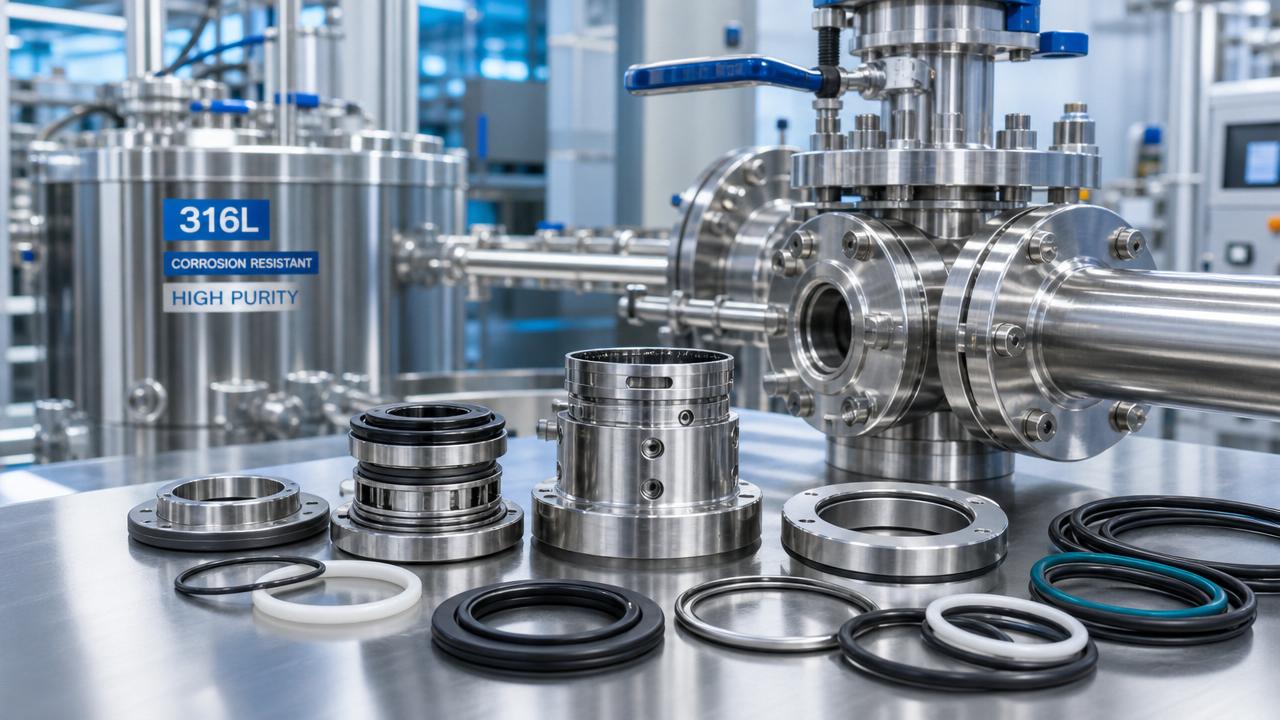
Industrial Seal Investment Insights for 2026 Planning
As 2026 planning accelerates, industrial seal investment insights are moving from a technical niche into a board-level concern.
Seal performance now affects uptime, contamination control, warranty exposure, regulatory readiness, and total asset efficiency across diverse industrial systems.
In critical environments, a low-cost sealing choice can create disproportionate risk through leakage, unplanned shutdowns, energy loss, and accelerated maintenance cycles.
That is why industrial seal investment insights must connect engineering detail with capital allocation, supply resilience, and lifecycle value.
For organizations operating advanced flow, pressure, thermal, and contamination-sensitive equipment, the real question is not only what seals cost today.
The deeper issue is how seal selection influences reliability under stricter standards, harsher duty cycles, and increasingly volatile global sourcing conditions.
Definition and Strategic Scope
Industrial seal investment insights refer to the structured evaluation of sealing technologies, materials, suppliers, and application risks before budget decisions are finalized.
This evaluation goes beyond unit pricing. It includes pressure tolerance, media compatibility, temperature stability, wear behavior, maintenance frequency, and compliance documentation.
In modern industrial systems, seals may be static, dynamic, mechanical, elastomeric, polymer-based, or composite designs serving very different containment needs.
A gasket in a chemical line, an FFKM seal in semiconductor equipment, and a mechanical seal in aggressive pumping service demand different investment logic.
Strong industrial seal investment insights therefore combine three lenses:
- technical fitness for the operating envelope
- commercial resilience across suppliers and regions
- lifecycle economics across the full asset period
This framework is especially important in the broader high-performance supply chain tracked by G-PCS, where failure tolerance is extremely low.
Key Market Signals Shaping 2026 Decisions
Several market signals are reshaping industrial seal investment insights for 2026 planning across integrated industrial operations.
These signals make industrial seal investment insights more strategic than historical replacement-based purchasing habits.
Why Seal Investment Quality Matters to Business Performance
Industrial seal investment insights matter because seals influence far more than containment at the component level.
A robust sealing decision can reduce maintenance labor, stabilize process quality, protect adjacent equipment, and limit environmental or safety incidents.
A weak decision often appears economical only at purchase. It becomes expensive through downtime, scrap, fluid loss, contamination, and urgent replacement logistics.
Business outcomes linked to seal choices
- Higher asset availability through fewer leakage events
- Better quality control in sensitive production environments
- Lower lifecycle cost despite higher initial component pricing
- Improved audit readiness under ISO, API, SEMI, or MIL-SPEC contexts
- Reduced dependence on emergency sourcing channels
For this reason, industrial seal investment insights should be evaluated alongside reliability engineering, not only under general MRO spend categories.
Material and Design Categories That Deserve Attention
Not every application requires the same sealing architecture. Effective industrial seal investment insights start by matching design type to operating reality.
In 2026 planning, industrial seal investment insights should prioritize the failure mode most likely to disrupt system value.
That may be wear, extrusion, swelling, compression set, thermal cycling, outgassing, contamination, or seal face instability.
Representative Application Scenarios Across Industry
Industrial seal investment insights become practical when translated into common operating scenarios.
- High-pressure fluid control systems require extrusion resistance, dimensional stability, and material compatibility under rapid pressure change.
- Chemical processing lines need resistance to aggressive media, permeation control, and dependable long-cycle sealing behavior.
- Semiconductor and clean-process tools need low particles, low outgassing, high purity, and exact repeatability.
- Microwave and RF energy systems require seals that maintain enclosure integrity under heat and electromagnetic operating stress.
- Cryogenic or hydrogen-related systems require validated behavior under low temperatures and permeation-sensitive service conditions.
These examples show why industrial seal investment insights should always be application-led, not catalog-led.
Practical Evaluation Criteria for 2026 Budgets
A disciplined investment review can simplify selection without reducing technical rigor.
Core evaluation checklist
- Map actual pressure, temperature, speed, media, and cleanliness conditions
- Review field failure history and maintenance interval performance
- Compare installed cost against expected service life
- Check certification, traceability, and test-report availability
- Validate geographic supply continuity and backup sourcing options
- Assess installation sensitivity and training requirements
Industrial seal investment insights are strongest when this checklist is supported by failure analysis and standardized qualification protocols.
Short-term price pressure should not override evidence from field performance or compliance exposure.
Common Mistakes That Distort Seal Investment Decisions
Several recurring errors weaken industrial seal investment insights and produce avoidable cost escalation.
- Treating all seals as interchangeable consumables
- Using nominal operating data instead of actual peak conditions
- Ignoring compatibility with cleaning agents or transient process media
- Underestimating documentation needs for regulated environments
- Approving one-source materials without contingency planning
- Focusing on purchase price rather than failure consequence
Each of these mistakes can turn a minor component into a major operational bottleneck.
Action Path for Stronger 2026 Planning
The most useful industrial seal investment insights lead to a structured next step rather than a broad market overview alone.
Begin by ranking sealing points according to failure consequence, not annual spend. Then separate commodity locations from critical containment points.
Next, standardize material review criteria across engineering, quality, and sourcing teams so qualification decisions remain consistent.
After that, identify applications where premium sealing materials may reduce downtime, improve compliance, or extend maintenance intervals enough to justify investment.
Finally, build a living supplier matrix covering lead times, certifications, technical depth, and alternate-source readiness.
For 2026 planning, industrial seal investment insights should support a more resilient containment strategy, especially in high-performance and sensitive operating environments.
When evaluated through lifecycle value, compliance strength, and application-specific risk, better seal decisions can protect both operational continuity and long-term capital efficiency.
Industry Briefing
Get the top 5 industry headlines delivered to your inbox every morning.