Global Mechanical Seal Market 2026: What Changes
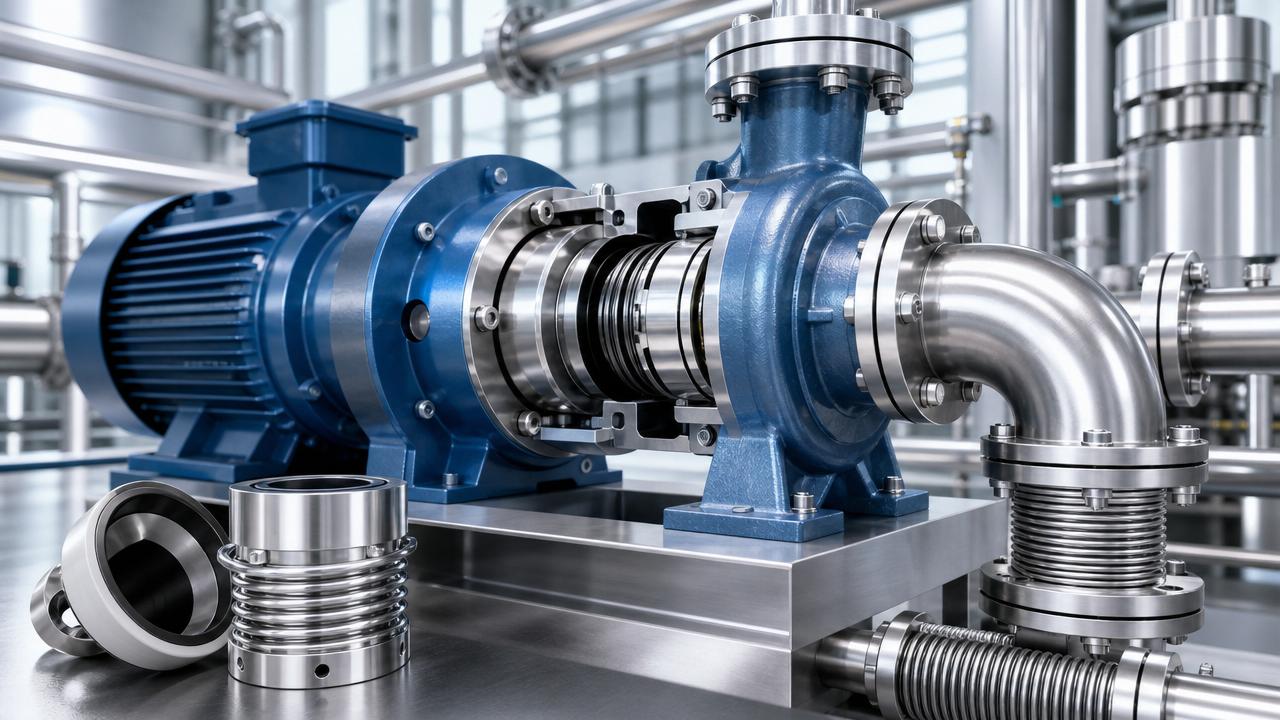
The global mechanical seal market 2026 is entering a new phase shaped by stricter reliability standards, energy-efficiency demands, and extreme-environment applications. For business decision-makers, understanding how technology upgrades, regulatory pressures, and supply chain shifts are redefining sealing performance is essential to securing uptime, cost control, and long-term competitive advantage.
For CTOs, plant leaders, procurement directors, and engineering teams, the discussion is no longer limited to replacing a seal when leakage occurs. In 2026, sealing strategy is increasingly tied to energy loss, emissions control, safety compliance, maintenance intervals, and the resilience of high-value assets operating under pressure, heat, vacuum, corrosive chemistry, or continuous duty cycles.
This is particularly relevant across advanced manufacturing, semiconductor systems, hydrogen handling, industrial microwave equipment, pharmaceutical processing, aerospace support systems, and other mission-critical environments where failure windows may be measured in hours, minutes, or even milliseconds. In these sectors, the right sealing architecture can influence total cost of ownership over 12–36 months more than the initial purchase price suggests.
Against this backdrop, the global mechanical seal market 2026 is moving toward higher specification discipline, tighter material selection, and stronger alignment with ISO, API, SEMI, and other application-specific frameworks. For enterprises evaluating suppliers and long-term sourcing models, the market is changing in ways that directly affect risk, lead time, and lifecycle economics.
Why the Global Mechanical Seal Market 2026 Is Shifting
Several structural forces are changing demand patterns. First, end users are operating equipment harder and longer, often targeting 18–24 month maintenance intervals instead of 6–12 month routines. Second, environmental controls are becoming stricter, especially in applications involving volatile compounds, ultrapure media, or hydrogen. Third, equipment is becoming more compact and faster, leaving less tolerance for thermal distortion, dry running, and vibration.
1. Reliability standards are rising
In many industrial settings, a seal is no longer considered a low-priority consumable. It is a reliability component linked to pump MTBF, planned shutdown frequency, and operator safety. In sectors such as chemical processing, wafer fabrication, and high-pressure gas systems, even minor leakage rates can trigger downtime, product contamination, or nonconformance events.
That is why buyers in the global mechanical seal market 2026 are placing more emphasis on seal-face stability, elastomer compatibility, shaft movement tolerance, and support systems such as flush plans and barrier fluid control. A purchasing review that once covered 3 or 4 basic specifications now often includes 8–12 technical checkpoints.
2. Energy efficiency is no longer optional
Mechanical seals influence power draw indirectly through friction, heat generation, and equipment condition. In large rotating systems running 24/7, the difference between stable operation and repeated seal drag can accumulate across thousands of annual operating hours. For enterprises with 50, 100, or 200 pumps in service, even a modest efficiency improvement can materially reduce operating cost.
As a result, buyers are comparing cartridge seals, balanced designs, dry gas seals, split seals, and advanced face materials not only by unit price, but also by expected leakage control, energy profile, and service life under real loads.
3. Extreme-environment applications are expanding
The growth of hydrogen systems, vacuum processing, high-temperature reactors, corrosive media transfer, and precision clean environments is increasing demand for specialized sealing solutions. Standardized configurations that perform adequately at 5 bar and 80°C may fail quickly at 40 bar, 200°C, or in media with aggressive solvent exposure.
This is one reason the global mechanical seal market 2026 is seeing stronger interest in engineered materials such as silicon carbide pairings, carbon graphite grades, FFKM compounds, metal bellows formats, and seal support systems tuned for narrow operating windows.
The table below highlights the main market drivers and what they mean for enterprise buyers evaluating mechanical seal programs over the next 12–24 months.
The key takeaway is that the market is becoming more technical and less price-led. A lower-cost seal that shortens service life by 3–6 months may create far higher losses through unplanned intervention, spare inventory pressure, and process disruption.
What Enterprise Buyers Should Evaluate in 2026
For business decision-makers, successful sourcing in the global mechanical seal market 2026 depends on matching seal design to process reality, not catalog assumptions. That means reviewing media chemistry, pressure cycling, shaft dynamics, startup behavior, cleaning routines, and maintenance capability before locking in a supplier or standardizing a fleet.
Core selection criteria
- Operating pressure range, such as 1–10 bar, 10–40 bar, or above 40 bar
- Temperature envelope, for example -40°C to 120°C, or 120°C to 260°C
- Media category: water-based, solvent-based, abrasive, ultrapure, gas, or slurry
- Shaft speed and runout tolerance
- Allowed leakage threshold and environmental controls
- Maintenance access, replacement time, and skill level required on site
Material compatibility matters more than broad claims
One of the most common procurement errors is selecting a seal based on generic “chemical resistance” language rather than actual media, concentration, cleaning chemicals, and thermal cycling. A seal that performs well in one process fluid may degrade quickly when exposed to alternating CIP agents, trace solvents, or pressure pulses occurring 20–50 times per shift.
Installation time has hidden cost value
In a large facility, the difference between a 30-minute cartridge replacement and a 2-hour component seal rebuild affects labor planning, line availability, and the risk of assembly error. Decision-makers increasingly factor in technician dependency and repeatability, especially across multi-site operations where training consistency varies.
The comparison below provides a practical framework for evaluating common seal approaches in the global mechanical seal market 2026.
For most B2B buyers, the right answer is not one universal seal type. It is a segmentation model: standardize where conditions are predictable, and engineer special configurations where failure consequences are expensive or safety-critical.
Supply Chain, Lead Time, and Risk Control in the Global Mechanical Seal Market 2026
Another major change in the global mechanical seal market 2026 is the tighter connection between technical specification and supply assurance. As more sectors adopt high-performance materials and precision-machined components, lead time can widen from 2–4 weeks for common seals to 8–14 weeks for engineered assemblies, especially when exotic elastomers or specialty face materials are involved.
Where sourcing risk is increasing
Risk typically rises in three situations: when buyers over-customize low-volume parts, when vendor qualification is based only on quotation speed, and when spare policy is disconnected from actual service criticality. These issues often surface during emergency replacement cycles, where the cost of a 7-day delay is far greater than the premium of carrying validated spare units.
A practical 5-step risk control model
- Classify assets into critical, important, and routine service groups.
- Map each group to pressure, temperature, media, and downtime cost.
- Approve 2–3 technically validated seal configurations per group.
- Define spare stock policy by replacement cycle, typically 3, 6, or 12 months.
- Track failure mode, installation error, and service hours after each replacement.
Documentation is becoming a buying requirement
In advanced sectors, purchasing teams increasingly request dimensional verification, material declarations, pressure-temperature limits, and guidance linked to ISO, API, SEMI, or internal validation procedures. This trend favors suppliers and intelligence platforms that can support specification discipline rather than simply ship parts.
That is where a technical repository such as G-PCS becomes valuable. For organizations managing critical flow and containment assets, access to benchmarked component intelligence can shorten evaluation cycles, reduce mismatch risk, and improve the consistency of supplier comparison across different business units.
The table below shows a decision-oriented view of common supply risks and recommended responses for 2026 planning.
The strongest procurement teams are treating seals as managed reliability assets. That means using technical data, approved alternatives, and service feedback loops to reduce exposure before a failure event occurs.
How Decision-Makers Can Build a Better 2026 Seal Strategy
The most effective response to the global mechanical seal market 2026 is not just buying better parts. It is building a better decision system. Enterprises that improve specification quality, vendor evaluation, inventory logic, and field feedback usually gain more value than those focused only on unit-price negotiation.
Prioritize total lifecycle value
When one seal supports a process line worth millions in annual output, the relevant calculation includes installation time, spare consumption, downtime exposure, product loss, compliance exposure, and maintenance labor. A part that costs 20% more upfront may still deliver the lower 24-month cost if it reduces one emergency shutdown.
Standardize data across sites
A common problem in global organizations is fragmented seal data. One plant records face material; another tracks only vendor name; a third logs failure reason without operating conditions. A standard template with 10–12 required fields can significantly improve sourcing consistency and root-cause analysis.
Recommended minimum data set
- Equipment tag and service duty
- Pressure and temperature range
- Media description and cleaning agents
- Seal type and face material pairing
- Elastomer or secondary sealing material
- Installation date and failure date
- Observed failure mode
- Downtime hours and replacement steps required
Use specialized intelligence where systems are mission-critical
For industries dealing with UHP control, industrial microwave systems, extreme-environment mechanical seals, precision actuation, or specialized gaskets, generic sourcing information is often insufficient. Decision-makers need technical context that links component behavior to standards, contamination risk, pressure stability, and reliability architecture.
A platform such as G-PCS is positioned for that need. By organizing technical intelligence around high-performance containment and flow systems, it supports more rigorous evaluation of materials, application fit, and specification trade-offs. This can help senior buyers and engineering leaders reduce ambiguity during new project planning, supplier review, and upgrade decisions.
Common mistakes to avoid in 2026
- Choosing seals by price without calculating downtime cost
- Assuming standard elastomers will tolerate aggressive cleaning cycles
- Ignoring startup, cavitation, or dry-run conditions in specification review
- Overlooking support systems such as flush plans and barrier fluid management
- Relying on a single supplier for critical applications without validated backup
The global mechanical seal market 2026 will reward organizations that treat sealing not as a commodity category, but as a controlled reliability domain. Better outcomes will come from disciplined specification, application-based sourcing, and stronger alignment between engineering, procurement, and maintenance teams.
For enterprise decision-makers operating in advanced flow, containment, and energy-critical environments, the next step is to evaluate where current seal selection practices fall short of future operating demands. If your team is reviewing high-performance sealing options, supplier benchmarks, or application-specific reliability strategies, contact G-PCS to get tailored guidance, compare technical pathways, and explore more specialized solutions.
Industry Briefing
Get the top 5 industry headlines delivered to your inbox every morning.