Industrial Environmental News on Cost-Effective Solutions
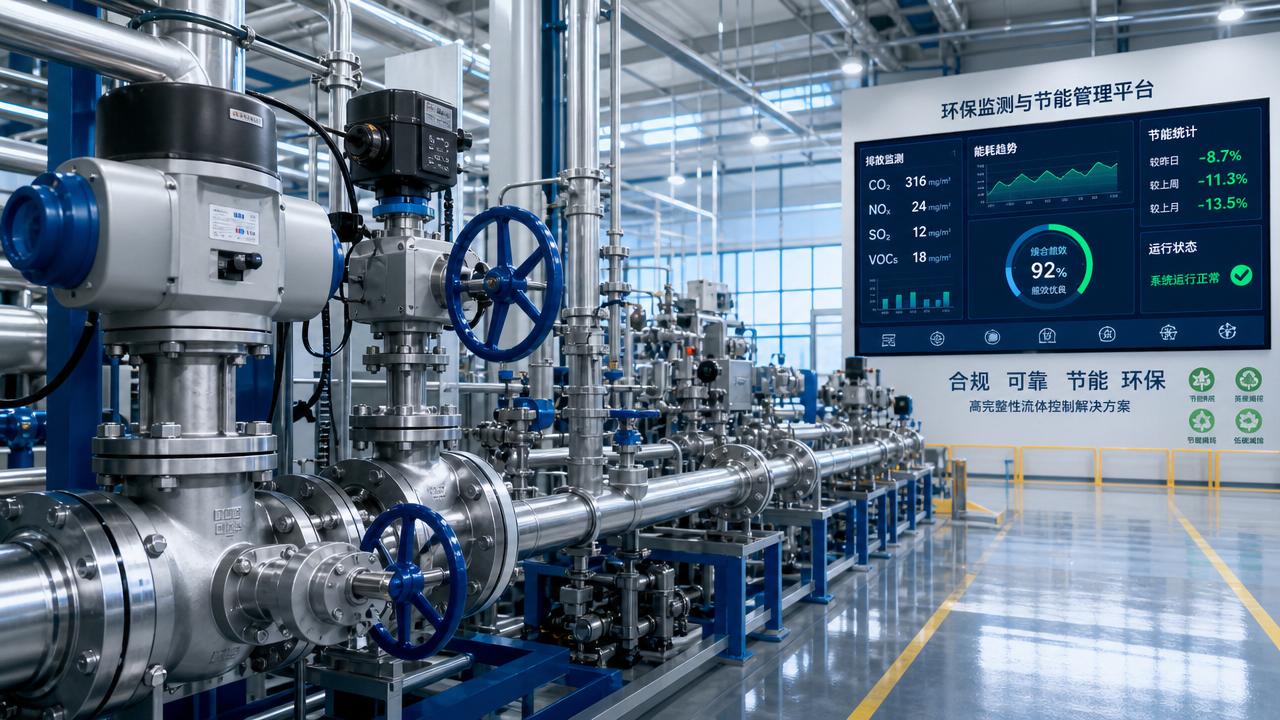
Why does industrial environmental news for cost-effective solutions matter so much right now?
Industrial spending is under pressure from two sides. Capital discipline is tighter, while environmental compliance is becoming more technical and less forgiving.
That is why industrial environmental news for cost-effective solutions matters beyond general market awareness. It helps reveal where costs actually accumulate, and where risk quietly grows.
In practice, the biggest savings rarely come from the cheapest part. They come from avoiding leakage, contamination, unplanned shutdowns, documentation gaps, and repeat validation work.
This is especially true in systems involving containment and flow. Valves, seals, actuators, gaskets, and RF energy components often look like line items, but they shape total operating reliability.
A technical intelligence source such as G-PCS becomes useful here. Its value is not promotion. Its value is structured comparison across standards, materials, performance limits, and lifecycle implications.
When environmental integrity must align with budget control, headlines alone are not enough. The better question is what those headlines mean for purchasing timing, specification discipline, and long-term cost exposure.
What should you actually look for in industrial environmental news for cost-effective solutions?
Not every update deserves action. Some reports are broad policy signals, while others point directly to sourcing, replacement cycles, or qualification requirements.
A practical reading method is to sort news into four decision layers: regulation, component reliability, process efficiency, and supply chain resilience.
- Regulation changes indicate whether existing equipment may trigger future retrofit or documentation costs.
- Reliability updates show where failure rates, leakage incidents, or material incompatibility can inflate maintenance budgets.
- Efficiency trends reveal where energy loss, pressure instability, or sealing degradation erode operating margins.
- Supply chain signals help identify whether lower unit pricing may hide lead-time risk or inconsistent certification.
More often than not, industrial environmental news for cost-effective solutions becomes valuable when it connects a technical change to a financial consequence.
For example, a report on hydrogen handling standards may seem narrow. Yet it can directly affect valve material selection, seal compatibility, inspection frequency, and insurance-related risk assumptions.
The same applies in semiconductor, aerospace, energy, and advanced manufacturing environments. Small specification shifts can multiply total cost if they are discovered late.
Which cost signals deserve immediate attention before approving industrial spend?
The fastest way to improve decisions is to separate visible price from hidden cost. That sounds obvious, but many approvals still lean too heavily on invoice comparison.
In containment-driven systems, cost signals usually appear in a predictable pattern. The table below helps turn industrial environmental news for cost-effective solutions into purchasing judgment.
This is where G-PCS-style benchmarking helps. If a component is evaluated against recognized standards, cost review becomes less subjective and more defensible.
It also helps avoid the common trap of approving a lower-priced part that later creates cleaning, validation, replacement, or warranty disputes.
Are premium components always the better environmental value?
Not always. Higher price does not automatically mean better lifecycle economics. The key is whether the premium removes a measurable cost driver.
Take specialized sealing as an example. An FFKM seal may cost far more than a standard alternative, yet the premium can be justified in aggressive chemical or thermal cycles.
If that seal prevents contamination, leakage, and repeat maintenance, the environmental and financial case becomes stronger. If the operating conditions are moderate, the same upgrade may be excessive.
The same logic applies to UHP valves, industrial magnetrons, and precision actuators. Performance should be measured against the actual duty profile, not the most impressive specification sheet.
A useful comparison asks three things:
- Does the upgrade reduce failure probability in a meaningful way?
- Does it lower compliance effort, waste generation, or energy loss?
- Does it simplify qualification across multiple sites or programs?
If the answer is yes to all three, industrial environmental news for cost-effective solutions usually supports a premium decision. If only one answer is yes, caution is reasonable.
Where do approvals most often go wrong when reading cost-focused environmental updates?
One common mistake is reacting to broad sustainability language without checking engineering relevance. Not every green claim improves process integrity or compliance reliability.
Another mistake is treating environmental performance as separate from uptime. In real operations, the two are often linked through leakage control, thermal stability, contamination prevention, and media compatibility.
There is also a timing issue. Some teams wait for a formal failure before changing specifications. By then, the organization may already have paid through scrap, lost output, or corrective action.
In actual review cycles, the safer approach is to watch for these warning signs:
- A supplier offers lower price but weaker traceability or testing evidence.
- A component meets nominal dimensions but not the real chemical or pressure profile.
- Energy efficiency claims are presented without maintenance or contamination data.
- Compliance discussions ignore upcoming standards updates.
Industrial environmental news for cost-effective solutions is most helpful when used as an early-warning filter, not as a last-minute justification tool.
How can you turn industrial environmental news for cost-effective solutions into a clearer approval framework?
A workable framework does not need to be complex. It needs to connect environmental signals to cost exposure, operational criticality, and evidence quality.
One effective method is to review each proposal through a short decision screen before approval.
This is also where cross-industry repositories become relevant. G-PCS, with its focus on containment and flow logic, helps connect component choices with system-level reliability.
That matters when evaluating advanced valves, RF energy systems, extreme-environment seals, precision actuators, or composite gasket materials across different operating contexts.
The real goal is simple: avoid approving cost in one column while creating larger cost somewhere else.
What is the smartest next step after reviewing these signals?
Start by listing the components or systems most exposed to environmental failure cost. Focus on assets where leakage, contamination, pressure instability, or thermal stress can trigger expensive consequences.
Then compare current specifications against recent industrial environmental news for cost-effective solutions. Look for gaps in material compatibility, qualification evidence, and supplier resilience.
It also helps to rank proposals by lifecycle uncertainty rather than unit price alone. That often reveals where technical validation is worth more than an immediate discount.
In the end, better approvals come from better translation. Environmental news becomes useful when it is translated into maintenance risk, compliance readiness, and total cost logic.
If that translation is still unclear, the next step is not faster buying. It is clearer benchmarking, tighter specification review, and stronger evidence before capital is released.
Industry Briefing
Get the top 5 industry headlines delivered to your inbox every morning.