Environmental Equipment News for Low-Emission Upgrades
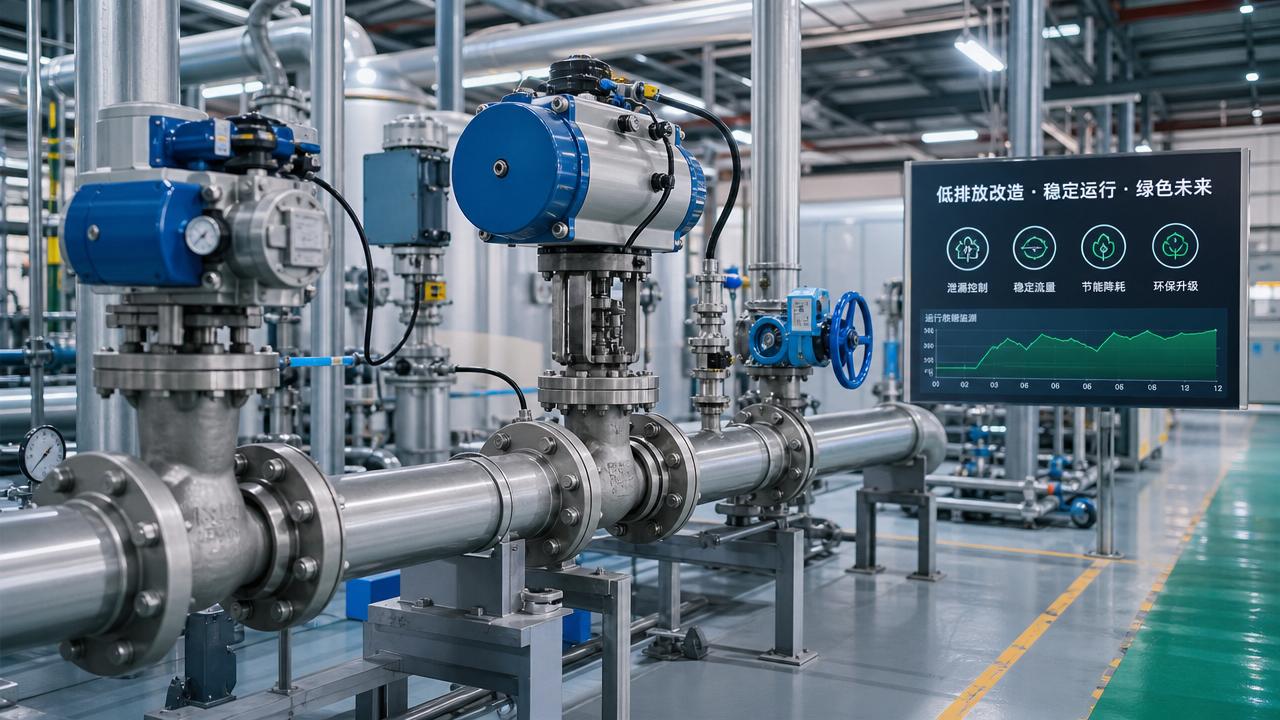
Environmental equipment news for low emissions has moved from a compliance sidebar to a core planning input for retrofit decisions, capital timing, and operational risk control.
The latest signals are not only about filters, scrubbers, or reporting rules. They also involve valves, seals, actuators, RF systems, and the hidden precision components that determine whether upgrades hold performance under real loads.
For industrial programs facing tighter emissions limits, the important question is no longer whether to upgrade. It is how to reduce leakage, improve process stability, and avoid reliability losses while emissions targets become more demanding.
Why low-emission upgrades now attract broader attention
Across energy, electronics, advanced manufacturing, chemicals, and transport-linked infrastructure, emission control is becoming more granular. Regulators increasingly look beyond stack output and into fugitive loss, containment failure, and trace contamination.
That shift changes the meaning of environmental equipment news for low emissions. The market is no longer focused only on end-of-pipe treatment. It is paying closer attention to the equipment chain that controls flow, pressure, heat, and sealing integrity.
This is especially relevant where uptime carries a high penalty. A low-emission upgrade that weakens process repeatability, increases maintenance frequency, or introduces material incompatibility can create a larger business problem than the original emissions gap.
That is why technical intelligence platforms such as G-PCS matter in this discussion. Their value lies in connecting emissions objectives with the engineering logic of containment and flow, rather than treating sustainability as an isolated reporting exercise.
What the topic really includes
In practical terms, environmental equipment news for low emissions covers more than new devices entering the market. It includes design updates, material changes, benchmark standards, retrofit methods, and operating data from demanding environments.
A useful reading of the topic usually involves three linked layers. First, the emissions objective itself. Second, the equipment architecture required to support it. Third, the lifecycle conditions that can quietly undermine both.
For example, a leak-reduction program may depend on specialized polymer gaskets, extreme-environment mechanical seals, and fast-response pneumatic or piezoelectric actuators. If one element is underspecified, the wider low-emission target becomes fragile.
This is one reason G-PCS frames the issue through five industrial pillars. UHP control and valves, industrial microwave and RF systems, advanced sealing, precision actuation, and specialized gasketing often sit behind environmental performance, even when they are not visible in public reporting.
The signals worth tracking in current environmental equipment news
Several themes now appear consistently in environmental equipment news for low emissions. They help separate tactical upgrades from durable engineering improvements.
- Leak-path reduction is receiving more attention than simple throughput optimization.
- Material compatibility is becoming a frontline issue in hydrogen, aggressive chemistries, and ultra-clean media.
- Faster control response is increasingly tied to emissions stability during transients, startup, and shutdown.
- Standards alignment is moving earlier in project planning, especially where ISO, API, SEMI, or MIL-SPEC references affect qualification.
- Lifecycle data is gaining more weight than nominal catalog performance.
More interestingly, low-emission progress is often driven by component-level refinement. A better seal geometry, a hydrogen-compatible valve platform, or a more stable actuator can reduce losses without requiring a full process redesign.
That trend favors disciplined retrofit planning. It allows programs to improve environmental performance in stages, while preserving production continuity and capital control.
Where low-emission upgrade value actually appears
The business value of environmental equipment news for low emissions becomes clearer when viewed through operating outcomes rather than policy language.
Containment quality
Many emission problems begin as containment problems. Valve stem leakage, seal wear, gasket creep, and unstable pressure control can produce persistent low-level losses that are expensive to detect and harder to eliminate later.
Process consistency
Low emissions often depend on stable process windows. Fast and accurate actuation helps reduce overshoot, pressure fluctuation, and thermal inconsistency, all of which can increase waste, venting, or off-spec production.
Maintenance economics
An upgrade that reduces emissions but shortens service intervals may not be a sound decision. Durable materials, verified compatibility, and repeatable control behavior usually matter more than headline efficiency claims.
Regulatory resilience
Facilities increasingly need evidence, not assumptions. Benchmarking against recognized standards creates a stronger basis for internal approval, vendor comparison, and future audits.
Typical upgrade situations across industries
The same environmental target can look very different depending on process sensitivity, media type, and reliability expectations. The table below shows how environmental equipment news for low emissions translates into practical upgrade contexts.
What these scenarios share is the need for precise component selection. Environmental upgrades succeed when emission goals are matched to media behavior, control speed, and long-term sealing performance.
How to read environmental equipment news for low emissions more effectively
Not every announcement deserves the same weight. Some updates reflect genuine engineering progress. Others are little more than repositioned product claims.
A better approach is to test each development against a few practical questions.
- Does the upgrade address a measurable emission pathway, or only a general efficiency narrative?
- Are the materials validated for the actual media, temperature, pressure, and cycling conditions?
- Is the performance supported by recognized standards or field-proven benchmarks?
- Will control precision improve during transient operation, not only at steady state?
- What maintenance and replacement implications follow after installation?
This is where a repository like G-PCS becomes useful. It places low-emission equipment developments into a deeper technical frame, linking component behavior with compliance pressure, reliability targets, and procurement defensibility.
A practical path for the next upgrade cycle
The next step is rarely a single purchase decision. It is usually a structured review of emission sources, failure points, and upgrade dependencies across the asset base.
Start by identifying where emissions risk and reliability risk overlap. That often reveals the highest-value retrofit targets, especially around valves, seals, gaskets, and response-critical actuation points.
Then compare candidate technologies against operating conditions and standards, not marketing language. In many cases, the strongest low-emission result comes from precise subsystem refinement rather than broad replacement.
Environmental equipment news for low emissions is most valuable when it supports better judgment. Used well, it helps turn regulatory pressure into a disciplined upgrade roadmap built on containment integrity, process control, and long-term system confidence.
Industry Briefing
Get the top 5 industry headlines delivered to your inbox every morning.