How Trade Shifts Are Reshaping High-End Seal Supply
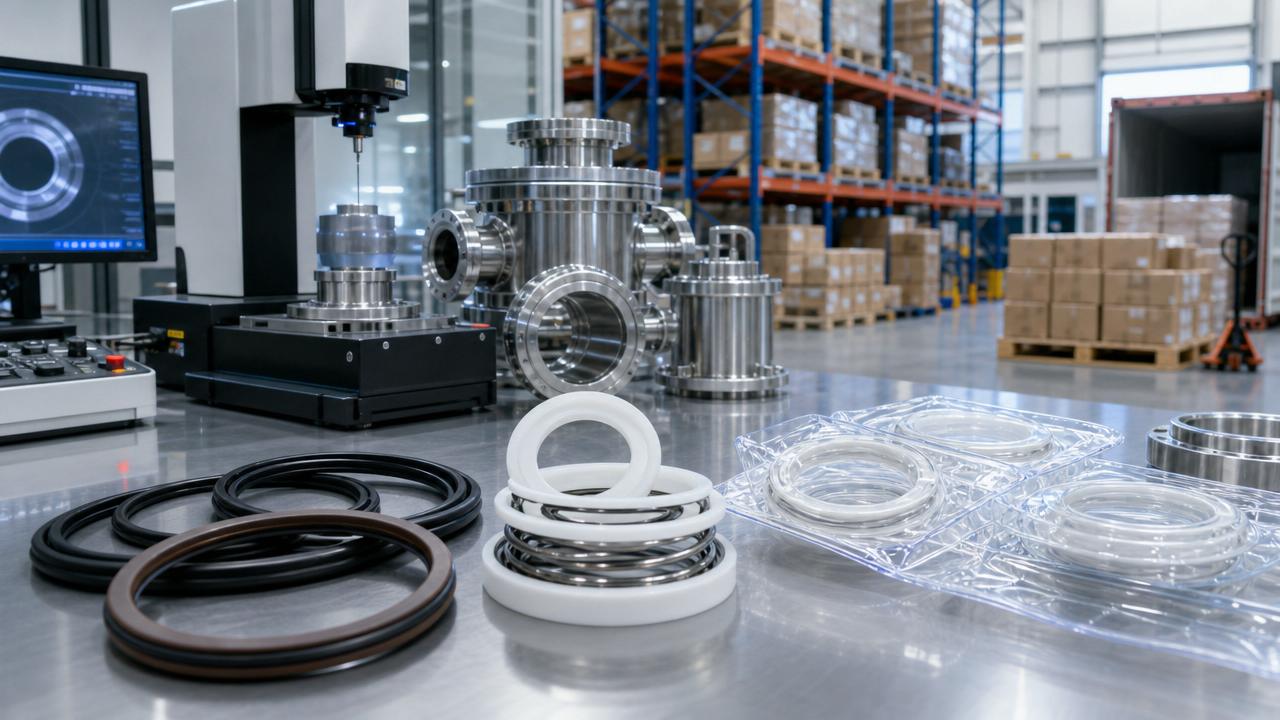
For business evaluators tracking critical component risk, the impact of trade on high-end seal supply is no longer a marginal concern but a strategic variable affecting cost, compliance, lead times, and system reliability. As global sourcing patterns shift under regulatory pressure, export controls, and regional manufacturing realignment, high-performance seal availability is being reshaped in ways that directly influence procurement decisions across advanced industrial sectors.
In sectors where seal failure can interrupt a wafer process, compromise a hydrogen line, or degrade a vacuum or RF environment, the supply question is not simply whether a part can be sourced. The real issue is whether the right material, geometry, cleanliness level, and certification package can be secured within an acceptable time window and at a predictable landed cost. That is where the impact of trade on high-end seal supply becomes a board-level concern for procurement teams and technical evaluators.
For decision-makers using technical intelligence platforms such as G-PCS, seal sourcing now requires a broader lens. Buyers must evaluate not only elastomer compatibility and pressure ratings, but also regional production concentration, customs exposure, qualification cycles, and the resilience of multi-tier supplier networks. In many advanced applications, a 4-week delay in a specialized seal can create a 12-week disruption in equipment commissioning, qualification, or maintenance planning.
Why Trade Realignment Now Matters to Premium Seal Procurement
The impact of trade on high-end seal supply has intensified because premium sealing components are not generic catalog items. Many are engineered around narrow process windows, such as ultra-clean semiconductor gas delivery, cryogenic containment, aggressive plasma environments, or high-pressure hydrogen service above 350 bar and up to 700 bar. In these categories, procurement flexibility is inherently limited.
Over the last 3 to 5 years, three forces have changed buying conditions. First, export controls and technology restrictions have increased documentation and country-of-origin scrutiny. Second, regionalization strategies have shifted production from single-country dependence toward dual-source or nearshore models. Third, logistics volatility has widened normal replenishment cycles from 2 to 4 weeks for standard industrial seals to 8 to 20 weeks for custom FFKM, PTFE composite, or spring-energized profiles.
High-end seals are concentrated in a narrow supplier base
Unlike commodity gaskets, high-end seals often depend on a small number of qualified compounders, molders, finishers, and test labs. A single part may require 4 to 6 linked capabilities: raw polymer formulation, precision molding, post-curing, surface finishing, contamination control, and batch traceability. If one node is disrupted by tariffs, licensing delays, or regional power constraints, the entire delivery schedule can slip.
This concentration risk is particularly visible in extreme-environment applications. Seals used in semiconductor wet benches, satellite thermal systems, UHP valve assemblies, and microwave energy equipment often require low outgassing, narrow compression set behavior, and compatibility with aggressive media. Those requirements can reduce the viable supplier pool from dozens to fewer than 5 globally qualified options.
Trade friction affects more than unit price
A common procurement mistake is to view trade shifts mainly through tariff percentages. In reality, the impact of trade on high-end seal supply is usually more severe in hidden cost categories: engineering revalidation, incoming inspection expansion, broker fees, dual inventory carrying costs, and line-stop exposure. A 6% to 12% landed cost increase may be manageable; a qualification reset lasting 6 to 10 weeks is often far more damaging.
- Extended customs review for dual-use or technically sensitive assemblies
- Longer lead times for compounds requiring controlled export documentation
- Higher minimum order quantities to justify regional production transfer
- Additional audit requirements for new source approval and process equivalence
The table below outlines how trade-related disruption typically shows up across premium sealing categories used in advanced industrial systems.
The key lesson is that trade pressure rarely impacts all seal types equally. Evaluators should segment supply risk by material family, manufacturing complexity, and qualification burden rather than using a single sourcing assumption across the entire bill of materials.
How the Impact of Trade on High-End Seal Supply Changes Buyer Risk Models
Procurement models built around historic cost benchmarks are increasingly insufficient. The impact of trade on high-end seal supply now requires a risk-weighted framework that blends price, compliance, substitution feasibility, and continuity planning. For business evaluators, this means that total procurement value must be measured over 12 to 24 months, not by quarter alone.
From unit-cost focus to continuity-cost focus
In highly engineered systems, the cheapest seal is often the most expensive sourcing decision. A lower-price component from a newly added geography may appear attractive until the buyer accounts for PPAP-style documentation, material compatibility checks, accelerated life testing, and installation retraining. If the application includes vacuum, corrosive chemistry, or thermal cycling from -40°C to 260°C, even small formulation changes can create performance drift.
A useful risk model tracks at least 4 dimensions: source concentration, qualification effort, replacement criticality, and logistics stability. Each dimension can be scored from 1 to 5. Components scoring 16 or above on a 20-point scale should usually be treated as strategic inventory items or dual-source candidates.
A practical 5-step evaluation method
- Map every critical seal to its application, pressure range, temperature range, and cleanliness level.
- Identify single-country and single-supplier dependencies across all qualified part numbers.
- Estimate lead-time volatility using best case, normal case, and disruption case scenarios.
- Quantify requalification time for substitute materials, dimensions, or manufacturing routes.
- Set stocking rules based on asset criticality, with 8 to 12 weeks of cover for highest-risk parts.
This method helps procurement teams separate standard replenishment items from mission-critical seals that deserve deeper governance. It also aligns sourcing decisions with technical realities rather than spreadsheet averages.
Regional manufacturing shifts are changing qualification logic
As suppliers establish secondary production in Southeast Asia, Eastern Europe, Mexico, or regional clean manufacturing clusters, buyers gain resilience but face a new challenge: process equivalence. Two parts with the same drawing can behave differently if molding pressure, cure profile, machining tolerance, or cleanliness handling changes. For high-end sealing, equivalence is not a paperwork exercise; it is a functional reliability test.
In practical terms, a transfer that appears simple on paper may require 3 stages of validation: document review, sample inspection, and in-system trial. Depending on the application, that cycle can take 2 weeks for noncritical static gaskets or 8 to 14 weeks for seals used in plasma tools, RF systems, or high-pressure gas controls.
The following comparison can help evaluators decide where to accept regional alternatives and where to retain legacy approved sources.
This distinction matters because not every part needs the same mitigation cost. Smart buyers reserve intensive risk controls for seals whose failure or delay can affect tool uptime, regulatory exposure, or customer delivery commitments.
Selection Criteria for Business Evaluators in a Trade-Volatile Market
To manage the impact of trade on high-end seal supply, business evaluators need criteria that combine technical fit and sourcing resilience. A supplier that offers good pricing but weak documentation discipline may not be suitable for regulated or highly sensitive systems. Likewise, a technically capable supplier with a 16-week average response cycle may not support uptime targets.
Six checkpoints before approving a source
- Material disclosure depth, including compound family, media compatibility, and temperature limits
- Traceability at lot or batch level, especially for FFKM, PTFE blends, and clean-process parts
- Ability to provide dimensional consistency on tight-tolerance parts within defined tolerances
- Document readiness for ISO, API, SEMI, or customer-specific procurement files
- Lead-time transparency, including standard cycle, expedited cycle, and disruption scenario
- Regional manufacturing or stocking options that reduce cross-border dependency
For most advanced industrial buyers, these 6 checkpoints reveal more than a price quote can. They show whether the supplier can support a controlled sourcing environment when policy, freight, or customs conditions change with little notice.
Key material and application questions
Evaluators should ask technical questions early, before a commercial shortlist is finalized. Does the application involve vacuum below 10^-3 mbar, cyclic pressure above 250 bar, or chemical exposure requiring advanced fluoropolymer stability? Is the seal static or dynamic? Does the assembly require cleanroom packaging, low particle generation, or post-processing such as bake-out? Each question affects substitution flexibility and supply strategy.
A seal used in a standard pump skid can often be shifted between regions with manageable friction. A seal used in semiconductor gas delivery, aerospace thermal systems, or hydrogen compression cannot. The impact of trade on high-end seal supply becomes sharper as the cost of failure rises and the tolerance for contamination or deformation falls.
Common procurement misjudgments
- Assuming same drawing equals same performance across factories
- Underestimating the time needed for internal engineering sign-off
- Ignoring packaging and storage controls for sensitive compounds
- Using annualized demand forecasts without accounting for shutdown spares
- Failing to separate replaceable seals from no-fail strategic components
These mistakes are expensive because they turn external trade pressure into internal execution risk. Better sourcing decisions come from integrating engineering, quality, and procurement reviews during the first 2 to 3 weeks of supplier evaluation rather than after a disruption occurs.
Operational Strategies to Reduce Exposure and Improve Supply Confidence
There is no single fix for the impact of trade on high-end seal supply, but there are proven operational responses. The most effective programs combine part segmentation, supplier intelligence, strategic inventory, and documented substitute pathways. For B2B organizations managing critical flow and containment systems, the goal is not only supply continuity but decision speed under uncertain conditions.
Build a tiered seal portfolio
A practical approach is to divide seals into 3 tiers. Tier 1 covers routine industrial parts with broad supplier availability. Tier 2 includes application-specific parts requiring moderate validation. Tier 3 consists of mission-critical seals with narrow qualification windows, long lead times, and high system consequences. This portfolio structure helps teams decide where to hold 2 weeks of stock and where 10 to 12 weeks is justified.
Use technical intelligence as a sourcing control tool
Platforms like G-PCS add value because they connect product performance, standards alignment, and market structure. In a volatile trade environment, procurement teams benefit from a repository that compares sealing materials, application constraints, and regulatory expectations across sectors such as UHP control, industrial microwave systems, extreme-environment mechanical sealing, precision actuation, and advanced gasketing.
That intelligence can reduce evaluation time by highlighting where a seal category is technically interchangeable and where it is not. It can also support conversations between CTOs, sourcing managers, and business evaluators who need a shared framework for risk, not just fragmented supplier data.
Create a response playbook for the next 90 days
Many companies wait until a shipment is delayed before acting. A stronger model is to build a 90-day response playbook. In the first 30 days, identify all high-risk seals and confirm current inventory cover. In days 31 to 60, qualify backup routes or alternate stocking points. In days 61 to 90, finalize substitution rules, internal approval triggers, and escalation paths for parts that affect revenue-critical assets.
This discipline improves purchasing confidence even when external trade conditions remain unstable. It also shortens the gap between disruption detection and operational response, which is often the difference between a manageable sourcing issue and a missed production commitment.
Final Takeaways for Procurement and Evaluation Teams
The impact of trade on high-end seal supply is reshaping how advanced industrial buyers evaluate cost, qualification, and continuity. For business evaluators, the critical shift is from transactional purchasing to risk-aware sourcing. Premium seals are small components, but in high-value systems they can determine whether uptime, compliance, and delivery schedules remain intact.
Organizations that perform best in this environment are those that segment seal criticality, test regional alternatives carefully, and align technical review with procurement strategy from the beginning. With better visibility into lead times, material dependencies, and qualification pathways, teams can reduce disruption exposure without overbuying or compromising system reliability.
If your team is reassessing supply resilience for extreme-environment mechanical seals, specialized polymer gaskets, UHP sealing interfaces, or other high-performance containment components, now is the right time to review sourcing assumptions. Contact us to obtain a more tailored evaluation framework, discuss critical seal categories, or explore additional solutions through G-PCS.
Industry Briefing
Get the top 5 industry headlines delivered to your inbox every morning.