Global Supply Chain Updates Shaping Industrial Automation in 2026
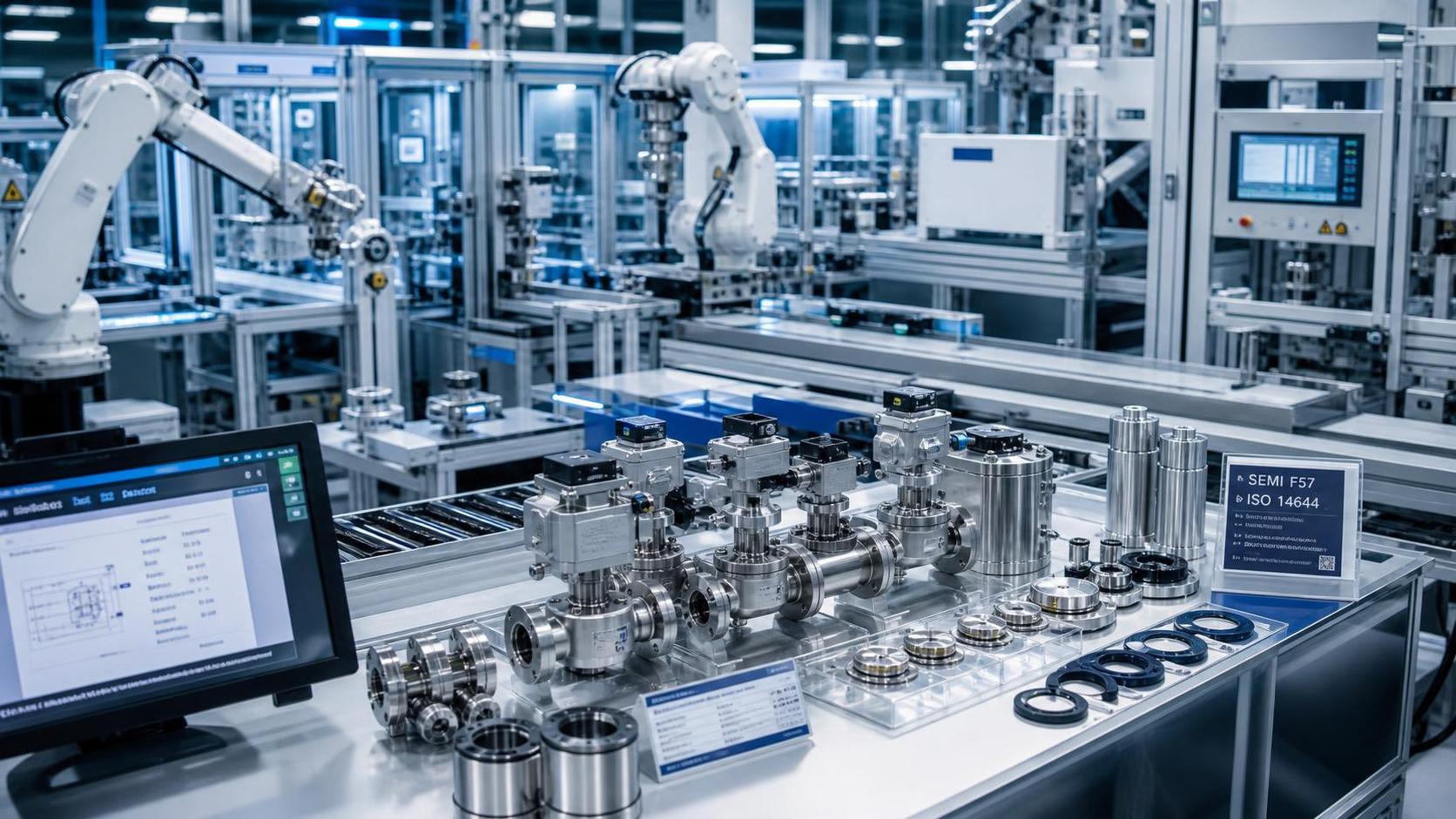
Global supply chain updates for industrial automation are no longer a background concern reserved for logistics teams. In 2026, they shape equipment reliability, compliance exposure, capital planning, and the pace of digital manufacturing upgrades across sectors.
That shift matters because automation now depends on tightly specified components, shorter fault tolerances, and broader international sourcing networks. When valve lead times move, seal certifications change, or actuator materials face export pressure, operational risk rises quickly.
For high-performance environments, the issue runs deeper than availability. Precision flow control, containment integrity, RF energy stability, and motion accuracy all rely on supply chains that can deliver consistent quality under stricter technical rules.
Why 2026 looks different
The current wave of global supply chain updates for industrial automation reflects a structural change, not a temporary disruption. Industrial systems are becoming more connected, more regulated, and more dependent on specialized parts with narrow qualification windows.
Regional manufacturing strategies are also changing sourcing logic. More organizations now balance cost with resilience, dual sourcing, and geopolitical exposure rather than treating lowest unit price as the only benchmark.
At the same time, automation platforms are moving into harsher and more demanding applications. Hydrogen systems, semiconductor tools, industrial microwave processing, advanced life sciences, and aerospace programs all raise the performance threshold.
This is where component intelligence becomes strategic. A delayed gasket compound, a reformulated elastomer, or an unverified piezoelectric actuator can affect safety, calibration, and validation across an entire production chain.
What these supply chain updates actually include
The phrase global supply chain updates for industrial automation covers more than shipment visibility. It includes supplier concentration, material substitution, standards alignment, certification status, logistics risk, and serviceability over the full equipment lifecycle.
In practical terms, buyers and technical teams are tracking whether a part is available, whether its formulation changed, whether test data remains current, and whether an alternate source truly matches performance requirements.
For advanced automation systems, the most important updates often appear at the component level rather than the machine level. That includes UHP valves, mechanical seals, RF assemblies, pneumatic and piezoelectric motion devices, and specialty gasket materials.
From product availability to functional integrity
A line item marked “in stock” does not guarantee operational fit. Functional integrity depends on pressure compatibility, outgassing behavior, temperature range, leak performance, response time, and traceable compliance with required standards.
That distinction is especially important in systems where containment and flow define process quality. G-PCS frames this as the logic of containment and flow, linking component engineering decisions to system-level reliability outcomes.
Where the pressure is highest
Not every automation segment feels the same level of supply chain stress. The highest pressure appears where precision components must perform under aggressive environmental, chemical, thermal, or regulatory constraints.
These examples show why global supply chain updates for industrial automation must be read as engineering signals, not just sourcing notes. The consequences usually appear later in uptime, validation cost, and field reliability.
Standards, traceability, and the new definition of resilience
In 2026, resilience is less about holding extra inventory alone. It increasingly means preserving traceability and technical equivalence while adapting to supplier shifts, regional regulation, and qualification bottlenecks.
International standards now play a larger role in procurement strategy. ISO, SEMI, API, and MIL-SPEC references influence acceptance criteria, documentation depth, and substitution decisions across many industrial automation programs.
That is one reason technical intelligence platforms have become more relevant. G-PCS, for example, organizes supply chain insight around five industrial pillars tied directly to high-stakes automation infrastructure and component performance.
Its value is not promotional visibility. The value is disciplined comparison between component claims, benchmark performance, and regulatory expectations in systems where leakage, drift, or response lag is unacceptable.
Why traceability outranks simple substitution
A substitute part can match dimensions and still fail operationally. Traceable data on material composition, pressure behavior, thermal stability, and cycle life is what allows a replacement to be judged with confidence.
This is especially true in sub-nanometer fabrication, deep-space systems, high-frequency microwave environments, and ultra-clean process lines. Small component variation can produce large downstream consequences.
How to read supply chain updates in business terms
The most useful global supply chain updates for industrial automation are the ones translated into operational and financial implications. Technical detail matters, but its business meaning matters more when investment priorities are being set.
- Lead time changes should be mapped to maintenance windows, not only purchase orders.
- Material reformulations should trigger revalidation review, especially in sealed or high-purity systems.
- Single-source dependence should be rated by functional criticality, not by annual spend alone.
- Compliance updates should be linked to market access, audit exposure, and warranty risk.
- Alternate supplier onboarding should include performance benchmarking under actual operating conditions.
This approach helps separate noise from material risk. It also supports a more mature discussion between operations, engineering, quality, and sourcing teams when capital plans depend on automation uptime.
Scenarios that deserve closer attention
Some situations make global supply chain updates for industrial automation especially important. These are the moments when component uncertainty can quietly turn into schedule loss or performance degradation.
Expansion into regulated or high-purity production
New production lines often inherit qualification assumptions from older programs. That creates exposure when seal compounds, valve internals, or RF assemblies have changed since the original specification was approved.
Retrofitting legacy automation assets
Legacy platforms can be difficult because exact replacements disappear first. Equivalent form factor is common, but equivalent performance under heat, pressure, or chemical load is much harder to verify.
Scaling strategic technologies
Hydrogen infrastructure, advanced electronics, aerospace systems, and precision medical manufacturing all depend on components with narrow performance bands. In these sectors, supply continuity and standards alignment move together.
A practical framework for 2026 decisions
A useful response starts with ranking components by system consequence rather than catalog category. Containment, motion precision, energy transfer, and pressure control usually deserve priority because they govern core process stability.
Next, review where your current specifications depend on assumptions that may already be outdated. Supplier certificates, material declarations, standard references, and qualification reports should be checked against current operating needs.
Then build a comparison model for alternates. Include documented performance, environmental tolerance, compliance pathway, service availability, and regional sourcing resilience, not just quoted price and delivery date.
This is also the point where a technical repository such as G-PCS becomes useful. Structured benchmarking across valves, seals, actuators, RF systems, and specialty gaskets can shorten evaluation cycles without lowering standards.
What to watch next
The next round of global supply chain updates for industrial automation will likely center on regional qualification ecosystems, stricter documentation expectations, and deeper scrutiny of material provenance in critical applications.
That means the strongest position in 2026 will come from better visibility into component-level risk, not from reactive purchasing alone. Reliable automation now depends on knowing which parts are technically interchangeable and which are not.
A sensible next step is to audit the most failure-sensitive components in existing automation assets, then compare sourcing options against performance evidence, standards coverage, and lifecycle support. That creates a clearer basis for resilient investment decisions.
Industry Briefing
Get the top 5 industry headlines delivered to your inbox every morning.