Food Grade Mechanical Seal OEM: What Matters Beyond Compliance
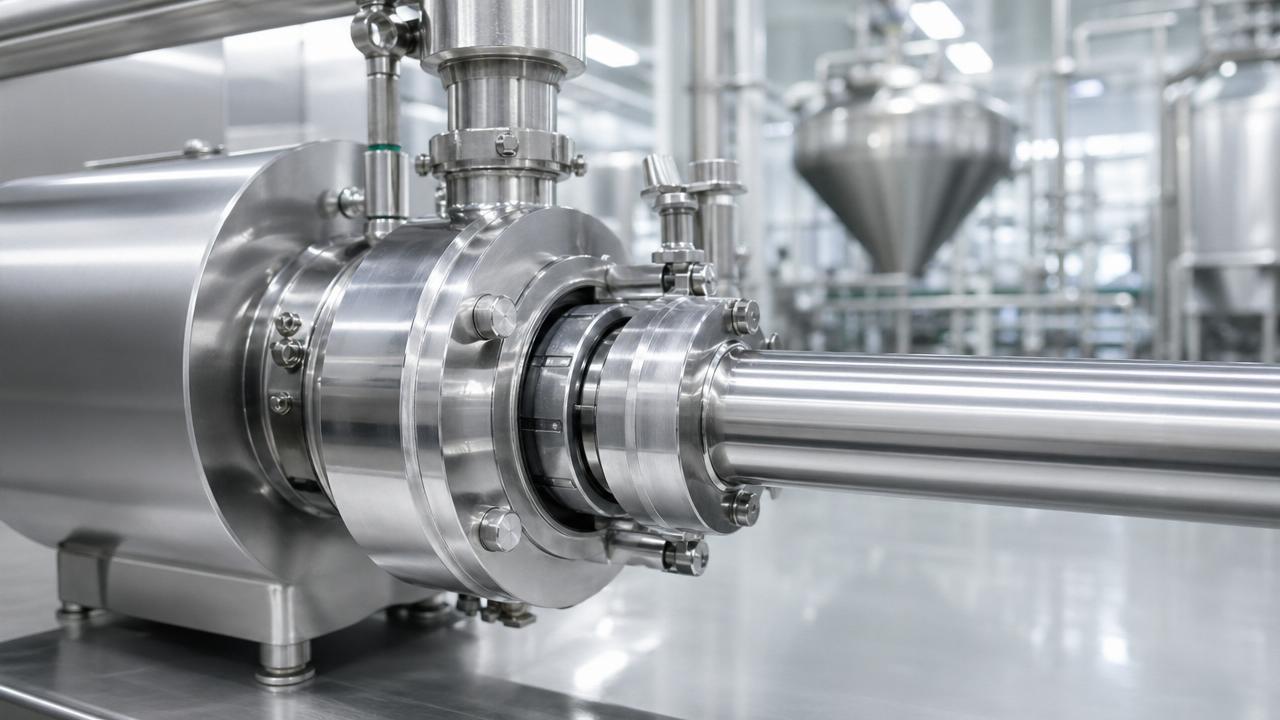
Choosing a food grade mechanical seal OEM is about far more than meeting baseline compliance. For quality control and safety leaders, the real differentiators lie in material traceability, hygienic design, cleanability, process stability, and long-term sealing reliability under demanding production conditions. Understanding these factors helps reduce contamination risk, strengthen audit readiness, and protect both product integrity and operational performance.
In food and beverage processing, a seal is not a minor hardware item. It sits at the interface between rotating equipment, product contact zones, washdown chemistry, thermal cycling, and contamination control. When a procurement team evaluates a food grade mechanical seal OEM, the most important question is not only whether the supplier can provide a compliant bill of materials, but whether it can support stable production over 12, 24, or 36 months without compromising hygiene or uptime.
For quality control managers and safety leaders, this decision touches several operational priorities at once: audit readiness, preventive maintenance intervals, CIP compatibility, allergen changeover risk, and traceable deviation handling. In high-throughput lines running 16–20 hours per day, even a small seal issue can trigger product loss, unplanned sanitation, or a batch hold. That is why selecting the right food grade mechanical seal OEM requires a broader technical and supplier assessment.
Why Compliance Alone Is Not Enough
A seal may meet basic food-contact requirements and still perform poorly in the field. Regulatory conformity addresses one layer of risk, but production environments introduce additional variables: abrasive particles, sugar crystallization, viscosity swings, steam sterilization, pressure pulses, and cleaning chemicals with pH values ranging from 2 to 13. A capable food grade mechanical seal OEM must design for those realities, not only for laboratory acceptance.
Four risk areas quality teams should examine
- Material substitution risk across different batches or production lots
- Dead-leg or crevice-prone geometries that complicate cleaning validation
- Seal face instability during rapid temperature shifts of 5°C to 95°C
- Inconsistent dimensional control that affects shaft fit, compression, and leakage rate
For example, a seal that performs well in a neutral dairy application may degrade much faster in acidic beverage filling or in starch processing with suspended solids. A robust OEM should be able to discuss product media, shaft speed, pressure range, flush plan, and sanitation routine in detail. If the supplier only emphasizes “food grade” without clarifying service conditions, the evaluation is incomplete.
What “fit for process” means in practice
For most quality-driven operations, fit for process means the seal system can handle at least 4 dimensions of variation: media chemistry, thermal cycle frequency, cleaning regime, and operating duty cycle. In some mixer, pump, and homogenizer systems, seals may experience 3 shifts per day, 1–2 CIP cycles, and multiple product changes per week. A seal OEM that does not account for these cycles may pass incoming inspection yet still create repeated deviation reports.
The table below highlights the difference between baseline compliance and broader operational suitability when assessing a food grade mechanical seal OEM.
The practical takeaway is clear: compliance is the entry point, not the final decision criterion. Teams responsible for food safety should look for evidence that the OEM can sustain repeatable performance in actual operating windows, not just satisfy a specification sheet.
The Technical Criteria That Separate Strong OEMs From Commodity Suppliers
A strong food grade mechanical seal OEM is typically distinguished by process knowledge, traceability discipline, and engineering responsiveness. These factors influence how quickly issues are diagnosed, how reliably replacement parts match prior builds, and how well the seal supports validation and audit processes.
1. Material traceability and documentation depth
Traceability should extend beyond a generic material declaration. Quality teams should ask whether the OEM can link each seal assembly to elastomer lot data, face material records, metal grade information, and dimensional inspection history. In regulated facilities, retaining traceable records for 2–5 years is often useful for complaint investigation and supplier review cycles.
2. Hygienic design and cleanability
Hygienic performance depends on geometry as much as material. A seal with difficult-to-clean interfaces can trap residue and extend sanitation time. Food processors often prefer designs that minimize crevices, reduce exposed springs in product zones where possible, and support predictable drainability. Even a 10–15 minute increase in cleaning time per cycle can add up over 5 or 6 cleanings each week.
3. Dimensional consistency and interchangeability
If replacement seals vary in fit or compression behavior, the result may be premature leakage or installation errors. A reliable OEM should maintain controlled tolerances, repeatable finishing processes, and stable packaging methods that protect seal faces during transit. For plants with multiple lines, interchangeability across equipment sets can reduce spare-part complexity by 20%–30%.
4. Application engineering support
An OEM should be able to review shaft diameter, speed, pressure, temperature, media solids, lubrication conditions, and CIP chemicals before final recommendation. This matters when equipment handles both low-viscosity liquids and thicker products in the same week. Without application review, a standard seal selected for one duty point may fail at another.
The following decision matrix can help procurement and QC teams compare food grade mechanical seal OEM options in a more structured way.
This type of matrix turns seal sourcing into a risk-controlled decision rather than a price-only comparison. In many facilities, the lowest quoted unit price becomes the highest lifecycle cost if it leads to 2 extra shutdowns per quarter or repeated product-contact investigations.
Process Stability, Service Life, and Audit Readiness
For safety and quality teams, a food grade mechanical seal OEM should contribute to process stability in measurable ways. That includes predictable service life, lower leakage incidence, easier verification during preventive maintenance, and documentation that supports internal audits or customer audits. The OEM’s value is not limited to supply; it extends to how well the seal integrates into plant control systems and maintenance planning.
Service-life consistency matters more than maximum life claims
A seal that lasts 14 months in one line and 4 months in another without clear explanation creates uncertainty. In contrast, a seal system that consistently performs within a narrower 9–12 month window can be easier to plan around. Maintenance teams can align spare inventory, shutdown scheduling, and labor allocation with less emergency intervention.
Documentation should support audits, not complicate them
During supplier qualification or incident review, documentation speed matters. A responsive OEM should be able to provide requested records within 1–3 business days, not after weeks of back-and-forth. This includes material declarations, inspection records, packaging controls, and change notification practices. For QC leaders, delayed document retrieval can become an audit finding in itself.
Typical indicators of a mature OEM support model
- Defined incoming material controls and lot-based documentation
- Formal drawing revision management and change communication
- Application review before first production release
- Failure analysis support for leakage, wear, or chemical attack events
- Lead-time transparency for standard and custom parts, often 2–6 weeks depending on complexity
These practices are especially important in operations with frequent allergen changeovers, high washdown intensity, or export-oriented customers that audit supplier controls closely. When the seal supplier is disciplined, the plant’s own compliance workload becomes more manageable.
How to Evaluate a Food Grade Mechanical Seal OEM Before Purchase
A practical pre-purchase review should combine technical, quality, and commercial checks. This can usually be completed in 5 steps and helps avoid the common mistake of approving a supplier based only on drawings and price. Cross-functional review between procurement, maintenance, and quality often reveals issues that a single department may overlook.
Recommended 5-step review process
- Define the duty cycle: media, pressure, temperature, shaft speed, and CIP chemistry.
- Request documentation: material records, quality controls, and dimensional inspection scope.
- Review hygienic design details: potential retention points, cleanability, and installation access.
- Check supply performance: standard lead time, emergency support, and replacement consistency.
- Run a pilot on 1–2 critical assets before wider rollout across the plant.
A pilot phase is particularly valuable. Testing a food grade mechanical seal OEM on one pump family or one mixer platform for 60–90 days can reveal installation issues, cleaning interactions, and early wear patterns before a full-site conversion. This approach reduces the risk of adopting an otherwise compliant part that performs poorly in real production.
Questions procurement and QC should ask together
- What is the standard lead time for repeat orders: 7–10 days, 2–4 weeks, or longer?
- How are material or design changes communicated and approved?
- Can the OEM support failure analysis with photos, wear interpretation, and corrective recommendations?
- What spare-part strategy is recommended for lines with continuous operation?
- Are packaging and labeling sufficient to preserve traceability through receiving and storage?
The best supplier conversations are specific. Instead of asking whether a seal is “high quality,” ask how it performs under repeated exposure to alkaline washdown, whether face materials are suitable for intermittent dry running, and what inspection data accompanies shipment. Specific questions usually lead to more reliable supplier selection.
Common Mistakes and How to Avoid Them
Many sourcing problems occur not because the seal is obviously unsuitable, but because the evaluation criteria were too narrow. A food grade mechanical seal OEM may look acceptable on paper while still lacking the support structure needed by modern food manufacturing environments.
Mistake 1: Treating all food-grade elastomers as interchangeable
Different compounds can respond very differently to fats, acids, steam, and cleaning agents. A small change in elastomer formulation can shorten service life or alter compression set behavior. Quality teams should verify not only compatibility claims but also batch-level consistency and change control.
Mistake 2: Overlooking installation sensitivity
Even a well-designed seal can fail early if installation requires excessive precision without adequate guidance. Ask whether the OEM provides installation instructions, handling precautions for seal faces, and torque-related recommendations where relevant. Reducing installation variation can improve first-pass reliability significantly across multi-shift maintenance teams.
Mistake 3: Choosing on unit price alone
If one lower-cost option causes only 2 extra maintenance events per quarter, plus sanitation downtime and product loss, the annual cost difference may exceed the initial purchase savings. In critical equipment, total cost should consider replacement frequency, labor time, downtime exposure, and deviation management workload.
For organizations managing high-integrity containment and flow systems, this broader evaluation mindset is consistent with the technical discipline seen across advanced sectors. Whether the application is a hygienic production line or another sensitive process environment, reliability starts with component control, materials discipline, and supplier accountability.
Final Selection Guidance for Quality and Safety Leaders
The right food grade mechanical seal OEM should help your team achieve 3 goals at the same time: protect product contact integrity, support stable equipment operation, and simplify compliance management. That means looking beyond certificates toward traceability depth, hygienic design, dimensional consistency, engineering support, and predictable supply performance.
For QC personnel and safety managers, the most effective supplier relationships are built on transparent records, responsive technical review, and a shared understanding of contamination risk. If your current seals create repeat leakage events, difficult audits, or inconsistent maintenance intervals, it may be time to reassess the OEM behind them rather than only replacing parts one batch at a time.
G-PCS supports decision-makers who need a sharper technical lens on containment and flow-critical components, including food-grade sealing applications where reliability and documentation cannot be separated. To compare options, review your current seal risk points, or discuss a more rigorous qualification approach, contact us now to get a tailored solution and explore more specialized sealing insights.
Industry Briefing
Get the top 5 industry headlines delivered to your inbox every morning.