Ultra-High Pressure Valves: Key Checks Before Buying
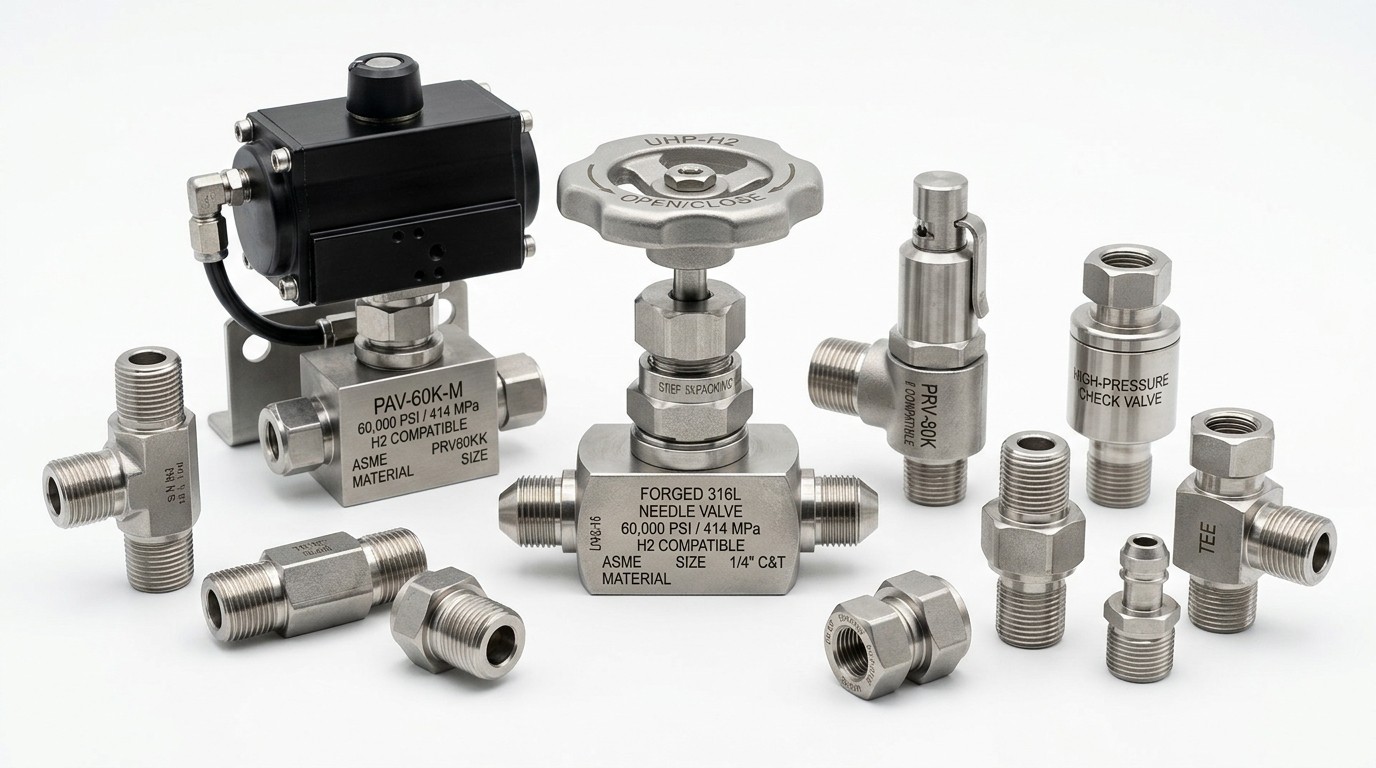
Selecting ultra-high pressure valves requires more than comparing pressure ratings. For buyers managing critical flow systems and energy containment, the right choice depends on containment technology, seal integrity, response accuracy, and long-term reliability. This guide outlines the key checks before purchase, helping decision-makers evaluate high-performance components such as hydrogen compatible valves, extreme-environment seals, and high-precision actuators with greater confidence.
For information researchers, CTOs, R&D leaders, and procurement directors, the buying process is rarely about a single valve body. It is about how the valve performs inside a larger containment architecture that may operate at 400 bar, 700 bar, or even higher, often under fast cycling, aggressive media exposure, and strict leakage limits. In sectors linked to hydrogen handling, semiconductor process control, laboratory compression systems, aerospace test loops, and advanced energy platforms, a weak selection decision can create downtime, safety risk, and costly redesign.
A disciplined procurement review should therefore examine pressure margins, sealing systems, materials compatibility, actuator response, standards alignment, maintenance access, and supplier documentation quality. The following sections break down the most important checks before buying ultra-high pressure valves, with practical guidance designed for high-consequence B2B applications.
Define the Real Operating Envelope, Not Just the Nameplate Rating
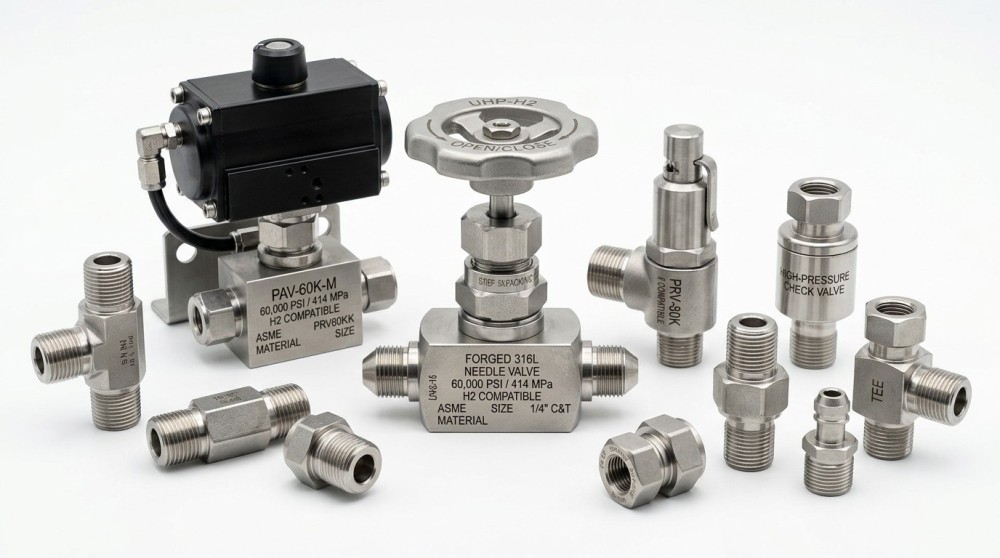
One of the most common purchasing mistakes is treating the maximum pressure listed on a datasheet as the full decision basis. In practice, an ultra-high pressure valve must be evaluated against the complete operating envelope: normal working pressure, surge pressure, temperature range, media type, cycle frequency, and acceptable leakage threshold. A valve rated for 700 bar may still be a poor fit if the application includes frequent pressure spikes to 820 bar, rapid temperature swings from -40°C to 85°C, or continuous open-close cycling above 20,000 cycles per month.
Decision-makers should begin by separating three conditions: continuous operating pressure, transient peak pressure, and proof or test pressure. These are not interchangeable. A buyer handling hydrogen, inert gas, specialty fluids, or high-purity process media should confirm whether the quoted value reflects continuous service or a short-duration test condition. In critical systems, a practical engineering margin often matters more than the headline rating, especially where pressure pulsation or vibration is present.
Temperature is the second filter. At elevated temperatures, many sealing materials lose mechanical stability; at very low temperatures, some elastomers harden and increase leakage risk. Even metal-seated or spring-energized sealing designs can respond differently when thermal contraction changes contact geometry. For this reason, valve selection should always link pressure and temperature together rather than reviewing them as isolated specifications.
It is also important to match the valve type to the flow function. Isolation valves, needle valves, check valves, relief valves, and directional control valves face different stress patterns. A needle valve optimized for fine throttling at 500 bar may not be ideal as a high-cycle shutoff valve in a pulse-driven skid. Procurement teams should verify whether the design has been validated for the intended duty profile rather than assuming all UHP valve geometries behave the same way.
Core operating variables to confirm
- Continuous pressure range, for example 350-700 bar, rather than only maximum burst or proof values.
- Temperature window, such as -40°C to 85°C or 0°C to 200°C, depending on media and installation environment.
- Cycle duty, including manual, pneumatic, or piezoelectric actuation frequency over 10,000, 100,000, or 1 million cycles.
- Flow media characteristics, including hydrogen embrittlement sensitivity, corrosive exposure, particulate load, and purity requirements.
- Leakage acceptance class, response time target, and pressure drop limits across the valve body.
The table below helps procurement and engineering teams distinguish between headline pressure claims and real selection criteria used in high-performance flow containment systems.
A disciplined review of these three dimensions often reveals whether a lower-cost option is truly suitable. In many B2B systems, valve failure is not caused by exceeding a single pressure number; it is caused by combined stress across pressure, temperature, and repetitive cycling.
Check Seal Integrity, Material Compatibility, and Containment Design
For ultra-high pressure valves, sealing technology is often the deciding factor between stable long-term service and early leakage events. Buyers should review whether the valve uses elastomeric seals, metal-to-metal seating, spring-energized polymer elements, or a hybrid containment concept. Each approach carries trade-offs in leak tightness, chemical resistance, maintenance interval, and thermal performance.
Material compatibility becomes even more critical in hydrogen, oxygen-adjacent, corrosive gas, or specialty fluid applications. Hydrogen-compatible valves, for example, must be evaluated for both permeation behavior and embrittlement risk in metallic components. Similarly, seals used in aggressive or ultra-clean environments may require materials such as FFKM, PTFE-based compounds, PEEK, or engineered metal seal structures depending on pressure level and contamination tolerance.
Procurement teams should also distinguish between internal leakage and external leakage. Internal leakage affects control stability and shutoff quality, while external leakage directly affects safety, cleanliness, and regulatory exposure. In many advanced systems, acceptable external leakage may need to approach very low thresholds under controlled test conditions. A supplier should be able to explain test method, test medium, and inspection criteria instead of providing only generic “bubble-tight” claims.
Connection design is another hidden risk point. Thread form, gland construction, surface finish, and torque control all influence sealing performance. A well-designed valve can still underperform if it is paired with mismatched fittings or assembled without clear installation guidance. For this reason, containment should be reviewed as a system interface, not as a standalone component attribute.
H4-level checks that reduce leakage risk
Seal material review
Ask for the actual seal family and its operating limits. For example, some high-performance polymers can tolerate broad chemical exposure but may still show deformation under repeated pressure pulses above 600 bar. FFKM may be valuable in aggressive media and elevated temperatures, but the right grade and backup design still matter.
Surface and seat quality
Seat finish, stem guidance, and machining tolerances directly affect repeatable shutoff. In precision flow control, minor inconsistencies can create measurable drift in response or leakage over 3 to 12 months of operation.
Media purity impact
In semiconductor, laboratory, or high-purity gas service, trapped particles, outgassing behavior, and cleaning compatibility can be as important as pressure strength. A valve that survives mechanically may still be unsuitable if it compromises process cleanliness.
The following comparison table outlines how buyers can align sealing choices with different risk profiles.
The key takeaway is simple: seal integrity is not a secondary detail. In many ultra-high pressure systems, the sealing concept determines maintenance interval, contamination risk, safety margin, and total cost of ownership over the first 12 to 36 months.
Evaluate Actuation, Response Accuracy, and System Integration
Not every ultra-high pressure valve is manually operated. In advanced industrial systems, actuation can involve pneumatic drives, solenoid-assisted mechanisms, motorized assemblies, or high-precision piezoelectric elements. Buyers should evaluate response time, repeatability, fail-safe behavior, and control system compatibility before approving a valve for automated duty.
Response requirements vary by application. A test stand or lab pressure control loop may need fine resolution and stable modulation over milliseconds or low-second intervals. A production isolation skid may prioritize reliable shutoff and repeatable actuation over 50,000 to 500,000 cycles. Procurement teams should ask whether the actuator has been paired and validated with the valve body at the intended pressure level, because bench performance at low pressure does not always translate to stable operation at 700 bar.
System integration should include mechanical and digital interfaces. Mechanical factors include mounting orientation, space envelope, tubing access, vibration tolerance, and manual override options. Digital factors include input voltage, signal protocol, controller compatibility, and position feedback requirements. In high-consequence environments, diagnostics such as cycle counters, end-position confirmation, or leak monitoring can reduce unplanned downtime and improve maintenance planning.
Another critical point is pressure drop and flow coefficient. Buyers sometimes select a compact valve that fits the cabinet layout but later discover excessive restriction, unstable flow, or thermal rise due to throttling losses. When flow stability matters, the actuator and flow path must be assessed together rather than sourced as isolated components.
A practical 4-step integration review
- Define the control role: on/off isolation, metering, relief, or directional switching.
- Set measurable performance targets: response time, cycle life, positioning accuracy, and fail-state behavior.
- Verify hardware fit: port geometry, installation space, tubing load, and environmental exposure.
- Confirm controls fit: signal interface, power requirements, feedback options, and maintenance diagnostics.
The table below can help decision-makers map actuation strategy to application demand.
When response accuracy is specified early, valve selection becomes more strategic. This is especially important in systems where sealing, control, and diagnostic performance must work together under high pressure rather than as separate engineering decisions.
Review Standards, Documentation, Testing, and Supplier Readiness
A technically strong valve can still be a poor procurement choice if documentation is weak. For B2B buyers, the supplier’s ability to provide traceable technical records is often as important as the component itself. At minimum, buyers should request material details, pressure and leak test information, temperature limits, installation instructions, maintenance guidance, and any relevant alignment with ISO, API, SEMI, or MIL-SPEC-related requirements where applicable to the end-use environment.
Testing language deserves careful attention. Terms such as “factory tested” or “qualified” can mean very different things. Ask whether the valve was helium leak tested, hydrostatically tested, pneumatically tested, cycle tested, or cleaned for high-purity service. Also confirm whether testing was performed at production scale, on a representative sample, or only on prototype units. For mission-critical systems, procurement teams often benefit from a documented acceptance plan with 3 layers: incoming inspection, installation verification, and commissioning validation.
Lead time and support capability should also be assessed early. In specialized high-pressure supply chains, standard configurations may ship in 2 to 6 weeks, while custom porting, special alloys, or tailored actuator packages may extend to 8 to 14 weeks. If a project schedule is tight, clarify which features are standard, which are engineered-to-order, and what spare parts can be stocked in advance.
Finally, consider how the supplier handles change control. A minor material substitution, seal revision, or machining update can affect compatibility in sensitive systems. Buyers should ask whether revision tracking, notification procedures, and replacement part continuity are available, especially for platforms with multiyear lifecycle expectations.
Documentation checklist before purchase order release
- Datasheet with continuous pressure, temperature range, media limits, and connection details.
- Test summary covering leak checks, pressure verification, and if relevant, cycle-life evaluation.
- Material and sealing description sufficient for compatibility review.
- Installation, torque, and maintenance guidance for field teams.
- Revision control policy, spare parts list, and expected service interval.
The next table summarizes how documentation quality influences buying confidence and downstream project risk.
In high-stakes procurement, documentation is not administrative overhead. It is the evidence base that allows engineering, quality, and purchasing teams to make aligned decisions with fewer surprises during commissioning and lifecycle support.
Common Buying Mistakes, FAQ, and Final Decision Guidance
Even experienced buyers can make avoidable errors when sourcing ultra-high pressure valves. The most frequent issues include overreliance on a single pressure figure, underestimating media compatibility, overlooking actuator-system fit, and accepting vague test language. Another common mistake is buying a high-performance valve without reviewing the surrounding sealing stack, fittings, and maintenance access. In containment-driven systems, the valve is only as reliable as the interface conditions around it.
A stronger procurement process usually follows 5 steps: define operating envelope, shortlist compatible sealing and material options, verify actuation and controls fit, review standards and test documentation, and confirm lifecycle support. This structured approach helps reduce redesign loops, especially in projects where one failure can interrupt weeks of validation work or delay equipment release.
For organizations managing advanced flow and energy assets, the best purchasing decision is rarely the lowest unit price. It is the option that delivers stable containment, predictable maintenance, and credible technical documentation over the life of the system. That is particularly relevant when evaluating hydrogen-compatible valves, extreme-environment seals, and precision actuation assemblies across interconnected supply chains.
FAQ: practical questions buyers often ask
How do I know if a UHP valve is suitable for hydrogen service?
Check more than the pressure value. Review metallic material susceptibility, seal permeation behavior, test conditions, and whether the supplier can explain compatibility under the expected range, such as 350 to 700 bar. If the answer is limited to “hydrogen ready” without technical context, more review is needed.
What delivery window should B2B buyers expect?
For common configurations, 2 to 6 weeks is a typical planning range. Custom ports, special materials, or integrated actuator packages can extend this to 8 to 14 weeks. Spare seal kits or service parts should be discussed at the same time as the initial order.
Which indicators matter most during comparison?
Focus on 4 core dimensions: validated operating envelope, sealing architecture, actuation repeatability, and documentation quality. Unit cost should be compared only after these technical factors are aligned.
Is a higher pressure rating always safer?
Not necessarily. A higher-rated valve may be larger, slower, less precise, or less compatible with cleanliness and control requirements. Safety comes from the right match between duty profile, sealing design, materials, and test evidence.
Selecting ultra-high pressure valves is ultimately a containment strategy decision. Buyers who review pressure envelope, seal integrity, material compatibility, response performance, documentation, and support readiness are far more likely to secure reliable long-term results. If you need deeper technical screening for hydrogen-compatible valves, specialized sealing systems, or precision actuation integration, contact us to discuss your application, request a tailored evaluation framework, and explore more solutions built for critical flow and energy containment.
Industry Briefing
Get the top 5 industry headlines delivered to your inbox every morning.