How to Source Hydrogen Compatible Valves Safely
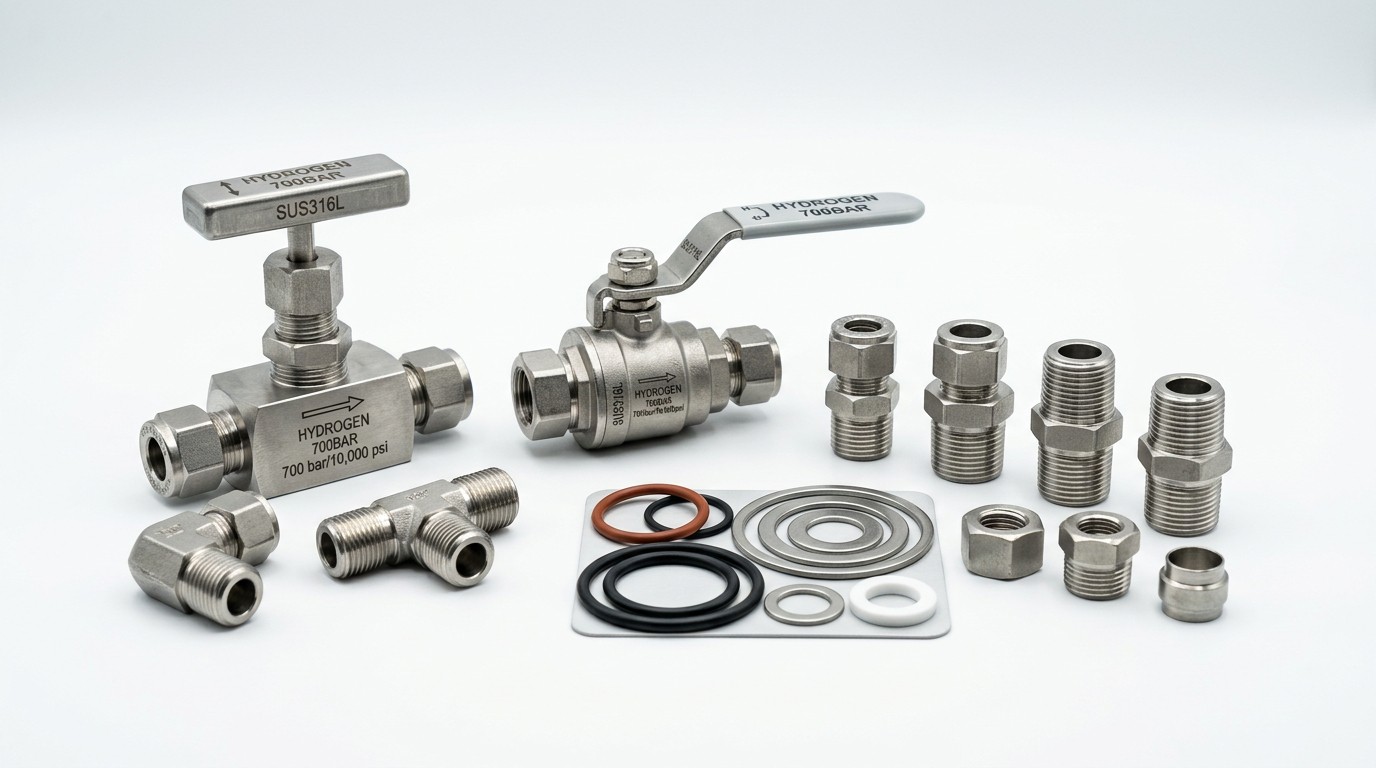
Sourcing hydrogen compatible valves safely requires more than price comparison—it demands a rigorous understanding of energy containment, critical flow systems, and containment technology. For procurement leaders and technical researchers evaluating high-performance components, the right supplier must prove material compatibility, pressure integrity, seal reliability, and compliance for ultra-high pressure valves operating in demanding hydrogen applications.
In hydrogen service, a valve is not a simple on-off device. It is a containment component that must resist permeation, manage pressure cycling, and maintain seat integrity under demanding media behavior. A sourcing error can affect system uptime, certification timelines, maintenance intervals, and, in worst cases, personnel safety and asset protection.
For industrial buyers, the challenge is often not finding suppliers, but filtering them. Many can quote pressure ratings, yet fewer can explain hydrogen embrittlement risk, seal material selection, leak testing limits, or why a 700 bar application requires a different review process than a 100 bar process line. That gap is where disciplined sourcing becomes a strategic function rather than a transactional purchase.
This guide is designed for information researchers, procurement directors, CTOs, and engineering teams who need a structured way to evaluate hydrogen compatible valves. It focuses on practical selection criteria, risk control, qualification checkpoints, and supplier assessment methods aligned with high-performance flow systems.
Why Hydrogen Valve Sourcing Requires a Different Risk Model
Hydrogen creates sourcing conditions that are fundamentally different from standard gas or liquid service. Its small molecular size increases leakage sensitivity, while high diffusivity and pressure cycling can stress metals, seats, and sealing interfaces in ways that are not always visible during routine visual inspection. In systems above 350 bar, these effects become more critical, and at 700 bar they demand far tighter engineering discipline.
Procurement teams often receive datasheets that list stainless steel construction, nominal pressure range, and temperature limits. However, safe hydrogen service depends on deeper details: alloy condition, seal chemistry, stem packing design, valve seat geometry, surface finish, and test method. A valve rated for high pressure in nitrogen is not automatically suitable for compressed hydrogen.
Another sourcing issue is the mismatch between commercial language and technical reality. Terms such as “hydrogen ready” or “suitable for gas service” are too broad to support a critical purchase decision. Buyers should request evidence tied to application class, such as cyclic duty, shutoff frequency, target leak rate, and whether the valve is used in storage, dispensing, compression, or process isolation.
For B2B decision-makers, the safest sourcing process uses at least 4 layers of review: media compatibility, pressure design, sealing performance, and compliance traceability. When one layer is skipped, the total cost of ownership can rise through unplanned maintenance, slow commissioning, or repeated qualification work across 6 to 12 months.
Core technical risks buyers should recognize
- Hydrogen embrittlement risk in susceptible metallic materials, especially under cyclic stress and elevated pressure.
- Permeation and fugitive leakage challenges, which can be more demanding than conventional compressed gas applications.
- Seat wear and sealing instability caused by rapid pressurization, depressurization, and repeated shutoff duty.
- Temperature interaction, including adiabatic heating during fast fill or pressure transients in compact systems.
Typical sourcing questions to ask before RFQ
Before requesting a quotation, define 5 basic conditions: operating pressure, peak pressure, cycle frequency, temperature range, and required leak performance. Also confirm whether the valve is manual, actuated, normally closed, or part of an automated safety chain. These details shorten technical clarification time and reduce quote revisions by 2 to 3 rounds in many projects.
It also helps to distinguish between laboratory, pilot, and production duty. A valve used 20 times per month in R&D is sourced differently from one used 2,000 times per week in a fueling skid or pressure management train. The supplier should be able to explain the design margin and maintenance interval appropriate to each use case.
Material Compatibility, Sealing Strategy, and Pressure Integrity
A safe hydrogen valve starts with material compatibility. Austenitic stainless steels are commonly used in hydrogen systems, but material choice still depends on pressure, stress concentration, manufacturing quality, and the severity of cyclic loading. Buyers should ask not only what alloy is used, but how critical wetted parts are processed, heat treated, and finished.
Sealing strategy is equally important. In high-pressure hydrogen service, elastomer selection cannot rely on general chemical resistance charts alone. Compression set, low-temperature behavior, gas decompression resistance, and permeation performance all matter. Depending on application, PTFE-based seats, engineered thermoplastics, or advanced elastomers may each have valid use cases, but the supplier should justify the choice.
Pressure integrity is more than a body rating. Buyers should review proof testing, burst margin approach, leak testing method, and design pressure relative to normal operating pressure. In many critical procurement programs, engineers prefer a clear safety margin between routine operating conditions and maximum allowable design limits rather than running continuously near rating.
The following table helps technical and purchasing teams align the main compatibility checkpoints before approving a supplier shortlist.
The key takeaway is that hydrogen compatibility is never a one-line specification. It is the combined result of material behavior, seal selection, and pressure qualification. When suppliers can provide these three layers clearly, buyers gain stronger confidence during technical review and approval.
Useful parameter ranges to define internally
Pressure and cycle profile
Document whether the valve operates below 100 bar, within 100 to 350 bar, or in the 350 to 700 bar range. Also note estimated cycle count, such as fewer than 500 cycles per year, 500 to 10,000 cycles, or continuous duty. This changes the qualification depth required from the supplier.
Leak performance target
Ask whether the application needs bubble-tight shutoff, quantified helium leak testing, or a stricter internal standard. Even if hydrogen-specific field conditions differ from bench testing, a defined leak acceptance framework helps compare suppliers on the same basis.
How to Evaluate Suppliers Beyond the Datasheet
A strong hydrogen valve supplier should be able to support engineering review, not only sales communication. This means providing traceable technical documentation, clarifying limitations, and discussing failure modes openly. In high-consequence flow systems, vague claims often create the largest procurement risk.
Buyers should evaluate suppliers across at least 6 criteria: application understanding, manufacturing consistency, test capability, documentation quality, response speed, and after-sales support. A low unit price becomes less attractive if technical clarifications take 3 weeks, sample testing requires rework, or documents fail third-party review during project qualification.
Lead time transparency is another key factor. Custom hydrogen compatible valves, especially for high-pressure isolation or dispensing applications, may require 4 to 12 weeks depending on machining complexity, seat material, and validation scope. Suppliers should clearly separate standard production lead time from first-article qualification lead time.
The table below provides a practical supplier comparison framework for procurement and engineering teams building a shortlist.
A supplier that performs well in these checkpoints is more likely to reduce hidden sourcing costs. The real value lies in fewer design revisions, faster qualification, and lower field risk, not only in the initial unit price.
A practical 5-step supplier qualification flow
- Define service envelope: pressure, temperature, duty cycle, media purity, and installation constraints.
- Request technical package: datasheet, materials list, test scope, drawing level details, and traceability approach.
- Conduct engineering review: compare material and sealing strategy against the intended hydrogen application.
- Validate sample or pilot lot: include leak verification, dimensional checks, and functional testing where relevant.
- Approve supplier with control points: incoming inspection, documentation retention, and change notification requirements.
This 5-step model is especially useful for organizations managing critical assets across multiple sites. It creates a repeatable sourcing standard and helps procurement teams avoid re-qualification every time a new valve size or connection option is ordered.
Standards, Testing, and Documentation Buyers Should Request
Hydrogen valve sourcing becomes safer when documentation is treated as part of the product. Buyers should ask for applicable design and testing references tied to the valve’s operating context. Depending on the sector, relevant frameworks may involve ISO, API, SEMI, or internal end-user specifications. The exact standard set varies by industry, but the discipline of matching standards to use case should remain consistent.
At minimum, most technical buyers should request 4 document categories: material traceability, pressure or leak test evidence, dimensional or drawing confirmation, and quality records. For regulated or highly sensitive systems, an additional document package may include cleanliness requirements, batch identification, and change control procedures for materials or seal substitutions.
It is also wise to distinguish between qualification testing and production testing. A supplier may have completed one-time design verification, while your project may still require routine production test records for each batch or each valve. This distinction can affect acceptance criteria, delivery planning, and inspection workload over a 12-month sourcing program.
Below is a simplified document checklist that supports safer procurement for hydrogen compatible valves in high-performance flow systems.
When buyers collect these records early, project handoff becomes easier between procurement, quality, and engineering teams. It also reduces the chance of late-stage approval issues during commissioning or third-party review.
Common documentation gaps that delay projects
- Pressure rating stated without test method or test duration.
- Seal material listed generically without a clear grade or formulation family.
- Drawing revision not aligned with the quoted part configuration.
- Traceability records available for body material but not for all wetted sealing elements.
These gaps may seem minor during sourcing, yet they often add 1 to 3 weeks to approval workflows once the end user or quality department requests clarification.
Implementation Mistakes, Maintenance Planning, and Safer Buying Decisions
Even a well-selected hydrogen valve can underperform if implementation details are overlooked. Connection mismatch, contamination during assembly, incorrect torque practice, and uncontrolled pressure ramp rates can all reduce valve life. Procurement should therefore align with installation and maintenance teams before placing high-value or repeat orders.
One common mistake is buying only against nominal pressure class while ignoring system dynamics. If the application includes rapid cycling, pulse loading, or frequent emergency shutoff events, the valve should be evaluated as a dynamic control point rather than a static pressure boundary. This difference often changes the preferred seat design and maintenance interval.
Maintenance planning should also be built into the sourcing decision. In some duty profiles, scheduled inspection every 6 to 12 months may be appropriate; in heavier cycling service, review intervals may need to be shorter. The supplier should provide guidance on wear indicators, service kits where applicable, and signs that trigger replacement rather than repair.
For organizations managing strategic supply chains, the most resilient buying decision balances 3 outcomes: technical safety, operational continuity, and documentation readiness. That is particularly important in sectors where valve failure can interrupt fueling, laboratory work, semiconductor processes, or advanced energy systems.
Frequent sourcing and implementation errors
- Selecting a valve based on general high-pressure suitability without hydrogen-specific review.
- Assuming all stainless steel constructions behave the same under cyclic hydrogen service.
- Ignoring leak test methodology and focusing only on pass or fail wording.
- Overlooking maintenance access, spare strategy, and change notification requirements.
FAQ for procurement teams and technical researchers
How do I know whether a valve is truly suitable for hydrogen?
Look for a combination of evidence rather than one claim. At minimum, review wetted material details, sealing material rationale, pressure and leak testing scope, and the intended application range, such as below 350 bar or up to 700 bar. A credible supplier should explain why the design fits your duty cycle and not just your pressure number.
What lead time should buyers expect?
Standard configurations may move in 2 to 6 weeks, while customized hydrogen compatible valves with special connections, documentation packages, or qualification requirements often need 4 to 12 weeks. First orders usually take longer than repeat orders because engineering and quality review happen in parallel.
Which metrics matter most during supplier comparison?
Focus on 4 metrics: compatibility evidence, test clarity, documentation completeness, and response time. Price is important, but if technical clarification takes too long or traceability is incomplete, the total procurement cost usually rises through project delay and additional inspection effort.
Safe sourcing of hydrogen compatible valves depends on disciplined evaluation, not assumptions. Buyers who define service conditions clearly, verify material and sealing compatibility, demand transparent testing records, and qualify suppliers beyond the datasheet are far better positioned to protect system reliability and project timelines.
For decision-makers managing high-performance containment and flow systems, a structured sourcing process also supports faster internal approval, lower lifecycle risk, and stronger alignment between procurement, engineering, and quality teams. If you are reviewing hydrogen valve options for critical applications, now is the right time to refine your specification and supplier checklist.
Contact us to discuss your hydrogen service requirements, request a tailored evaluation framework, or learn more about valve selection strategies for demanding ultra-high pressure and specialized sealing environments.
Industry Briefing
Get the top 5 industry headlines delivered to your inbox every morning.