Wood Panels: Moisture Risks Before Specification
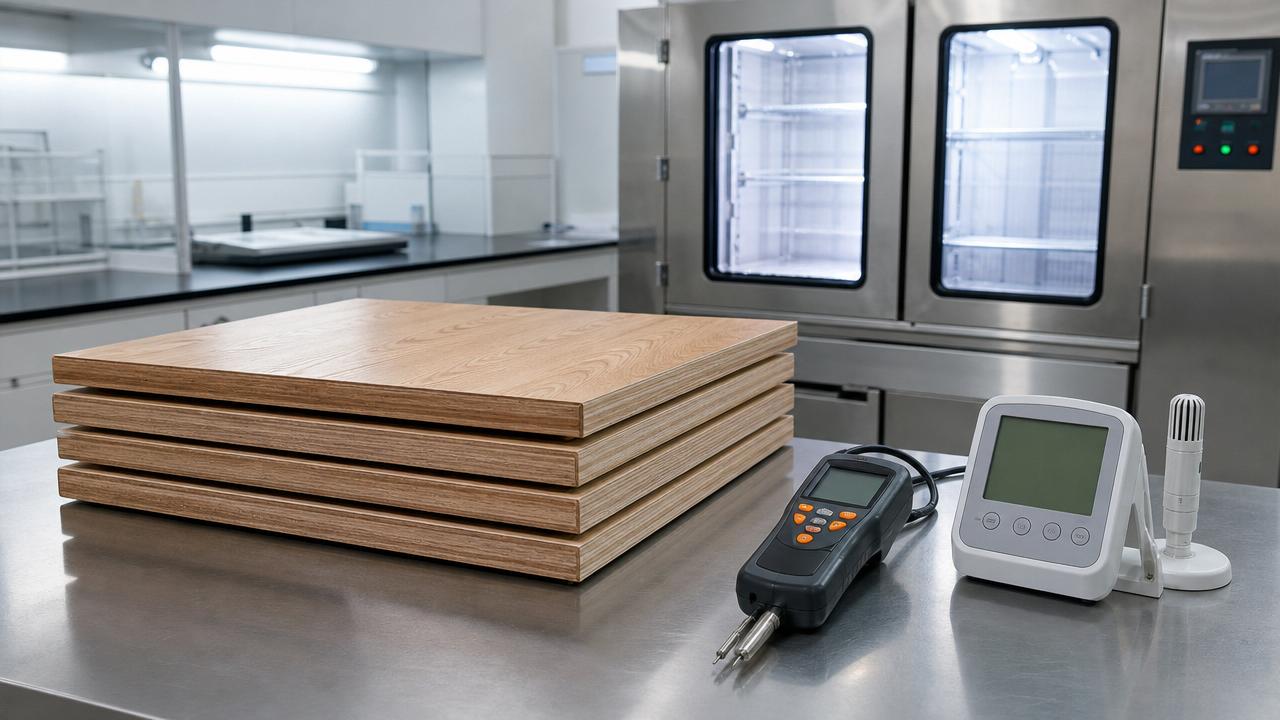
Before any specification is approved, wood panels must be assessed for moisture-related risks that can compromise safety, quality, and long-term performance. For quality control and safety teams, unchecked moisture variation may lead to swelling, delamination, microbial growth, dimensional instability, or failures in bonded and sealed assemblies. This article outlines the key moisture factors to evaluate before selecting wood panels, helping technical decision-makers reduce compliance risks, prevent costly defects, and ensure reliable performance in demanding operational environments.
In high-control facilities, wood panels are rarely judged by appearance alone. They may support cleanroom partitions, test benches, packaging systems, enclosure substrates, acoustic structures, or protected service areas around precision equipment.
For teams managing containment, sealing, airflow, and asset protection, moisture is not a minor material variable. It is a performance condition that can shift within 24–72 hours after storage, machining, coating, or installation.
Why Moisture Risk Matters Before Wood Panels Are Specified
Wood panels are hygroscopic, meaning they absorb and release moisture until reaching equilibrium with surrounding temperature and relative humidity. This behavior directly affects dimensional stability and joint reliability.
A panel that appears compliant at incoming inspection may drift outside tolerance after 2–4 weeks in a different environment. That delay is often when bonded assemblies begin showing defects.
Moisture content and equilibrium conditions
Typical interior applications often target wood panel moisture content around 6%–10%, depending on regional climate and service conditions. Higher-risk environments may require tighter incoming limits.
Quality teams should compare the panel’s measured moisture content with the expected equilibrium moisture content at the operating location. A mismatch of 3% or more deserves investigation.
Critical failure modes to screen
- Swelling at edges, grooves, and fastener locations that affects fit-up or safety clearances.
- Delamination in plywood, laminated boards, or decorative surfaces exposed to cyclic humidity.
- Loss of bond strength where sealants, adhesives, foils, or coatings interface with wood panels.
- Microbial growth when moisture, temperature, nutrients, and poor ventilation persist for several days.
- Dimensional drift that compromises gaskets, enclosure flatness, or mechanical alignment.
For procurement and safety leaders, these issues translate into rework, delayed commissioning, failed audits, and potential hazards near controlled flow or energy systems.
The following table connects common moisture indicators with specification decisions. It supports early screening before drawings, approved vendor lists, or production orders are finalized.
The key conclusion is simple: wood panels should be specified by measured behavior, not by catalog description alone. Moisture limits must connect to service exposure.
Moisture-Driven Quality and Safety Failure Paths
Moisture failures usually develop through a chain of events. A 1 mm dimensional change may become a seal gap, a fastener stress point, or a microbial risk.
In controlled industrial environments, a panel defect can affect far more than furniture or cabinetry. It may influence access panels, operator stations, protective partitions, or packaging integrity.
Dimensional instability and sealing performance
Where wood panels interface with polymer gaskets, aluminum frames, or bonded skins, moisture movement can disturb compression. Even small changes may reduce sealing consistency.
For safety teams, this matters around ventilation enclosures, instrument housings, microwave shielding structures, and process-adjacent work cells where gaps can create contamination pathways.
Delamination, microbial growth, and hidden degradation
Delamination is often detected late because the surface veneer remains visually acceptable. Internal bond breakdown may begin after repeated humidity cycles or liquid ingress at cut edges.
Microbial growth risk increases when moisture remains elevated and ventilation is poor. Inspection plans should consider hidden cavities, wall returns, under-benchtop areas, and packaging storage zones.
A practical 6-point failure path check
- Confirm whether the panel will face direct water, vapor, condensation, or cleaning agents.
- Map operating humidity over at least 7 days, including shutdown or weekend conditions.
- Inspect all machined edges, drilled holes, rebates, and exposed core areas.
- Check whether coatings and sealants are compatible with panel moisture content.
- Review fastener spacing, panel thickness, and allowance for movement.
- Define rejection criteria before first article approval or mass delivery.
This sequence helps teams prevent moisture from becoming a latent nonconformity. It also improves communication between design, sourcing, receiving inspection, and site safety.
Specification Criteria for Safer Wood Panels
A reliable specification should state the panel type, moisture content limit, test method, conditioning requirement, edge protection, and intended exposure category.
When these 6 elements are missing, suppliers may deliver products that meet a generic grade but fail the actual operating duty.
Panel type selection and exposure class
MDF, particleboard, plywood, OSB, and laminated composite wood panels respond differently to humidity. Density, adhesive system, core structure, and edge treatment all influence performance.
Interior dry zones may tolerate standard panels. Semi-controlled or cleaning-intensive zones often require moisture-resistant grades, sealed edges, or alternative composite substrates.
Before releasing a purchase specification, quality teams should compare each option against operating exposure, inspection burden, and failure consequence. The table below gives a decision framework.
No single panel type is automatically best. The right specification aligns moisture exposure, mechanical duty, seal design, lifecycle cost, and inspection capability.
Minimum documentation to request from suppliers
Supplier documentation should support traceable decisions. At minimum, request technical data sheets, safety data sheets where applicable, test references, storage guidance, and declared emission category.
- Moisture content range at dispatch and recommended acclimation period, commonly 48–96 hours.
- Thickness swelling or water resistance test data relevant to the panel grade.
- Dimensional tolerances for length, squareness, flatness, and thickness.
- Adhesive or bond durability classification appropriate to intended exposure.
- Handling limits for temperature, humidity, stacking, and protection during transport.
For critical installations, avoid approving wood panels based only on price and surface finish. Moisture-related evidence should be reviewed before commercial comparison.
Inspection, Testing, and Acceptance Workflow
A moisture risk program does not need to be complex. It should be repeatable, documented, and practical for receiving inspection and site installation teams.
For many B2B projects, a 5-step workflow is enough to reduce preventable failures before the panels enter fabrication or operational zones.
Step 1: Define the service environment
Record expected temperature, humidity, cleaning frequency, wet-adjacent processes, and ventilation conditions. A typical controlled range might be 18°C–25°C and 40%–60% RH.
Step 2: Establish incoming inspection rules
Use a calibrated moisture meter and define sampling frequency. For small lots, inspect at least 5 panels; for larger lots, use a documented sampling plan.
Step 3: Condition before machining or bonding
Allow panels to acclimate in the production or installation environment for 48–96 hours when moisture mismatch is suspected. Avoid sealing trapped moisture inside coatings.
Step 4: Validate interfaces and edges
Edges absorb moisture faster than faces. Every cut, hole, slot, or rebate should be sealed or protected according to its exposure and cleaning risk.
Step 5: Record acceptance and nonconformity actions
Document readings, lot numbers, inspection dates, and disposition decisions. If a panel exceeds the limit, quarantine the lot before rework spreads through assemblies.
Common acceptance thresholds to define
- Maximum moisture content by panel grade and service zone.
- Allowed flatness deviation over a defined length, such as 1,000 mm.
- Edge damage limit, including chipped corners, swelling, and exposed core.
- Required sealant coverage on machined or field-cut edges.
- Hold period after coating, laminating, or bonding before final inspection.
This approach gives safety managers a defensible record. It also helps procurement evaluate suppliers beyond unit cost, especially for repeat technical projects.
Procurement Decisions for Controlled Industrial Use
Procurement teams often face pressure to select wood panels quickly. However, a low-cost panel can become expensive after 1 failed installation cycle.
A better sourcing model scores material suitability, moisture documentation, supplier consistency, delivery protection, and corrective response. These 5 dimensions reduce ambiguity during approval.
Questions to ask before issuing a purchase order
- What is the target moisture content at dispatch, and how is it measured?
- Are the wood panels protected against rain, condensation, and ground moisture during transport?
- Which test method supports swelling, bond durability, or exposure classification?
- Can the supplier maintain lot traceability for replacement or investigation?
- What is the normal lead time for moisture-resistant grades, commonly 2–6 weeks?
These questions are especially important when wood panels support assemblies near UHP valve skids, RF energy equipment, actuator test areas, or sealed instrumentation spaces.
When to escalate to technical review
Escalate the specification if panels are used near sensitive containment boundaries, frequent washdown areas, clean zones, high-value electronics, or long-life infrastructure.
A technical review is also justified when replacement access is difficult, failure consequences are high, or service life expectations exceed 5 years.
Misunderstandings that create avoidable defects
- Assuming a laminated face protects the exposed core at every cut edge.
- Using indoor-grade wood panels in areas with condensation or aggressive cleaning cycles.
- Measuring moisture only after visible swelling has already appeared.
- Ignoring humidity during storage because the final installation environment is controlled.
- Treating panel substitution as a purchasing decision rather than a risk-controlled engineering change.
The best procurement outcome is not simply the cheapest compliant panel. It is the panel that maintains function across transport, storage, fabrication, installation, and service.
Moisture Control as Part of a Broader Reliability Framework
For G-PCS, material decisions are part of the broader logic of containment and flow. Wood panels may seem peripheral, but they affect environmental integrity.
When panels support sealed rooms, access structures, test benches, or protective enclosures, moisture control becomes linked to uptime, safety, and quality assurance.
Aligning panel specification with critical systems
In facilities involving UHP control, RF energy, extreme-environment seals, precision actuators, and specialized gaskets, peripheral materials must not undermine system-level reliability.
A suitable wood panel specification should therefore reference interfaces, exposure assumptions, inspection frequency, and corrective actions. It should not stop at thickness and decorative grade.
Actionable controls for quality and safety teams
- Create 3 service categories: dry controlled, intermittent humidity, and high moisture risk.
- Specify pre-install conditioning time and acceptable storage humidity.
- Require edge protection for every machined panel used in sealed or clean-adjacent areas.
- Include moisture readings in first article inspection and incoming lot records.
- Review substitutions through quality, safety, and engineering before release.
These controls help convert moisture management from a reactive repair task into a predictable specification discipline. That shift is essential for demanding B2B environments.
Wood panels should be approved only after their moisture behavior, exposure class, interfaces, and inspection requirements are clearly defined. This protects safety, quality, and lifecycle value.
For quality control personnel, safety managers, and technical buyers, the most effective path is early risk screening supported by measurable acceptance criteria.
G-PCS helps decision-makers connect material selection with containment integrity, sealing reliability, and operational control. To refine your wood panels specification or review moisture-related risks, contact us to obtain a tailored technical assessment and learn more solutions.
Industry Briefing
Get the top 5 industry headlines delivered to your inbox every morning.