Specialized Polymer Gaskets: When PTFE Is the Better Fit
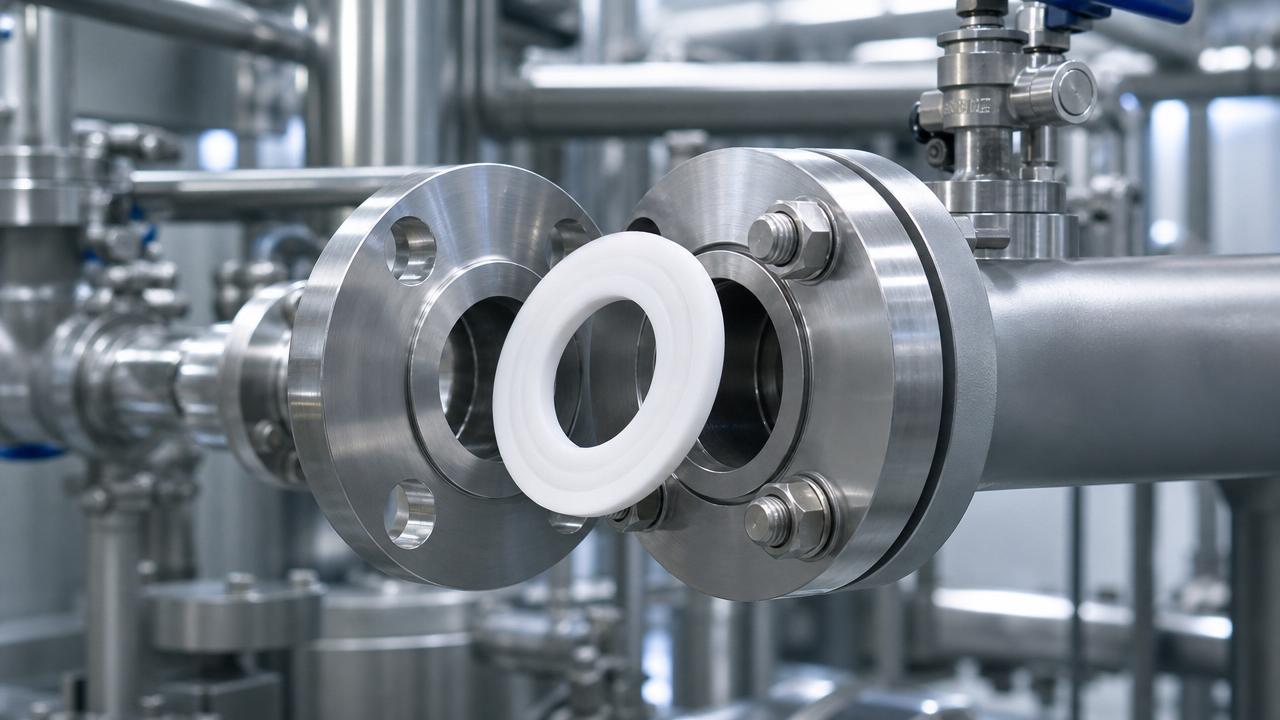
In demanding sealing environments, specialized polymer gaskets often determine whether a system performs reliably or fails under pressure, heat, or chemical exposure.
Among advanced material options, PTFE stands out when low friction, broad chemical resistance, and clean performance are essential.
This article explores when PTFE is the better fit for operators seeking longer service life, safer operation, and more consistent sealing results.
What Operators Usually Need to Know First
If you are choosing between gasket materials, the core question is simple: will PTFE solve a real operating problem better than rubber, fiber, or metal-based alternatives?
For most users and operators, PTFE is the better fit when chemical attack, sticking, contamination, or unstable sealing performance are causing repeated maintenance issues.
It is not the universal answer for every flange or service condition.
But in many aggressive or cleanliness-sensitive systems, specialized polymer gaskets made from PTFE deliver more predictable performance than conventional gasket materials.
The practical value is clear: fewer leaks, less material degradation, easier disassembly, and better process stability in systems that cannot tolerate contamination or unplanned shutdowns.
Why PTFE Matters in Specialized Polymer Gaskets
PTFE, or polytetrafluoroethylene, is widely recognized for its unique balance of chemical inertness, low surface energy, thermal stability, and non-stick behavior.
These properties make it one of the most important materials in the world of specialized polymer gaskets.
Unlike many elastomers, PTFE does not easily swell, harden, or crack after exposure to corrosive media.
Unlike some softer gasket materials, it also performs well where cleanliness, chemical compatibility, and low friction are critical to day-to-day operation.
For operators, this matters because the gasket is often the first component to reveal process incompatibility.
When a sealing material degrades, the result is usually leakage, torque loss, contamination, or difficult maintenance.
PTFE helps reduce those risks in the right applications.
When PTFE Is the Better Fit Than Standard Gasket Materials
The best use cases for PTFE usually involve one or more severe service factors that push common gasket materials beyond their safe operating range.
One of the strongest reasons to choose PTFE is chemical resistance.
When a system handles acids, solvents, oxidizers, ultra-pure media, or mixed chemical streams, many traditional gasket materials can degrade quickly or unpredictably.
PTFE is often selected because it remains stable across a very broad range of chemical exposures.
Another strong reason is cleanliness.
In process lines where contamination must be minimized, PTFE is preferred because it is non-reactive and does not easily shed materials into the process stream.
This is especially important in pharmaceuticals, semiconductor support systems, analytical equipment, food processing, and high-purity fluid handling.
Low friction is another practical advantage.
When operators need easier assembly, smoother component movement, or less sticking during service and disassembly, PTFE often performs better than tackier sealing materials.
It can also be the better fit in applications where moisture resistance and weather stability are important over long operating periods.
What Problems PTFE Can Help Prevent in Daily Operation
Operators are usually less interested in material theory than in avoidable failure modes.
That is exactly where PTFE becomes useful to evaluate.
A well-matched PTFE gasket can help reduce chemical degradation that leads to softening, embrittlement, swelling, or sudden seal failure.
It can also lower the chance of product contamination caused by gasket breakdown in sensitive systems.
Another common issue is flange sticking during maintenance.
Some gasket materials bond to metal surfaces over time, especially under heat, pressure, or chemical exposure.
PTFE’s non-stick character can make gasket removal easier and shorten maintenance intervals.
Torque retention can also become more stable when the right PTFE gasket design is chosen for the service condition.
That does not mean every PTFE gasket will automatically seal better.
But when properly specified, it can deliver more reliable long-term performance than lower-grade alternatives used outside their comfort zone.
Where PTFE Performs Especially Well
PTFE-based specialized polymer gaskets are especially valuable in fluid systems where chemical compatibility is the top priority.
This includes chemical dosing lines, acid transfer points, solvent service, and systems carrying highly reactive cleaning agents.
They are also widely used in high-purity applications.
When product integrity matters, operators need sealing materials that do not introduce particles, residues, or unwanted reactions.
PTFE is commonly chosen in these cases because of its inert surface and clean service profile.
Outdoor and moisture-prone installations are another area where PTFE can be useful.
It resists water absorption and generally maintains stability in wet or humid conditions.
Operators working with aggressive washdown procedures may also find PTFE more durable than some conventional gasket materials.
In equipment requiring frequent teardown and cleaning, PTFE can reduce maintenance difficulty due to its low adhesion and broad media compatibility.
Where PTFE May Not Be the Best Option
A balanced decision matters because PTFE also has limitations.
It should not be selected only because it is considered advanced.
In some applications, softer elastomeric materials may seal better at low bolt loads or on imperfect flange surfaces.
PTFE can be less forgiving if joint alignment is poor or installation practices are inconsistent.
Cold flow, also called creep, is one of the most important concerns.
Under sustained load, standard PTFE may deform over time, which can reduce sealing stress if the joint design does not account for it.
This is why filled PTFE or engineered gasket structures are often preferred in more demanding static sealing applications.
PTFE may also be a weaker choice in applications dominated by extreme mechanical cycling, severe flange distortion, or conditions where compressibility is more important than chemical resistance.
For operators, the lesson is simple: choose PTFE for the problems it solves well, not for the label alone.
How Operators Can Tell If PTFE Is the Right Choice
The most useful evaluation method is to start with the actual cause of past gasket failures.
If your current gasket fails because of chemical attack, surface sticking, contamination concerns, or unstable performance after cleaning cycles, PTFE deserves serious consideration.
Next, check the service media and temperature range.
PTFE is usually selected where broad chemical resistance is required, but the exact operating profile still matters.
You should also review flange condition, bolt load consistency, and sealing surface quality.
PTFE performs best when the joint design and installation method support its material behavior.
If recurring failures are linked to poor installation, misalignment, or damaged flange faces, changing only the gasket material may not solve the root problem.
It is also worth asking whether cleanliness requirements are becoming more demanding.
As systems move toward higher purity, more aggressive chemicals, or stricter maintenance intervals, specialized polymer gaskets based on PTFE often become more attractive.
PTFE vs Other Common Gasket Material Types
Compared with general-purpose rubber gaskets, PTFE usually offers much stronger chemical resistance and cleaner performance.
Rubber may be easier to compress, but it is often more vulnerable to swelling, aging, and media-specific degradation.
Compared with compressed fiber materials, PTFE often performs better in corrosive or high-purity environments.
Fiber materials can be cost-effective, but they may not offer the same inertness or contamination control.
Compared with metal gaskets, PTFE is easier to use in many moderate-load systems and does not require the same level of flange stress.
However, metal gaskets may be more appropriate in very high-temperature or very high-pressure service where mechanical strength dominates material selection.
The real comparison is not about which material is best in general.
It is about which material best matches the process risk, maintenance burden, and sealing demands of the specific application.
The Importance of PTFE Grade and Gasket Design
Not all PTFE gaskets perform the same way.
Material grade, filler content, manufacturing method, and gasket geometry all influence field performance.
Virgin PTFE may be preferred in ultra-clean or highly sensitive chemical service.
Filled PTFE can improve creep resistance, dimensional stability, and wear behavior in applications where standard PTFE may deform too easily.
Expanded PTFE is another option that can improve conformability and sealing on less-than-perfect flange surfaces.
For operators, this is important because poor results are sometimes blamed on PTFE when the actual issue is incorrect grade selection.
A gasket designed for one type of flange or media condition may fail quickly in another.
That is why technical matching matters more than generic material preference.
Installation and Handling Factors That Affect PTFE Performance
Even high-quality specialized polymer gaskets can fail if installation practices are weak.
PTFE requires careful handling because sealing performance depends heavily on proper compression and joint preparation.
Operators should inspect flange faces for scratches, warping, corrosion, or embedded residue before installation.
Bolts should be tightened using the correct sequence and load guidance for the gasket type and flange design.
Over-tightening can damage the joint or distort the gasket.
Under-tightening can leave insufficient sealing stress and create leak paths.
It is also wise to confirm that the selected gasket dimensions match the equipment specification exactly.
Using the wrong thickness or profile can reduce the advantages PTFE would otherwise provide.
Good material choice and good installation must work together.
What Long-Term Value PTFE Can Offer
From an operator’s perspective, the value of PTFE is usually measured in fewer interventions and more stable uptime.
If a gasket lasts longer in chemical service, resists sticking during changeouts, and lowers leak frequency, the operational payoff can be significant.
This is especially true when downtime is expensive or when leakage creates safety, cleanup, or product quality risks.
PTFE may cost more upfront than basic gasket materials, but a higher purchase price does not always mean higher total cost.
When longer service life reduces shutdowns, maintenance labor, and replacement frequency, PTFE can deliver better overall value.
Its clean-service advantages can also support compliance and process control in regulated or quality-sensitive environments.
Common Signs It May Be Time to Switch to PTFE
Some practical warning signs suggest that your current gasket material may no longer be the right fit.
Frequent replacement after chemical exposure is one of the clearest indicators.
Another is visible swelling, cracking, hardening, or sticking after normal service intervals.
Repeated leakage after washdown, cleaning chemical exposure, or media changes also points to compatibility problems.
If maintenance teams regularly struggle to remove old gaskets cleanly, PTFE may help reduce downtime and flange surface damage.
Contamination concerns are another trigger.
When product purity becomes more critical, shifting to PTFE-based specialized polymer gaskets can be a logical upgrade.
These signals do not guarantee that PTFE is the answer, but they strongly suggest that a more chemically robust gasket material should be evaluated.
Conclusion: When PTFE Is the Better Fit
PTFE is the better fit when operators need a gasket material that resists aggressive chemicals, supports clean processing, reduces sticking, and delivers more stable sealing performance over time.
Its strengths are most visible in applications where conventional gasket materials fail because of media attack, contamination risk, or maintenance difficulty.
At the same time, PTFE works best when the grade, gasket design, flange condition, and installation method are properly matched to the service.
That is the key takeaway for anyone selecting specialized polymer gaskets.
Do not choose PTFE because it sounds advanced.
Choose it when the operating conditions clearly reward its chemical resistance, cleanliness, and low-friction behavior.
When those factors matter most, PTFE is often not just a good option, but the smarter and safer sealing choice.
Industry Briefing
Get the top 5 industry headlines delivered to your inbox every morning.