Perfluoroelastomer Seals vs FFKM O-Rings
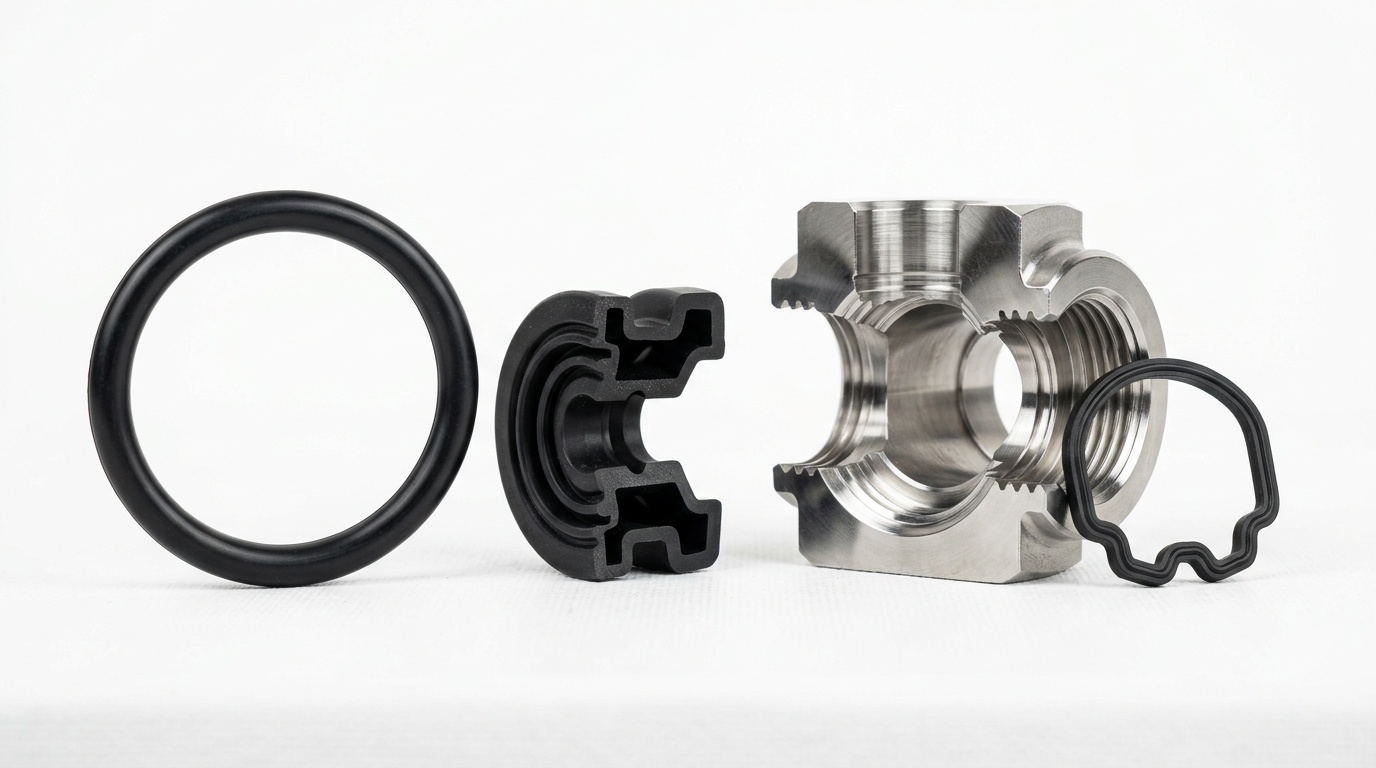
In critical flow systems, choosing between perfluoroelastomer seals and FFKM O-rings directly affects energy containment, uptime, and compliance. For decision-makers evaluating high-performance components in extreme-environment seals, this comparison clarifies material behavior, containment technology risks, and long-term value across advanced industrial applications.
For CTOs, R&D leaders, and procurement teams working in semiconductor tools, chemical processing skids, aerospace assemblies, UHP valve platforms, and RF energy systems, the terminology around sealing materials can be confusing. In practice, “perfluoroelastomer seals” is often the broader material category, while “FFKM O-rings” refers to a common seal geometry made from that same family of compounds.
That distinction matters because a material decision is never only about chemical resistance. It also affects compression set, plasma durability, vacuum integrity, thermal cycling stability, and maintenance frequency over 12–36 month operating windows. In high-consequence containment environments, the wrong specification can create leaks, unplanned shutdowns, contamination events, or shortened service intervals.
Understanding the Difference: Material Family vs Seal Geometry
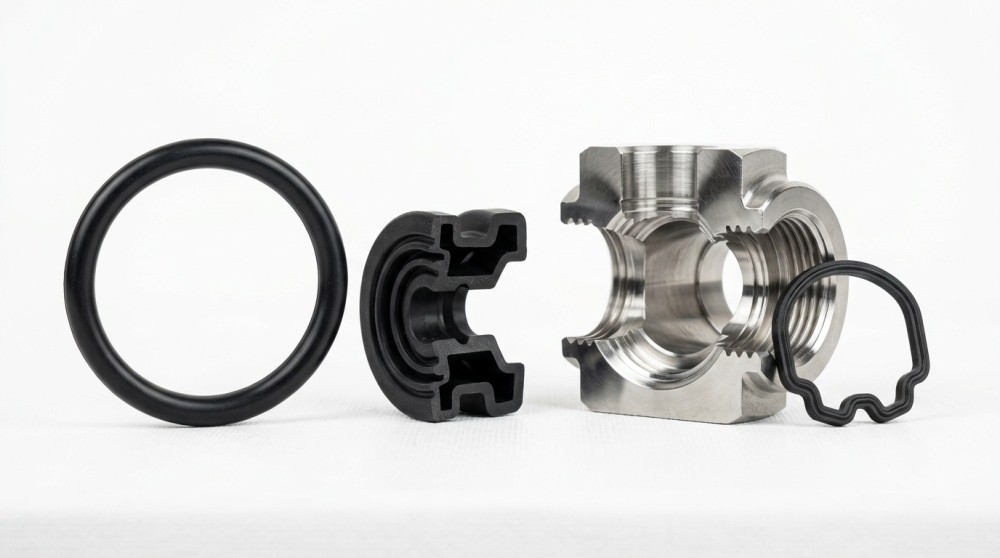
The first point to clarify is that perfluoroelastomer and FFKM are not opposing technologies in the way many buyers assume. FFKM is the standard abbreviation used in ASTM and industrial material discussions for perfluoroelastomer. In other words, FFKM is the material class; an FFKM O-ring is one specific component shape manufactured from that class.
A broader term such as “perfluoroelastomer seals” may include O-rings, custom-molded gaskets, lip seals, bonded geometries, spring-energized hybrid designs, and specialized sealing profiles. This is why a procurement brief that compares “perfluoroelastomer seals vs FFKM O-rings” often needs refinement before supplier evaluation begins.
In critical flow and containment systems, geometry can be as important as chemistry. An O-ring may be ideal for static sealing in grooves with predictable squeeze ratios of roughly 15%–30%, but more complex assemblies may require custom perfluoroelastomer seals to manage pressure pulsation, aggressive media, low leakage thresholds, or difficult flange conditions.
For decision-makers, the practical question is not simply which term is better. The real question is whether the application needs a standard FFKM O-ring, a custom perfluoroelastomer sealing profile, or a different high-performance elastomer altogether. That decision should be based on media, temperature, pressure, motion, compliance requirements, and total lifecycle cost.
Where confusion typically starts
Engineering teams often use material language, while sourcing teams use part language. A design engineer may specify “FFKM, low outgassing, high-purity grade,” but a buyer may search for “perfluoroelastomer seals” and receive options across several geometries. This mismatch can add 1–3 sourcing cycles and delay qualification.
A practical classification framework
- Material class: FFKM or perfluoroelastomer, selected for chemical and thermal performance.
- Seal type: O-ring, gasket, custom-molded profile, or specialty component based on hardware design.
- Duty profile: static, dynamic, vacuum, plasma, CIP/SIP, UHP gas, or corrosive wet chemistry.
- Risk level: standard industrial service, clean process service, or mission-critical containment.
The table below separates terminology, function, and selection logic in a way that supports both technical review and commercial comparison.
The key conclusion is straightforward: comparing perfluoroelastomer seals with FFKM O-rings is often a category-versus-format discussion. The better evaluation method is to first confirm that FFKM is the right material family, then determine whether an O-ring geometry is sufficient for the application envelope.
Performance Criteria in Extreme-Environment Sealing
FFKM-based sealing is usually selected because standard FKM, EPDM, or silicone compounds may fail when exposed to combined extremes of chemistry, heat, and process instability. In advanced flow systems, seals may encounter continuous temperatures from 200°C to 260°C, short excursions beyond that range, or chemically aggressive cleaning cycles every 24–72 hours.
However, not all perfluoroelastomer compounds perform the same way. Some grades prioritize plasma resistance for semiconductor dry etch tools, others are tuned for amines, acids, solvents, or steam. A buyer looking only at the label “FFKM” may overlook critical differences in hardness, compression set, permeation behavior, and particulate performance.
In high-frequency RF systems or UHP valve assemblies, seal degradation is rarely a single-variable event. It may result from pressure cycling, thermal shock, media absorption, and insufficient gland design acting together over 500,000 cycles or more. That is why component review should combine material data with actual service conditions rather than relying on catalog shorthand.
From a containment perspective, three issues usually dominate long-term reliability: resistance to chemical attack, retention of elastic recovery after compression, and stability under thermal and vacuum cycling. When these are not aligned with the duty profile, even a premium FFKM O-ring may underperform.
Key technical criteria to review
- Operating temperature range, including transient spikes and cool-down frequency.
- Media compatibility with acids, bases, ketones, solvents, oxidizers, steam, or plasma species.
- Compression set after extended dwell periods such as 70 hours, 168 hours, or longer validation windows.
- Pressure profile, including vacuum service, 10 bar process loops, or 700 bar hydrogen-adjacent valve systems.
- Cleanliness requirements such as low extractables, low particle shedding, and high-purity processing suitability.
Why geometry still changes performance
Two seals made from the same FFKM compound can behave very differently if one is a standard O-ring and the other is a custom profile. Groove fill, squeeze distribution, flange tolerance absorption, and dynamic friction all influence leakage and wear. In many systems, a geometry change can improve service life by one maintenance cycle without changing the base polymer.
The comparison table below highlights where material selection ends and application engineering begins.
For many buyers, the takeaway is not that one option is superior in all situations. It is that FFKM O-rings are often the right starting point, while custom perfluoroelastomer seals become valuable when the hardware, duty cycle, or compliance burden exceeds standard design assumptions.
Application-Based Selection for Industrial Decision-Makers
A useful way to select between perfluoroelastomer seals and FFKM O-rings is to begin with the application environment rather than the product name. In semiconductor wet benches, plasma chambers, analytical instruments, pharmaceutical skids, and chemical dosing modules, seal failure modes vary sharply. A single material family can support all of these sectors, but not with one universal design approach.
For static face-seal applications with standard glands, FFKM O-rings often provide the best balance of availability, validation speed, and replacement simplicity. Stocked sizes can reduce sourcing lead times to 7–15 days in many supply chains, while custom molded perfluoroelastomer seals may require 3–8 weeks depending on tooling, material grade, and inspection requirements.
In contrast, systems with irregular flange geometry, aggressive thermal cycling, or controlled leakage thresholds may justify custom seals. This is common in specialized vacuum modules, RF energy delivery assemblies, or high-value fluid control hardware where one leak event can interrupt production lots, trigger contamination review, or damage adjacent components.
From a B2B sourcing perspective, the right decision depends on four combined variables: process media, hardware geometry, qualification timeline, and downtime cost. A lower-cost standard O-ring may become the more expensive choice if replacement frequency doubles or if preventive maintenance windows shrink from 12 months to 6 months.
Typical selection paths by use case
- Choose standard FFKM O-rings when the gland is conventional, the duty is primarily static, and replacement access is straightforward.
- Choose custom perfluoroelastomer seals when leakage tolerance is tight, gland geometry is constrained, or process cycling is unusually severe.
- Run comparative validation when the assembly experiences combined thermal, chemical, and pressure stresses over repeated maintenance intervals.
A buyer-oriented decision matrix
The matrix below helps procurement and engineering teams align component choice with operational priorities rather than relying on generic premium-material assumptions.
This comparison shows why many advanced industrial buyers no longer ask only for “the best FFKM.” They ask for the best-fit FFKM seal architecture within a defined operating window, service interval, and contamination risk profile.
Procurement Risks, Qualification Steps, and Cost-of-Ownership
In strategic sourcing, seal price per piece should never be treated as the primary decision metric. A premium-grade FFKM O-ring can cost several times more than standard elastomer alternatives, yet still reduce total cost if it extends maintenance intervals, prevents line stoppage, and lowers contamination risk. The same logic applies when moving from a standard O-ring to a custom perfluoroelastomer seal.
The main procurement risk is under-specification. Buyers sometimes match only temperature range and chemical compatibility, then overlook pressure cycling, thermal shock, installation damage risk, or tolerance stack-up. Another common issue is over-specification, where a very high-end compound is selected for a service condition that a simpler geometry or lower-cost high-performance material could handle.
A disciplined qualification process usually includes drawing review, material screening, sample validation, and maintenance planning. For critical systems, teams often run a 4-step evaluation: confirm media exposure, verify hardware gland, test under representative cycles, and compare replacement economics over 12–24 months. This reduces the chance of selecting a chemically resistant seal that still fails mechanically.
Lead time is another practical factor. Standard sizes may be purchased faster, but specialty compounds or custom profiles can add tooling, first-article inspection, and batch approval time. In regulated or high-sensitivity sectors, incoming inspection and documentation review may add 5–10 business days beyond physical delivery.
Common buying mistakes
- Assuming all FFKM compounds have the same resistance to plasma, amines, steam, or mixed solvent cleaning.
- Selecting a standard O-ring where gland fill, extrusion resistance, or seal contact geometry requires a custom form.
- Evaluating only unit price instead of maintenance labor, downtime cost, and validation burden.
- Ignoring installation practice, lubrication compatibility, and compression targets during rollout.
Qualification checklist for enterprise teams
For high-value assets, a structured review process improves selection accuracy and supplier alignment.
- Define media, temperature, pressure, cycle frequency, and contamination sensitivity.
- Identify whether the hardware supports standard O-ring glands or requires custom seal geometry.
- Request compound-specific technical data, not just generic perfluoroelastomer labeling.
- Plan pilot use over one maintenance interval before full-scale conversion.
- Model lifecycle cost across replacement frequency, line stoppage exposure, and spare inventory strategy.
For organizations managing critical containment and flow assets across multiple sites, the winning strategy is usually standardization where possible and customization where necessary. That balance controls both inventory complexity and field risk.
FAQ: Practical Questions About Perfluoroelastomer Seals and FFKM O-Rings
The following questions reflect common search intent from technical evaluators and enterprise buyers comparing high-performance sealing options.
Are perfluoroelastomer seals always better than standard FFKM O-rings?
Not always. If the application uses a standard gland, stable static loading, and known media compatibility, an FFKM O-ring may be the best solution. Custom perfluoroelastomer seals become more valuable when geometry, leakage tolerance, or service severity exceeds normal O-ring capability.
How long does qualification usually take?
For standard sizes and already-approved compounds, initial qualification may take 1–3 weeks. If the project includes custom tooling, multi-media testing, or site-specific documentation, the timeline can extend to 4–8 weeks. Mission-critical applications may take longer if maintenance-cycle validation is required.
What should procurement teams request from suppliers?
At minimum, request compound identification, hardness range, temperature capability, chemical suitability guidance, dimensional tolerances, and any available cleanliness or outgassing information relevant to your process. For custom seals, also request drawing confirmation, tooling expectations, and first-article inspection criteria.
Which industries benefit most from FFKM sealing solutions?
The strongest fit is usually found in semiconductor manufacturing, high-purity chemical processing, aerospace subsystems, advanced analytical equipment, pharmaceutical process skids, industrial RF and microwave systems, and UHP valve applications. These environments combine elevated thermal, chemical, or contamination-control demands that exceed standard elastomer limits.
For organizations making high-stakes sealing decisions, the most important insight is this: FFKM defines the material family, while perfluoroelastomer seals define the broader solution space. The right choice depends on whether a standard O-ring geometry can deliver the required containment, service life, and qualification confidence in your actual operating environment.
When selection is aligned with media exposure, hardware design, and lifecycle targets, both standard FFKM O-rings and custom perfluoroelastomer seals can support stronger uptime, lower risk, and better compliance outcomes. If you need help narrowing the right sealing route for critical flow systems, contact us to discuss application details, request a tailored recommendation, or explore more specialized sealing solutions.
Industry Briefing
Get the top 5 industry headlines delivered to your inbox every morning.