How Trade Is Reshaping High-End Seal Supply
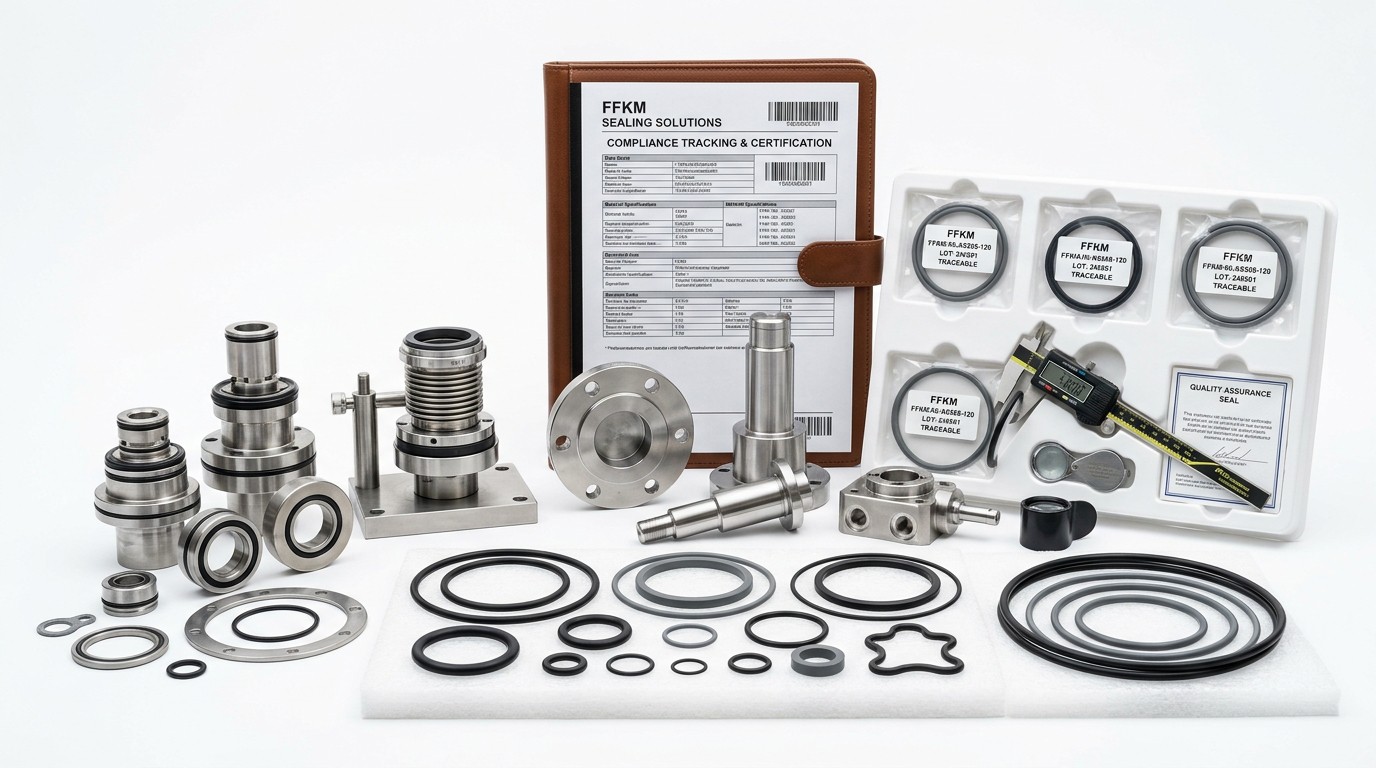
Global trade is rapidly reshaping the market for high-performance components in energy containment and critical flow systems, especially across ultra-high pressure valves, perfluoroelastomer seals, and extreme-environment seals. For researchers and decision-makers, understanding the impact of trade on high-end seal supply is now essential to managing risk, ensuring seal reliability, and securing resilient sourcing strategies in advanced containment technology.
Why is trade pressure changing high-end seal supply so quickly?
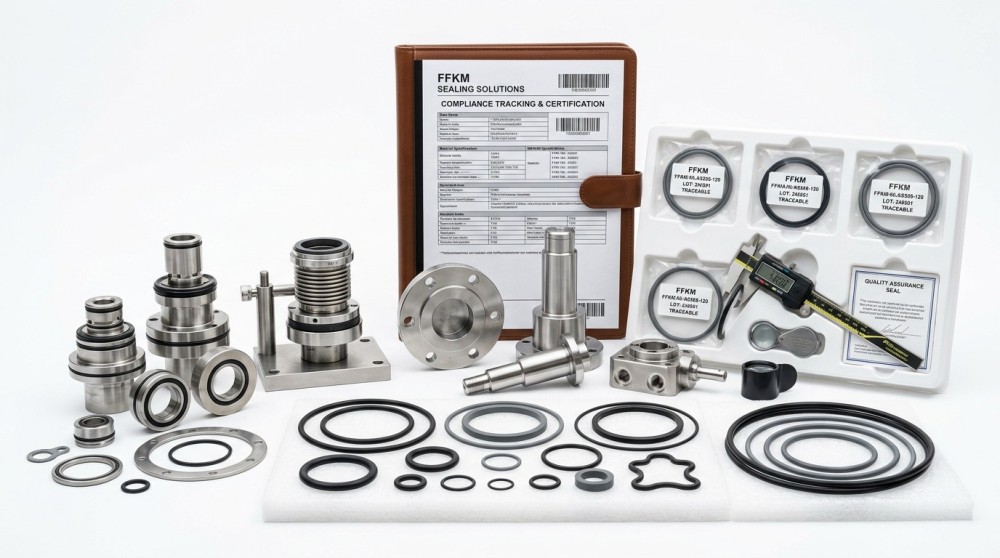
High-end seal supply is no longer shaped only by material science or machining capability. It is increasingly influenced by export controls, tariff adjustments, regional compliance rules, logistics volatility, and dual-source qualification demands. For buyers of FFKM seals, extreme-environment mechanical seals, and UHP-compatible sealing elements, a sourcing decision that once took 2–4 weeks for technical review can now require 6–12 weeks when trade risk screening and supplier validation are added.
This matters most in sectors where containment failure is not a minor maintenance event. In semiconductor tools, hydrogen systems, vacuum platforms, industrial microwave assemblies, and aerospace-adjacent equipment, seal performance directly affects pressure retention, media compatibility, particle control, and uptime stability. A delay in high-end seal supply can stop pilot builds, postpone qualification runs, or force substitution with materials that do not fully meet thermal or chemical limits.
Trade is also changing the competitive map. Suppliers that previously served as low-visibility component manufacturers are now strategic bottlenecks. Procurement leaders increasingly evaluate not only unit price, but also regional manufacturing footprint, raw polymer access, compound traceability, documentation readiness, and the ability to support small-batch engineering orders alongside volume production.
G-PCS addresses this shift through a technical intelligence model built around the logic of containment and flow. Instead of viewing seals as isolated consumables, it connects sealing performance with standards exposure, application severity, response time, and supply continuity. That approach is especially useful when a single seal material must be assessed against ISO, SEMI, API, or MIL-SPEC-oriented requirements across multiple regions.
What procurement teams are watching more closely
Trade disruption has pushed decision-makers toward a wider screening matrix. In many projects, three categories now dominate qualification: performance risk, document risk, and delivery risk. If one category fails, even a technically strong seal may not be approved for deployment.
- Performance risk: media compatibility, pressure range, compression set behavior, thermal cycling tolerance, and contamination sensitivity under continuous operation.
- Document risk: material declarations, lot traceability, test records, dimensional consistency, and evidence aligned with customer or regional compliance review.
- Delivery risk: lead time variation, customs sensitivity, raw material concentration, secondary manufacturing location, and reorder predictability over 1–3 quarters.
For information researchers, these changes mean the search for high-end seal supply must go deeper than catalog data. For enterprise decision-makers, the key issue is no longer just “Which seal works?” but “Which seal supply path remains reliable under changing trade conditions?”
Which parts of the sealing market are most exposed to trade disruption?
Not all sealing products are equally affected. Standard elastomer items with broad distributor coverage usually recover faster from regional delays. High-end seal supply becomes more fragile when material formulation is specialized, tolerances are tight, test documentation is mandatory, or application failure cost is high. That is why FFKM seals, engineered composite gaskets, and extreme-environment mechanical seals face more exposure than commodity-grade alternatives.
The trade impact is strongest in four operating conditions: highly corrosive media, ultra-clean systems, high pressure, and severe thermal cycling. In these cases, substitution is difficult because the seal is tied to system validation. A nominally similar compound may fit dimensionally yet fail in outgassing, plasma resistance, steam stability, or compression recovery after repeated cycling.
The table below shows where supply sensitivity typically increases and why buyers should treat high-end seal supply as a strategic sourcing issue rather than a routine replenishment task.
The practical takeaway is clear: the more tightly a seal is linked to process purity, pressure containment, thermal endurance, or regulated documentation, the more trade disruption can affect project timing and technical risk. This is where G-PCS adds value by benchmarking sealing options against application severity instead of relying on generic category labels.
Where decision errors often begin
A common mistake is to assume that a dimensional match ensures a functional replacement. In advanced containment systems, three hidden variables often decide success: compound behavior under actual media, sealing force stability across 10°C–250°C or broader duty windows, and documentation completeness for customer audit trails. Ignoring any of these can turn a short-term sourcing fix into a long-term reliability problem.
Another error is over-prioritizing nominal lead time. A supplier that quotes 10–15 days but cannot provide traceability, revision control, or lot consistency may create more delay than a 4–6 week source that supports qualification correctly. High-end seal supply should be judged on total readiness, not shipping speed alone.
How should buyers compare suppliers when seal availability becomes uncertain?
When trade friction affects high-end seal supply, supplier comparison needs to move from price-based screening to evidence-based procurement. For most B2B teams, five checks are essential: material continuity, regional production resilience, documentation depth, engineering support, and change-notice discipline. These checks help procurement directors and R&D leaders reduce the risk of late-stage redesign or field failure.
This is especially important for applications under ISO, SEMI, API, or MIL-SPEC-linked governance, where changes in compound origin, cure system, filler profile, or dimensional process can have qualification consequences. Even when the form factor is unchanged, the approval burden may restart if the supply chain changes materially.
The comparison table below is designed for teams evaluating high-end seal supply under time pressure, budget control, and compliance sensitivity.
A supplier with stronger change control and better engineering dialogue may be the safer option even if the unit price is higher by a moderate margin. In high-end seal supply, cost should be measured against downtime risk, qualification delay, and possible system contamination, not only against purchase order totals.
A practical 4-step sourcing framework
For teams facing unstable cross-border conditions, a structured approach helps reduce noise and focus on critical variables.
- Define the true duty profile: pressure, media, temperature, cycle count, cleanliness level, and expected service interval.
- Classify the supply risk: single-source compound, customs exposure, documentation gaps, or long tooling restart risk.
- Validate substitute paths: same material family, near-equivalent geometry, or redesign requirement with testing scope.
- Set a replenishment model: prototype, pilot, and production quantities should each have separate lead-time assumptions and buffer logic.
In many advanced systems, this framework can reduce reactive purchasing and support more stable forecasting over 8–12 week planning windows. It also creates better alignment between engineering, procurement, and quality teams.
What technical and compliance factors should not be compromised?
Under trade pressure, some organizations are tempted to relax technical requirements in order to keep production moving. That is risky in high-end seal supply because many failures do not appear immediately. A seal may pass initial assembly but degrade under pressure cycling, aggressive chemistry, plasma exposure, vacuum duty, or repeated thermal transition. The hidden cost often emerges after 100 hours, 500 cycles, or the first maintenance shutdown.
Three technical areas deserve strict control. First, material compatibility must be confirmed against real media rather than assumed from broad family labels. Second, dimensional behavior under compression must match groove and hardware conditions. Third, compliance documentation must be sufficient for internal review and customer-facing approval, especially when systems are exported or integrated into regulated equipment chains.
G-PCS is particularly relevant here because its five-pillar structure connects sealing decisions to adjacent component systems such as UHP control valves, industrial microwave assemblies, piezoelectric actuation hardware, and specialized polymer gaskets. In practice, seal reliability is rarely isolated; it interacts with pressure pulsation, energy density, material cleanliness, and dynamic response.
Key checks before approving a substitute seal
Technical review checklist
- Verify operating envelope, such as low-temperature start-up, peak process temperature, pressure spikes, and continuous duty duration per shift.
- Review media interaction, including solvents, oxidizers, steam, plasma, hydrogen service, or particulate sensitivity in clean process lines.
- Check geometry-related behavior, such as compression ratio, gland fill, wear pattern, and recovery after repeated installation or cycling.
- Confirm documentation set, including lot traceability, revision history, dimensional inspection, and any applicable declarations needed by the end customer.
These checks become more important when lead times stretch beyond normal replenishment cycles. If a replacement path takes 4–8 weeks to secure, a weak approval decision can lock the project into a second delay. That is why procurement and engineering should jointly evaluate high-end seal supply instead of treating it as a handoff between departments.
Standards also matter as a language of risk. ISO, SEMI, API, and MIL-SPEC references do not guarantee suitability by themselves, but they help teams structure validation, recordkeeping, and quality expectations. In global supply environments, that common framework is often the difference between a manageable approval cycle and an unclear dispute over what “equivalent” actually means.
How can companies build a more resilient sourcing strategy for high-end seals?
Resilience in high-end seal supply is not achieved by stockpiling everything. For most companies, the better approach is selective resilience: identify the 10–20 percent of sealing items that protect the most critical revenue, uptime, or qualification milestones, then apply deeper sourcing controls to those parts. This prevents capital from being tied up in low-risk inventory while protecting the components that would trigger the biggest operational loss if unavailable.
A strong strategy usually combines three layers. The first is technical mapping: define which seals are truly non-substitutable. The second is supply mapping: understand source concentration, regional constraints, and documentation dependencies. The third is response planning: prepare qualified alternatives, sample plans, and approval workflows before a disruption occurs.
For enterprise decision-makers, this becomes a portfolio problem rather than a single purchase event. High-end seal supply should be managed across prototype, qualification, service, and production phases, each with different tolerance for delay and different evidence requirements. A prototype delay of 2 weeks may be manageable; a production interruption of 2 weeks in a regulated or high-purity environment can be far more costly.
Recommended planning actions for the next 1–2 quarters
- Segment seal demand into prototype, pilot, and mass-production bands so that lead-time assumptions are not mixed across very different order profiles.
- Create a critical-parts list with 5–8 mandatory review fields, including media, pressure range, temperature window, documentation need, and substitute feasibility.
- Pre-qualify at least one alternate path for the highest-risk items, even if only for emergency use or regional continuity planning.
- Align procurement and engineering review frequency, such as monthly for unstable categories or quarterly for stable categories with long service intervals.
This is where G-PCS offers strategic value beyond product lookup. By connecting material behavior, application severity, standards context, and sourcing logic, it helps CTOs, R&D heads, and procurement leaders make faster decisions with fewer blind spots. In a trade-sensitive market, technical intelligence is not optional; it is part of supply continuity.
FAQ: what do buyers and researchers ask most about high-end seal supply?
The questions below reflect common search intent from information researchers and enterprise decision-makers who need practical guidance on sourcing high-end seal supply in volatile trade conditions.
How long is the typical lead time for high-end seal supply?
It depends on material specialization, documentation depth, and regional manufacturing structure. For standard stocked sealing items, lead time may be within 7–15 days. For engineered FFKM seals, extreme-environment mechanical seals, or application-specific dimensions, 4–8 weeks is a common planning range. If additional qualification, export review, or custom tooling is involved, the window can extend further.
Can a lower-cost material be used as a substitute during trade disruption?
Sometimes, but only after a structured review. Cost-down substitution may work in non-critical service where media, temperature, pressure, and cleanliness demands are moderate. It is much riskier in semiconductor, hydrogen, vacuum, corrosive chemical, or high-frequency energy systems. In these environments, a cheaper substitute may increase leakage risk, contamination exposure, maintenance frequency, or requalification cost.
What documents should procurement request before approval?
At minimum, buyers should request dimensional confirmation, material identification, lot traceability, and revision-controlled records. Depending on the application, additional declarations or test summaries may be needed. A useful rule is to define 4–6 required document items before quoting, so that purchasing does not discover compliance gaps after supplier selection.
When should a company dual-source a seal instead of relying on one approved supplier?
Dual-sourcing makes the most sense when the seal is critical to uptime, qualification milestones, or regulated deliveries, and when disruption cost is meaningfully higher than the cost of maintaining an alternate source. Many companies start with dual-source review for items with lead times above 4 weeks, high documentation dependence, or failure impact that would stop a line, a chamber, or a validation program.
Why work with a technical intelligence partner instead of navigating seal risk alone?
Trade is reshaping high-end seal supply at the intersection of engineering, compliance, and procurement. That intersection is exactly where many internal teams lose time: engineering defines performance, procurement chases availability, and quality requests documentation after the fact. A technical intelligence partner helps align those functions earlier, reducing repeated supplier screening and late-stage approval conflicts.
G-PCS is built for this kind of decision environment. Its focus on UHP control and valves, industrial microwave and RF energy systems, extreme-environment mechanical seals, precision actuation, and specialized gasket materials gives decision-makers a broader view of containment and flow reliability. That is particularly useful when seal selection cannot be separated from surrounding system demands.
If your team is reviewing high-end seal supply, you can use G-PCS to clarify parameter confirmation, compare material paths, assess substitute risk, discuss normal lead-time ranges, and narrow down documentation needs before formal sourcing begins. That support is valuable whether you are in early research, active vendor comparison, pilot qualification, or production continuity planning.
Contact us to discuss seal material selection, application matching, delivery planning, sample support, standards-related documentation, or quote preparation for critical containment systems. If your challenge involves FFKM seals, extreme-environment seals, UHP-compatible sealing components, or high-purity flow applications, a focused technical review can save weeks in the procurement cycle and reduce avoidable reliability risk.
Industry Briefing
Get the top 5 industry headlines delivered to your inbox every morning.