How to Judge Chemical Resistance Seal Wholesale Quality
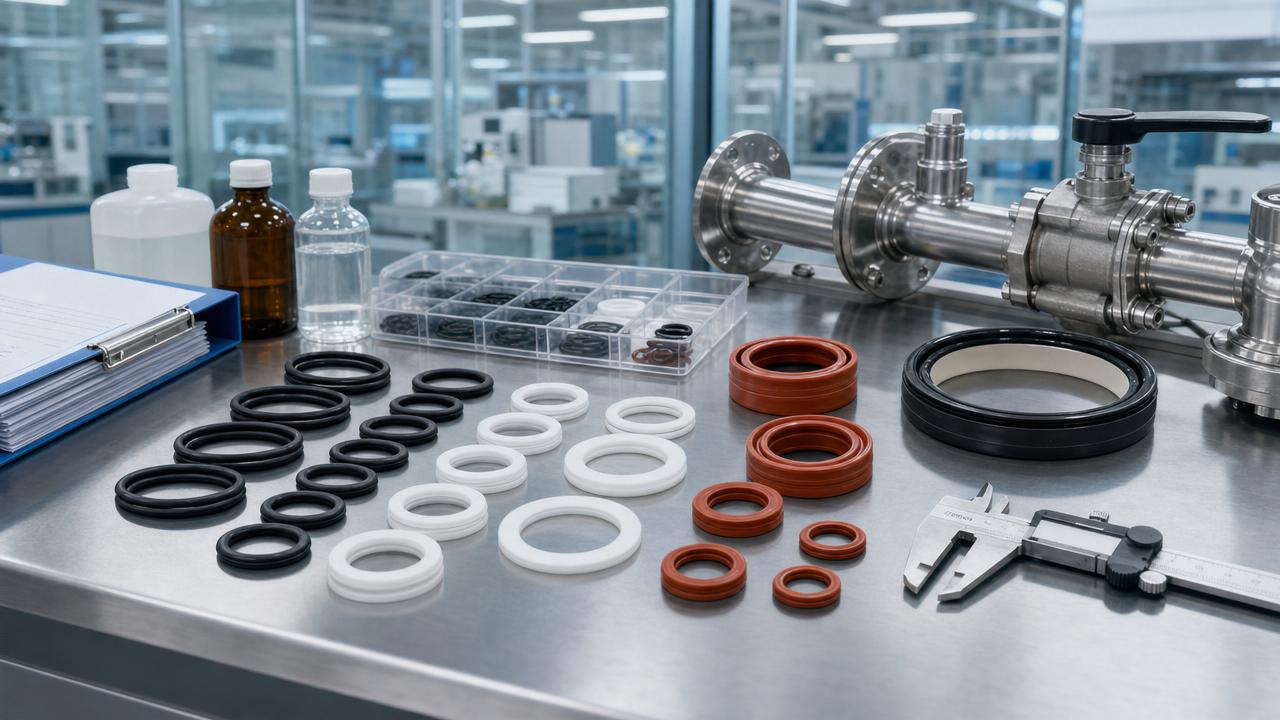
In chemical resistance seal wholesale, quality is more than a price tag—it determines service life, media compatibility, and system safety. For procurement teams, judging wholesale seal quality means evaluating material traceability, chemical performance, dimensional consistency, compliance standards, and supplier reliability. This guide explains the core criteria that help buyers reduce risk, compare vendors effectively, and secure seals that meet demanding industrial applications.
Why procurement teams should use a checklist first
In chemical resistance seal wholesale, buyers often compare quotations before they compare failure risk. That is the wrong sequence. A low unit price can disappear quickly if seals swell, crack, lose elasticity, contaminate process media, or fail under pressure and temperature cycling. A checklist-based review helps procurement teams avoid subjective vendor claims and focus on measurable quality indicators.
This approach is especially useful in industrial supply chains where seals are used in pumps, valves, reactors, RF and microwave systems, pneumatic assemblies, UHP control lines, and aggressive chemical handling equipment. In these environments, the purchasing decision is not only about obtaining stock; it is about securing process continuity, maintenance predictability, and compliance confidence. A structured quality checklist makes chemical resistance seal wholesale decisions faster, more consistent, and easier to defend internally.
First-pass checklist: what to confirm before comparing prices
Before asking for final pricing in chemical resistance seal wholesale, confirm these essentials. If any item is unclear, the quote is not ready for decision.
- Exact media exposure: acids, alkalis, solvents, oxidizers, mixed chemicals, cleaning agents, or vapor-phase chemicals.
- Operating and peak temperature range, including sterilization or washdown exposure.
- Pressure profile: static, dynamic, vacuum, pulsating, or shock-load conditions.
- Seal type and motion mode: O-ring, gasket, lip seal, seat seal, rotary or reciprocating use.
- Required material family: FFKM, PTFE, FKM, EPDM, PFA-encapsulated, or engineered composite.
- Dimension standard and tolerance expectation, including groove fit and compression ratio.
- Compliance needs such as ISO, FDA, USP Class VI, SEMI, API, RoHS, or REACH.
- Lot traceability, shelf-life control, packaging cleanliness, and documentation availability.
If a supplier cannot answer these points clearly, procurement should treat the offer as incomplete regardless of the quoted cost advantage.
Core quality criteria for chemical resistance seal wholesale
1. Material authenticity and traceability
Material substitution is one of the biggest risks in chemical resistance seal wholesale. A seal labeled as high-performance fluoroelastomer may not match the expected compound formulation, filler system, or cure chemistry. Procurement teams should request compound identification, batch records, manufacturer data sheets, and where appropriate, third-party verification. For critical applications, ask whether the supplied material is virgin, blended, reprocessed, or modified for cost reduction.
Good suppliers should provide traceable lot numbers, cure date or production date, and storage recommendations. In high-spec industries, traceability is not an extra benefit; it is a baseline quality control requirement.
2. Real chemical compatibility, not generic claims
Many vendors in chemical resistance seal wholesale advertise “excellent chemical resistance” without explaining to which chemicals, at what concentration, and under what temperature. Procurement should ask for compatibility data tied to actual media conditions. Sulfuric acid at room temperature is not the same as sulfuric acid at elevated temperature. Solvent blends can attack materials differently from single chemicals. Vapor exposure can also produce different degradation behavior than liquid immersion.
Useful indicators include volume swell, hardness change, tensile retention, compression set after exposure, and visible cracking or blistering. If the application is severe, prioritize suppliers that can support immersion testing or provide historical field data from comparable service conditions.
3. Mechanical performance under operating stress
A chemically compatible seal can still fail mechanically. In chemical resistance seal wholesale, quality evaluation should include hardness range, elongation, tensile strength, compression set, rebound behavior, extrusion resistance, and wear resistance. These factors matter when the system experiences pressure spikes, vibration, dynamic motion, or repeated maintenance cycles.
For static sealing, compression set and dimensional accuracy often carry the most weight. For dynamic sealing, friction behavior, abrasion resistance, and thermal stability become more important. Procurement teams should align material property review with the actual service mode instead of using a one-size-fits-all quality standard.
4. Dimensional consistency and molding quality
Even premium materials can underperform if dimensions are inconsistent. In chemical resistance seal wholesale, inspect tolerance control, flash removal, surface finish, parting line quality, concentricity, and cross-section uniformity. Irregular dimensions cause leak paths, uneven compression, early wear, and difficult installation.
Ask whether the supplier uses calibrated inspection tools, statistical sampling, first-article inspection, and final lot checks. If your equipment uses tight gland designs or automated assembly, dimensional consistency may be as critical as chemical resistance itself.
5. Cleanliness, contamination control, and packaging
For electronics, semiconductor, pharmaceutical, food-adjacent, and precision fluid systems, cleanliness can determine whether chemical resistance seal wholesale quality is acceptable. Seals may carry mold release residue, particulates, oils, or packaging contamination. Procurement should confirm cleaning methods, bagging standard, labeling accuracy, and whether the supplier can support low-particle or cleanroom-oriented packaging where needed.
A practical vendor comparison table
Use the table below to compare chemical resistance seal wholesale suppliers on the points that matter most to industrial buyers.
Extra checks by application scenario
For aggressive chemical processing
Prioritize resistance to concentrated acids, alkalis, oxidizers, and solvent blends. Ask about long-duration exposure data, thermal aging, and compression set retention. FFKM and PTFE-based solutions are often evaluated here, but compound quality still varies widely across suppliers.
For semiconductor and ultra-clean systems
Focus on extractables, particle generation, plasma or reactive gas compatibility, and packaging cleanliness. In this segment of chemical resistance seal wholesale, a lower-cost seal can create a much larger contamination cost downstream.
For valves, UHP lines, and pressure-critical assemblies
Check extrusion resistance, hardness stability, pressure cycling durability, and tolerance fit under load. Ask whether the seal design has been used in comparable pressure classes and whether anti-extrusion support elements are required.
For maintenance-driven replacement purchasing
If procurement is replacing an existing seal, verify whether the previous failure was chemical, thermal, mechanical, or installation-related. Reordering the same dimensions without understanding the failure mode is a common and costly mistake.
Commonly overlooked risks in chemical resistance seal wholesale
- Ignoring mixed-media exposure, such as process chemicals plus CIP cleaners or steam sterilization.
- Approving based on catalog compatibility charts without checking concentration and temperature.
- Assuming all seals in the same polymer family perform equally.
- Overlooking packaging and storage conditions that affect shelf life and elasticity.
- Comparing only piece price instead of total cost of ownership, downtime, and replacement frequency.
- Failing to confirm compliance documents before the purchase order is released.
Execution plan: how buyers can evaluate suppliers efficiently
- Define the application clearly: media, temperature, pressure, motion type, service life target, and compliance needs.
- Create a short technical questionnaire for all vendors to standardize responses.
- Request samples from the top candidates and compare dimensions, finish, packaging, and documentation.
- For critical use, require test evidence or limited pilot validation before volume commitment.
- Score suppliers on technical fit, traceability, quality consistency, lead time, and responsiveness.
- Negotiate not only price, but also change control, lot consistency, complaint handling, and replenishment strategy.
This structured process helps procurement teams treat chemical resistance seal wholesale as a risk-managed sourcing decision instead of a simple transactional purchase.
FAQ for procurement decisions
Is the highest-priced seal always the best choice?
No. The best choice is the seal that matches the actual chemical, thermal, mechanical, and compliance demands of the application. In chemical resistance seal wholesale, over-specification wastes budget, while under-specification increases failure risk.
What documents should buyers request first?
Start with the technical data sheet, material declaration, compliance certificates, lot traceability information, inspection standard, and any compatibility or validation data relevant to your service conditions.
When is laboratory testing necessary?
Testing is strongly recommended when the process media are highly aggressive, mixed, high-purity, high-temperature, or safety-critical, or when seal failure would create major downtime or contamination cost.
Final buying guidance
The most reliable way to judge chemical resistance seal wholesale quality is to review a small set of high-impact factors in the right order: material authenticity, chemical compatibility under real conditions, mechanical performance, dimensional consistency, cleanliness, compliance, and supplier process control. Procurement teams that use this checklist can compare vendors more objectively, reduce qualification mistakes, and improve long-term supply reliability.
If your team is preparing a sourcing decision, the best next step is to organize the application parameters before discussing price: exact media, concentration, temperature range, pressure profile, seal geometry, quantity forecast, validation needs, compliance requirements, and delivery expectations. With that information ready, supplier conversations become more precise, technical evaluation becomes faster, and the chemical resistance seal wholesale decision becomes far less risky.
Industry Briefing
Get the top 5 industry headlines delivered to your inbox every morning.