Agricultural Machinery Selection: Cost, Downtime, and Fit
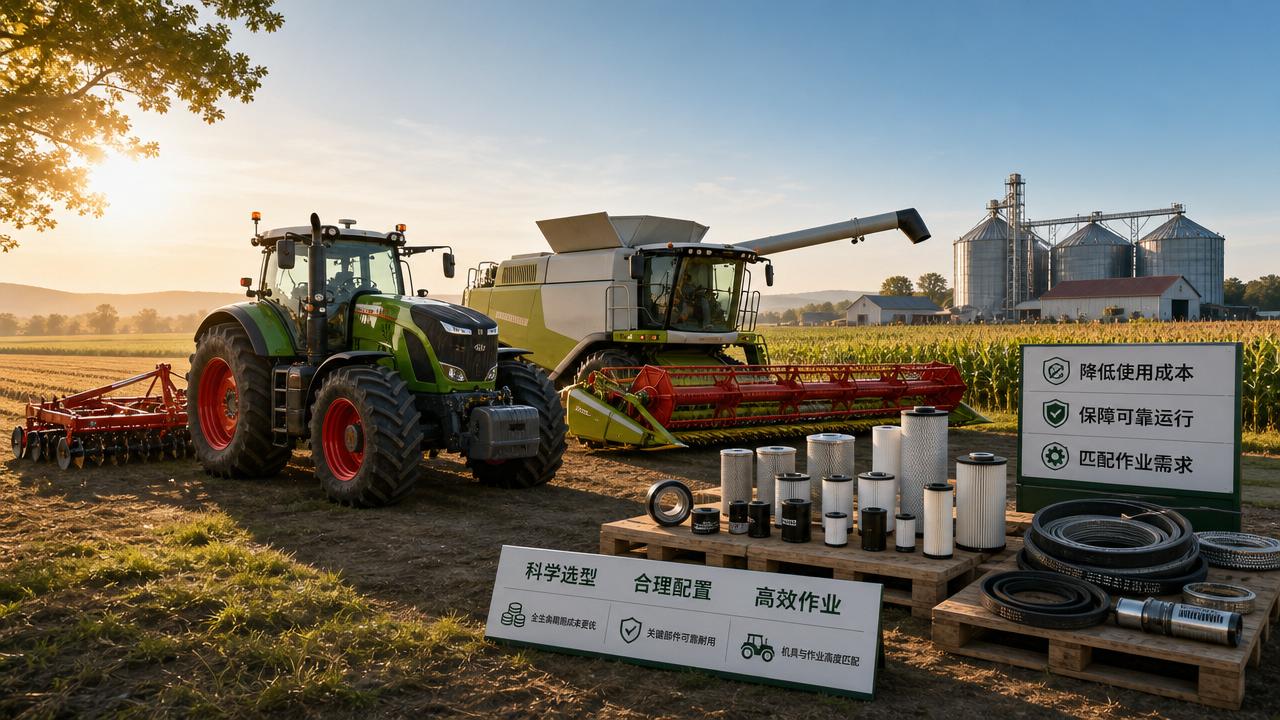
Agricultural Machinery Selection: Cost, Downtime, and Fit
Selecting agricultural machinery is no longer just a question of purchase price. It is a decision tied to uptime, parts availability, field conditions, operator efficiency, and return on investment.
For tractors, harvesters, implements, or precision-enabled equipment, the right fit protects seasonal productivity. The wrong choice can lock operations into avoidable costs.
This guide examines how agricultural machinery can be evaluated through total cost, reliability, application match, supplier support, and long-term operating value.
Why Field Scenario Matters Before Any Agricultural Machinery Purchase
Agricultural machinery performs under narrow seasonal windows. A machine that looks economical on paper may become expensive when it misses planting, spraying, or harvest timing.
Scenario fit begins with workload, terrain, soil moisture, crop type, labor skill, and transport distance. These variables decide capacity needs and failure exposure.
Cost should include fuel, wear parts, service intervals, financing, software subscriptions, and resale value. Purchase price is only one part of ownership.
Downtime risk is equally important. Agricultural machinery often works when service demand is highest and parts logistics are most stressed.
A strong selection process connects the machine to the operating environment, not only to horsepower, attachment size, or advertised output.
Scenario One: Row Crop Operations With Narrow Timing Windows
Row crop work depends on speed, repeatability, and traction. Planting delays can reduce yield, while inefficient passes increase fuel and soil compaction.
Agricultural machinery for this scenario should match implement width, field size, hydraulic demand, and guidance accuracy. Oversizing can waste capital and fuel.
Undersizing creates schedule pressure. It may also increase operator fatigue because more passes are needed during short weather windows.
- Check tractor power against the heaviest implement, not the average implement.
- Confirm hydraulic flow, hitch rating, ballast, and tire configuration.
- Evaluate auto-steer compatibility if controlled traffic or variable-rate work is planned.
Scenario Two: Harvesting Where Downtime Has Immediate Revenue Impact
Harvesting is the most downtime-sensitive agricultural machinery scenario. Crop quality, moisture level, and weather exposure can change within hours.
A combine, forage harvester, or specialty harvester must be judged by throughput, grain loss, cleaning performance, and service accessibility.
Parts availability matters more than peak capacity. A high-output machine loses value if a common component cannot be replaced quickly.
Look beyond engine size. Feeder house design, rotor configuration, residue handling, and sensor reliability shape real field performance.
- Map expected acres per day under realistic field conditions.
- Review wear-part replacement time and tool requirements.
- Check local inventory for belts, bearings, knives, chains, and sensors.
Scenario Three: Livestock and Mixed Farms Requiring Daily Reliability
Daily feeding, bedding, loader work, and manure handling require dependable agricultural machinery rather than maximum rated capacity.
In this scenario, cold starts, visibility, cab access, loader cycle speed, and maneuverability often matter more than advanced automation.
Compact tractors, telehandlers, skid steers, mixers, and spreaders should be assessed for durability under repetitive, low-speed, high-cycle workloads.
The best agricultural machinery choice reduces daily friction. Easy greasing, quick attachment changes, and accessible filters save labor every week.
Scenario Four: Specialty Crops With Space, Damage, and Precision Constraints
Orchards, vineyards, vegetables, and greenhouse operations require agricultural machinery adapted to narrow rows, canopy clearance, and delicate crop handling.
Standard machines may damage plants, compact root zones, or fail to deliver accurate application coverage. Fit must be verified physically.
Key judgment points include turning radius, machine height, track width, low-speed control, spray drift control, and operator visibility.
For specialty crops, agricultural machinery should be tested in representative rows before purchase. Catalog dimensions rarely capture real clearance challenges.
Scenario Five: Precision-Enabled Operations and Data-Driven Inputs
Precision agricultural machinery can improve input control, reduce overlap, and support traceability. Yet technology value depends on integration quality.
The machine should communicate with guidance systems, sensors, controllers, farm software, and variable-rate prescriptions without recurring compatibility problems.
Data features should not be treated as decoration. Connectivity, calibration stability, firmware support, and diagnostic access influence long-term usefulness.
- Confirm ISOBUS, GNSS, controller, and implement compatibility.
- Ask how software updates affect older equipment.
- Review data ownership, export formats, and subscription costs.
Different Agricultural Machinery Needs by Operating Scenario
Total Cost: What Should Be Counted Before Comparing Quotes
The true cost of agricultural machinery includes direct and indirect expenses. A lower quote may hide higher service or fuel costs.
A practical comparison should estimate cost per acre, cost per hour, and cost per season. Each view reveals different weaknesses.
- Acquisition cost, financing terms, taxes, and insurance.
- Fuel, lubricants, filters, tires, tracks, and wear parts.
- Scheduled maintenance labor and required diagnostic tools.
- Unscheduled repair probability during peak use.
- Operator training, software fees, and resale value.
When agricultural machinery is shared across tasks, utilization improves. However, excessive task variety can increase attachment cost and setup time.
Downtime: How to Judge Support Before the Machine Fails
Downtime planning should happen before purchase. Once the machine is stopped, leverage is limited and seasonal pressure increases.
Reliable agricultural machinery is not only well-built. It is supported by nearby parts, skilled service, clear diagnostics, and fast technical escalation.
Ask for documented service intervals, typical repair times, and parts fill rates. Vague promises are not enough for peak-season work.
- Identify the nearest stocking location for critical parts.
- Confirm mobile service coverage during evenings and weekends.
- Review warranty exclusions for dust, moisture, impact, and software faults.
- Create a spare-parts list for high-risk components.
Fit: Matching Agricultural Machinery to Real Working Conditions
Fit is the link between machine specification and daily performance. It covers physical, mechanical, digital, and human factors.
A tractor may have enough horsepower but insufficient hydraulic flow. A harvester may have capacity but poor access for maintenance.
Agricultural machinery should also fit the operator skill level. Complex interfaces can reduce productivity if training and support are weak.
- Define the hardest job the machine must complete.
- List all implements, attachments, and data systems involved.
- Check field access, road transport, turning space, and storage.
- Run a trial under realistic load, speed, and soil conditions.
Common Misjudgments When Selecting Agricultural Machinery
Many poor decisions come from comparing visible specifications while ignoring field behavior. Horsepower, tank size, or header width rarely tell the full story.
Another mistake is assuming new technology automatically improves results. Precision features need calibration, connectivity, maintenance, and disciplined data workflows.
- Buying too large and raising fixed cost without enough utilization.
- Buying too small and creating seasonal bottlenecks.
- Ignoring parts logistics for critical agricultural machinery.
- Underestimating operator training and daily maintenance time.
- Failing to test compatibility with existing implements.
A Practical Selection Workflow for Better Decisions
A disciplined workflow reduces emotional buying and improves comparison quality. It also makes supplier claims easier to verify.
Action Guide: Turning Evaluation Into a Confident Purchase
Start with the most expensive failure scenario. If downtime during harvest is unacceptable, support strength may outweigh a lower purchase price.
Request field references for the same crop, terrain, and workload. Similar conditions reveal more than general performance claims.
Build a shortlist using total cost, downtime exposure, and fit. Then test each agricultural machinery option against real operating constraints.
Before final approval, document assumptions for hours, acres, parts cost, service response, resale value, and operator training.
The strongest agricultural machinery decision is not the cheapest or most advanced. It is the machine that performs reliably in the intended scenario.
Use cost, downtime, and fit as connected filters. That approach protects productivity, reduces avoidable risk, and supports sustainable equipment investment.
Industry Briefing
Get the top 5 industry headlines delivered to your inbox every morning.