Agricultural Machinery News: Automation Cost Trends
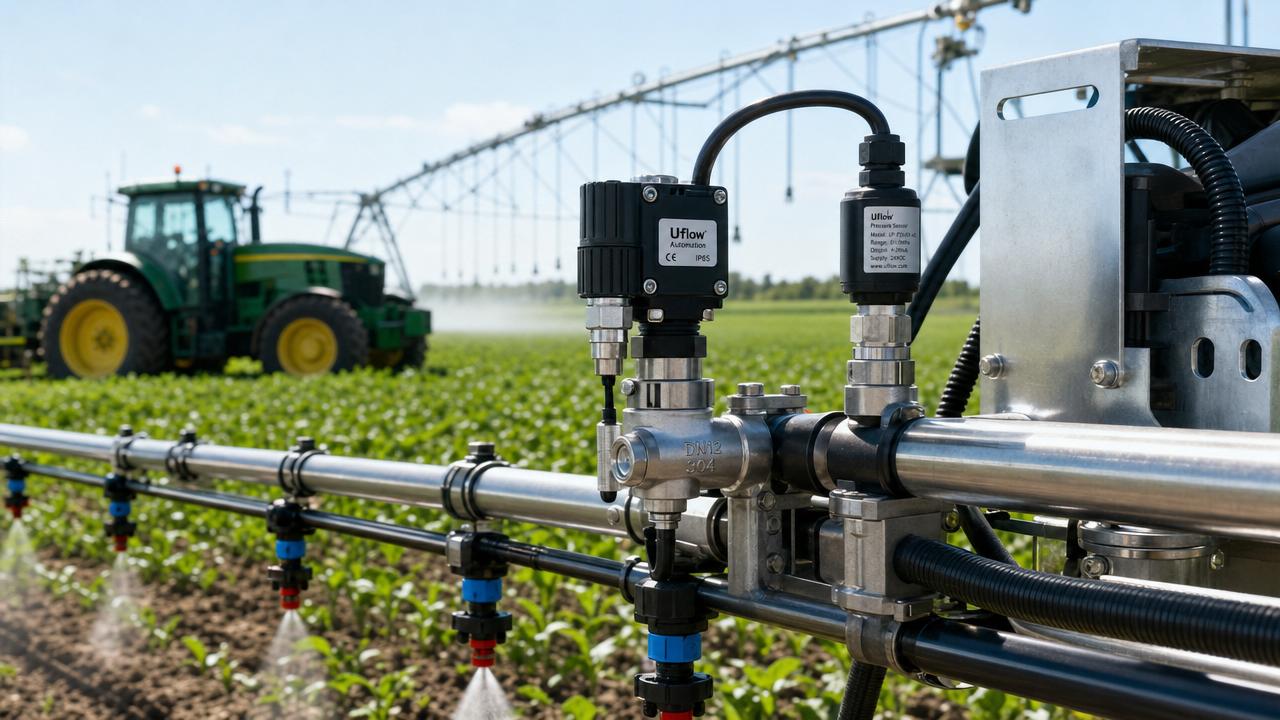
Agricultural Machinery News: Automation Cost Trends Reshape Equipment Decisions
In today’s agricultural machinery news, automation cost trends are becoming a critical signal for evaluating long-term equipment value, uptime, and operational risk.
As farms adopt smarter control systems, precision actuators, sealing technologies, and data-driven components, upfront price no longer tells the full story.
Lifecycle cost, repair exposure, component reliability, and supplier readiness now define the true economics of next-generation agricultural equipment.
Why Automation Costs Are Moving to the Center of Agricultural Machinery News
Recent agricultural machinery news shows a clear shift from mechanical capacity toward automated precision, repeatable control, and integrated sensing.
Tractors, seeders, sprayers, harvesters, irrigation systems, and post-harvest equipment are becoming software-enabled industrial platforms.
This transition changes cost structures because sensors, controllers, actuators, valves, seals, and communication modules carry different risk profiles.
The machine is no longer assessed only by horsepower, tank size, implement compatibility, or field speed.
It is increasingly assessed by control accuracy, service diagnostics, uptime resilience, and data interoperability across mixed equipment fleets.
That is why agricultural machinery news now often connects automation investment with maintenance strategy, component traceability, and operational predictability.
The Main Signals Behind Rising Automation Investment
Automation costs are not rising randomly. They reflect deeper technical requirements across modern agricultural systems.
These signals explain why agricultural machinery news increasingly treats automation as a cost-control tool, not merely a premium feature.
Component Engineering Is Changing the Cost Equation
Modern agricultural machinery depends on small components that must operate reliably under unstable field conditions.
Precision-control valves regulate flow in spraying, irrigation, hydraulic steering, and variable-rate application systems.
Pneumatic and piezoelectric actuators support faster positioning, finer adjustment, and better repeatability in automated implements.
Specialized sealing systems protect electronics, hydraulic circuits, and fluid paths from contamination, pressure cycling, and chemical exposure.
In agricultural machinery news, these parts may appear secondary, yet their failure can stop an entire machine during a narrow operating window.
This creates a new cost logic: paying more for validated components can reduce downtime, warranty risk, and seasonal disruption.
What Is Driving the Automation Cost Trend
Several forces are converging, making automation cost trends a recurring topic in agricultural machinery news.
- Input inflation increases demand for precise seed, fertilizer, chemical, fuel, and water usage.
- Weather volatility rewards equipment that can complete tasks quickly and consistently.
- Data requirements push machines toward better sensors, traceability, and digital field records.
- Labor shortages increase interest in guided operation, autonomous functions, and remote monitoring.
- Environmental rules encourage lower drift, cleaner application, and better emissions-related control.
- Supply chain uncertainty favors standardized, serviceable, and well-documented component platforms.
Together, these factors move automation from optional innovation into practical risk management.
That shift explains why agricultural machinery news links automation pricing with resilience, sustainability, and total machine availability.
How the Trend Affects Equipment Budgets
Automation changes budgets by moving spending from metal structure toward electronics, software, sensors, valves, actuators, and sealed modules.
The purchase price may increase, yet the operating model can become more predictable when uptime and input efficiency improve.
Agricultural machinery news often highlights headline equipment prices, but hidden lifecycle variables deserve equal attention.
- Calibration effort affects labor time and application quality.
- Seal durability affects hydraulic reliability and electronics protection.
- Controller openness affects future upgrades and fleet integration.
- Diagnostic access affects repair speed during peak season.
- Component availability affects downtime during regional demand spikes.
A lower initial price can become expensive when proprietary parts, weak sealing, or limited diagnostics increase field interruption.
Impact Across the Agricultural Machinery Value Chain
Automation cost trends affect machinery design, distribution, service planning, and field operations at the same time.
Equipment engineering must balance rugged mechanics with tighter control architecture and environmental protection.
Service networks need stronger diagnostic capability because automated equipment creates electronic, pneumatic, hydraulic, and software-related failure modes.
Agricultural machinery news increasingly reflects this complexity through coverage of telematics, predictive maintenance, sensor integration, and autonomous systems.
For field operations, the impact is practical: fewer passes, better application accuracy, more reliable timing, and improved documentation.
However, these gains depend on component quality, interface compatibility, training depth, and spare-part readiness.
Key Cost Indicators Worth Tracking
Not every automation upgrade delivers the same return. Better evaluation requires structured cost indicators.
- Cost per productive hour: Compare uptime, fuel use, service frequency, and field output.
- Input savings potential: Estimate reductions in overlap, drift, over-application, and waste.
- Failure criticality: Identify components that can stop the machine during essential work.
- Environmental rating: Check sealing protection against dust, liquid ingress, chemicals, and vibration.
- Diagnostic transparency: Review access to fault codes, service data, and software updates.
- Standards alignment: Favor validated components and documented quality frameworks.
These indicators make agricultural machinery news more actionable when comparing automation claims across different equipment categories.
Where Costs May Stabilize and Where They May Rise
Some automation costs may stabilize as sensors, controllers, displays, and communication modules become more standardized.
Common platforms can reduce integration cost, simplify training, and improve spare-part availability across equipment families.
Yet high-reliability components may remain expensive because field environments demand rugged materials and precise validation.
Advanced sealing, corrosion-resistant valves, pressure-stable gaskets, and high-speed actuators require engineering discipline beyond commodity sourcing.
This is why agricultural machinery news should be read through two lenses: digital commoditization and specialized component resilience.
How to Respond to Automation Cost Trends
The best response is not to reject higher automation costs, but to separate necessary value from avoidable complexity.
Agricultural machinery news can support better decisions when each technology claim is matched with measurable field outcomes.
- Define the operational problem before comparing automation packages.
- Request lifecycle cost data, not only purchase quotations.
- Check component-level reliability in dust, vibration, pressure, and chemical exposure.
- Prioritize platforms with accessible diagnostics and clear service procedures.
- Verify interoperability with existing implements, data systems, and service tools.
- Review spare-part support for valves, seals, sensors, actuators, and controllers.
This approach turns agricultural machinery news from market noise into a practical framework for evaluating risk and return.
The Role of Technical Intelligence in Better Equipment Evaluation
High-performance agricultural machinery increasingly borrows lessons from advanced industrial systems.
Precision flow control, specialized sealing, reliable actuation, and standards-based validation are becoming essential for demanding field applications.
Technical intelligence helps connect component choices with operational consequences, especially where downtime carries seasonal penalties.
Agricultural machinery news becomes more valuable when it considers containment, flow, environmental integrity, and response precision.
Those principles support stronger decisions in spraying, irrigation, harvesting, hydraulic control, and autonomous machine platforms.
Next Steps for Reading Agricultural Machinery News More Strategically
Automation cost trends will remain central in agricultural machinery news as equipment becomes more connected, precise, and service-dependent.
The strongest evaluations will compare purchase price with uptime, input efficiency, repair exposure, and component reliability.
Start by mapping the most failure-sensitive functions in each machine category, then review the components controlling those functions.
Track valves, seals, actuators, controllers, sensors, and diagnostic systems as closely as engine power or implement size.
Use agricultural machinery news to identify which automation features reduce measurable risk, and which simply add complexity.
For the next equipment review, build a comparison sheet covering lifecycle cost, field reliability, standards alignment, and service readiness.
That disciplined view turns automation spending into a controlled investment, rather than an uncertain premium attached to new machinery.
Industry Briefing
Get the top 5 industry headlines delivered to your inbox every morning.