When High-Speed Positioners Make Sense in Precision Control
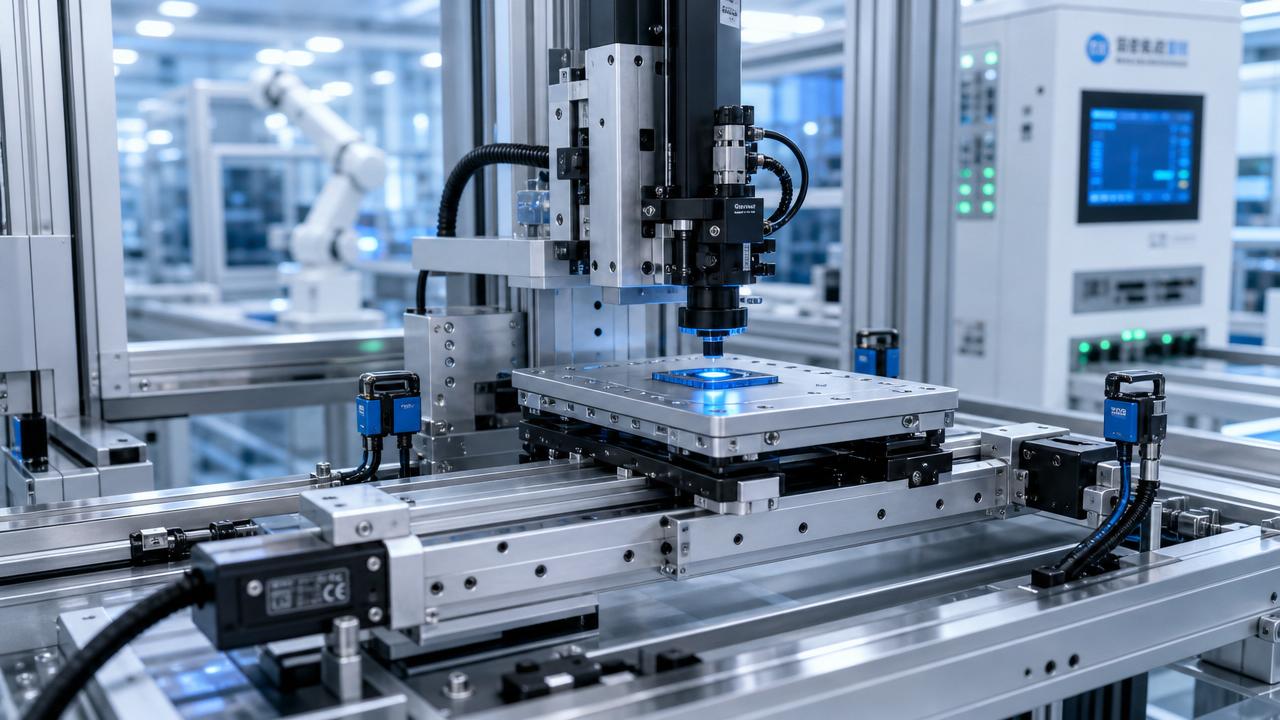
In precision control, choosing high-speed positioners only makes sense when response time, stability, and repeatability directly affect system performance and project risk. For project leaders managing advanced industrial applications, understanding where speed delivers measurable value is essential to balancing technical demands, integration complexity, and long-term reliability.
Why a checklist approach is the smartest way to evaluate high-speed positioners
For project managers and engineering leads, the main challenge is rarely understanding that faster motion exists. The real challenge is deciding whether high-speed positioners create practical value in a specific system, or whether they introduce unnecessary cost, tuning effort, and reliability risk. A checklist-based evaluation helps teams focus on application-critical factors first: response window, payload behavior, control loop quality, environmental demands, and lifecycle impact.
This matters across advanced manufacturing, RF and microwave equipment, optical alignment, semiconductor tools, laboratory automation, micro-assembly, and specialized sealing or flow-control subsystems. In each case, the question is not simply “Do we want speed?” but “Does faster positioning reduce project risk, improve throughput, or protect process integrity?” That is where high-speed positioners begin to make sense.
Start here: the first five checks before you specify high-speed positioners
Before comparing vendors or actuator technologies, confirm these five decision points. If most answers are unclear, specification work is premature.
- Is cycle time actually constrained by positioning speed, or by sensing, process dwell, communication latency, or upstream handling?
- Does the application require rapid settling to a stable target, not just fast movement between points?
- Will improved response reduce defects, alignment drift, process variability, or scrap in a measurable way?
- Can the surrounding mechanical structure support high-bandwidth motion without resonance, thermal drift, or vibration amplification?
- Does the project team have the controls, metrology, and integration capability needed to realize the benefit of high-speed positioners?
If the answer to only the first question is yes, a standard precision stage may be enough. High-speed positioners are justified when several of these checks align and when the system-level outcome improves, not just the component datasheet.
Core decision checklist: when high-speed positioners usually make sense
1. The process window is extremely short
High-speed positioners are often valuable when the controlled process happens in milliseconds or microseconds. Examples include beam steering, wafer inspection alignment, fast optical focusing, adaptive test fixtures, and dynamic valve or aperture adjustment in high-frequency systems. In these cases, slower stages can become the dominant source of delay or error accumulation.
2. Settling time matters more than peak speed
A common mistake is choosing equipment based on maximum velocity alone. In precision control, the useful metric is often how quickly the device reaches target position and stays there within tolerance. If your process needs repeatable sub-micron or nanometer-level stability immediately after a move, high-speed positioners with strong closed-loop performance can be far more valuable than a fast but oscillatory alternative.
3. Throughput gains are large enough to justify system complexity
If faster positioning cuts inspection time, shortens production takt time, or increases test-cell utilization across many cycles per day, the business case can be strong. This is especially true in high-value production environments where each second saved multiplies across expensive tools, operators, or process chambers.
4. Disturbance rejection is critical
In environments with vibration, changing loads, pressure fluctuation, thermal drift, or dynamic force interactions, high-speed positioners can help maintain accuracy by reacting quickly to disturbances. The benefit is not only faster motion but more stable control under real operating conditions.
5. The cost of positional error is high
When a small positioning error can damage substrates, reduce seal integrity, lower RF coupling efficiency, misalign optical paths, or trigger rework, high-speed positioners can serve as risk-reduction tools. Their value rises when project consequences are expensive and process sensitivity is extreme.
Use this practical comparison table before making a specification decision
The table below helps project leaders connect technical need to procurement logic.
Application-specific guidance for project leaders
Semiconductor and microfabrication systems
In wafer handling, lithography support, inspection, and precision dispensing, high-speed positioners can improve alignment speed while preserving ultra-fine repeatability. Here, the key checks are vibration isolation, sensor resolution, thermal behavior, and compatibility with clean or controlled environments. Speed only helps if contamination, drift, and control noise remain under control.
Optics, photonics, and imaging platforms
Fast focusing, mirror positioning, beam stabilization, and lens alignment often benefit from high-speed positioners, especially when image sharpness or beam path accuracy must be corrected in real time. Project teams should prioritize bandwidth, hysteresis control, encoder quality, and the impact of cable forces on micro-motion stability.
RF, microwave, and energy delivery equipment
In tunable microwave systems, test setups, and high-frequency energy applications, fast mechanical correction can support impedance adjustment, coupling optimization, or dynamic positioning in sensitive assemblies. The most important checks are electromagnetic compatibility, thermal loading, shielded signal integration, and repeatable performance under continuous duty.
Precision sealing, valve control, and flow-sensitive assemblies
Not every sealing or flow-control application needs high-speed positioners, but they make sense when rapid actuation directly affects containment quality, dosing precision, or synchronized process timing. This is especially relevant in advanced gas handling, UHP systems, and test platforms where leakage risk or transient response has system-level consequences.
Commonly overlooked factors that weaken the business case
Many projects overestimate the benefit of high-speed positioners because they focus on actuator performance and underestimate system constraints. Watch for these risk points:
- Mounting stiffness is insufficient, so the machine absorbs dynamic gains instead of converting them into usable precision.
- Payload definition is incomplete, including fixtures, cables, fluid lines, or thermal mass that alter real dynamic behavior.
- Controller and sensor update rates are too slow to support the intended motion bandwidth.
- Procurement compares devices by speed or force only, without considering settling time, repeatability, and service life.
- Validation plans measure no-load performance, while production conditions involve disturbance, contamination, pressure variation, or duty-cycle heating.
- Maintenance strategy is unclear, leading to gradual degradation that erodes the original precision advantage.
Execution checklist: what to prepare before engaging suppliers
If your team is considering high-speed positioners, supplier discussions become much more productive when basic project data is ready in advance. Prepare the following:
- Target motion profile, including stroke, acceleration, settling time, and required repeatability.
- Payload definition with center of gravity, cable influence, and external force conditions.
- Environmental limits such as temperature range, vacuum or cleanroom conditions, vibration exposure, and contamination sensitivity.
- Control architecture details, including feedback devices, communication interfaces, update rates, and synchronization requirements.
- Duty cycle expectations, lifetime targets, and acceptable maintenance windows.
- Commercial boundaries such as budget range, qualification timeline, documentation expectations, and regulatory or industry standard needs.
This preparation reduces redesign loops and helps distinguish between a motion component that looks impressive on paper and one that is genuinely suitable for production deployment.
How to judge ROI without oversimplifying the decision
For project managers, return on investment should be evaluated across technical and operational dimensions. Useful ROI questions include: Does faster positioning raise tool availability? Does it improve yield? Does it reduce operator intervention? Does it lower defect escape risk? Does it support future platform scalability? High-speed positioners are easiest to justify when they improve more than one of these outcomes simultaneously.
At the same time, avoid assuming that the most advanced option is automatically the most economical. In some systems, moderate-speed motion with stronger structural design and better sensing delivers a better total result. The best procurement decision is usually the one that optimizes control performance at the system level, not the one with the most aggressive standalone specifications.
FAQ for teams evaluating high-speed positioners
Do high-speed positioners always improve precision?
No. They improve precision only when the surrounding mechanics, sensing, and controls can support fast, stable operation. Otherwise, added speed may increase overshoot, vibration, or thermal effects.
What is the most important specification to compare first?
For most precision-control applications, compare settling time under real payload and accuracy conditions before looking at maximum speed. That is usually closer to process reality.
When should a project avoid high-speed positioners?
Avoid them when the process is insensitive to response time, when structural rigidity is poor, when integration capability is limited, or when maintenance simplicity matters more than dynamic performance.
Final guidance and next-step questions
High-speed positioners make sense when they solve a real control problem: shortening a critical response window, stabilizing a sensitive process, improving throughput, or reducing the cost of positional error. For project leaders, the best path is to evaluate them through a disciplined checklist rather than a speed-first mindset.
If your organization is moving toward specification or supplier engagement, prioritize a structured discussion around required stroke, payload, settling time, repeatability, environmental conditions, controller compatibility, validation method, lifecycle expectations, budget range, and delivery schedule. Those questions will reveal quickly whether high-speed positioners are the right strategic fit, and whether the proposed solution is optimized for your actual application rather than a generic performance claim.
Industry Briefing
Get the top 5 industry headlines delivered to your inbox every morning.