High-Speed Positioners: What Improves Response Without Instability
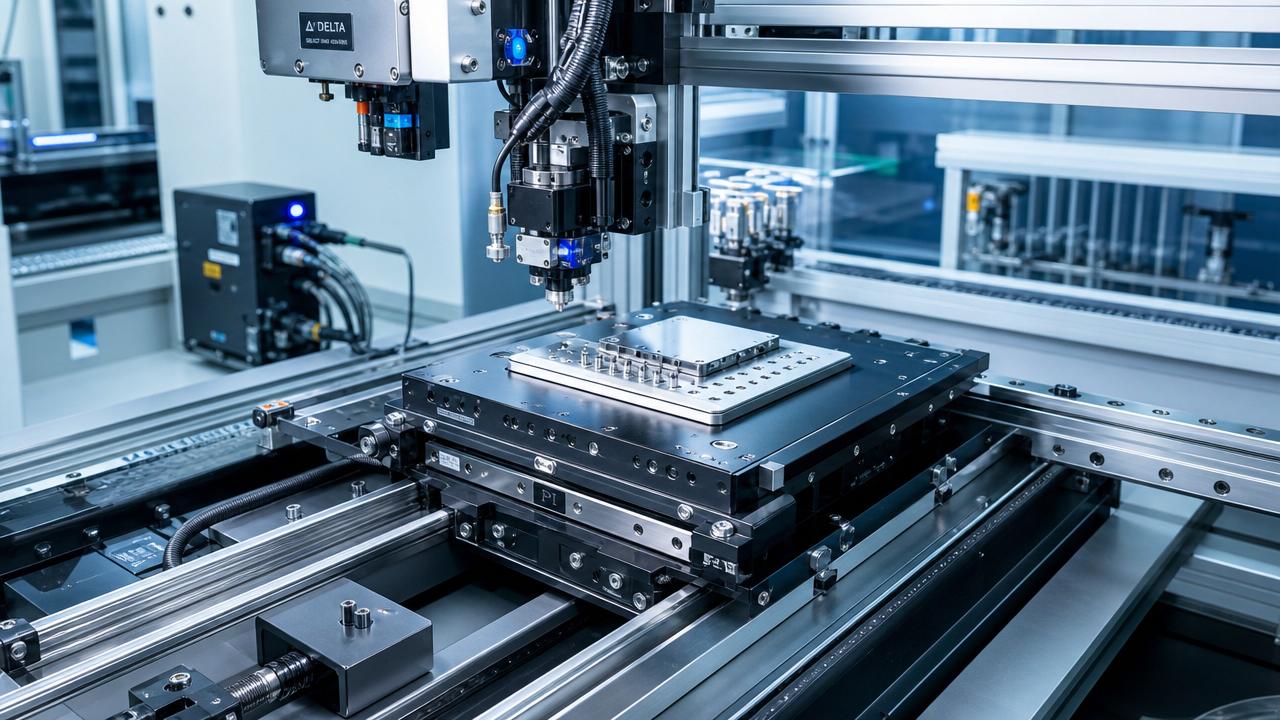
High-speed positioners can dramatically improve throughput and precision, but faster motion often introduces overshoot, vibration, and control instability. For operators and end users, the real challenge is finding what truly boosts response without sacrificing repeatability or system safety. This article explores the key factors that help high-speed positioners achieve stable, reliable performance in demanding industrial applications.
Why the discussion around high-speed positioners is changing
Across advanced manufacturing, inspection, semiconductor handling, photonics alignment, medical automation, and precision assembly, expectations for motion systems have shifted. Users no longer evaluate high-speed positioners only by top speed or travel distance. The real benchmark is now response quality under production conditions: how quickly a stage settles, how consistently it repeats, how well it resists vibration, and how safely it behaves when process loads change.
This change matters because industrial systems are becoming more tightly coupled. A positioner is no longer an isolated device; it interacts with vision systems, dispensing heads, laser tools, metrology loops, cleanroom requirements, and increasingly aggressive cycle-time targets. In that environment, unstable motion does not just create a positioning error. It can reduce yield, trigger false rejects, accelerate wear, and create unpredictable downtime.
As a result, the market conversation has moved from “How fast can it move?” to “What improves response without instability?” That is an important shift for operators. It means the best-performing high-speed positioners are often not the ones with the most aggressive acceleration specification on paper, but the ones engineered and tuned to reach a stable final position quickly in real use.
The strongest trend signal: settling time is replacing raw speed as the key metric
One of the clearest signals in the precision motion market is the growing focus on settling time. Many end users have learned that a fast move followed by oscillation is slower in practice than a slightly less aggressive move that stabilizes immediately. This is especially true in pick-and-place, micro-dosing, optical alignment, wafer handling, and test automation, where the process cannot start until motion has fully settled.
For high-speed positioners, better response without instability usually comes from a balanced motion profile, stiff mechanics, low moving mass, high-resolution feedback, and well-matched control tuning. These factors shorten the time between command and usable position. That usable position is what operators care about, because throughput depends on the complete cycle, not just the peak acceleration number.
What is driving this shift in response expectations
Several forces are pushing users to rethink how high-speed positioners should be selected and operated. First, product tolerances are narrowing. In electronics, optics, biotech automation, and precision assembly, smaller allowable errors mean any overshoot or ringing becomes more damaging. Second, production lines are becoming faster and more synchronized. Positioners must coordinate with sensors, robots, feeders, and inspection modules, so delay from instability has a multiplying effect.
Third, more systems are handling delicate or high-value parts. In such applications, aggressive motion that excites vibration can reduce product integrity or create handling risk. Fourth, maintenance teams are under pressure to increase uptime. Unstable motion often causes repeated retuning, unexplained stoppages, and component fatigue, all of which conflict with reliability goals.
A fifth driver is the wider use of advanced actuator technologies, including piezoelectric and precision pneumatic systems, which offer high responsiveness but also require careful integration. As these technologies become more common, the quality of control strategy, sensor resolution, and structural design matters more than ever.
What actually improves response without making high-speed positioners unstable
For operators and technical users, the most useful question is practical: which improvements help in the real world? The answer is not one single component. Stable fast response is usually the result of five interacting areas.
1. Higher structural stiffness with lower moving mass
A rigid mechanical structure raises the natural frequency of the system and reduces deflection during acceleration. At the same time, lower moving mass makes it easier to accelerate and decelerate without exciting resonance. This is why modern high-speed positioners increasingly use optimized stage geometry, lightweight materials, compact payload interfaces, and carefully controlled cable routing. Operators may not see these details immediately, but they strongly affect whether fast motion remains controllable.
2. Better feedback resolution and signal quality
Stable response depends on accurate knowledge of position. Encoders, interferometric feedback, or other precision sensing methods help the controller correct motion earlier and more precisely. Poor signal quality, noise, or insufficient resolution can cause hunting, overshoot, or inconsistency. In many installations, users blame the positioner when the deeper issue is feedback integrity or electrical noise in the control chain.
3. Smarter control tuning instead of more aggressive gain
A common mistake is assuming that stronger gain always means faster response. In reality, excessive gain can push high-speed positioners toward oscillation. Better results often come from model-based tuning, feedforward control, notch filtering, jerk-limited profiles, and application-specific parameter optimization. The trend is clear: sophisticated control strategy is replacing brute-force tuning.
4. Load matching and payload discipline
A positioner that performs beautifully in a supplier demo may become unstable after users add a gripper, camera, cable bundle, process head, or off-center fixture. The actual load, inertia, center of gravity, and dynamic coupling matter. More end users are now checking the full moving assembly rather than evaluating the stage alone. This is one of the most practical changes in operator behavior.
5. Better installation environment and vibration isolation
Even excellent high-speed positioners can lose stability if mounted on a weak frame or placed near other vibrating equipment. Floor vibration, thermal drift, compressed air fluctuations, and poor mounting surfaces all influence response. As production lines become denser, environmental effects are becoming a larger part of motion performance.
How these changes affect operators, maintenance teams, and buyers
The movement toward stable, data-backed performance affects more than engineering teams. It changes what different roles need to observe and prioritize.
The next market direction: integrated motion quality over isolated component performance
A major trend in high-speed positioners is the move toward integrated performance evaluation. Users increasingly expect suppliers to address mechanics, actuators, sensors, cables, drive electronics, and control software as one system. This is especially relevant in sectors that rely on high-precision pneumatic and piezoelectric actuators, where micro-second responsiveness can create major benefits but also makes instability more visible.
This integrated view also aligns with broader industrial expectations around reliability, traceability, and standards-based validation. Decision-makers want motion components that can support strict process windows, regulated production environments, and long-term consistency. In that context, high-speed positioners are becoming part of a larger reliability framework rather than a simple motion purchase.
Signals that users should watch before performance problems appear
Not all instability starts with a visible failure. In many systems, early warning signs appear first as subtle behavior changes. Operators should pay attention to small increases in settle time, rising sensitivity to payload variation, intermittent deviation after direction changes, or new vibration after maintenance work. These are often signs that a previously stable setup is moving closer to a control limit.
Another important signal is repeated parameter adjustment. If teams keep retuning high-speed positioners to restore acceptable behavior, the root cause may be structural, environmental, or load-related rather than purely software-related. Persistent retuning usually indicates a mismatch between actual operating conditions and original design assumptions.
Practical judgment criteria for selecting or improving high-speed positioners
For organizations evaluating new motion systems or upgrading existing ones, a few judgment rules are especially useful. First, ask for response data under realistic payload and duty-cycle conditions. Second, compare stable settling performance instead of only acceleration values. Third, confirm how the system behaves near the edge of the required operating envelope, not just in ideal tests. Fourth, review support for tuning, diagnostics, and vibration analysis. Fifth, check whether mounting, cabling, and environmental requirements have been treated as part of the solution.
What this means for future operations and upgrade planning
The broader direction is clear: high-speed positioners will continue to become faster, but value will increasingly come from controllable speed, not nominal speed. End users who benefit most will be those who treat motion quality as a system issue. That means connecting the positioner decision to payload design, feedback architecture, machine base stiffness, environmental control, and maintenance strategy.
For many facilities, the best response improvement may not come from replacing the entire stage. It may come from improving mounting rigidity, reducing moving cable forces, cleaning feedback signals, updating control tuning, or rebalancing payload inertia. In other words, the next performance gain is often hidden in integration quality rather than hardware size alone.
Final takeaway for users evaluating high-speed positioners
The current trend is not simply toward faster motion, but toward faster stable motion. That distinction is shaping how high-speed positioners are designed, purchased, tuned, and maintained. The most important change is that response quality now matters more than headline speed, because instability creates hidden costs in yield, uptime, maintenance, and safety.
If your organization wants to judge how this trend affects its own equipment, focus on a few questions: Are your current high-speed positioners settling fast enough for the real process window? Are payload changes or mounting conditions causing hidden instability? Is tuning based on data or repeated trial and error? And are you measuring performance by speed alone, or by the time it takes to reach a truly usable, repeatable position? Those answers will reveal where the next reliable improvement should begin.
Industry Briefing
Get the top 5 industry headlines delivered to your inbox every morning.